News
Lagos 2027: 'Hamzat has what it takes to succeed Sanwo-Olu' – Obasa


The Speaker of the Lagos State House of Assembly, Mudashir Obasa, has declared that the gubernatorial candidate of All Progressives Congress, APC, in the state, Dr Obafemi Hamzat has what it takes to succeed the current Governor, Babajide Sanwo-Olu.
Obasa made this declaration while addressing journalists at Hamzat's formal manifesto presentation.
The event was held at Wole Soyinka Centre for Culture and Creative Arts, formerly known as the National Arts Theatre, Iganmu, Lagos.
Our correspondent reports that the event took place on Friday.
DAILY POST gathered that Hamzat is the current deputy governor of the state.
He eyed the position in 2019 before he was persuaded to deputise the current governor, Babajide Sanwo-Olu.
Obasa while speaking at the event on Friday, expressed confidence in Hamzat's ability to deliver on his campaign promises.
He explained that Hamzat’s educational background and wealth of experience in private and public offices are enough for him to deliver.
Obasa while speaking said, "He has the competence, character, and most importantly, the determination to rewrite the Lagos State socio-economic narrative".
Lagos 2027: ‘Hamzat has what it takes to succeed Sanwo-Olu’ – Obasa

Bauchi State Police Command has arrested a 26-year-old man, John Umar Shehu, for allegedly impersonating a Nigerian Army personnel, attacking his prospective employer and stealing his vehicle.
The suspect, a native of Bassa Local Government Area of Plateau State, was arrested over alleged criminal impersonation, criminal breach of trust, assault and theft.
The Police Public Relations Officer, SP Nafiu Habib, disclosed this in a statement issued on Friday, October 30, 2026.
According to the statement, the command received a written petition on October 22 from a resident of Gida Dubu area of Bauchi, who alleged that the suspect had contacted him seeking employment as a driver at his pure water factory.
The petitioner said the suspect contacted him on October 18 and was invited for an interview and driving assessment.
However, during the assessment on October 22, the suspect allegedly attacked the factory owner and the son of one of his neighbours before fleeing with the employer's vehicle.
The stolen vehicle was identified as a white H-Jet motor vehicle with registration number AE-278-ALK. A green Infinix Smart 5X mobile phone was also reportedly stolen.
The police said detectives subsequently launched an investigation and arrested the suspect through intelligence-led policing.
A search conducted on him led to the recovery of several Nigerian Army uniforms and military items, including desert camouflage, green camouflage, a jungle hat, an Army raincoat, a camouflage vest and an Army sweater.
The stolen vehicle was also recovered from the suspect in Jos, the Plateau State capital.
The statement said the suspect allegedly presented himself as Private Umar Shehu, with service number NA/22/82/1064, claiming to be attached to the 7 Division, Maimalari Barracks, 134 Special Forces Battalion, Borno State.
The Commissioner of Police, Sani-Omolori Aliyu, condemned the alleged impersonation, warning that the command would not tolerate the use of security agencies' identities to perpetrate crimes.
He said: "The Command will not tolerate criminal impersonation of security agencies to perpetrate crime."
The police commissioner further assured that the suspect would be thoroughly investigated and prosecuted.
He added: "The suspect will be diligently investigated and charged to court."
The police said the arrest followed intelligence-led policing, while the recovered vehicle and military items would serve as exhibits in the investigation.
Bauchi police arrest fake soldier accused of attacking employer, stealing vehicle
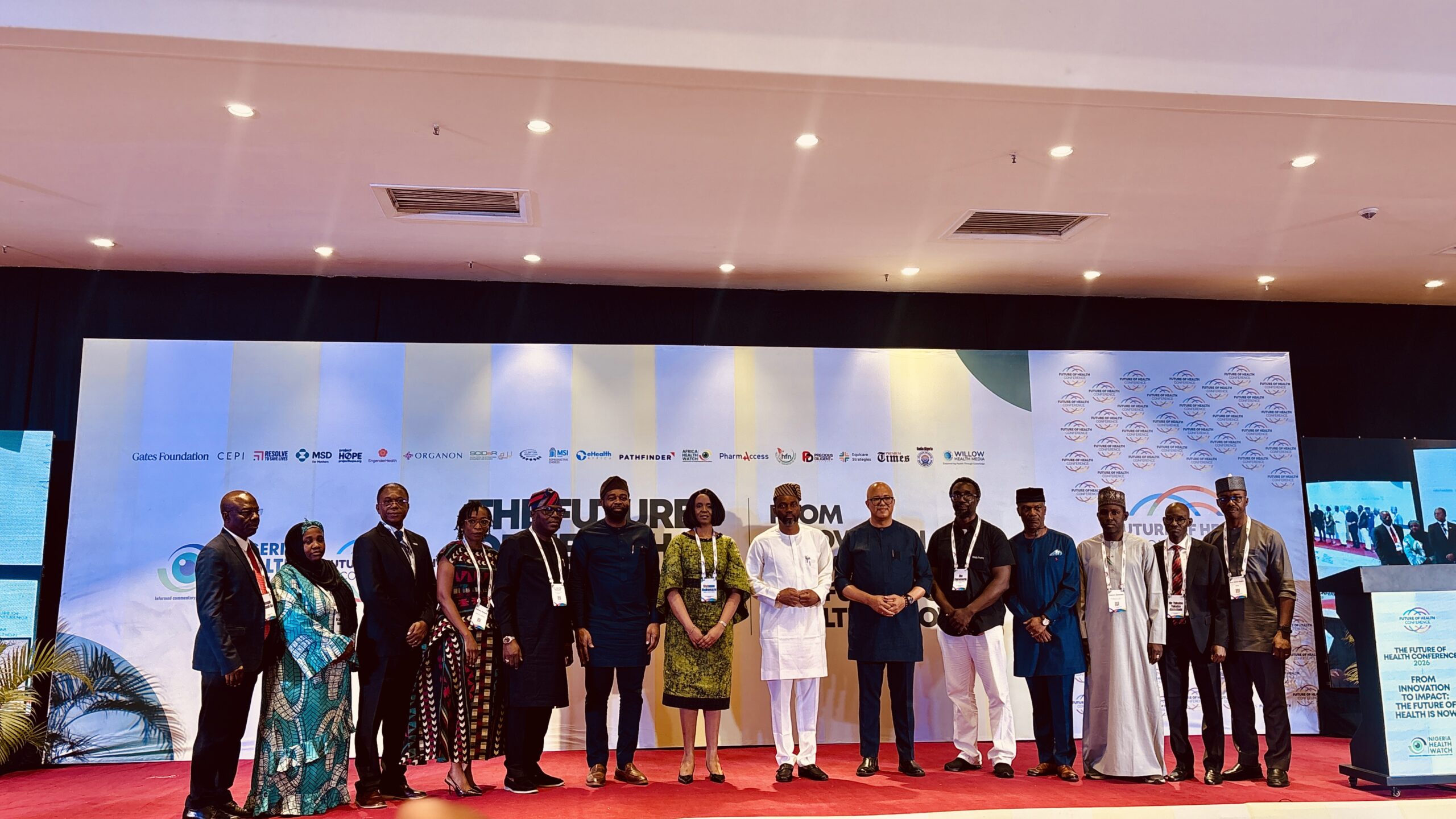
Nigeria has seen advances in medical research, technology, and healthcare innovation, yet many communities still struggle to access essential health services.
From infectious disease outbreaks and maternal deaths to inadequate financing and shortages of health workers, the country’s healthcare challenges extend beyond the availability of new technologies.
These challenges dominated discussions at the 2026 Future of Health Conference, organised by Nigeria Health Watch, where experts examined how promising innovations could be translated into practical improvements in healthcare delivery.
The 11th edition of the annual conference brought together policymakers, researchers, health professionals, innovators, development partners and private-sector representatives to discuss ways to strengthen Nigeria’s health system.
The discussions focused on moving beyond pilot projects and isolated successes to interventions that can reach more people, improve health outcomes and remain effective over time.
Across presentations, panel discussions and partner sessions, five key lessons emerged.


1. Innovation must deliver measurable results
One of the conference’s central messages was that developing a new technology or healthcare intervention does not automatically translate into better health outcomes.
Experts emphasised that an innovation’s success should be measured by its ability to solve real problems, improve access to care, and produce lasting results.
This means looking beyond introducing new technologies to whether they are affordable, accessible and sustainable.
For example, a medical device may improve diagnosis in a health facility. Still, its impact will remain limited if no trained workers can operate it or systems ensure patients receive appropriate treatment.
The discussions also highlighted the importance of addressing financing, infrastructure and workforce challenges that often prevent promising innovations from reaching communities.
The lesson was that innovation should be judged not only by what has been developed, but by the difference it makes in people’s lives.
2. Reliable data can change health decisions
Another major lesson was the importance of accurate data in understanding health challenges, measuring progress and guiding government decisions.
A presentation on Nigeria’s HIV response illustrated how inaccurate estimates can affect the interpretation of health programme performance.
According to the presentation, a national survey revised the estimated number of people living with HIV in Nigeria from 3.2 million to 1.8 million.
The revision substantially changed the reported treatment coverage figure, demonstrating how improved data can alter assessments of progress without an equivalent immediate increase in the number of people receiving treatment.
The example showed why reliable population estimates are important when evaluating the effectiveness of public health interventions.
Research on malaria drug resistance provided another illustration.
Researchers are using molecular analysis of malaria parasites to identify patterns of drug resistance across different locations, generating evidence that could help inform treatment policies and public health responses.
However, experts stressed that collecting data and conducting research were not enough.
The findings must also be communicated clearly to policymakers and incorporated into health programmes to influence decisions and improve outcomes.
3. Communities must be involved in health solutions
Discussions on Lassa fever research highlighted the importance of involving communities in disease surveillance, research and healthcare delivery.
Researchers involved in the ENABLE study explained how community engagement helped identify infections that might otherwise have gone undetected.
In some cases, symptoms such as tiredness were not initially considered serious enough to raise concerns about possible infection.
The experience demonstrated how working closely with communities can improve understanding of diseases and help researchers identify cases that may be missed through routine surveillance.
The research also examined how Lassa fever affects different population groups, including children, and the need to better understand the long-term health effects survivors experience.
Beyond infectious diseases, the discussions showed that community participation can help health workers identify barriers to care, understand local concerns and develop more appropriate interventions.
The broader lesson was that communities should not simply receive healthcare interventions. They should also help shape how those interventions are designed and delivered.
4. Primary healthcare requires trained workers, not just equipment
Maternal healthcare discussions drew attention to the challenges pregnant women face in accessing essential services, particularly in underserved communities.
A presentation on a Project HOPE-supported initiative in Bwari Area Council of the Federal Capital Territory described efforts to improve maternal healthcare across 10 primary healthcare facilities.
The initiative combines health worker training, point-of-care testing equipment and ultrasound services to strengthen antenatal care.
Under the arrangement, five facilities serve as hubs equipped with point-of-care ultrasound machines, while the remaining facilities refer pregnant women to the hubs when scans are needed.
The intervention aims to improve access to ultrasound examinations during pregnancy and support the early identification of complications requiring further medical attention.
However, the presentation also highlighted that providing equipment is only one part of improving healthcare.
Health workers need appropriate training, mentorship, and ongoing supervision to use diagnostic tools effectively and interpret findings.
ALSO READ: Nigeria Health Watch to host conference on scaling health innovations
Facilities also need functional referral systems to ensure that patients requiring additional care can access it.
The lesson was that strengthening primary healthcare requires coordinated investment in equipment, skilled personnel and service delivery systems.
Without these supporting structures, even useful technologies may fail to deliver their intended benefits.
5. Epidemic preparedness must begin before an outbreak
The final major lesson centred on preparing for disease outbreaks before they occur.
Experts highlighted the importance of sustained investment in vaccine research, diagnostic tools, manufacturing capacity and partnerships among governments, researchers and the private sector.
Discussions on the Coalition for Epidemic Preparedness Innovations’ (CEPI) 100 Days Mission illustrated the importance of early preparation.
The initiative aims to develop safe and effective vaccines against a new pandemic threat within 100 days of identifying the threat, with a focus on achieving initial authorisation and readiness for manufacturing at scale.
The target does not mean that entire populations would be vaccinated within 100 days.
Rather, it requires scientific research, vaccine platforms, regulatory processes and manufacturing arrangements to be sufficiently developed before a new outbreak emerges.
Experts also identified sustained financing as a major challenge, particularly because the benefits of preparedness are often less visible when there is no active public health emergency.
The discussions emphasised the need for long-term partnerships among governments, philanthropic organisations, researchers and industry to support equitable access to vaccines and other essential health technologies.
The lesson was that effective outbreak response depends largely on the investments, systems and partnerships established before a public health emergency begins.
Discover more from Premium Times Nigeria
Subscribe to get the latest posts sent to your email.
-

 Health4 days ago
Ebola: ₦100,000 weekly allowance for quarantined contacts was unplanned
-
News4 days ago
Frontier AI labs say their models refuted the Exponential Time Hypothesis. What does that mean?
-
News4 days ago
Lagos assembly backs state police, seeks parliamentary police
-
News3 days ago
MTN Challenges Nigerians: Compare our data prices with Kenya, South Africa, Zimbabwe – Technology Times