News
Golden Eaglets: Agege Wonderkid Abdussalam Lands Nigeria Squad As China Tournament Beckons


Spartan FC midfielder Abdussalam has taken another giant step in his rapidly rising career after earning a place in Nigeria’s Golden Eaglets squad for the 2026 China International Youth Football Tournament.
The talented youngster from Agege, Lagos, will be among the 20 players travelling to Yinchuan, China, where Nigeria will compete against hosts China, Australia and Tanzania from July 5 to 11 as part of preparations for the WAFU B U-17 Championship later this year.
His selection is a major reward for his outstanding development at Spartan FC and further reinforces Agege’s reputation as one of Nigeria’s biggest talent-producing communities.
«”This is a dream opportunity for Abdussalam and another proud moment for Spartan FC as one of our own gets the chance to represent Nigeria,” a club official said.»
The Golden Eaglets, five-time FIFA U-17 World Cup champions, will use the four-nation tournament to fine-tune preparations for the WAFU B U-17 Championship, which serves as the qualifying tournament for the 2027 U-17 Africa Cup of Nations.
Head coach Uwejamomere Eboboritse will lead the Nigerian delegation to China alongside assistants Kalli Mohammed Kachalla and Abdullahi Isa, with the technical crew expected to assess the squad against quality international opposition.
For Abdussalam, the tournament presents a golden opportunity to establish himself in the national team setup and strengthen his chances of making Nigeria’s final squad for the WAFU B Championship.
The invitation also represents another milestone for Spartan FC, a club that has continued to build a reputation for producing young talents capable of progressing to the national teams and professional football.
As the Golden Eaglets begin another journey in search of continental and global success, all eyes will be on the Agege-born midfielder as he looks to seize his opportunity on the international stage and continue his remarkable rise in Nigerian football.







Health
SPECIAL REPORT: In Kaduna, a new intervention is saving women from excessive bleeding after childbirth
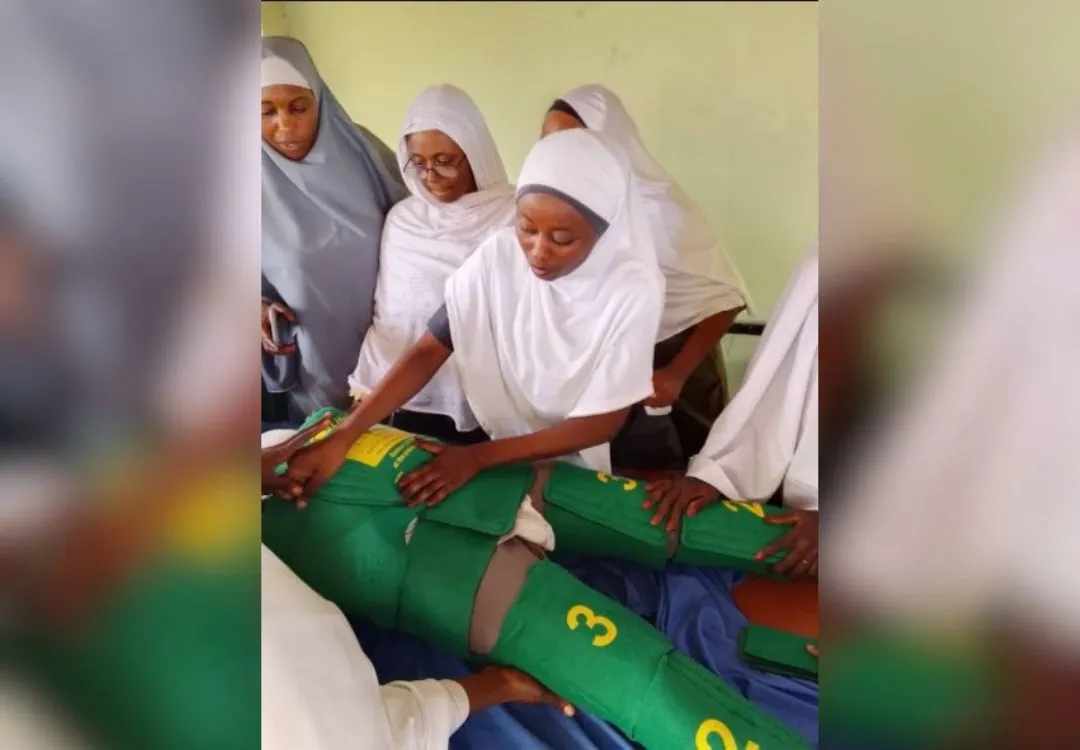
At a primary healthcare centre in Kaduna State, Zainab Garba remembers what health workers used to do when a woman began bleeding heavily after childbirth.
They would provide initial care, explain the seriousness of the situation to her relatives and prepare her for referral to a higher-level health facility.
For Ms Garba, an antenatal care provider at PHC Abdukwari in Sabon Gari LGA, who also assists with deliveries, there were limits to what health workers at her level could do.
But she said that began to change after she was trained to use the E-MOTIVE approach to detect and manage postpartum haemorrhage (PPH).
“With the presence of E-MOTIVE and the training given to us, we now do better,” she said. “The majority stop bleeding without even being referred.”

Ms Garba is one of the frontline health workers PREMIUM TIMES met during visits to primary healthcare facilities in Kaduna, where an intervention is attempting to address a longstanding challenge in maternal healthcare: shortages of skilled health workers to manage potentially life-threatening complications at the primary healthcare level.


The intervention, known as the Task Shifting Task Sharing (TSTS) project, is implemented by Pathfinder International in partnership with Impact Catalysts, with support from the Gates Foundation. It is designed to strengthen the capacity of Community Health Extension Workers (CHEWs) to take on specific maternal healthcare responsibilities at the primary healthcare level.
Under the project, 77 CHEWs have been trained across 77 primary healthcare facilities in nine LGAs: Kaduna North, Kaduna South, Igabi, Soba, Sabon Gari, Makarfi, Kaura, Jema’a and Zangon Kataf.
They are supported by nine clinical mentors, one in each LGA, and nine Reproductive Health Coordinators.
Programme records reviewed by PREMIUM TIMES show that the CHEWs received competency-based training in PPH prevention and management, basic emergency obstetric and newborn care and other maternal and newborn health services.
A key component of the training focuses on preventing, detecting, and managing PPH using the E-MOTIVE approach.
The deadly toll of PPH
PPH, or excessive bleeding after childbirth, is one of the leading causes of maternal deaths worldwide.
It can occur within the first 24 hours after childbirth, known as primary PPH, or between 24 hours and six weeks after delivery, known as secondary PPH.
A 2026 Lancet Series highlighted by the World Health Organisation estimates that PPH affects about 27 million women and kills nearly 43,000 women globally each year. It also indicates that PPH costs countries, health systems and families globally over $10 billion each year.
The burden is particularly high in poorer regions, with the WHO estimating that more than 85 per cent of deaths from PPH occur in sub-Saharan Africa and South Asia.
In Nigeria, PPH remains a major contributor to maternal mortality, accounting for an estimated 23 to 30 per cent of maternal deaths, according to WHO.
Recent surveillance data from Kaduna also show the continuing toll of PPH. A Kaduna State Primary Health Care Board review for the first quarter of 2026 identified PPH as the leading cause of maternal death among cases for which causes were detailed, with PPH-related deaths reported in Kudan, Birnin Gwari and Lere LGAs.
The finding followed a similar pattern in the last quarter of 2025, when the state’s community maternal and perinatal death surveillance report linked maternal deaths in several LGAs to PPH, often following deliveries outside health facilities.
In many cases, according to the WHO, there are no identifiable risk factors, making early detection and rapid treatment particularly important.
Lewis Aituma, a senior resident doctor in Obstetrics and Gynaecology, described PPH as “the obstetrician’s nightmare,” particularly in countries such as Nigeria, where access to emergency obstetric care remains inadequate.
He said women with multiple pregnancies, prolonged labour, fibroids, anaemia or previous Caesarean deliveries may face a higher risk.
If severe bleeding is not controlled quickly, he added, a woman can develop shock, organ failure and die.
A race against bleeding
Recognising excessive blood loss early and starting treatment quickly is therefore critical to preventing severe complications.
Under its latest guidance, WHO recommends objective measurement of blood loss after childbirth. Although PPH has traditionally been diagnosed when a woman loses at least 500 millilitres of blood after delivery, the latest guidance recommends earlier intervention when blood loss reaches 300 millilitres and is accompanied by abnormal vital signs.

One tool for doing this is a calibrated drape placed beneath the woman after delivery. It collects and measures blood, reducing reliance on visual estimation.
Once PPH is diagnosed, WHO recommends rapid use of the MOTIVE treatment bundle: massage of the uterus, oxytocic medicines to stimulate contractions, tranexamic acid to reduce bleeding, intravenous fluids, examination of the vaginal and genital tract, and escalation of care where necessary.
Together with early detection, the approach is commonly referred to as E-MOTIVE.
Evidence suggests it can make a substantial difference.
A large randomised trial involving more than 200,000 women in hospitals in Nigeria, Kenya, South Africa and Tanzania found that early detection and bundled treatment reduced, by about 60 per cent, the risk of a combined outcome of severe PPH, surgery for bleeding or death from bleeding compared with usual care.
But in Kaduna, having an effective approach is only part of the equation.
There must also be someone with the skills to use it when a woman starts bleeding.
Closing a workforce gap
Tanimu Argungu, Pathfinder International’s Kaduna State team lead, said the organisation found that many PHCs relied heavily on community-level health workers amid shortages of nurses, midwives and other highly skilled health personnel.
Programme data reviewed by PREMIUM TIMES show that CHEWs account for 28 per cent of Kaduna’s PHC workforce, while Junior CHEWs account for another 14 per cent. Together, they make up more than 40 per cent of the workforce at that level.
The data show that task shifting was already widespread before the intervention. At baseline, more than 84 per cent of the supported PHCs were already assigning some responsibilities to CHEWs and other cadres, but only 40 per cent of the staff performing those tasks had been trained to do them.
Mr Argungu said the TSTS intervention was designed to address this gap by training health workers to safely take on specific responsibilities.
“We first supported the state to adopt the policy and see how to implement it properly. We realised that many of the PHCs in Kaduna State were manned by CHEWs and JCHEWs,” he said.
He said facilities were selected partly based on maternal deaths previously reported through the state’s surveillance system, with CHEWs working in those facilities then selected for training.

Under the TSTS project in Kaduna, 77 CHEWs underwent an initial 9-day competency-based training before returning to their facilities, where clinical mentors continued to coach and mentor them.
Programme records reviewed by PREMIUM TIMES show that the mentorship component ran from October 2025 to August 2026, with nine clinical mentors conducting monthly facility-based coaching alongside LGA Reproductive Health (RH) coordinators.
After training, the CHEWs shared what they had learnt with colleagues who had not attended the initial sessions.
For Mr Argungu, the continued mentorship is critical.
“The mentorship session is key to any capacity building,” he said.
He said experience from previous training programmes showed that knowledge acquired during classroom sessions could decline after workers returned to their facilities without adequate follow-up.
He said some workers who did not attend the initial classroom training but participated in the cascade sessions and subsequent facility mentorship also showed improvement.
Adetoun Akor Aliu, Safe Motherhood coordinator at the Kaduna State Primary Health Care Board (KSPHCB), said shortages of nurses and midwives had already led PHCs to rely on CHEWs to provide some services.
Mrs Akor Aliu said the movement of health workers to federal institutions and outside Nigeria in search of better opportunities had contributed to workforce shortages.
“So task shifting, task sharing was already happening in Kaduna State,” she said.
What the Pathfinder-supported intervention did, Mrs Akor Aliu explained, was to make the practice more structured by concentrating on what CHEWs could be trained and permitted to do at the facility level.
A new approach to detecting PPH
At PHC Abdukwari in Sabon Gari LGA, Aisha Labaran, a CHEW, demonstrated how the training has changed the response to bleeding after delivery.
“Before, when we had a PPH case, we used to refer,” she said. “But now, if we have, we treat them through the E-MOTIVE procedure.”
One important change is how workers determine the amount of blood a woman has lost.
Before the intervention, visual estimation could play a major role. Now, Ms Labaran said, workers use a calibrated drape to collect and measure blood after childbirth.
WHO recommends objective measurement of blood loss because visual estimation can delay recognition of dangerous bleeding.

Ms Labaran said health workers monitor women after delivery and begin the PPH response once the diagnostic criteria are met.
She estimated that the facility had managed about 10 PPH cases since she received the training.
She said the knowledge was also spreading beyond the initially trained worker, with other technical staff benefiting from training and mentorship at the facility.
Rabiu Abdullahi, the officer-in-charge of PHC Abdukwari, said the facility previously relied on referrals for women who developed PPH because workers lacked the skills to manage the condition.
Mrs Abdullahi said the facility recorded five PPH cases in the two years preceding the intervention, all of which were referred for higher-level care.
She said three cases were referred to TundunWada Teaching Hospital, while two were referred to Major Ibrahim Abdullahi Memorial General Hospital.
She said the facility now begins managing PPH cases when they occur, rather than automatically referring every case.
“We usually referred patients with PPH to a secondary facility because we did not have the competence and skills to handle it,” she said.

Mrs Abdullahi said the training has strengthened the facility’s ability to monitor women in labour, recognise danger signs and begin managing PPH when it occurs.
She said the knowledge has also been passed on to other CHEWs at the facility, with five health workers trained.
Aisha Sambo, the Reproductive Health coordinator for Sabon Gari LGA, said nine health workers had been trained under the programme in the LGA.
Mrs Sambo monitors maternal health services across health facilities in the LGA.
She said facilities that previously relied heavily on referrals for PPH were increasingly managing cases at the PHC level following training and mentorship under the TSTS project.
What changed at Mando PHC
At Mando PHC in Afaka Ward, Igabi LGA, Hadiza Abdullahi described a change in practice.
The community health worker said some equipment and medicines used in responding to obstetric emergencies were either unfamiliar to her or not routinely used before her training.
For instance, she said she previously relied on visual estimation to judge blood loss and had never used a calibrated drape.
She also said she did not know how to use tranexamic acid for PPH or properly apply a non-pneumatic anti-shock garment, which can help stabilise a woman suffering severe blood loss while treatment or referral is arranged.
“Before, if the woman is bleeding, we can only give her misoprostol and oxytocin and refer her,” Ms Abdullahi said.
Ms Abdullahi said the facility handled several PPH cases before the intervention and referred them for higher-level care, although she could not provide records showing the exact number.

Now, she said, workers follow a more structured response, allowing them to begin managing the bleeding while determining whether the woman needs higher-level care.
Ms Abdullahi said the facility has managed about 20 PPH cases since the intervention began.
She said preparation has also changed. Rather than waiting until a complication develops, Ms Abdullahi said workers prepare emergency materials before a delivery so they can respond more quickly if something goes wrong.
Ms Abdullahi was the only worker from her facility who attended the initial training, but she said she subsequently shared what she learned with about 20 colleagues.
One of those colleagues was Hajara Yunusa, a CHEW at Mando PHC, who said she learnt the E-MOTIVE approach from Ms Abdullahi after the initial training.
Ms Yunusa said the sessions improved her understanding of how to recognise and manage PPH and also strengthened her skills in conducting deliveries.
“I learnt E-MOTIVE from Hadiza Abdullahi. I now know how to manage a woman with PPH at the PHC,” she said. “There were a lot of things I didn’t know about conducting deliveries before, which I now know after the training.”
Kyauta Isiaka, a public health midwife and TSTS clinical mentor covering Mando PHC and eight other facilities in Igabi LGA, said mentorship allows workers who did not attend the initial training to participate in practical sessions at the facility.
During her visits, she observes workers, identifies gaps and reinforces skills.
She said health workers also contact her when they encounter difficulties outside scheduled mentorship visits.

Mrs Isiaka said there was still a need for more health workers to receive comprehensive training rather than relying solely on knowledge passed down by colleagues.
“There is a need for some of the health workers to still have the complete training if possible,” she said.
What the records show
Beyond the accounts of individual health workers, programme monitoring records reviewed by PREMIUM TIMES provide some indication of what has happened across the supported facilities.
Between October 2025 and June 2026, mentored CHEWs attended 4,337 deliveries across the supported PHCs, according to the records.
During the same period, the programme recorded 192 PPH cases managed at the PHC level, 3,323 postpartum family planning insertions and 9,085 postnatal care services across the supported facilities.

The records state that some PHCs now manage PPH cases that would previously have been referred, while workers have also been trained to stabilise complications before referral when higher-level care is required.
Fatima Ma’azu, programme officer for the TSTS project, said the training had strengthened the ability of CHEWs to respond to PPH at the facility level and reduced the need for referrals.
“So far, so good, we have recorded zero maternal mortality as a result of PPH, and we have reduced referrals because the CHEWs are able to prevent and manage PPH where it happens,” she said.
More women coming to health centres
The intervention also depends on something that training alone cannot solve: women must reach health facilities before workers can help them.
The importance of reaching a health facility is also reflected in the state’s mortality surveillance. Kaduna’s Q1 2026 review found that all the maternal deaths for which the circumstances were explicitly detailed followed home deliveries involving unskilled providers.
Mrs Isiaka, the public health midwife, said community volunteers and Ward Development Committees are being used to encourage pregnant women to attend antenatal care and deliver at health facilities.
She said community structures refer women and promote facility delivery during meetings and household engagement.
Abdu Zaria, chairman of the Ward Development Committee in Afaka Ward, Igabi LGA, said the committee works with community and religious leaders to encourage pregnant women to seek care at the PHC rather than remain at home during pregnancy and childbirth.
Mr Zaria said residents had also noticed changes since more women began using the facility. He said reports of women dying during pregnancy had become rare in the community.
Mr Argungu, Pathfinder International’s Kaduna State team lead, said distrust of facilities was one of the early challenges encountered by the project, particularly where communities knew that skilled personnel were limited.
He said community engagement accompanied the health worker training to rebuild confidence in the facilities.
Sustainability efforts
The TSTS intervention was designed as a two-year project. Mr Argungu said it subsequently received a no-cost extension into early 2027, while attention increasingly shifted towards state ownership.
Programme documents reviewed by PREMIUM TIMES show that Kaduna has developed a N619.675 million Costed Implementation Plan covering 2025 to 2027.
The documents state that the plan was formally adopted by the Kaduna State Ministry of Health and the State Primary Health Care Board.
The plan covers regulatory support, quality of care, sustainability, clinical care organisation and monitoring and evaluation.
But the state says its plans for task shifting extend beyond the Pathfinder-supported project.
Mrs Akor Aliu said the state does not expect the training and mentorship of CHEWs to stop when Pathfinder’s support ends.
The reason, she said, is straightforward: “CHEWs remain more widely available across many PHCs than nurses and midwives.”

Mrs Akor Aliu said the state government has continued training frontline health workers in maternal and newborn healthcare, with further training planned.
She said more than 527 CHEWs have been trained on PPH and the E-MOTIVE approach across the state, while about 283 CHEWs have received training in essential newborn care, including newborn resuscitation.
“And presently, we have a training coming up soon strictly for 50 CHEWs,” she said.
Mrs Akor Aliu said mentorship is also continuing, with supervisors returning to facilities to assess how health workers are applying their skills and provide hands-on support where gaps remain.
Facility champions are also being selected to reinforce those skills between mentorship visits, she said.
“Continuous mentorship continues,” Mrs Akor Aliu said. “We go back, we see how they are doing, and then facility champions are being selected to continue that process.”
Programme records reviewed by PREMIUM TIMES provide some evidence of the transition, showing that the State Primary Health Care Board extended the TSTS mentorship approach to 14 LGAs in May and June 2026 without partner funding.
The transition plan also envisages reproductive health coordinators continuing monthly mentoring and incorporating TSTS quality-of-care tools into the state’s existing supervision system.
The documents further propose a dedicated budget line in the state’s 2027 Annual Operational Plan for mentorship, data reviews and related activities.
But financing remains a potential obstacle.
Mrs Akor Aliu acknowledged that state funding for health activities is not always released when required.
“Most times, the state funding is not released quickly, timely, because of cash-backing issues with the state government,” she said.
She said support from other organisations working in maternal and newborn health has helped the state continue training and mentorship activities.
Mr Argungu also identified financing as one of the challenges to expanding the intervention, saying the state may have to expand gradually if it cannot immediately fund implementation across all LGAs.
For Mrs Isiaka, sustaining the approach will require continued investment in both training and follow-up.
“We want the training to continue, and we also want the mentoring to continue,” she said.
Discover more from Premium Times Nigeria
Subscribe to get the latest posts sent to your email.
News
Former Archbishop of Canterbury Justin Welby Calls for Peace, Protection of Communities During Plateau Visit


Former Archbishop of Canterbury, Justin Welby, has visited Plateau State as part of efforts to engage Christian and Muslim leaders and communities affected by violent attacks in the state.
During the visit, Welby met with religious leaders in Jos and visited communities affected by violence, including Angwan Rukuba and parts of Bassa Local Government Area.
In Angwan Rukuba, the former Archbishop condoled with families affected by the Palm Sunday attacks, while in Bassa, he delivered a message of hope to residents who have endured years of violence.
Welby was accompanied by the Founder of El-Buba Outreach Ministries International (EBOMI), Prophet Isa El-Buba; Rev. Steve Dangana; the Special Adviser on Religious Affairs to the Plateau State Governor; and the Chairman of the Christian Association of Nigeria (CAN), Plateau State chapter, Rev. Dr. Dunka Gomwalk.
As part of the engagement, Welby held discussions with members of the Plateau State Inter-Religious Advisory Council before visiting the Jos Central Mosque, where he met with Muslim leaders.
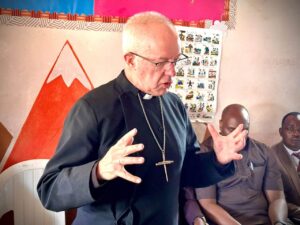
Speaking on the purpose of his visit, Welby said he was interested in supporting Christian and Muslim leaders in identifying practical ways of preventing further attacks and protecting vulnerable communities.
He called for sustained commitment to peacebuilding, compassion and the protection of vulnerable people, drawing from his experiences in international peacebuilding efforts.
Welby said the situation in Plateau was receiving international attention, adding that people in different parts of the world were praying for an end to the violence.
“My message is many people long to see this end and are praying for them around the world. Keep praying, keep working, keep vigilant and God will deliver,” he said.
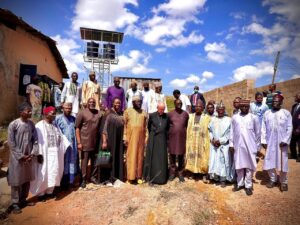
The former Archbishop also commended recent peace and security initiatives in some communities, including the training of local vigilantes and the installation of closed-circuit television (CCTV) cameras.
During the visit to Bassa, His Royal Highness, Rt. Rev. Ronku Aka, said the community had lost more than 3,000 people to violent attacks over the past decade.
He appealed for continued prayers and stronger efforts towards finding lasting solutions to insecurity, stressing that meaningful development would remain difficult without peace.
Chairman of the Plateau State Inter-Religious Advisory Council, Rev. Dr. Pandam Yamsat, urged Christian and Muslim leaders to strengthen their cooperation in addressing the state’s security challenges.
Yamsat said religious leaders already possessed important elements of the solution to the peace challenges confronting Plateau and should return to the dialogue table to identify practical measures for promoting peace.
He maintained that differences between the two faith communities should not prevent constructive engagement, adding that peace could be achieved through sustained cooperation.
“Peace is doable. If we want peace, we will have it on the Plateau,” Yamsat said.
The Founder of EBOMI, Prophet Isa El-Buba, also called for stronger collaboration between Christians and Muslims in responding to violence across northern Nigeria.
El-Buba described every loss of human life as a loss to society, irrespective of the victim’s religion or ethnic background.
He urged religious leaders and communities to work together and prevent religious differences from being exploited to fuel violence.
According to him, his organisation has continued to promote cooperation between Christians and Muslims while supporting initiatives aimed at empowering vulnerable groups.
El-Buba also advocated programmes to provide Almajiri children with structured Islamic education and guidance, saying such interventions could reduce their vulnerability to extremist interpretations of religious teachings.

At the Jos Central Mosque, the Chief Imam, Sheikh Ghazali Isma’ila Adam, identified youth involvement, stereotyping and political manipulation as some of the challenges affecting peacebuilding efforts.
He called for peace initiatives to extend beyond meetings involving political and religious elites to include young people and communities directly affected by conflict.
The Chief Imam also encouraged increased interaction between Christian and Muslim communities, including visits to one another’s places of worship, saying such engagements could help challenge negative stereotypes and promote peaceful coexistence among younger generations.
The Director-General of the Plateau Peace Building Agency and Secretary of the Plateau State Inter-Religious Advisory Council, Dr. Julie Sanda, said the council’s activities extended beyond meetings and policy discussions.
According to Sanda, religious leaders had accompanied peacebuilding teams to affected communities to comfort residents, listen to their concerns and demonstrate solidarity.
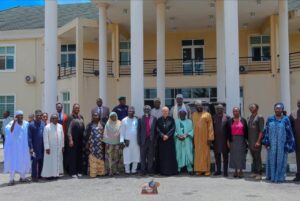
She thanked Welby for visiting Plateau and listening to the experiences of religious and community leaders, expressing hope that the engagement would lead to further collaboration and the exchange of peacebuilding experiences.
Welby’s visit comes amid renewed security concerns in parts of Plateau State, where the government, religious leaders and security agencies have continued engagements aimed at preventing attacks, strengthening community protection and promoting peaceful coexistence.
The former Archbishop had earlier paid a visit to Plateau State Governor, Caleb Mutfwang, as part of his engagements in the state.
-

 Business3 days ago
Lingzhi Global, NACOFTAN Announce 2026 Coffee Festival in Cross River
-
Events3 days ago
Peace Walk: WOPPI Urges Plateau Citizens to Invest in Peace Every Day
-
 Health3 days ago
Nigerian hospitals collaborate to perform tele-robotic surgery
-
News3 days ago
INEC declares APM’s Adamu Yakubu winner of Sakwa bye-election in Bauchi