Business
FG moves to clear export grant backlog, reform EEG scheme


The Federal Government has begun processes to clear the backlog of Export Expansion Grant (EEG) payments and reform the scheme for sustainability.
The Minister of Industry, Trade and Investment, Jumoke Oduwole, said this at a stakeholders engagement on the EEG scheme in Abuja on Thursday.
Mrs Oduwole said the scheme had faced difficulties, with payments outstanding since 2020, leaving the current administration with significant payment backlogs.
She said the backlog required validation and verification of claims submitted by exporters, involving several government agencies.
According to her, the Federal Ministry of Finance, Central Bank of Nigeria (CBN) and other relevant agencies are involved in the process.
The minister said the Federal Ministry of Industry, Trade and Investment anchored the EEG as an export promotion tool under the Nigerian Export Promotion Council (NEPC).


She said the government was pursuing two pathways: clearing outstanding payments and restructuring the scheme to make it sustainable.
The minister said the reforms aligned with President Bola Tinubu’s Renewed Hope Agenda and the goal of building a one trillion dollar economy.
She said the agenda prioritised economic diversification and non-oil exports as part of efforts to strengthen Nigeria’s productive capacity.
Mrs Oduwole said Nigerian non-oil exporters had recorded growth in both volume and value over the past two years.
She said the government would continue to incentivise exporters sustainably because the sector could create jobs and expand the global market for Nigerian products.
The minister said the government had also been working to improve market access through trade agreements, including the African Continental Free Trade Area (AfCFTA).
She said payments already approved in May 2023 would be transmitted to the 10th National Assembly for consideration and approval.
Mrs Oduwole explained that the National Assembly would carry out its duties legislative before the Federal Government could issue the necessary instruments for payment.
READ ALSO: CBN, trade ministry speak on AfCFTA trade reforms at Citibank forum
“President Tinubu has also approved earmarking 40 per cent of the NEST Fund toward a trade facilitation fund.
“The independently managed fund will provide a sustainable pathway for settling EEG obligations and supporting trade facilitation.
“Once the National Assembly approves the payments, government can issue promissory notes through the Debt Management Office to clear the backlog.
“The government will thereafter establish a reformed framework for export expansion incentives,” she said.
According to Mrs Oduwole, the current EEG structure is unsustainable because it is too expensive and has no closing date.
She said the reformed scheme would discourage the export of raw materials and place greater emphasis on value-added and finished products.
The minister said the scheme would also support emerging businesses and target sectors requiring assistance to improve their export competitiveness.
Mrs Oduwole said the government had engaged stakeholders, including the NEPC and the Manufacturers Association of Nigeria Export Group, to develop a sustainable way forward for the scheme.
(NAN)
Discover more from Premium Times Nigeria
Subscribe to get the latest posts sent to your email.




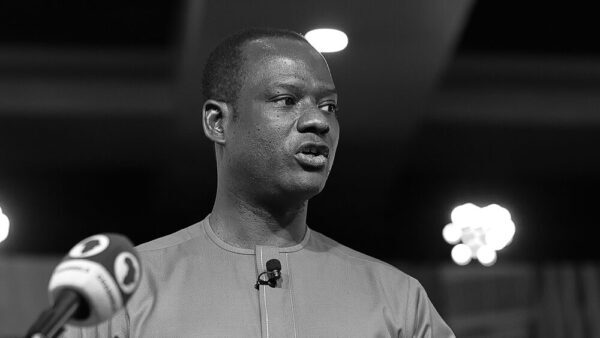
The Federal Government says Fitch Ratings’ decision to revise Nigeria’s credit rating outlook from Stable to Positive reflects progress in economic reforms, foreign exchange market adjustments and efforts to strengthen the country’s external position.
Fitch announced the revision on 9 October, retaining Nigeria’s long-term foreign-currency issuer default rating at ‘B’.
In a statement issued on Saturday, the Minister of Finance and Coordinating Minister of the Economy, Taiwo Oyedele, said Fitch cited increased foreign exchange reserves, easing inflation and improved economic prospects among the factors supporting the outlook revision.
According to the minister, Nigeria’s gross foreign exchange reserves rose to $54.9 billion as of 25 September 2026, from $32 billion in mid-April 2024.
He attributed the increase to more formalised foreign exchange transactions, portfolio inflows, higher exports and remittances.
Fitch also projected that Nigeria would record a current account surplus equivalent to 6.4 per cent of gross domestic product in 2026.
Economic growth and inflation
The ratings agency projected that Nigeria’s real gross domestic product would grow by 4.3 per cent in 2026, compared with 4 per cent in 2025, with growth remaining above 4 per cent in 2027 and 2028.
Fitch expects non-oil activities to remain the main driver of economic expansion.
The projection comes as Nigeria’s economy recorded growth of 4.43 per cent year-on-year in the second quarter of 2026, according to the National Bureau of Statistics (NBS).
The figure was higher than the 3.89 per cent recorded in the first quarter of 2026 and the 4.23 per cent recorded in the corresponding quarter of 2025.
The World Bank’s October 2026 Nigeria Development Update projected average annual economic growth of 4.4 per cent between 2026 and 2028, identifying services and agriculture among the contributors to economic activity.
On inflation, Fitch projected an average rate of 15.4 per cent in 2026, less than half the level recorded in 2024.
The NBS reported that Nigeria’s headline inflation rate eased marginally to 15.39 per cent in August 2026, from 15.43 per cent in July.
The figures provide recent context for Fitch’s assessment of inflation, although the agency’s annual average forecast is different from the monthly inflation rate reported by the NBS.
Reserves, oil production and public debt
Fitch also noted developments in Nigeria’s oil sector, including crude oil production meeting the country’s OPEC target of 1.5 million barrels per day from May 2026.
Mr Oyedele said increased domestic refining was helping to reduce fuel imports and foreign exchange demand.
On public finances, Fitch expects Nigeria’s tax reforms to increase non-oil revenue relative to the size of the economy.
The agency projected that general government debt would average 32 per cent of GDP between 2026 and 2028, below the median of 56 per cent for countries with a ‘B’ rating.
Fitch also highlighted Nigeria’s domestic debt market and the banking sector recapitalisation exercise, noting that many banks had capital adequacy ratios above 20 per cent.
However, the agency identified persistent challenges, including inflation remaining above levels in peer countries, government revenue being low relative to the size of the economy, and interest payments accounting for a high proportion of government revenue.
The minister said the federal government would continue implementing reforms aimed at increasing revenue, improving spending efficiency, strengthening debt management and supporting non-oil economic growth.
Other rating developments
The Fitch decision follows other developments in Nigeria’s international credit assessments.
READ ALSO: FG to negotiate ₦1,350 petrol price ceiling as global oil shock drives pump prices
In May 2026, S&P Global Ratings upgraded Nigeria’s credit rating from ‘B-’ to ‘B’. In August, Moody’s revised its outlook on Nigeria to Positive while retaining its ‘B3’ rating.
Mr Oyedele noted that the government’s medium-term objective remained to improve Nigeria’s credit standing and work towards investment-grade status.
He said the administration would continue to focus on foreign exchange market reforms, tax revenue mobilisation, fiscal governance, more efficient public spending and growth in non-oil sectors.
The minister said its broader objective was to “translate economic reforms into jobs, food security, support for small businesses and improved living standards”.
Discover more from Premium Times Nigeria
Subscribe to get the latest posts sent to your email.
-

 Business3 days ago
Communications Ministry made ₦345.5 million duplicate payment for Abuja ICT Park project
-
Business3 days ago
Fuel subsidy would cost Nigeria over N20trn yearly — Minister
-
News3 days ago
LumenUs helps automate tedious paperwork in times of grief
-
News2 days ago
Inside INEC’s AI and cybersecurity plans to secure Nigeria’s 2027 Elections – Technology Times