News
2027: Trust me to deliver credible elections – Amupitan tells Nigerians


The chairman of the Independent National Electoral Commission, INEC, Prof. Joash Amupitan, has appealed to Nigerians to have confidence in his leadership, assuring them that he will deliver free, fair, credible and inclusive elections in 2027.
Amupitan gave the assurance on Thursday during a dialogue organised by the Kimpact Development Initiative, KDI, at Chatham House in London, United Kingdom.
Speaking against the backdrop of concerns over the credibility of the 2023 general election, the INEC chairman admitted that technical problems during the exercise had affected public confidence in the commission.
“The 2023 general election significantly affected public confidence in INEC, and the commission is still working to rebuild the trust of Nigerians,” he said.
Amupitan, however, assured Nigerians that measures had been introduced to prevent inaccurate polling unit results from appearing on the INEC Result Viewing Portal, IReV, in 2027.
“The major problems we identified in 2023 occurred during the collation of results. We have now introduced technical measures to detect errors and prevent inaccurate results from being uploaded to IReV,” he said.
“We have introduced safeguards to ensure that any result that is inaccurate at the polling unit will not be uploaded to IReV. Nigerians should be able to trust the results they see on the portal,” he said.
“The recent off-cycle governorship elections in Anambra and Osun states demonstrated improvements in our performance, as we were able to declare the results the day after voting,” he added.
The INEC chairman also announced that the commission would conduct a nationwide mock accreditation and voting exercise on November 28, 2026, to test its preparations for the 2027 general election.
Amupitan further maintained that his previous involvement in legal cases involving political disputes would not affect his neutrality as electoral umpire.
“My loyalty is solely to the Constitution of the Federal Republic of Nigeria and the Electoral Act,” he said.
2027: Trust me to deliver credible elections – Amupitan tells Nigerians

Women in northern Nigeria continue to bear a disproportionate burden of maternal deaths, with the Northwest and Northeast geopolitical zones accounting for about three-quarters of reported fatalities in health facilities, according to the 2026 Joint Annual Review (JAR) Statistical Book.
The report also highlights significant disparities in maternal health outcomes between rural and urban areas, with rural women recording a maternal mortality ratio of 656 deaths per 100,000 live births, compared with 444 deaths per 100,000 live births in urban areas.
Produced by the Federal Ministry of Health and Social Welfare, the report reviews the third year of implementation of the Health Sector Strategic Blueprint. It was presented at the third Nigeria Health Sector Joint Annual Review in Abuja on 10 November.
The findings highlight persistent inequalities in maternal healthcare access and outcomes, despite a reported decline in maternal deaths across health facilities nationally.
According to the report, Nigeria recorded thousands of maternal deaths in health facilities between January and September 2026, although the figures represent only deaths captured by the facility reporting system.
The ministry acknowledged that the figures could be underreported or overreported but described the data as reliable for monitoring trends in the health sector.


Maternal mortality remains high
Maternal mortality refers to the death of a woman during pregnancy, childbirth or within 42 days of the termination of pregnancy from causes related to or aggravated by the pregnancy or its management.
Most maternal deaths are preventable through timely access to quality antenatal care, skilled birth attendance, emergency obstetric services and appropriate postnatal care.
Despite the reported improvements, Nigeria’s maternal mortality ratio remains a major public health concern.
The JAR Statistical Book puts the country’s maternal mortality ratio at 572 deaths per 100,000 live births, significantly above the Sustainable Development Goal (SDG) target of fewer than 70 deaths per 100,000 live births by 2030.
The burden is particularly concerning given Nigeria’s contribution to global maternal deaths.
In its 2023 report, titled “Improving Maternal and Newborn Health and Survival and Reducing Stillbirths: Progress Report 2023”, the World Health Organisation (WHO) estimated that Nigeria recorded 82,000 maternal deaths, 181,000 stillbirths and 277,000 neonatal deaths in 2020.
The combined 540,000 deaths accounted for 12 per cent of global maternal, stillbirth and neonatal deaths, despite Nigeria contributing only six per cent of global live births.
The report ranked Nigeria second after India among countries with the highest combined burden of maternal deaths, stillbirths and neonatal deaths.
Reported maternal deaths decline
The JAR data indicate a downward trend in facility-reported maternal deaths over the review period.
The country recorded 5,391 maternal deaths in health facilities in 2024, compared with 4,455 in 2025.
The figure declined further in 2026, although the exact total requires confirmation against the final statistical table. The quarterly data also indicate improvements.
Following a peak in the second quarter of 2024, maternal deaths and the maternal mortality ratio generally declined. By the third quarter of 2026, the maternal mortality ratio had fallen to 128 deaths per 100,000 live births, representing a reduction of about 46 per cent from the earlier peak.
Maternal deaths during the same period also declined by approximately 40 per cent to 947.
However, these improvements have not been evenly distributed across the country.
Northern states bear the burden
According to the report, maternal deaths over the past three years were heavily concentrated in the Northwest and Northeast geopolitical zones.
By 2026, the two zones together accounted for approximately three-quarters of all documented maternal deaths in health facilities.
The five northern states with the highest maternal mortality burden were Kano, Borno, Jigawa, Yobe and Katsina.
While the national figures showed a downward trend, maternal deaths reportedly increased across the two northern zones, contrasting with reductions recorded in southern parts of the country.
ALSO READ: Faith leaders urged to confront beliefs, family decisions driving maternal deaths in Kano
In most southern states, fewer than 50 maternal deaths were reported. The states with the lowest recorded numbers included Osun (four deaths), Abia (five), Enugu (eight), Ekiti (nine), and Bayelsa (nine).
Maternal morbidity
Beyond deaths, the report also highlights the burden of maternal morbidity, including complications that can have lasting effects on women’s health, wellbeing and livelihoods. In 2026, approximately 3,060 women were diagnosed with vesicovaginal fistula (VVF), compared with 4,350 in 2025.
VVF is an abnormal opening between the bladder and vagina that can result in continuous, involuntary leakage of urine, often following prolonged or obstructed labour.
Of the women diagnosed in 2026, 1,737 underwent surgical repair, representing 56.8 per cent of those diagnosed. This was lower than in 2025, when 2,564 women (59 per cent) underwent repairs.
The Northwest and Northeast again recorded the highest burden, with 1,420 and 982 cases, respectively, in 2026. The figures underscore the need to strengthen access to emergency obstetric care, timely referrals and surgical treatment, particularly in underserved communities.
Discover more from Premium Times Nigeria
Subscribe to get the latest posts sent to your email.

The Minister of Aviation and Aerospace Development, Festus Keyamo, has said Nigeria will not suffer any major consequence if former Vice President Atiku Abubakar is absent from the ballot for the 2027 presidential election.
The minister spoke on Friday during an interview on Frontline, a current affairs programme on Eagle 102.5 FM, Ilese-Ijebu.
He was responding to questions about his earlier comment that heaven would not fall if Atiku did not appear on the ballot in 2027, amid the leadership crisis rocking the African Democratic Congress, ADC.
“Not having Atiku on the ballot in 2027 should not be presented as a threat to the country’s democracy,” Keyamo said.
Keyamo recalled that the APC had faced a similar situation in Zamfara when the court removed its elected governor, deputy governor, senators and members of the National and State Assemblies.
He said the party accepted the court's decision without suggesting that the country would collapse.
"Heaven did not fall when the same court sacked all our candidates in Zamfara a few years ago. Not just candidates who had won elections. The governor, the deputy governor, all members of the House of Assembly, all the senators and all members of the House of Representatives. I'm talking from top to bottom. They were all sacked," he said.
“Why should similar court decisions involving opposition parties now be described as political interference? The judiciary should be allowed to handle complaints brought before it,” he said.
The minister maintained that the court was responding to complaints by some ADC members who claimed they had been denied their rights during the party's leadership crisis.
According to him, the grievances of those who alleged they were displaced should not be ignored simply because prominent politicians such as Atiku and former Senate President David Mark were involved in the dispute.
Keyamo also denied claims that President Bola Tinubu was responsible for the crisis in the ADC, saying the President had no role in the party's internal affairs.
“APC has no responsibility to help opposition parties resolve their internal disagreements. The more they are in disarray, the better for us. We will simply watch from a distance and will not have a hand in it,” Keyamo said.
On the APC's position ahead of the 2027 election, Keyamo said the ruling party would prefer Atiku and former Anambra State Governor, Peter Obi, to contest separately rather than allow opposition politicians to unite behind one candidate.
"It is in our interest that Atiku Abubakar and Obi run, so that all opposition will not gather under one umbrella," he said.
He urged opposition politicians to present their grievances before the courts and allow the judiciary to determine the disputes without pressure.
Heaven won’t fall if Atiku is missing from 2027 ballot – Keyamo
-

 News4 days ago
APM holds Presidential Campaign in Plateau, Pledges Security and Economic Reset
-
News1 day ago
UNIJOS Appoints Patricia Lar as First Female Vice-Chancellor
-
News3 days ago
NiYA: Nigeria Awards ₦49m grants to 17 young entrepreneurs – Technology Times
-
Education4 days ago
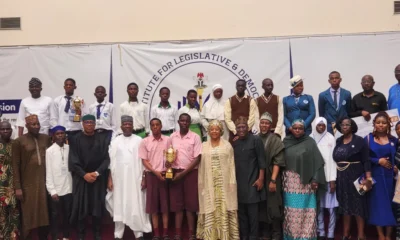
2 Students Win Scholarships As Ondo School Wins NILDS National Quiz Competition