News
2027: Shun thuggery, promote peace, Plateau CP tells youths


The Plateau State Commissioner of Police, Ayodeji Faniyan, has advised youths in the state to shun political thuggery, eschew violence, and embrace peace ahead of the 2027 general elections.
The CP gave the advice at an event organised by the police command on Saturday in Jos.
The event commemorated the 2026 International Youth Day, with the theme “Different Context, Common Aspirations.”
Mr Faniyan, who said that youths remain central to the success of democracy and national development, admonished them to resist being used as instruments of violence by politicians.
“Your future is too important to be traded for peanuts during elections.
“I urge you to shun political thuggery and all forms of criminality.
“The police will not spare anyone caught disrupting the peace of Plateau,” he said.
Mr Faniyan noted that the command was committed to engaging youths through dialogue and community policing, adding that a peaceful youth population was key to credible elections and sustainable development.
Victor Elias, the area commander, Jos Metro, also urged young people to promote peaceful coexistence in their communities.
He also cautioned youths against misusing social media.
“Use your social media platforms to educate, to inform and to unite people.
“Do not use social media to spread misinformation or hate speech that can divide us,” he said.
(NAN)









News
“If We Waited 30 Years to Get Here, We Can Beat Morocco” — Team Nigeria Dare Davis Cup History in Rabat

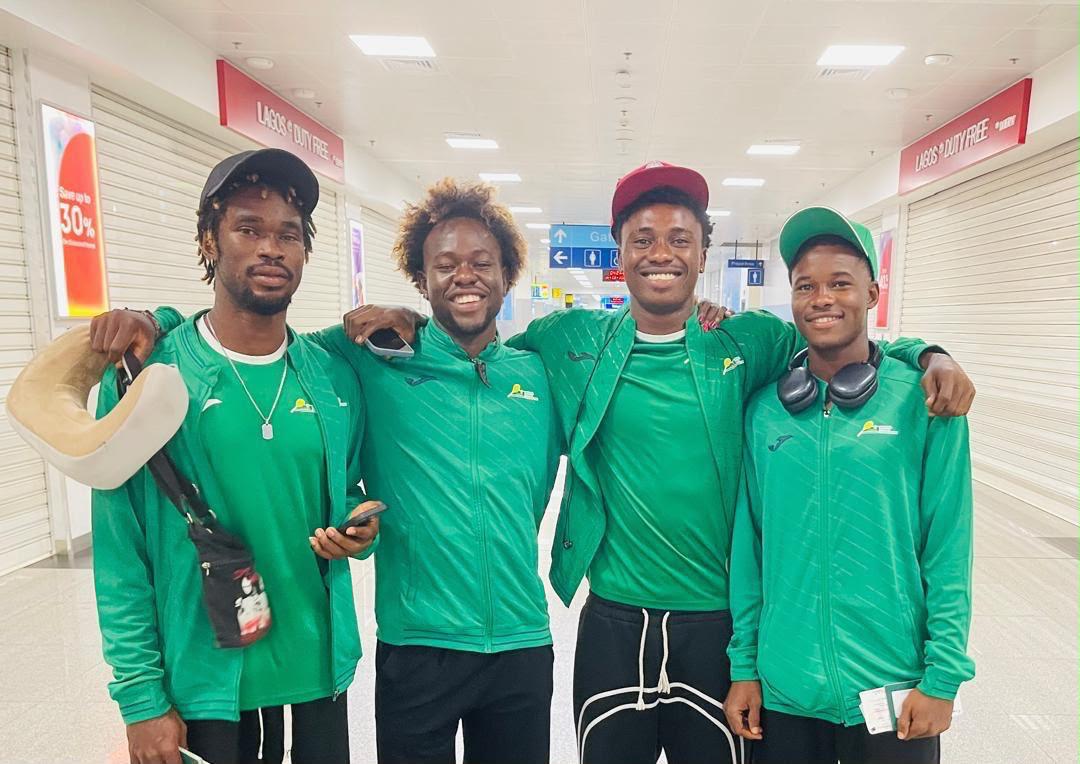
Team Nigeria have arrived in Rabat with a message of belief ahead of their Davis Cup World Group II showdown with Morocco: if they could end a wait of more than three decades to reach this stage, they can also end their winless record against the North Africans.
The Nigerian contingent has already begun intensive preparations for the September 19-20 tie at the Union Sportive des Cheminots de Tennis du Maroc, with the players determined to turn what appears a difficult assignment into another landmark moment for Nigerian tennis.
Nigeria have never defeated Morocco in their four previous Davis Cup meetings, but Secretary General of the Nigeria Tennis Federation, Shammah Aliyu Makpa, believes the team’s recent progress provides enough reason to approach the encounter with confidence rather than fear.
“We know it won’t be an easy task but we are also equal to the challenge,” Makpa said.
“This is another opportunity for us to break the jinx because we have never defeated Morocco in the Davis Cup before.
“If we can qualify for this stage after over 30 years of waiting, then I will say it’s still possible to defeat Morocco and qualify for the Davis Cup World Group I.”
That sense of possibility has shaped Nigeria’s preparations since arriving in Rabat.
Daniel Adeleye, Canice Abua, Michael Emmanuel and Yusuf Abubakar have already taken to the match courts, beginning with a light session shortly after their arrival before moving into more demanding morning and afternoon training.
The players are using the early arrival to adapt to the Moroccan weather and court conditions while head coach Benson Ishicheli works on tactics and possible doubles combinations.
Makpa said the objective is to ensure that when the first ball is struck, Nigeria’s players are prepared in every aspect.
“Yes, preparations are in top gear now as you can see,” he said.
“The team is here early enough to prepare and acclimatize with the weather. The technical crew and everyone here are doing their work to ensure that the team is ready mentally, physically and emotionally before the clash.”
There is good reason for the confidence within the Nigerian camp.
Nigeria earned their place in World Group II by defeating Uzbekistan 3-1 in Lagos in February, with several members of the squad now in Morocco playing decisive roles in that victory.
Canice Abua and Michael Emmanuel delivered a crucial doubles victory over Denis Istomin and Khumoyun Sultanov before Daniel Adeleye defeated Ilya Ignatov in the reverse singles to complete Nigeria’s triumph.
The achievement brought Nigeria back to this level of Davis Cup competition after a wait stretching more than three decades.
Now the players are being asked to produce another breakthrough.
Highly-rated youngster Oluwaseun Ogunsakin had also been expected to strengthen the squad in Rabat, although his chances of joining his teammates have become doubtful because of circumstances beyond his control.
For those already in camp, however, attention is firmly on the players available and the opportunity immediately in front of them.
Makpa also credited the National Sports Commission and Lagos Country Club for providing the support and facilities that enabled the team to prepare properly before leaving Nigeria.
But once competition begins, preparation will give way to execution.
Morocco have history on their side after winning all four previous Davis Cup encounters between the countries. Nigeria, meanwhile, arrive with the confidence generated by overcoming Uzbekistan and ending their long wait to reach World Group II.
That is why the Nigerian camp is refusing to view the country’s poor record against Morocco as an insurmountable barrier.
They have already ended one 30-year wait. In Rabat, their message is that another piece of history can be rewritten.
-

 News22 hours ago
Nigeria Takes on the World! Chess Stars Begin 2026 Olympiad Battle in Samarkand
-
News2 days ago
Felix Arome Assumes Office as Director-General of Front Line Alliance Network
-
Health2 days ago
97% of PHCs in 16 states fail national staffing standards – Report
-
Business4 days ago
CPPE warns against return to petrol subsidy, proposes targeted relief