Business
‘No Nigerian asset has been sold to US’ — Alake

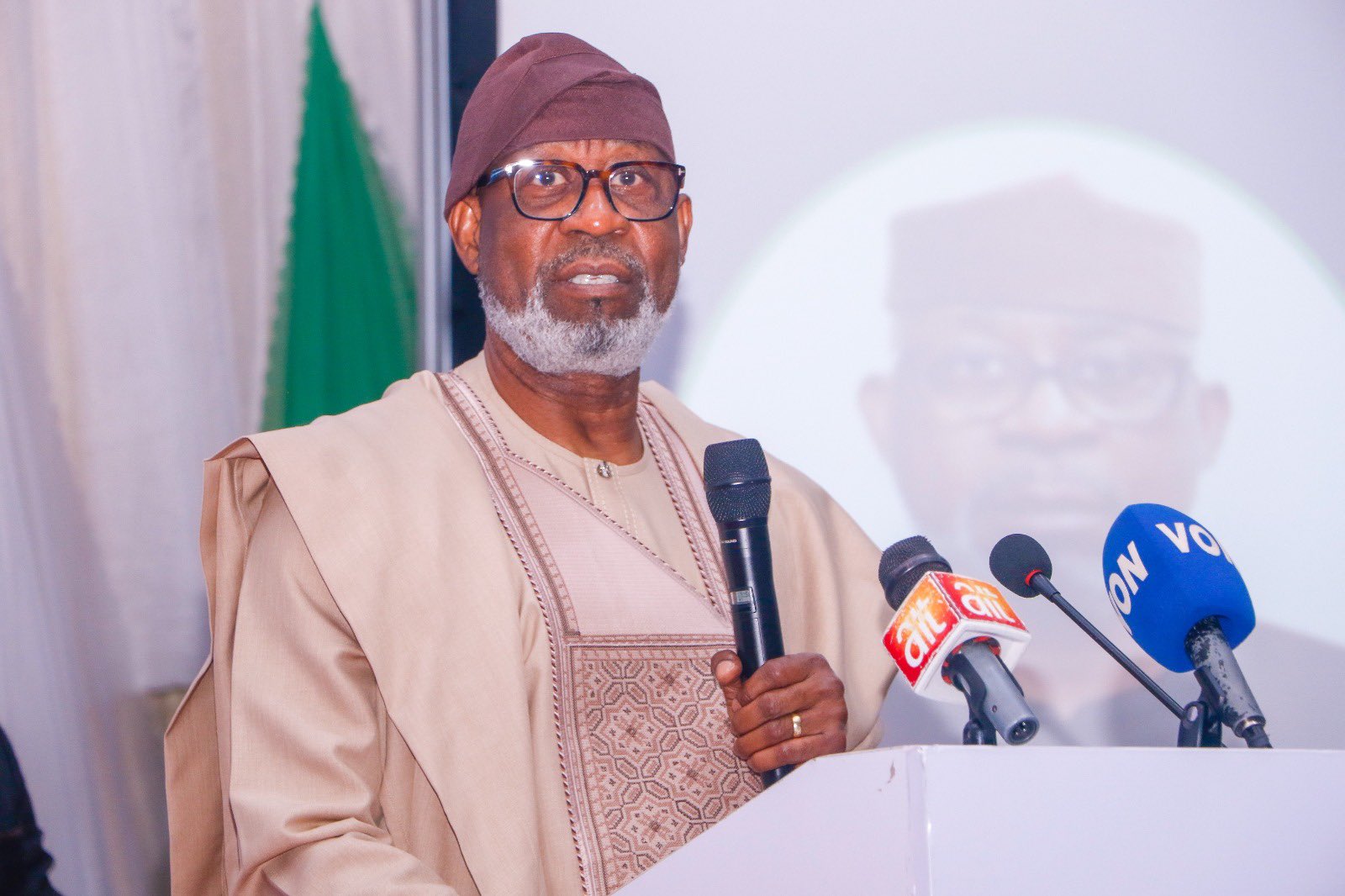
The Minister of Solid Minerals Development, Dele Alake, has dismissed reports that Nigeria sold $700 billion worth of solid minerals to the United States, insisting that the bilateral agreement between both countries does not involve the sale or transfer of Nigeria’s mineral assets.
Mr Alake made the clarification during the inauguration of the Nigeria-United States Committee on Strategic Cooperation in the Solid Minerals Sector in Abuja.
“There is no sale of any Nigerian asset. There’s nothing exchanging hands,” he said.
The minister explained that the agreement signed by Nigeria and the US was a government-to-government framework designed to connect American investors with Nigerian businesses, rather than transfer ownership of the country’s natural resources to foreign interests.
“We created a platform to facilitate mingling of US investment ventures with Nigeria’s local operators,” he added.
Mr Alake said the partnership was intended to attract capital, promote technology transfer, expand local mineral processing and create jobs as the Federal Government seeks to reduce Nigeria’s dependence on crude oil.


The committee’s inauguration followed the signing of a strategic cooperation framework by Nigeria and the US in New York in September, on the sidelines of the 81st United Nations General Assembly.
What the $700bn figure means
The clarification follows the announcement of the agreement, which described Nigeria’s mineral resources as being worth an estimated $700 billion.
The figure refers to the estimated value of Nigeria’s mineral resources, according to the government, not the value of minerals sold to the US or a confirmed investment commitment from the American government.
The framework was signed by Mr Alake and US Deputy Secretary of State Christopher Landau in New York on 23 September. It provides for cooperation in geological data and exploration, mineral development and processing, infrastructure and technical capacity-building.
The agreement is expected to provide a platform for American investors to partner with Nigerian mining companies and other local operators.
Mr Alake said the government wanted to change a pattern in which resource-rich countries export raw materials while other countries capture more of the value through processing and manufacturing.
“We have the resources, the critical elements the world needs to transit to clean energy. So we are creating a new paradigm: you bring your capital, expertise and technology to match with our natural resources and create a win-win situation. The investor gains, Nigeria gains,” he explained.
He added that the government wanted Nigeria to retain more economic value from its mineral resources through local processing and industrial development.
Local processing takes centre stage
Mr Alake said local processing had become a key requirement for investors seeking mineral titles, as the government sought to discourage the extraction and export of raw minerals without sufficient value addition.
Nigeria has deposits of minerals including lithium, gold, iron ore, limestone and tin. However, the sector remains underdeveloped compared with the country’s oil industry, limiting its contribution to exports, industrial growth and government revenue.
The government has increasingly identified solid minerals as an avenue for diversifying the economy, attracting foreign investment and creating employment outside the oil sector.
Mr Alake said the policy was encouraging investment in mineral-processing facilities, including a lithium processing plant in Nasarawa State that the government has described as one of the largest of its kind in West Africa.
He said the Nigeria-US partnership could help match the country’s mineral resources with the capital, technology and expertise needed to develop a stronger mining industry.
The agreement comes amid global competition to secure critical minerals used in electric vehicle batteries, renewable energy systems and other advanced technologies. Countries are seeking to diversify their supply chains as demand for these materials grows.
Mr Alake charged members of the newly inaugurated committee to identify viable investment opportunities and ensure that the agreement produced measurable outcomes.
ALSO READ: Alake warns mining firms over host community agreements, threatens licence revocation
He said the committee’s work was important to President Bola Tinubu’s target of building a $1 trillion economy.
The minister said the government was determined to ensure that mineral wealth translated into tangible economic benefits for Nigerians rather than remain an underutilised resource.
In his remarks, the ministry’s Permanent Secretary, Faruk Yusuf Yabo, said the committee would provide a structured platform for turning bilateral discussions into practical cooperation and investment.
Jonathan Baas, an economic officer at the US Embassy in Nigeria, said Washington was prioritising energy, artificial intelligence and critical minerals in its international economic engagements.
He explained that the US was seeking partnerships that would strengthen critical mineral supply chains while allowing resource-producing countries to benefit from the economic opportunities created.
The Managing Director of the Nigeria Solid Minerals Company, Martins Imonitie, also said the committee would coordinate implementation, facilitate investment and monitor progress towards the objectives of the cooperation framework.
Mr Alake said the government would judge the partnership by its ability to generate investment, strengthen local industries and create jobs, rather than by the estimated value of Nigeria’s mineral resources alone.
Discover more from Premium Times Nigeria
Subscribe to get the latest posts sent to your email.






Nigeria is among more than 50 countries planning to develop nuclear power or expressing interest in building new reactors, as global nuclear electricity generation reached a record high in 2025, according to a new report by the International Energy Agency (IEA).
The report, World Energy Outlook 2026, published on Thursday amid contentious negotiations over fossil fuel phase-out and electrification at the 31st session of the United Nations Climate Change Conference (COP31) in Türkiye, provides an assessment of global energy trends and prospects across regions.
The 564-page report said global nuclear power generation reached a record high in 2025 and is expected to continue rising, with more than 420 gigawatts (GW) of nuclear capacity currently operational across over 30 countries.
As of July 2026, the report said nearly 90 GW of additional nuclear capacity was under construction worldwide, the highest level in more than 35 years. The projects are spread across 17 countries, largely China, India, South Korea, Russia, Egypt and Türkiye.
The report said the ongoing construction includes small modular reactors (SMRs) in Argentina, Canada, China and Russia. Construction began on eight nuclear reactors in the first half of 2026, marking one of the highest levels recorded in four decades.
According to the IEA, more than 50 countries now have plans or targets for nuclear power or have expressed interest in developing new reactors.
These countries include African countries such as Egypt, Kenya and Nigeria; European countries including Italy, Poland and Türkiye; Middle Eastern countries such as Jordan and Saudi Arabia; and Southeast Asian nations, including Indonesia, the Philippines, Thailand and Vietnam.
Many of these countries are particularly interested in small modular reactors (SMRs), the report noted.
It said China continues to operate one of the world’s largest nuclear construction programmes, while the United States has approved lifetime extensions for several reactors, allowing them to operate for up to 80 years.
In the European Union, the IEA said nuclear power is increasingly viewed as critical to achieving energy security and climate goals, while Japan is gradually restarting reactors.
Nuclear development is also advancing in countries entering the sector for the first time. Bangladesh, Egypt and Türkiye have projects at advanced stages of construction, Uzbekistan is beginning work on its first nuclear power plant, and Vietnam is progressing with plans for its first reactor.
International support for nuclear energy has also strengthened, with multilateral development banks increasingly involved in financing the sector. As of August 2026, 38 countries had endorsed a pledge to triple global nuclear capacity by 2050.
The IEA said the prevailing geopolitical and energy security landscape could further accelerate nuclear development, as countries seek to diversify their energy mix, reduce exposure to market volatility and ensure reliable electricity supply amid growing electrification.
The agency said the 2026 energy crisis had prompted several countries to reinforce or confirm nuclear power plans, extend the operating lifetimes of existing reactors and reconsider restrictions on nuclear development.
READ ALSO: IEA says Nigeria’s energy investment could double in five years
Emerging electricity demand from electrification, artificial intelligence (AI) and data centres is also strengthening the case for reliable, dispatchable energy sources such as nuclear power.
However, the report noted that electricity generation trends vary across regions, reflecting differences in energy resources, security priorities and existing infrastructure.
While renewable energy is expanding across most regions and nuclear power is gaining ground in an increasing number of markets, the pace and composition of the transition differ considerably.
China, India and Southeast Asia are expected to retain coal-heavy electricity systems through 2035, although their energy mixes are projected to diversify as electricity demand grows faster than in most other regions.
Coal is expected to remain the dominant source of electricity in these regions, but wind, solar, nuclear and natural gas are also projected to expand, gradually creating more diversified energy sources.
Discover more from Premium Times Nigeria
Subscribe to get the latest posts sent to your email.
-

 Business1 day ago
Elon Musk Launches X Money, Bringing Banking and Payments to Social Media Platform
-
News4 days ago
79% of local providers ready for Nigeria’s sovereign cloud, NITDA finds – Technology Times
-
News4 days ago
JOGAMA Announces November 20 Date for 16th Edition, Voting Closes November 17
-
Health1 day ago
JUTH Student Nurse Anaesthetist Dies After Collapsing During Football Match in Jos