Health
Nigeria’s first Ebola patient is diplomat’s wife who holidayed in Uganda — Africa CDC

Nigeria’s first confirmed Ebola patient is the wife of a diplomat who travelled to Uganda’s capital, Kampala, for a holiday, the Director-General of the Africa Centres for Disease Control and Prevention (Africa CDC), Jean Kaseya, has said.
Mr Kaseya said the woman, originally from Uganda but resident in Abuja, developed symptoms three days after returning to Nigeria on 3 October.
Providing details of the patient’s medical history, Mr Kaseya said the woman first developed symptoms on 6 October and initially sought treatment at a private hospital, believing she had malaria.
She subsequently visited another private hospital, where she was admitted on 11 October after her condition failed to improve.
“She went to the first hospital, a private hospital, thinking that she had malaria, and then she went to the second private hospital. She was admitted on the 11th,” Mr Kaseya told the BBC’s Newshour programme.
Details of patient’s travel, condition
According to a report by the BBC, Nigeria’s Coordinating Minister of Health and Social Welfare, Muhammad Pate, confirmed that the 42-year-old woman spent two and a half weeks in Kampala before returning to Abuja through Ethiopia, where she had a two-hour stopover in Addis Ababa.


Mr Pate said the patient, who tested positive for Ebola on Tuesday, was stable and responding to treatment.
“She’s stable, she’s improving,” he said.
He said health authorities had identified 44 people who came into contact with the patient and were taking measures to prevent further transmission.
“Not all of them have been in close proximity. We cast the net wide so that we contain it as broadly as possible,” he told the BBC.
The minister explained that none of the identified contacts, including the person who travelled with the patient, had developed symptoms.
He added that the woman had remained in Abuja since returning to Nigeria.
Mr Pate said public health authorities were alerted on Monday, 19 October, after the patient’s condition failed to improve.
Her Ebola diagnosis was confirmed the following day after three laboratory tests.
Ebola has an incubation period of two to 21 days, meaning an infected person may not develop symptoms until several days or weeks after exposure.
Ebola spreads through direct contact with the blood or other bodily fluids of an infected person, or with contaminated materials. Symptoms can include fever, headache, severe weakness, vomiting and diarrhoea.
Conflicting accounts of patient’s travel history
The latest information from Nigerian authorities and the Africa CDC differs from an earlier account provided by Uganda’s Ministry of Health.
Ugandan authorities had described the patient as a Nigerian national who travelled to eastern Democratic Republic of the Congo (DRC) for business and only passed through Uganda while returning home.
The Ugandan government maintained that the country had no active confirmed Ebola cases and that the woman’s transit through Uganda did not establish that she contracted the virus there.
However, Mr Pate said Nigerian authorities were working with Uganda, Ethiopia and the Africa CDC to establish the patient’s complete travel history and determine where she might have contracted the infection.
“We respect our sister nation of Uganda,” he said. “We have very strong solidarity, we are all in it together.”
Mr Kaseya also called for greater information-sharing among African countries to support investigations into the patient’s movements and possible exposure.
He urged Western countries to avoid imposing travel restrictions, stressing that international collaboration and solidarity were essential to containing the outbreak.
Regional outbreak
Nigeria’s confirmed case comes amid an ongoing Ebola outbreak linked to the Bundibugyo virus in the DRC, with infections also reported in other countries.
The European Centre for Disease Prevention and Control reported more than 9,500 cases and 4,602 deaths in the DRC as of 19 October.
Kenya, which confirmed its first imported case in early October, reported a ninth case on Tuesday. Its health ministry said all nine cases belonged to one known cluster, with the eight surviving patients responding well to supportive care.
The first Kenyan patient had travelled from the DRC through Uganda before arriving in Nairobi. The development has heightened regional concerns about the movement of the virus across borders.
Uganda also recorded Ebola infections earlier in 2026 but subsequently declared its outbreak over after completing the required period without a new confirmed case.
Nigeria’s current case has renewed attention on the risks posed by international travel during an outbreak, as public health authorities work to establish the source of infection and prevent further transmission.
Health authorities have advised the public to maintain good hand hygiene, avoid contact with the bodily fluids of suspected cases and promptly report possible exposure to public health officials.
Nigeria draws on 2014 experience
Nigeria previously experienced an Ebola outbreak in 2014 after an infected traveller arrived in Lagos from Liberia.
The outbreak resulted in 20 cases, including 19 laboratory-confirmed cases and one probable case, with eight deaths.
The World Health Organisation (WHO) declared Nigeria free of Ebola transmission on 20 October 2014 after the country completed 42 days without a new case.
Meanwhile, Mr Pate expressed confidence in the country’s ability to contain the latest case, citing improvements in disease surveillance, laboratory capacity and the availability of trained epidemiologists.
He said Nigeria’s previous experience with Ebola was one reason for confidence in the current response.
“We have done it in 2014, and we have good public health institutions,” Mr Pate said.
Discover more from Premium Times Nigeria
Subscribe to get the latest posts sent to your email.






Seven private sector and philanthropic organisations have proposed commitments worth more than $65 million to strengthen maternal and newborn healthcare services in Nigeria.
The commitments, announced on Wednesday during the 2026 Joint Annual Review of the health sector in Abuja, are expected to support interventions in 172 local government areas (LGAs) identified as having a high burden of maternal deaths.
According to a statement issued following the event, the organisations submitted letters of intent under the Maternal and Neonatal Mortality Reduction Innovation Initiative (MAMII) Private Sector Compact, a government-led framework designed to coordinate investments and technical support for maternal and newborn healthcare.
The seven organisations are DP World, Bayer, UNICEF, dsm-firmenich, Nestlé Nutrition Institute, Roche and Ferring Pharmaceuticals.
The proposed contributions include financial resources, medical products, technical expertise, supply chain support and other services intended to address gaps in maternal and newborn healthcare delivery.
Nigeria’s maternal mortality burden
The announcement comes as Nigeria continues to record high numbers of preventable maternal and newborn deaths.
According to estimates contained in the statement, approximately 40,000 women and 300,000 newborns die annually in Nigeria, representing more than 100 maternal deaths and 800 newborn deaths every day.
These estimates highlight persistent challenges in access to skilled birth attendants, emergency obstetric services, essential medicines and timely referrals, particularly in underserved communities.
MAMII, launched in November 2024, prioritises 172 LGAs across 33 states, which account for more than half of Nigeria’s maternal deaths, according to the programme’s targeting analysis.
The initiative focuses on improving emergency obstetric and newborn care, strengthening referral systems, providing emergency transport and increasing access to essential medical supplies and trained health workers.
Speaking at the event, Coordinating Minister of Health and Social Welfare Muhammad Pate said reducing preventable maternal and newborn deaths remained a national priority.
“Through the Nigeria Health Sector Renewal Investment Initiative and our Sector-Wide Approach, we are bringing federal and state governments, the private sector and development partners together around a common national plan, with particular attention to the 172 local government areas where the burden of maternal mortality is greatest,” Mr Pate said.
He described the commitments as an important step towards improving healthcare delivery and an important expression of confidence in Nigeria’s reform agenda.
“Our responsibility is to ensure that every commitment is aligned with national priorities, every investment is accounted for, and every intervention contributes to measurable improvements in the lives of Nigerian women and children,” he said.
Partners pledge technical support
The Nigeria Country Director of the Gates Foundation, Uche Amaonwu, said the partnership would help coordinate resources and expertise towards reducing preventable deaths.
Mr Amaonwu said the burden of maternal mortality continues to affect too many Nigerian families.
“The MAMII compact brings focus to this challenge, coordinating public, private and philanthropic efforts to reduce preventable maternal and newborn deaths,” he said.
He said the foundation was working with partners, including MSD for Mothers, MTN Group Foundation and the World Economic Forum’s Global Alliance for Women’s Health, to strengthen maternal and newborn healthcare.
Similarly, MTN Foundation Executive Director Odunayo Sanya said the organisation would support the initiative through connectivity, artificial intelligence and digital solutions.
“MTN believes technology has its greatest value when it removes real barriers to essential services,” she said.
Ms Sanya said the partnership would help provide women, frontline health workers and healthcare facilities with information and digital tools to improve maternal health outcomes.
The Head of the Centre for Health and Healthcare at the World Economic Forum, Shyam Bishen, said private sector participation could contribute more than financial support.
Mr Bishen said businesses could provide products, technology, supply chains and expertise needed to improve healthcare delivery, particularly in underserved communities.
The Executive Director of Social Impact and Sustainability at MSD for Mothers, Jacquelyn Caglia, said the organisation would invest in the Training for Emergency Action, Management and Workflows in Midwifery, Obstetrics and Neonatal Care (TEAM OB/NEO).
The programme is designed to equip health workers with the skills needed to manage life-threatening complications during pregnancy, childbirth and newborn care, including severe bleeding, infections and breathing difficulties in babies.
Ms Caglia said the company had spent 15 years supporting efforts to reduce maternal deaths, including in Nigeria, through its MSD for Mothers initiative.
“By investing in TEAM OB/NEO as part of the MAMII Compact, we reaffirm our commitment to Nigeria and to collaborating with other private sector partners to pool resources, expertise and innovation aligned to the national effort to expand access to quality maternity care services for women across Nigeria,” she said.
READ ALSO: Maternal case fatality rate drops by 60% in supported health facilities FG
Platform to track investments
The government also unveiled a digital platform designed to coordinate and monitor contributions under the MAMII Private Sector Compact.
The platform, developed through the SWAp Coordination Office, is expected to show the geographical distribution of interventions, partner contributions and outstanding healthcare gaps across participating states and LGAs.
It is also intended to help prevent the concentration of donor-funded projects in some locations while other communities remain underserved.
However, the platform is still at the prototype stage, with its operational and reporting arrangements yet to be finalised.
The MAMII National Lead at the SWAp Coordination Office, Dayo Adeyanju, said the platform would support better coordination and investment decisions.
“It shows clearly where the gaps are and which delivery partners are supporting which LGAs,” Mr Adeyanju said.
He added that the platform would help prevent the duplication of interventions and improve resource allocation, with information expected to support partner decisions from December 2026.
The government said the next phase of the Compact would involve agreeing on implementation milestones, deploying resources to priority areas and monitoring progress against maternal and newborn health outcomes.
Discover more from Premium Times Nigeria
Subscribe to get the latest posts sent to your email.

The Nigerian government said it has granted N24 billion in tax waivers to pharmaceutical manufacturers between 2025 and 2026 as part of efforts to increase local production of medicines and reduce dependence on imported healthcare products.
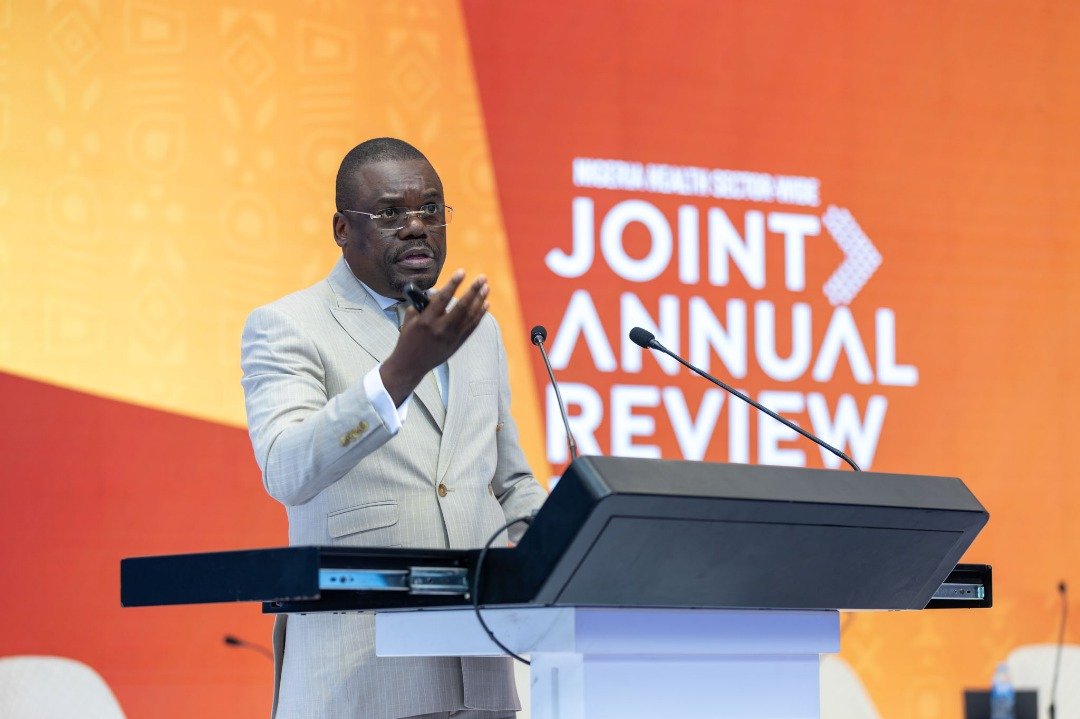
The Coordinating Minister of Health and Social Welfare, Muhammad Pate, disclosed this on Tuesday at the 2026 Nigeria Health Sector Joint Annual Review (JAR) in Abuja.
Mr Pate said the incentives were introduced under the presidential executive order signed in 2024 to support domestic manufacturing of medicines, medical equipment and other essential healthcare products.
He also disclosed that the government had secured 12 technology-transfer agreements and was pursuing prospective investments exceeding $5 billion in the healthcare manufacturing sector.
According to him, the government is working to ensure that the proposed investments translate into operational businesses capable of producing affordable healthcare products and creating employment opportunities.
“The Executive Order signed by Mr President in 2024 has supported N24 billion in tax waivers for pharmaceutical manufacturers in 2025–2026,” he said.
“We have 12 technology-transfer agreements and a prospective investment pipeline exceeding $5 billion.”
Mr Pate said the government’s priority was to translate the prospective investments into actual manufacturing activities.
“Our task is to help those prospective investments become operating businesses that supply safe, effective and affordable products and create opportunities for Nigerians,” he said.
Expansion of local manufacturing
Mr Pate said 10 factories or manufacturing lines had been commissioned under the government’s healthcare industrialisation programme, including six in 2026.
He explained that the facilities cover the production of pharmaceuticals, rapid diagnostic tests, long-lasting insecticidal nets and medical oxygen.
The minister acknowledged the contribution of the Presidential Initiative for Unlocking the Healthcare Value Chain (PVAC), coordinated by Abdu Mukhtar, to the government’s efforts to expand domestic manufacturing.
Also speaking at the review, the Minister of State for Health and Social Welfare, Iziaq Salako, reported an increase in local pharmaceutical production.
Mr Salako said locally manufactured medicines accounted for 50 per cent of Nigeria’s pharmaceutical market in 2026, compared with 30 per cent in 2023.
He said figures from the Pharmaceutical Group of the Manufacturers Association of Nigeria and the National Agency for Food and Drug Administration and Control (NAFDAC) also showed an approximately 10 per cent increase in the number of active local pharmaceutical companies.
He said the improvements reflected ongoing efforts to strengthen domestic manufacturing and reduce Nigeria’s dependence on imported healthcare products.
Meanwhile, Mr Pate said NAFDAC was strengthening regulatory measures against falsified medicines to support the development of the pharmaceutical industry.
He also disclosed that the government was working to operationalise Medipool, a group purchasing organisation designed to consolidate demand for medicines and other healthcare commodities.
According to him, the initiative would help organise government procurement while allowing other supply channels to continue operating.
The arrangement is intended to create more predictable demand for healthcare products and support local manufacturers.
Background
Nigeria has been working to expand domestic pharmaceutical manufacturing amid concerns about dependence on imported medicines and disruptions to international supply chains.
In July 2024, President Bola Tinubu signed an executive order introducing fiscal incentives to encourage local production of medicines and other healthcare products.
The order provided relief from tariffs, excise duties and Value Added Tax (VAT) on specified pharmaceutical machinery, equipment and raw materials used in manufacturing.
In May 2025, PREMIUM TIMES reported that the presidency had identified the executive order as one of the government’s major health sector reforms aimed at attracting investment and reducing the cost of pharmaceutical products.
The government said the incentives were designed to make local manufacturers more competitive and encourage increased production of essential healthcare products.
In September 2026, PREMIUM TIMES also reported that the federal government was targeting at least 70 per cent local production of essential healthcare products by 2030.
Speaking at the 8th Nigeria Pharma Manufacturers Expo in Lagos, Mr Salako said the government was using financing and tax incentives to strengthen domestic manufacturing.
He disclosed that 87 local manufacturers were benefiting from the presidential executive order granting zero tariffs on pharmaceutical machinery, active pharmaceutical ingredients and other production materials.
Mr Salako also said PVAC had secured about $2 billion in financing commitments at single-digit interest rates, with approximately 50 Nigerian healthcare companies in advanced discussions for funding.
He explained that increasing local production would help strengthen medicine security and reduce the country’s vulnerability to disruptions in international supply chains.
Sustaining local production
Despite the reported progress, Nigeria’s ambition to expand local pharmaceutical manufacturing will depend on sustained investment, access to financing and the ability of manufacturers to produce medicines that meet required quality standards.
READ ALSO: Nigeria targets 90% functional health centres, 40% health insurance coverage by 2031
At the September 2026 pharmaceutical manufacturers’ expo, Mr Salako emphasised the importance of expanding production beyond finished medicines to include active pharmaceutical ingredients, vaccines, diagnostics and other essential health commodities.
He also identified research, innovation, regulatory cooperation and access to regional markets as important areas for developing the industry.
The 2026 Joint Annual Review, held under the theme “Make the Data Count”, brings together federal and state government officials, development partners and other stakeholders to assess progress under the Nigeria Health Sector Renewal Investment Initiative.
The initiative is being implemented through the Sector-Wide Approach, which seeks to improve coordination, financing and accountability in healthcare delivery.
Discover more from Premium Times Nigeria
Subscribe to get the latest posts sent to your email.
-

 News3 days ago
Troops Arrest Suspected Gunrunner, Neutralise Two Terrorists in Plateau
-
News4 days ago
Makinde Visits COCIN Headquarters in Jos, Urges Christians to Shape Nigeria’s Political Future
-
News4 days ago
Makinde Unveils Four-Pillar Agenda to Reset Nigeria, Advocates State Police and National Unity Government
-
Health4 days ago
Plateau Mega Medical Outreach Treats 17,603 Patients, Performs 724 Surgeries Across Three Zones