Business
Nigerian Banks Raise ₦4.65 Trillion as CBN Ends Recapitalisation Drive


Nigerian banks have successfully raised a total of ₦4.65 trillion in fresh capital following the conclusion of the Central Bank of Nigeria’s (CBN) 24-month recapitalisation programme.
The exercise, which began in March 2024, was designed to strengthen the banking sector’s resilience, improve capital adequacy, and enhance the capacity of financial institutions to support economic growth amid domestic and global economic uncertainties.
The programme recorded strong participation from both domestic and international investors, with 72.55% of capital sourced locally and 27.45% from international markets, reflecting
sustained confidence in the Nigerian banking sector.
Governor Olayemi Cardoso commented: “The recapitalisation w has strengthened
the capital base of Nigerian banks, reinforcing the resilience of the financial system and ensuring it is wellpositioned to support economic growth and withstand domestic and external shocks.
Capital Strengthening and Financial System Resilience.
The post Nigerian Banks Raise ₦4.65 Trillion as CBN Ends Recapitalisation Drive appeared first on Business Today NG.
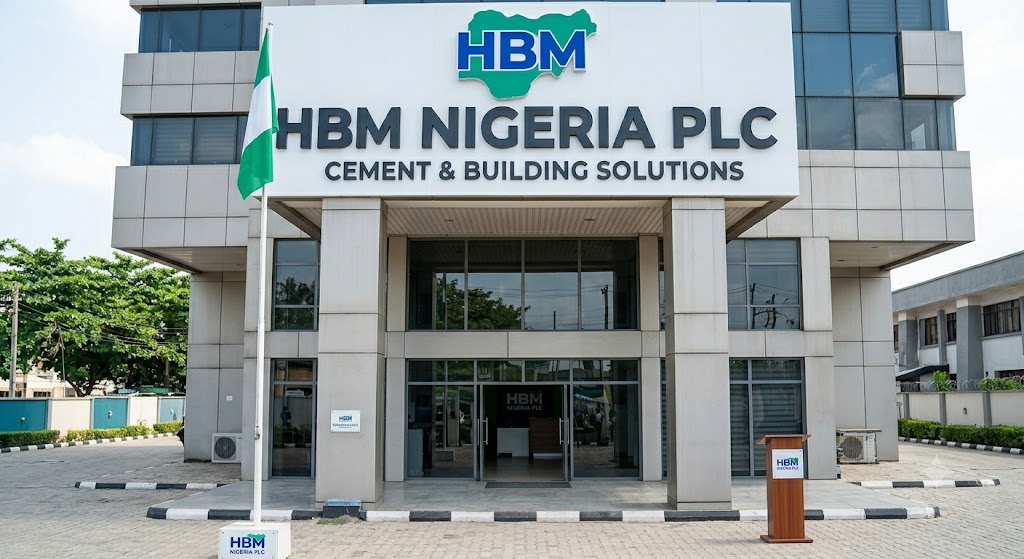

Lafarge Africa, acquired by Chinese investors from the Swiss-based Holcim Group last year, has adopted HBM Nigeria Plc as its new name.
According to a regulatory filing sighted on Tuesday, the cement maker’s new name tallies with the company’s long-term goals and its resolve to better serve stakeholders.
“The name change received full shareholder approval at the Annual General Meeting (AGM) held on the 30th of April 2026,” the company stated in the Nigerian Exchange filing.
“The Corporate Affairs Commission (CAC) has officially approved and issued the Certificate of Incorporation reflecting the name change,” it added.
In December 2024, Lafarge Africa disclosed that the Holcim Group had entered into a share purchase agreement with Huaxin Cement, headquartered in Wuhan, China, to acquire an 83.1 per cent stake in the company.

Until it divested its interest in Lafarge Africa, the Holcim Group held the controlling stake through Caricement BV and Associated International Cement Limited.
Regulatory hurdles, including a Senate directive ordering the Bureau of Public Procurement to halt the transaction last March, meant it was not closed until nine months after it was first made public.
READ ALSO: Champion Breweries appoints new managing director
“We cannot afford to wake up one day and realise that our cement industry, one of the backbones of our economy, is entirely in foreign hands,” said Shuaib Salisu, the senator representing Ogun Central, who raised the motion at the upper legislative body at the time.
The acquisition was valued at $1 billion (approximately ₦1.6 trillion) when the deal closed last August.
The first major expansion project under the new majority owner—a planned capacity increase of the Ashaka Cement plant in Gombe to 2MT and the Shagamu plant to 3.5MT—was announced early this year.
HBM Nigeria assured shareholders in the statement that their current share certificates and electronic holdings remain valid, despite the name change. They will be updated automatically by the registrars, it said.
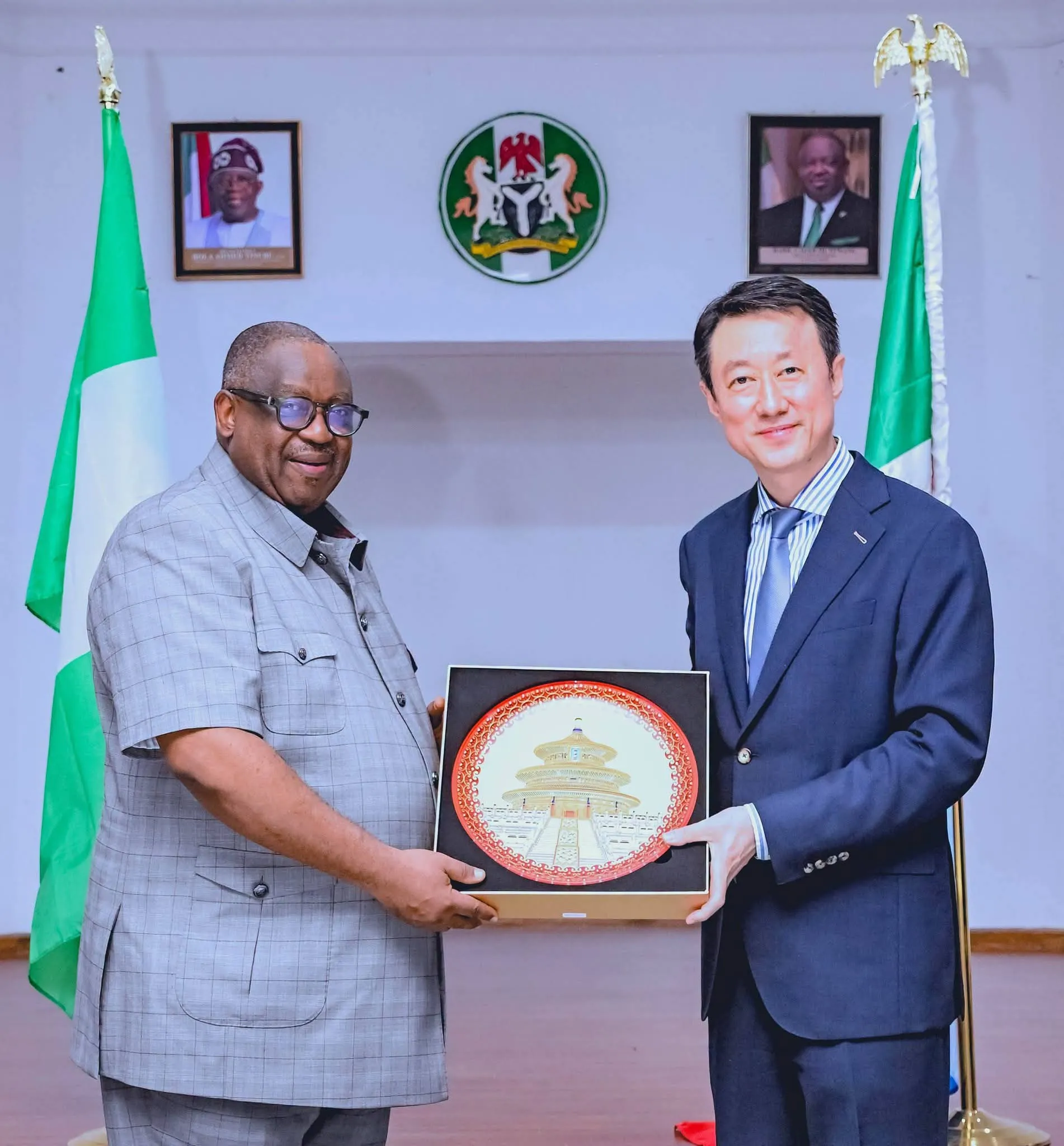
The Plateau State Government has intensified its strategic partnership with China as part of efforts to attract foreign investment, transform agriculture, and accelerate infrastructure development, positioning the state as a competitive destination for business and industrial growth.
Governor Caleb Manasseh Mutfwang disclosed this on Monday while receiving the Ambassador of the People’s Republic of China to Nigeria, Yu Dunhai, alongside a delegation of Chinese investors and business executives at the Government House in Jos.
The visit is part of the state’s broader strategy to strengthen international partnerships and attract foreign direct investment into critical sectors such as agriculture, mining, healthcare, tourism, infrastructure, and industrial development.
Speaking during the meeting, Governor Mutfwang described the relationship between Plateau State and China as one that has steadily evolved over the years, stressing the importance of expanding cooperation beyond national engagements through direct partnerships with Chinese provinces.
He said his administration is committed to leveraging investment, technology transfer, innovation, and knowledge exchange to unlock the state’s vast economic potential.
Agriculture at the Centre of Partnership
Governor Mutfwang identified agriculture as a key area for collaboration, noting that Plateau State has long been recognized as Nigeria’s food basket and a historic mining hub.
He explained that the government is pursuing an ambitious agricultural modernization agenda focused on mechanization, increased productivity, cold-chain infrastructure, livestock development, and agro-processing.
As part of the initiative, the governor unveiled plans for a 500-hectare Special Agro-Processing Zone near the Yakubu Gowon International Cargo Airport, designed to serve as a major export hub for agricultural products while improving value addition for farmers and agribusinesses.
He also highlighted investment opportunities in poultry, dairy farming, fisheries, and animal feed production, emphasizing the need to reduce Nigeria’s dependence on imported dairy products by building a competitive local livestock industry.
Sustainable Mining and Industrial Growth
On mining, Governor Mutfwang advocated responsible and environmentally sustainable practices that promote local value addition and community development.
He also called for closer collaboration with Chinese authorities in tackling illegal mining activities and ensuring that mineral resources contribute meaningfully to the state’s economic development.
China Reaffirms Commitment
In his remarks, Ambassador Yu described Plateau State as a strategic investment destination due to its abundant natural resources, favorable climate, and enormous agricultural potential.
He commended Governor Mutfwang’s leadership and ongoing reforms in infrastructure, agriculture, education, and governance, assuring the state of continued support from both the Chinese Government and the Chinese Embassy in Nigeria.
The ambassador disclosed that the visiting delegation comprised executives from four internationally recognized Chinese companies with extensive operational experience in Nigeria, expressing confidence that the engagement would unlock new opportunities in transportation, infrastructure, agriculture, and industrial development.
New Export Opportunities
Ambassador Yu highlighted the growing economic ties between China and Nigeria, revealing that bilateral trade between the two countries is valued at several billions of dollars annually, while Chinese direct investment in Nigeria reached approximately $700 million in the previous year.
He also announced that China’s recently introduced 100 percent zero-tariff policy on Nigerian exports presents a significant opportunity for Plateau State’s agricultural products to gain access to one of the world’s largest consumer markets.
Drawing from China’s development experience, Yu noted that agricultural reforms had lifted more than 800 million people out of poverty, pledging China’s support in improving agricultural productivity, expanding processing capacity, strengthening livestock production, and developing agricultural value chains in Plateau State.
Addressing concerns over illegal mining, the ambassador reiterated China’s zero-tolerance policy against unlawful mining activities and assured the state government of cooperation in identifying and prosecuting offenders while encouraging legitimate investors to comply with established regulations.
Both leaders expressed optimism that the renewed engagement would usher in a new era of mutually beneficial cooperation, delivering increased investment, job creation, economic growth, and sustainable development for Plateau State.


-

 News4 days ago
BREAKING: Ekiti 2026: ADC wins first polling unit
-
Health4 days ago
FG releases outbreak response funds to states to boost Ebola preparedness
-
News4 days ago
Coach Lucky Jolly Iduseri Hails Discipline and Preparation After Team Nigeria’s Strong Showing at Central African Powerlifting Championship
-
News4 days ago
JUST IN: Gunmen Kill Pregnant Woman, Youth in Fresh Plateau Attack