Health
FG says all 41 presidential health sector commitments fulfilled


The Federal Government has said it has fulfilled all 41 presidential health sector commitments under the Nigeria Health Sector Renewal Investment Initiative, with improvements recorded in 12 of the 13 indicators tracked under the programme.
The Permanent Secretary of the Federal Ministry of Health and Social Welfare, Daju Kachollom, disclosed this on Thursday at the 10th Annual Health Conference of the Association of Nigerian Health Journalists (ANHeJ) in Abuja.
President Bola Tinubu launched the initiative in December 2023 as part of efforts to improve healthcare delivery, strengthen health financing and improve health outcomes across the country.
The initiative was launched alongside the signing of the Health Sector Renewal Compact by the president, all 36 state governors and development partners, committing stakeholders to one plan, one budget and one report under a sector-wide approach.
“Three years on, all 41 presidential health sector commitments have been achieved, and 12 of the 13 indicators we tracked have improved,” Mrs Kachollom said.
The conference, themed “Nigeria’s Health Sector Renewal Investment: From Policy to Tangible Impact,” brought together journalists, policymakers, healthcare professionals and development partners to examine how government policies and investments could translate into better health outcomes for Nigerians.


Progress in health sector reforms
Mrs Kachollom said 3,526 primary healthcare centres had been revitalised, with another 900 undergoing rehabilitation.
She noted that the proportion of participating facilities supported by the Basic Health Care Provision Fund (BHCPF) in 172 local government areas with at least two midwives or community health extension workers had increased from 12 per cent to 91 per cent.
According to her, maternal deaths declined by 17 per cent, while newborn deaths dropped by 12 per cent between 2023 and 2025 in the 172 LGAs, which account for more than half of maternal deaths in the country.
On immunisation, she said measles and rubella vaccination had reached 100 million children, while more than 17 million girls had received the Human Papillomavirus (HPV) vaccine.
She added that the government had commissioned 10 factories and manufacturing lines to expand local production of medicines, diagnostic products, mosquito nets and medical oxygen.
The permanent secretary also disclosed that states had increased their combined health budgets from N1.97 trillion in 2023 to more than N3.3 trillion in 2026.
She, however, stressed that sustaining the reported achievements would require effective financing, implementation and accountability at all levels of government.
Persistent challenges
Despite the reported progress, Mrs Kachollom acknowledged that several challenges continued to undermine healthcare delivery in Nigeria.
She said childhood stunting remained high, affecting about four in 10 children under five, while only approximately one in 10 Nigerians had health insurance.
She also identified the high cost of healthcare services and the uneven distribution of health workers as barriers to accessing quality healthcare.
The permanent secretary expressed concern over the poor implementation of resolutions adopted by the National Council on Health.
She disclosed that the ministry received only 412 of the 740 reports expected on the implementation of resolutions adopted at the previous council meeting, with 10 states recording implementation scores below 40 per cent.
“A resolution that is never implemented is just another announcement,” she said.
Mrs Kachollom noted that the 67th National Council on Health, held last week, adopted recommendations for a unified national framework to sustain health campaigns through pooled and aligned financing, standardised incentives for health workers and digital payments.
The council also recommended the gradual integration of health programmes into federal and state budgets and annual operational plans.
Strengthening accountability
Mrs Kachollom urged journalists to independently verify government claims by visiting healthcare facilities, assessing their functionality and investigating whether public investments had improved healthcare delivery.
“When we announce a revitalised facility, we expect you to go and look at it,” she said.
“When your state makes a commitment at the council, ask a year later what became of it. Ask what has changed, for whom and how much. If the answer is nothing, tell Nigerians and tell us.”
The permanent secretary said the ministry would continue to make health sector data publicly available through platforms such as the Primary Healthcare Functionality Dashboard and the Joint Annual Review Scorecard.
She also announced that the 2023 to 2024 National Health Accounts would be published to provide information on how much Nigerians spend on healthcare and who bears the cost.
She urged journalists to assess the government’s performance against its Health Sector Strategic Blueprint, noting that 2027 would be the final year of its implementation.
“Let us move the conversation from what government announced to what changed; from how much was invested to what it achieved; and from what facility was commissioned to how many lives are better or have been saved,” she said.
Health journalists pledge stronger oversight
Earlier, the President of ANHeJ, Joseph Kadiri, said the success of government interventions should be measured by reductions in maternal and child deaths, improved access to quality healthcare, affordable medicines and functional primary healthcare facilities.
Mr Kadiri said health journalists had a responsibility to scrutinise government policies, track public investments and amplify the voices of vulnerable populations.
READ ALSO: Lassa Fever: High treatment costs of concern as infections rise for two consecutive weeks- NCDC
“As health journalists, we are not merely reporters of government announcements or institutional activities,” he said.
“We are responsible for asking difficult questions, examining narratives to ensure that they are evidence-backed, tracking public investments, amplifying the voices of vulnerable populations and bringing critical health issues to the attention of policymakers and the public.”
He expressed the association’s willingness to partner with the BHCPF gateways and the Ministerial Oversight Committee to monitor health sector interventions across the country.
He said the association would support accountability efforts through physical visits to healthcare facilities, documenting progress and identifying challenges affecting the implementation of government programmes.
Discover more from Premium Times Nigeria
Subscribe to get the latest posts sent to your email.






When Nigeria signed a health cooperation agreement with the United States in December 2025, the government committed to more than receiving billions of dollars in US assistance.
The deal requires Nigeria to share biological specimens, samples, genetic sequencing data and related information on emerging infectious diseases with epidemic or pandemic potential.
It also allows the US government to share these materials with eligible American entities involved in developing diagnostic tools and medical countermeasures, while providing for increased US oversight of health programmes.
Under a separate specimen-sharing agreement, Nigeria must initiate the sharing of requested materials within five days of receiving a request from the US government, unless both countries agree on another timeline.
In return, the United States plans to provide approximately $2.08 billion in health assistance between 2026 and 2030. Nigeria is expected to contribute about $3 billion in additional domestic health financing over the same period.
A PREMIUM TIMES review of the signed five-year Memorandum of Understanding (MoU) and its accompanying agreements shows how the arrangement will affect health data, disease surveillance, healthcare workers, medical supplies and the country’s responsibility for funding health programmes.
It also reveals a provision allowing the US government to continue using specimens and related information already transferred to it, even if Nigeria later terminates the sharing agreement.
What Nigeria agreed to share
The main MoU and a separate Health and Medical Cooperation Specimen Sharing Agreement were signed in Abuja on 19 December 2025 by Richard Mills, the US Ambassador to Nigeria, and Muhammad Pate, Nigeria’s Coordinating Minister of Health and Social Welfare.
The specimen-sharing agreement entered into force on 18 January 2026.
It covers biological specimens, samples, genetic sequencing data and related information on new and emerging infectious diseases with the potential to cause epidemics or pandemics.
Under Article Two of the specimen-sharing agreement, Nigeria must begin sharing requested materials within five days of receiving a request from the US government. It may also provide genetic sequencing information through a “public database instead of or in addition to directly sharing specimens and related data with the US government.”
More significantly, Nigeria has agreed that the US government can share the specimens and related information with American non-governmental entities involved in developing diagnostic tools and medical countermeasures.
The US government must notify Nigeria in writing whenever it transfers the materials to an American entity.
The agreement provides for some benefits to Nigeria if medical products are developed primarily from specimens and information supplied by the country.
Under Article three, the US government shall, subject to available funds and applicable laws, facilitate Nigeria’s priority access to such products. It also provides for donations of relevant medical countermeasures, potentially using funds under the main MoU to procure them.
The US is also expected to acknowledge Nigeria and relevant institutions in publications and reports arising from the use of the materials and share findings that could support the country’s public health objectives.
However, Article five contains a provision that could have implications beyond the termination of the agreement.
It states that termination by Nigeria “shall NOT affect the use by the US government of any specimens and related data previously shared under this Agreement”.
The agreement has an initial five-year duration and may be renewed for another five years by mutual consent.

Missing health data agreement
Beyond biological specimens, the main MoU provides for an integrated digital health information system linking different medical records and databases across Nigeria.
The proposed system is expected to connect electronic medical records, HIV and tuberculosis databases, laboratory information systems and public health surveillance platforms.
Section 2.5 sets a target of introducing electronic health records in 20 per cent of facilities in 2026, rising to 100 per cent by 2030.
The MoU also refers to a separate data-sharing arrangement between both governments, an indication that the electronic health data of Nigerians could be shared with the US government. The MoU also includes a provision to provide information on the partnership’s performance and accountability for funds appropriated by the US Congress.
Under Section 2.5.2, the arrangement is expected to last five years, renewable for another five years, and comply with relevant laws on personal information, data ownership, access rights and data hosting.
However, the actual data-sharing agreement was not included in the publicly accessible copy of the MoU.
Appendix five, where it is referenced, contains only the words “See attachment” and the marking “NOT FOR PUBLIC RELEASE.”
The missing document matters because it concerns a different category of information from the published specimen-sharing agreement. Without it, the precise categories of information to be exchanged cannot be independently established.
The main MoU also provides for monitoring visits and audits. Under Section 4.2, Nigeria must provide regulated data access, on-site access or other information required to assess performance indicators in up to five per cent of randomly selected or jointly identified health facilities, clinics, laboratories and programmes.
The provisions also allow audits of supply chains, government counterpart funding and compliance with restrictions on the use of American assistance.
Nigeria’s growing financial responsibility
Although the US plans to provide approximately $2.08 billion under the agreement, Nigeria is expected to contribute about $3 billion in additional domestic health financing between 2026 and 2030.
The funding schedule shows that American assistance will decline as Nigeria’s contribution increases.
In 2026, the US plans to provide about $501 million, compared with Nigeria’s additional contribution of $345 million. By 2030, American assistance is expected to fall to $237 million, while Nigeria’s contribution rises to about $845 million.

The agreement also allows the US to reduce its planned assistance if Nigeria fails to meet its spending commitments. Using 2030 as an example under section 5.1.1, it states that if Nigeria increases its health expenditure by $720.3 million instead of the planned $845.4 million, the US government could reduce its assistance by $100 million, from approximately $236.9 million to $136.9 million.
Nigeria’s qualifying contribution must come from government-raised funds, including loans. Grants from donors and multilateral organisations cannot count towards the commitment.
The agreement also provides for performance incentives of up to $75 million annually if Nigeria meets specified process and outbreak-response targets in 2027 or 2028, subject to available funds.
In an opinion article published in The Guardian on 20 October, Mr Pate defended the agreement, saying Nigeria’s contribution would remain in the country and support its health priorities. He said the commitment would be measured by actual expenditure rather than budget announcements.
Healthcare workers, medicines
The agreement also provides for the gradual transfer of responsibility for healthcare workers and medical supplies currently supported by American assistance to the Nigerian government.
Under Section 2.4, Nigeria intends to integrate US-funded frontline healthcare workers into its permanent health workforce by 2030. These include doctors, nurses, midwives, community health workers, pharmacists and laboratory personnel.
The funding schedule provides for the US to support 25,696 frontline healthcare worker positions in 2026, with its contribution declining until Nigeria assumes responsibility for the positions by 2030.
Salary support is expected to pass through Nigerian government systems, while state governments will recruit, deploy and manage personnel under agreed criteria.
For medical supplies, the agreement covers commodities for HIV, tuberculosis, malaria, and maternal and child health programmes. It also provides for the gradual transfer of procurement responsibilities to Nigeria’s pooled procurement system, Medipool, alongside efforts to strengthen local manufacturing and supply chains.
The changes mean Nigeria must eventually sustain workers, medicines and programmes that have relied on American assistance.
Faith-based providers, legal challenge
Another provision that has generated controversy is the allocation of funding to faith-based healthcare providers.
Section 2.6.2 of the MoU provides that approximately 10 per cent of US funding, estimated at $208 million, will be allocated to faith-based health service providers, to the maximum extent permitted by US law.
The provision attracted criticism after the US Embassy emphasised Christian faith-based healthcare providers in its public explanation of the agreement. In January, the African Democratic Congress (ADC) asked the federal government to clarify whether the arrangement gave preference to Christian institutions and to publish the full agreement.
PREMIUM TIMES examined the controversy in a February analysis, highlighting concerns about the religious framing, transparency and implications for Nigeria’s health system.
In a response to a Freedom of Information (FOI) request submitted by PREMIUM TIMES in February, the US Embassy in Abuja, through its spokesperson, Nicole Holler, said the agreement reserved funding for about 900 faith-based clinics and hospitals, which it said served more than 30 per cent of the population.
Ms Holler said most of the facilities were Christian but provided services to Nigerians irrespective of religion. She added that faith-based clinics represented approximately 10 per cent of healthcare service providers but served more than 30 per cent of the population.
Mr Pate, however, maintained that the provision did not give preference to any religion or denomination, adding that eligible Christian and Muslim providers could benefit.
Legal challenge over health data agreement
The agreement is also facing a legal challenge at the Federal High Court in Abuja over alleged violations of privacy rights, health laws and the absence of legislative oversight.
A legal practitioner, Bernard Okpi, filed suit FHC/ABJ/CS/549/2026 in March 2026, challenging provisions on the sharing of biological specimens and health information with the United States.
He argued that the arrangements could violate the National Health Act 2014, the Nigeria Data Protection Act 2023 and Nigerians’ constitutional right to privacy by allowing the transfer of sensitive health information without individual informed consent.
He also questioned the agreement’s provisions on faith-based healthcare funding, arguing that allocations favouring Christian institutions could discriminate against other religious groups and secular healthcare providers.
In his latest response to PREMIUM TIMES, Mr Okpi said the matter remained pending before Justice Peter Lifu and has been adjourned to February 2027.
Mr Pate has maintained that the agreement underwent a whole-of-government review and was cleared by the Attorney-General of the Federation.
He has also described the MoU as legally non-binding, adding that it recognises Nigerian law and allows either country to discontinue cooperation.
Although the MoU outlines financial and operational commitments by both governments, Section 6.9 states that the MoU “is not an international agreement and does not give rise to legal rights and obligations under international or domestic law”.
Part of Trump’s America First strategy
Nigeria’s agreement is part of the US President Donald Trump’s America First Global Health Strategy, released on 18 September 2025, amid a restructuring of US foreign assistance that included the dismantling of USAID’s role in delivering much of America’s development aid.
The strategy shifts health assistance towards bilateral agreements, linking investments to US national security, diplomatic and economic interests while requiring partner countries to assume greater responsibility for financing their health systems.
According to the US Department of State, the United States had signed 36 bilateral global health agreements, including with 25 African countries, as of 8 October 2026.
Some African countries have resisted the initiative. Zimbabwe withdrew from negotiations in February 2026 over concerns about sensitive health data and biological resources, while Ghana rejected its proposed agreement in April over concerns about access to health information.
How the documents became public
Although Nigeria signed the agreements in December 2025, their full contents were not initially available to the public.
In February 2026, PREMIUM TIMES submitted Freedom of Information requests to the Federal Ministry of Health and Social Welfare and the US Embassy in Abuja, seeking details of the arrangement.
The ministry did not respond. The US Embassy said the MoU was not publicly available at the time but provided information on the planned American funding, Nigeria’s contribution and the allocation for faith-based healthcare providers.
The agreements involving Nigeria, Ethiopia, Kenya, Mozambique and Uganda were briefly published on the US Department of State’s Freedom of Information Act Library on 13 March 2026. They were removed days later, according to Human Rights Watch.
READ ALSO: EXCLUSIVE: Nigeria submits BBNJ Treaty ratification instrument to UN
Human Rights Watch noted that the removal came shortly after reports that the US had linked a proposed $1 billion health assistance package for Zambia to access to the country’s mineral resources. However, this does not establish that the reports were the reason for the removal.
Public Citizen criticised the removal, arguing that the agreements should be made public so affected communities, healthcare providers and experts could understand their implications and prepare for implementation.
Public Citizen and Human Rights Watch later published copies of Nigeria’s MoU and the specimen-sharing agreement. However, the data-sharing agreement remains unavailable in all the publicly available documents reviewed by PREMIUM TIMES.
Discover more from Premium Times Nigeria
Subscribe to get the latest posts sent to your email.
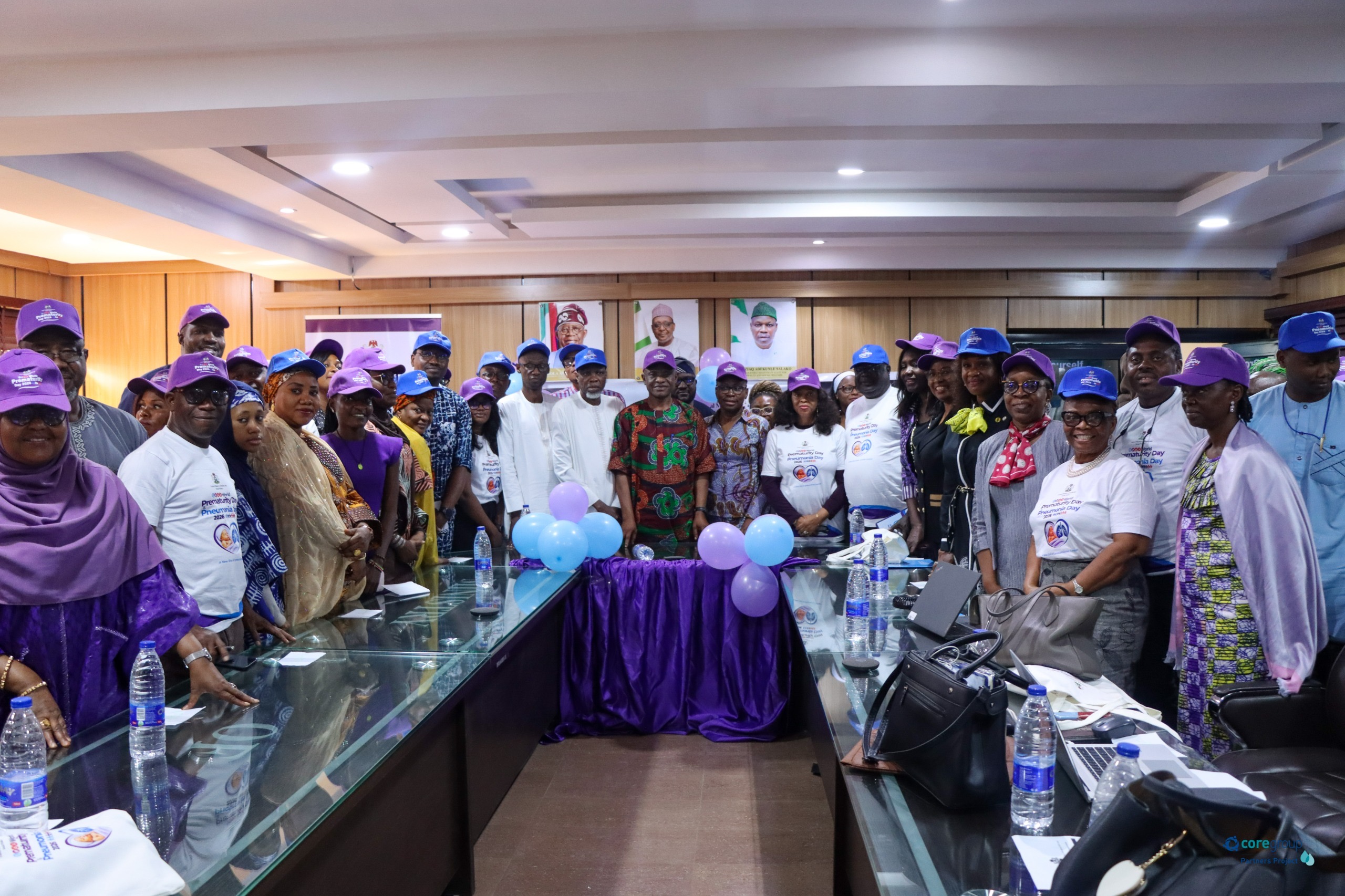
Nigeria’s neonatal mortality rate increased from 39 deaths per 1,000 live births in 2018 to 41 in 2024, despite progress in reducing deaths among children under five.
The Coordinating Minister of Health and Social Welfare, Muhammad Pate, disclosed this at the joint commemoration of World Prematurity Day and World Pneumonia Day in Abuja.
According to a statement issued on Wednesday by the ministry’s Assistant Director of Information and Public Relations, Ado Bako, under-five mortality declined from 132 deaths per 1,000 live births in 2018 to 110 in 2024.
Mr Pate, represented by the Director of Health Planning, Research and Statistics, John Ovuoreye, said childhood pneumonia also remains a significant contributor to preventable deaths, underscoring the need for sustained interventions.
Persistent newborn mortality
The 2024 Nigeria Demographic and Health Survey (NDHS) reveals disparities in child survival, with neonatal mortality standing at 45 deaths per 1,000 live births in rural areas compared with 35 in urban areas.
The figures remain above the Sustainable Development Goal target of no more than 12 neonatal deaths per 1,000 live births by 2030.
In November 2025, PREMIUM TIMES reported that Nigeria loses approximately 850,000 newborns and children under five annually to preventable causes, according to government estimates.
Government interventions
Mr Pate said the government is implementing the Nigerian Child Survival Action Plan 2025–2029, prioritising newborn care, immunisation, nutrition and effective referral systems.
He highlighted efforts to strengthen neonatal nursing education and improve access to respiratory support equipment and essential medicines, including caffeine citrate for managing breathing interruptions in premature babies.
The ministry’s Permanent Secretary, Kachollom Daju, represented by the Director of Family Health, Ahmed Ozi, called for stronger political leadership and sustained investment in evidence-based interventions.
She also emphasised the need for adequately equipped health facilities and timely access to quality care.
Stakeholders advocate sustained care
The World Health Organisation (WHO) Country Representative, Pavel Ursu, represented by the Team Lead for Health Systems and Services, Mary Brantuo, emphasised that premature babies require sustained medical attention beyond discharge from neonatal intensive care units.
Mr Ursu noted that regular monitoring, developmental assessments, specialised support and timely medical interventions are essential to their survival and long-term well-being.
The organisation said approximately 15 million babies are born prematurely worldwide annually, with prematurity remaining a major contributor to neonatal deaths in Nigeria.
It added that pneumonia continues to threaten child survival, calling for stronger prevention, early diagnosis, effective treatment and equitable access to quality healthcare.
UNICEF’s Maternal and Newborn Health Specialist, Victoria Isiremen, commended the ministry’s efforts to advance maternal, newborn and child health interventions.
She reaffirmed UNICEF’s commitment to supporting affordable, quality, and evidence-based healthcare before, during, and after birth, including early breastfeeding, essential newborn care, skilled community-based services, and improved neonatal healthcare.
Ms Isiremen also acknowledged ongoing efforts to strengthen newborn care through improved training, guidelines and capacity building for healthcare professionals, including the expansion of specialised newborn care services.
Representatives of the United Nations Population Fund (UNFPA) and CARE Nigeria highlighted the life-saving importance of continuous follow-up care, access to quality healthcare and sustained support for families.
Meanwhile, the Paediatric Association of Nigeria (PAN) called for national guidelines for follow-up care of premature babies, covering growth and developmental monitoring, nutrition, screening, early intervention, parental education, and psychosocial support.
The association expressed its readiness to collaborate with the ministry, the Nigerian Society of Neonatal Medicine (NISON) and development partners to develop the proposed guidelines.
Stakeholders also called for improved vaccination, access to medical oxygen, effective diagnostic services and prompt treatment of pneumonia, particularly among children under five.
The Chairman of the National Child Health Technical Working Group, Robinson Wammanda, reaffirmed the group’s commitment to coordinating stakeholder efforts and supporting the implementation of evidence-based interventions to reduce preventable deaths associated with prematurity and pneumonia.
READ ALSO: Seven organisations pledge $65m to reduce maternal, newborn deaths in Nigeria
World Prematurity, Pneumonia Day
World Prematurity Day and World Pneumonia Day are commemorated annually in November to raise awareness of the health challenges associated with premature birth and pneumonia, both of which are leading causes of deaths among children under five globally.
The commemorations also highlight the importance of prevention, early diagnosis, timely treatment and equitable access to quality healthcare in reducing preventable childhood deaths.
Discover more from Premium Times Nigeria
Subscribe to get the latest posts sent to your email.
-

 Events4 days ago
Plateau Govt, CAN Strengthen Unity Through 2026 Christmas Carols and Praise Festival
-
News3 days ago
Suspected Gunmen Set Plateau Secondary School Ablaze in Bokkos
-
News3 days ago
CCTech flags counterfeit technology threat to Nigeria’s enterprise IT infrastructure – Technology Times
-
Health3 days ago
WHO Reports 26.3 Million People Living with HIV in Africa