Health
Inside Nigeria-US Health Deal: What America gets in return for $2.1bn


When Nigeria signed a health cooperation agreement with the United States in December 2025, the government committed to more than receiving billions of dollars in US assistance.
The deal requires Nigeria to share biological specimens, samples, genetic sequencing data and related information on emerging infectious diseases with epidemic or pandemic potential.
It also allows the US government to share these materials with eligible American entities involved in developing diagnostic tools and medical countermeasures, while providing for increased US oversight of health programmes.
Under a separate specimen-sharing agreement, Nigeria must initiate the sharing of requested materials within five days of receiving a request from the US government, unless both countries agree on another timeline.
In return, the United States plans to provide approximately $2.08 billion in health assistance between 2026 and 2030. Nigeria is expected to contribute about $3 billion in additional domestic health financing over the same period.
A PREMIUM TIMES review of the signed five-year Memorandum of Understanding (MoU) and its accompanying agreements shows how the arrangement will affect health data, disease surveillance, healthcare workers, medical supplies and the country’s responsibility for funding health programmes.


It also reveals a provision allowing the US government to continue using specimens and related information already transferred to it, even if Nigeria later terminates the sharing agreement.
What Nigeria agreed to share
The main MoU and a separate Health and Medical Cooperation Specimen Sharing Agreement were signed in Abuja on 19 December 2025 by Richard Mills, the US Ambassador to Nigeria, and Muhammad Pate, Nigeria’s Coordinating Minister of Health and Social Welfare.
The specimen-sharing agreement entered into force on 18 January 2026.
It covers biological specimens, samples, genetic sequencing data and related information on new and emerging infectious diseases with the potential to cause epidemics or pandemics.
Under Article Two of the specimen-sharing agreement, Nigeria must begin sharing requested materials within five days of receiving a request from the US government. It may also provide genetic sequencing information through a “public database instead of or in addition to directly sharing specimens and related data with the US government.”
More significantly, Nigeria has agreed that the US government can share the specimens and related information with American non-governmental entities involved in developing diagnostic tools and medical countermeasures.
The US government must notify Nigeria in writing whenever it transfers the materials to an American entity.
The agreement provides for some benefits to Nigeria if medical products are developed primarily from specimens and information supplied by the country.
Under Article three, the US government shall, subject to available funds and applicable laws, facilitate Nigeria’s priority access to such products. It also provides for donations of relevant medical countermeasures, potentially using funds under the main MoU to procure them.
The US is also expected to acknowledge Nigeria and relevant institutions in publications and reports arising from the use of the materials and share findings that could support the country’s public health objectives.
However, Article five contains a provision that could have implications beyond the termination of the agreement.
It states that termination by Nigeria “shall NOT affect the use by the US government of any specimens and related data previously shared under this Agreement”.
The agreement has an initial five-year duration and may be renewed for another five years by mutual consent.

Missing health data agreement
Beyond biological specimens, the main MoU provides for an integrated digital health information system linking different medical records and databases across Nigeria.
The proposed system is expected to connect electronic medical records, HIV and tuberculosis databases, laboratory information systems and public health surveillance platforms.
Section 2.5 sets a target of introducing electronic health records in 20 per cent of facilities in 2026, rising to 100 per cent by 2030.
The MoU also refers to a separate data-sharing arrangement between both governments, an indication that the electronic health data of Nigerians could be shared with the US government. The MoU also includes a provision to provide information on the partnership’s performance and accountability for funds appropriated by the US Congress.
Under Section 2.5.2, the arrangement is expected to last five years, renewable for another five years, and comply with relevant laws on personal information, data ownership, access rights and data hosting.
However, the actual data-sharing agreement was not included in the publicly accessible copy of the MoU.
Appendix five, where it is referenced, contains only the words “See attachment” and the marking “NOT FOR PUBLIC RELEASE.”
The missing document matters because it concerns a different category of information from the published specimen-sharing agreement. Without it, the precise categories of information to be exchanged cannot be independently established.
The main MoU also provides for monitoring visits and audits. Under Section 4.2, Nigeria must provide regulated data access, on-site access or other information required to assess performance indicators in up to five per cent of randomly selected or jointly identified health facilities, clinics, laboratories and programmes.
The provisions also allow audits of supply chains, government counterpart funding and compliance with restrictions on the use of American assistance.
Nigeria’s growing financial responsibility
Although the US plans to provide approximately $2.08 billion under the agreement, Nigeria is expected to contribute about $3 billion in additional domestic health financing between 2026 and 2030.
The funding schedule shows that American assistance will decline as Nigeria’s contribution increases.
In 2026, the US plans to provide about $501 million, compared with Nigeria’s additional contribution of $345 million. By 2030, American assistance is expected to fall to $237 million, while Nigeria’s contribution rises to about $845 million.

The agreement also allows the US to reduce its planned assistance if Nigeria fails to meet its spending commitments. Using 2030 as an example under section 5.1.1, it states that if Nigeria increases its health expenditure by $720.3 million instead of the planned $845.4 million, the US government could reduce its assistance by $100 million, from approximately $236.9 million to $136.9 million.
Nigeria’s qualifying contribution must come from government-raised funds, including loans. Grants from donors and multilateral organisations cannot count towards the commitment.
The agreement also provides for performance incentives of up to $75 million annually if Nigeria meets specified process and outbreak-response targets in 2027 or 2028, subject to available funds.
In an opinion article published in The Guardian on 20 October, Mr Pate defended the agreement, saying Nigeria’s contribution would remain in the country and support its health priorities. He said the commitment would be measured by actual expenditure rather than budget announcements.
Healthcare workers, medicines
The agreement also provides for the gradual transfer of responsibility for healthcare workers and medical supplies currently supported by American assistance to the Nigerian government.
Under Section 2.4, Nigeria intends to integrate US-funded frontline healthcare workers into its permanent health workforce by 2030. These include doctors, nurses, midwives, community health workers, pharmacists and laboratory personnel.
The funding schedule provides for the US to support 25,696 frontline healthcare worker positions in 2026, with its contribution declining until Nigeria assumes responsibility for the positions by 2030.
Salary support is expected to pass through Nigerian government systems, while state governments will recruit, deploy and manage personnel under agreed criteria.
For medical supplies, the agreement covers commodities for HIV, tuberculosis, malaria, and maternal and child health programmes. It also provides for the gradual transfer of procurement responsibilities to Nigeria’s pooled procurement system, Medipool, alongside efforts to strengthen local manufacturing and supply chains.
The changes mean Nigeria must eventually sustain workers, medicines and programmes that have relied on American assistance.
Faith-based providers, legal challenge
Another provision that has generated controversy is the allocation of funding to faith-based healthcare providers.
Section 2.6.2 of the MoU provides that approximately 10 per cent of US funding, estimated at $208 million, will be allocated to faith-based health service providers, to the maximum extent permitted by US law.
The provision attracted criticism after the US Embassy emphasised Christian faith-based healthcare providers in its public explanation of the agreement. In January, the African Democratic Congress (ADC) asked the federal government to clarify whether the arrangement gave preference to Christian institutions and to publish the full agreement.
PREMIUM TIMES examined the controversy in a February analysis, highlighting concerns about the religious framing, transparency and implications for Nigeria’s health system.
In a response to a Freedom of Information (FOI) request submitted by PREMIUM TIMES in February, the US Embassy in Abuja, through its spokesperson, Nicole Holler, said the agreement reserved funding for about 900 faith-based clinics and hospitals, which it said served more than 30 per cent of the population.
Ms Holler said most of the facilities were Christian but provided services to Nigerians irrespective of religion. She added that faith-based clinics represented approximately 10 per cent of healthcare service providers but served more than 30 per cent of the population.
Mr Pate, however, maintained that the provision did not give preference to any religion or denomination, adding that eligible Christian and Muslim providers could benefit.
Legal challenge over health data agreement
The agreement is also facing a legal challenge at the Federal High Court in Abuja over alleged violations of privacy rights, health laws and the absence of legislative oversight.
A legal practitioner, Bernard Okpi, filed suit FHC/ABJ/CS/549/2026 in March 2026, challenging provisions on the sharing of biological specimens and health information with the United States.
He argued that the arrangements could violate the National Health Act 2014, the Nigeria Data Protection Act 2023 and Nigerians’ constitutional right to privacy by allowing the transfer of sensitive health information without individual informed consent.
He also questioned the agreement’s provisions on faith-based healthcare funding, arguing that allocations favouring Christian institutions could discriminate against other religious groups and secular healthcare providers.
In his latest response to PREMIUM TIMES, Mr Okpi said the matter remained pending before Justice Peter Lifu and has been adjourned to February 2027.
Mr Pate has maintained that the agreement underwent a whole-of-government review and was cleared by the Attorney-General of the Federation.
He has also described the MoU as legally non-binding, adding that it recognises Nigerian law and allows either country to discontinue cooperation.
Although the MoU outlines financial and operational commitments by both governments, Section 6.9 states that the MoU “is not an international agreement and does not give rise to legal rights and obligations under international or domestic law”.
Part of Trump’s America First strategy
Nigeria’s agreement is part of the US President Donald Trump’s America First Global Health Strategy, released on 18 September 2025, amid a restructuring of US foreign assistance that included the dismantling of USAID’s role in delivering much of America’s development aid.
The strategy shifts health assistance towards bilateral agreements, linking investments to US national security, diplomatic and economic interests while requiring partner countries to assume greater responsibility for financing their health systems.
According to the US Department of State, the United States had signed 36 bilateral global health agreements, including with 25 African countries, as of 8 October 2026.
Some African countries have resisted the initiative. Zimbabwe withdrew from negotiations in February 2026 over concerns about sensitive health data and biological resources, while Ghana rejected its proposed agreement in April over concerns about access to health information.
How the documents became public
Although Nigeria signed the agreements in December 2025, their full contents were not initially available to the public.
In February 2026, PREMIUM TIMES submitted Freedom of Information requests to the Federal Ministry of Health and Social Welfare and the US Embassy in Abuja, seeking details of the arrangement.
The ministry did not respond. The US Embassy said the MoU was not publicly available at the time but provided information on the planned American funding, Nigeria’s contribution and the allocation for faith-based healthcare providers.
The agreements involving Nigeria, Ethiopia, Kenya, Mozambique and Uganda were briefly published on the US Department of State’s Freedom of Information Act Library on 13 March 2026. They were removed days later, according to Human Rights Watch.
READ ALSO: EXCLUSIVE: Nigeria submits BBNJ Treaty ratification instrument to UN
Human Rights Watch noted that the removal came shortly after reports that the US had linked a proposed $1 billion health assistance package for Zambia to access to the country’s mineral resources. However, this does not establish that the reports were the reason for the removal.
Public Citizen criticised the removal, arguing that the agreements should be made public so affected communities, healthcare providers and experts could understand their implications and prepare for implementation.
Public Citizen and Human Rights Watch later published copies of Nigeria’s MoU and the specimen-sharing agreement. However, the data-sharing agreement remains unavailable in all the publicly available documents reviewed by PREMIUM TIMES.
Discover more from Premium Times Nigeria
Subscribe to get the latest posts sent to your email.





Nigeria’s neonatal mortality rate increased from 39 deaths per 1,000 live births in 2018 to 41 in 2024, despite progress in reducing deaths among children under five.
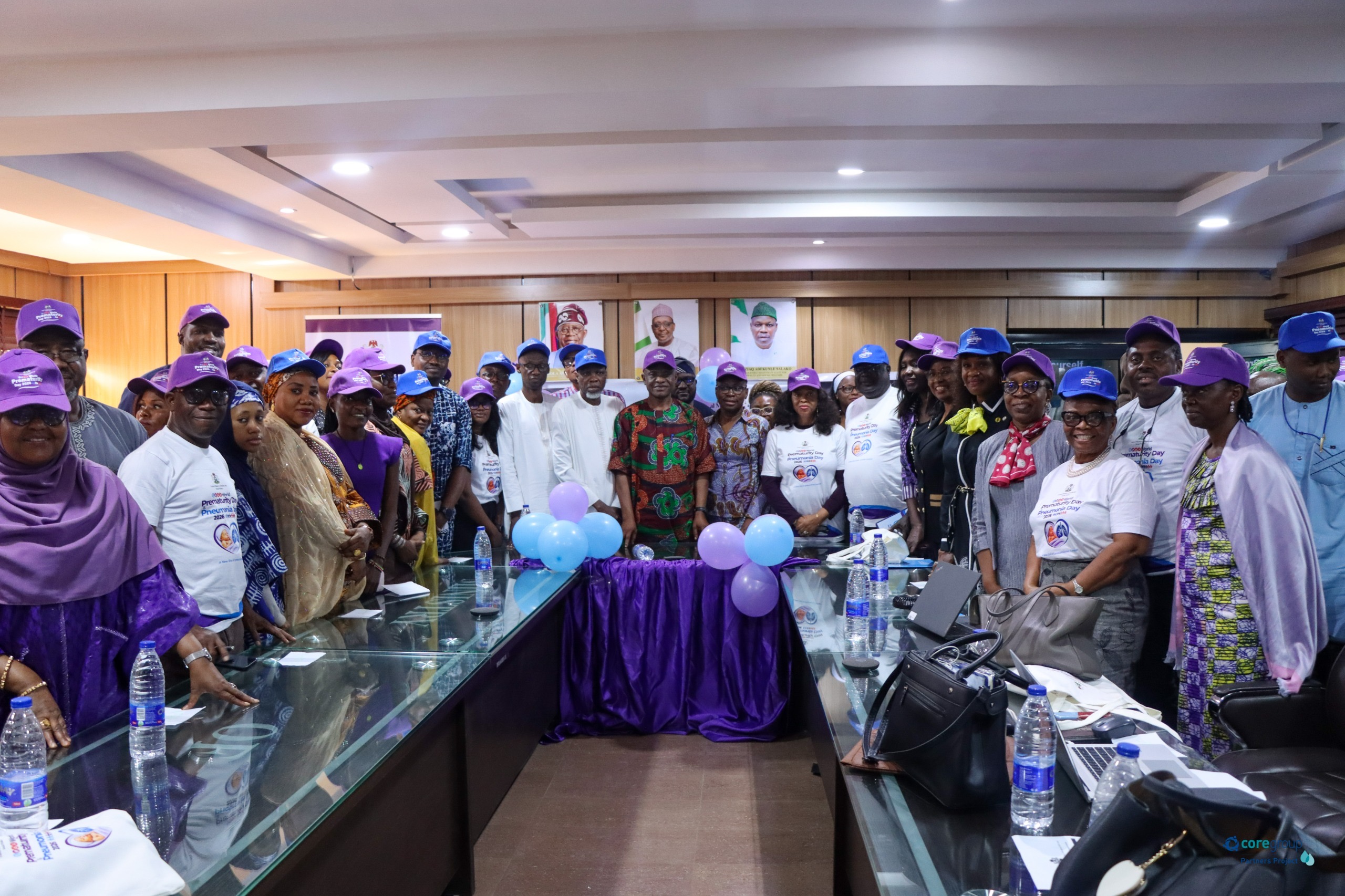
The Coordinating Minister of Health and Social Welfare, Muhammad Pate, disclosed this at the joint commemoration of World Prematurity Day and World Pneumonia Day in Abuja.
According to a statement issued on Wednesday by the ministry’s Assistant Director of Information and Public Relations, Ado Bako, under-five mortality declined from 132 deaths per 1,000 live births in 2018 to 110 in 2024.
Mr Pate, represented by the Director of Health Planning, Research and Statistics, John Ovuoreye, said childhood pneumonia also remains a significant contributor to preventable deaths, underscoring the need for sustained interventions.
Persistent newborn mortality
The 2024 Nigeria Demographic and Health Survey (NDHS) reveals disparities in child survival, with neonatal mortality standing at 45 deaths per 1,000 live births in rural areas compared with 35 in urban areas.
The figures remain above the Sustainable Development Goal target of no more than 12 neonatal deaths per 1,000 live births by 2030.
In November 2025, PREMIUM TIMES reported that Nigeria loses approximately 850,000 newborns and children under five annually to preventable causes, according to government estimates.
Government interventions
Mr Pate said the government is implementing the Nigerian Child Survival Action Plan 2025–2029, prioritising newborn care, immunisation, nutrition and effective referral systems.
He highlighted efforts to strengthen neonatal nursing education and improve access to respiratory support equipment and essential medicines, including caffeine citrate for managing breathing interruptions in premature babies.
The ministry’s Permanent Secretary, Kachollom Daju, represented by the Director of Family Health, Ahmed Ozi, called for stronger political leadership and sustained investment in evidence-based interventions.
She also emphasised the need for adequately equipped health facilities and timely access to quality care.
Stakeholders advocate sustained care
The World Health Organisation (WHO) Country Representative, Pavel Ursu, represented by the Team Lead for Health Systems and Services, Mary Brantuo, emphasised that premature babies require sustained medical attention beyond discharge from neonatal intensive care units.
Mr Ursu noted that regular monitoring, developmental assessments, specialised support and timely medical interventions are essential to their survival and long-term well-being.
The organisation said approximately 15 million babies are born prematurely worldwide annually, with prematurity remaining a major contributor to neonatal deaths in Nigeria.
It added that pneumonia continues to threaten child survival, calling for stronger prevention, early diagnosis, effective treatment and equitable access to quality healthcare.
UNICEF’s Maternal and Newborn Health Specialist, Victoria Isiremen, commended the ministry’s efforts to advance maternal, newborn and child health interventions.
She reaffirmed UNICEF’s commitment to supporting affordable, quality, and evidence-based healthcare before, during, and after birth, including early breastfeeding, essential newborn care, skilled community-based services, and improved neonatal healthcare.
Ms Isiremen also acknowledged ongoing efforts to strengthen newborn care through improved training, guidelines and capacity building for healthcare professionals, including the expansion of specialised newborn care services.
Representatives of the United Nations Population Fund (UNFPA) and CARE Nigeria highlighted the life-saving importance of continuous follow-up care, access to quality healthcare and sustained support for families.
Meanwhile, the Paediatric Association of Nigeria (PAN) called for national guidelines for follow-up care of premature babies, covering growth and developmental monitoring, nutrition, screening, early intervention, parental education, and psychosocial support.
The association expressed its readiness to collaborate with the ministry, the Nigerian Society of Neonatal Medicine (NISON) and development partners to develop the proposed guidelines.
Stakeholders also called for improved vaccination, access to medical oxygen, effective diagnostic services and prompt treatment of pneumonia, particularly among children under five.
The Chairman of the National Child Health Technical Working Group, Robinson Wammanda, reaffirmed the group’s commitment to coordinating stakeholder efforts and supporting the implementation of evidence-based interventions to reduce preventable deaths associated with prematurity and pneumonia.
READ ALSO: Seven organisations pledge $65m to reduce maternal, newborn deaths in Nigeria
World Prematurity, Pneumonia Day
World Prematurity Day and World Pneumonia Day are commemorated annually in November to raise awareness of the health challenges associated with premature birth and pneumonia, both of which are leading causes of deaths among children under five globally.
The commemorations also highlight the importance of prevention, early diagnosis, timely treatment and equitable access to quality healthcare in reducing preventable childhood deaths.
Discover more from Premium Times Nigeria
Subscribe to get the latest posts sent to your email.

The World Health Organisation (WHO) has disclosed that Nigeria recorded approximately 64,000 new HIV infections in 2025, despite a 52 per cent decline in new infections between 2010 and 2025.
The WHO Regional Office for Africa’s Team Lead for HIV, Tuberculosis, Hepatitis and Sexually Transmitted Infections (STIs), Akudo Ikpeazu, disclosed this on Tuesday while virtually delivering the keynote address at the 2026 Nigeria HIV Prevention Conference.
The three-day conference, themed “Building to Last: Re-imagining HIV Prevention Strategies in Nigeria,” was convened by the Federal Ministry of Health and Social Welfare and the National Agency for the Control of AIDS (NACA).
“In Nigeria, new HIV infections declined by 52 per cent between 2010 and 2025. Yet, about 64,000 people were newly infected in 2025,” she said.
“Nigeria must now accelerate prevention while changing the financial and institutional bases upon which the response rests.”
Ms Ikpeazu noted that Nigeria had committed to reducing new HIV infections by about 90 per cent by 2030, compared with 2010 levels.
She said achieving the target would require wider coverage of prevention services, faster results and reduced dependence on external funding.
Expanding prevention beyond key populations
Ms Ikpeazu disclosed that Nigeria’s incidence pattern analysis showed that 89 per cent of new adult HIV infections occur among the general population, compared with about 11 per cent among key populations.
“Prevention must therefore reach far beyond the groups covered by many existing targeted programmes. This finding demands balanced access,” she said.
She stressed that key populations continue to bear a disproportionate burden of HIV and that prevention services for these groups must be protected and expanded.
She, however, said the large prevention gap in the general population requires urgent attention.
The WHO official also advocated stronger interventions targeting adolescents and young people, noting that those facing little risk of infection today could become exposed as they grow older.
She called for the integration of HIV prevention into schools, primary healthcare facilities and reproductive and maternal health services.
She also recommended expanding access to condoms, lubricants, pre-exposure prophylaxis (PrEP), post-exposure prophylaxis (PEP), HIV self-testing and other prevention services.
Nigeria’s path to epidemic control
Speaking at the conference, the Joint United Nations Programme on HIV/AIDS (UNAIDS) Country Director in Nigeria, Krittayawan Boonto, said despite the progress recorded since 2010, the country continues to record between 60,000 and 65,000 new HIV infections annually.
Ms Boonto said, in order to reach epidemic control, the country needs to get below 5,000 infections a year.
“So we still have a long way to go,” she said.
Ms Boonto commended Nigeria’s new national HIV prevention plan, particularly its adoption of a whole-of-society approach that extends prevention beyond conventional healthcare settings.
She described the strategy as innovative, noting that she had not encountered a similar approach in other countries.
“It is something that I am seeing for the first time in Nigeria and not in any other country. So I would like to congratulate you for this foresight,” she said.
Ms Boonto explained that the approach would involve schools, marketplaces, places of worship, sporting facilities and digital platforms in equipping people, particularly young people, with the knowledge and resources to protect themselves against HIV.
HIV infections among children
Ms Ikpeazu also expressed concern over the continued transmission of HIV among children, noting that approximately 10,000 new infections are recorded among children annually in Nigeria.
“Children must remain visible as well. New infections among children have held at about 10,000 a year, demanding stronger action against vertical transmission during pregnancy, childbirth, and through the breastfeeding period,” she said.
The WHO official disclosed that about 26 per cent of pregnant women in Nigeria do not access antenatal care, limiting their access to essential services, including HIV testing, treatment and follow-up.
“But every door a pregnant woman walks through must be a door to prevention,” she said.
Ms Ikpeazu explained that WHO validation of the elimination of mother-to-child transmission in breastfeeding populations requires a transmission rate below five per cent and no more than 50 new paediatric HIV infections per 100,000 live births.
It also requires 95 per cent antenatal care coverage, 95 per cent HIV testing coverage among pregnant women and 95 per cent treatment coverage among pregnant women living with HIV.
She encouraged states with high antenatal care coverage to strengthen their prevention services and seek recognition through established WHO regional mechanisms.
Also speaking, the National Coordinator of the Association of Women Living with HIV/AIDS in Nigeria (ASWHAN), Esther Hindi, called for accelerated efforts to eliminate mother-to-child transmission of HIV.
Mrs Hindi said no child should be born with HIV when the knowledge, tools, and interventions to prevent it are within our reach.
“Every pregnant woman deserves access to quality, respectful, timely, and uninterrupted services, regardless of her circumstances,” she said.
She also called for expanded access to HIV testing, PrEP, condoms, treatment and sexual and reproductive health services.
She said stigma and discrimination continue to discourage people from accessing essential services, while urging stakeholders to involve women living with HIV in developing prevention policies and programmes.
Strengthening HIV prevention
In her welcome address, the Director-General of NACA, Temitope Ilori, said although Nigeria had made progress in expanding access to HIV testing and treatment, greater attention must be paid to preventing new infections.
“We cannot treat our way out of the HIV epidemic; prevention must remain at the heart of our national response,” she said.
Ms Ilori called for stronger community engagement, expanded prevention choices and the adoption of emerging biomedical technologies and digital solutions.
READ ALSO: Over 30,000 Nigerians access twice-yearly HIV prevention injection- Official
She noted that HIV prevention cannot be the responsibility of the health sector alone, calling for greater involvement of educational institutions, traditional and religious leaders, civil society organisations, the private sector and communities.
Meanwhile, the National Coordinator of Nigeria’s AIDS and STIs Control Programme (NASCP), Adebobola Bashorun, called for the expansion of HIV self-testing and PrEP services.
Mr Bashorun, represented by Omolara Emmanuel, also advocated the triple elimination of mother-to-child transmission of HIV, syphilis and hepatitis, as well as the involvement of young people in designing prevention interventions.
“Reimagining HIV prevention means moving beyond traditional approaches and embracing smarter, more people-centred strategies,” he said.
The conference will feature 19 sessions focusing on prevention strategies, service innovation, sustainable and nationally owned prevention systems, community leadership, human rights, and the use of research and data to improve prevention outcomes.
Discover more from Premium Times Nigeria
Subscribe to get the latest posts sent to your email.
-

 Events4 days ago
Plateau Govt, CAN Strengthen Unity Through 2026 Christmas Carols and Praise Festival
-
News3 days ago
Suspected Gunmen Set Plateau Secondary School Ablaze in Bokkos
-
News4 days ago
Ebonyi: NDC raises alarm over establishment of 200-man neighbourhood watch in Ohaozara
-
News3 days ago
CCTech flags counterfeit technology threat to Nigeria’s enterprise IT infrastructure – Technology Times