News
ICPC Urges VCs, Rectors To Protect TETFund Interventions


ICPC urges VCs, rectors to protect TETFund interventions
By Isaac Aregbesola
The Independent Corrupt Practices and Other Related Offences Commission (ICPC) has urged heads of tertiary institutions to ensure that Tertiary Education Trust Fund (TETFund) interventions are managed with integrity.
The ICPC Chairman, Dr Musa Aliyu, SAN, gave the charge on Monday in Abuja at the opening of the Organisational Integrity Management Capacity-Building Programme for officials of TETFund beneficiary institutions.
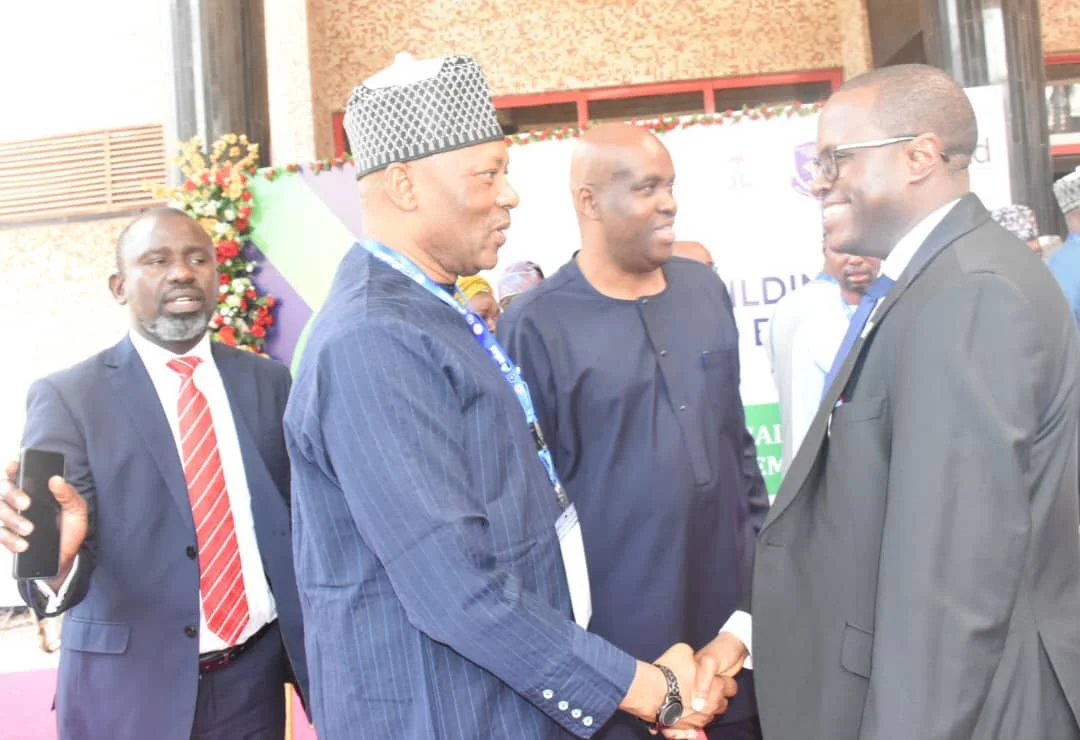
The event was organised by the Anti-Corruption Academy of Nigeria (ACAN), a training and research arm of ICPC with the support of TETFund.
Aliyu urged vice-chancellors, rectors, provosts, bursars and directors of works to strengthen internal controls, address corruption risks and ensure that TETFund interventions deliver value for money.
He said tertiary education remained fundamental to national development, noting that resources invested in universities, polytechnics and colleges of education were investments in Nigeria’s future.
“TETFund plays a strategic role by providing critical support for infrastructure, research and staff development.
“However, the success of these interventions depends not only on the availability of funds but also on the integrity and accountability of the institutions responsible for their utilisation,” he said.
He warned that weak procurement practices, inadequate project supervision, ineffective internal controls, conflicts of interest and financial mismanagement could undermine TETFund interventions, leading to wasted resources, delayed projects and eroded public confidence.
Aliyu stressed that organisational integrity went beyond personal morality and requires ethical leadership, effective systems and a culture that promotes accountability.
“Integrity must not exist merely in policy documents or institutional mission statements. It must be reflected in everyday decisions, administrative processes and the management of public resources,” Aliyu said.
The ICPC boss said while investigation and prosecution remained important, the commission was prioritising prevention through system study and review, corruption risk assessment and ethics compliance scorecards.
Aliyu also charged vice-chancellors, rectors, provosts, bursars and directors of works to strengthen their institutions in five key areas.
He said that areas included institutionalising corruption risk assessment, strengthening internal controls, promoting transparency in TETFund projects, strengthening reporting mechanisms and translating knowledge from the training into practical reforms.
“The responsibility for preventing corruption does not rest exclusively with anti-corruption agencies.
“It is a shared responsibility involving institutional leaders, administrators, procurement officers, auditors and other stakeholders,” he said.
The Executive Secretary, TETFund, Sonny Echono, in his remarks urged officials of beneficiary institutions of the fund to ensure that every naira disbursed was traceable to tangible, high-quality outcomes
Echono, represented by Dr Kolpao Okunlola , Director Human Resources and General Administration, said organisational integrity remains central to national development, warning that public trust depended on responsible stewardship.
He stressed that funding alone could not guarantee results without accountable leadership, effective implementation and strict adherence to standards.
He urged institutional leaders to comply with procurement laws, financial regulations and TETFund guidelines, take responsibility for project outcomes and protect those who report misconduct.
He warned beneficiary institutions against political interference and personal gain in the selection of beneficiaries and execution of projects, citing his repeated warnings that when appointments are influenced by factors other than merit, the entire institution suffers.
Prof. Tank Ishaya, Vice Chancellor University of Jos and Chairman, Committee of Vice-Chancellors of Federal Universities, urged beneficiary institutions to judiciously utilise funds allocated to them.
Ishaya identified honesty, transparency, accountability, data integrity, respect and fairness as core pillars of organisational integrity, stressing that integrity goes beyond money.
The Provost of ACAN, Prof. Sheriff Ibrahim, in his address of welcome said integrity in education referred to the adherence to ethical principles and standards by educators and students alike.
He identified honesty, accountability and fairness as essential to building trust and maintaining ethical standards across educational institutions.
Ibrahim urged tertiary institutions to work with ICPC to strengthen integrity management and address administrative corruption, embezzlement, examination misconduct, the monetisation of marks, sexual harassment and ghost workers.(NAN)
Edited by Yakubu Uba





The African Democratic Congress, ADC, has threatened to take its planned campaign rally to the streets of Kaduna after the state government refused to grant it access to Ranchers Bees Stadium.
The opposition party accused the Kaduna State Government of deliberately frustrating its political activities by denying it the use of the stadium for its scheduled rally on November 17 and 18, 2026.
The ADC disclosed this in a press statement issued on Tuesday by its National Publicity Secretary, Mallam Bolaji Abdullahi.
According to the party, it had earlier applied to the state government for permission to use the stadium but was denied approval in a letter dated November 12 by the Ministry of Local Government.
The ministry reportedly attributed the refusal to ongoing renovation work at the facility.
However, the ADC questioned the explanation, noting that the ruling All Progressives Congress, APC, had used the same stadium to flag off its presidential campaign on October 24, barely three weeks earlier.
The party described the government's explanation as ridiculous, alleging that the APC was afraid of the large crowds attracted by its rallies across the North.
“We find the excuse quite ridiculous. This was the same stadium where the APC flagged off its presidential campaign on October 24. But we know what they are afraid of,” the statement said.
The ADC further alleged that the government was attempting to prevent residents from comparing the attendance at its rallies with that of the ruling party.
Insisting that it would not abandon its planned rally, the opposition party threatened to hold a street demonstration if the government continued to deny it access to the stadium.
“If the Kaduna State Government will not allow us to campaign peacefully in the stadium, we will exercise our constitutional right to assemble peacefully in the streets.
“You may deny us a venue, but you cannot deny Nigerians their constitutional right to peaceful assembly,” the party said.
The ADC maintained that public facilities should not be used as instruments of political exclusion, arguing that they belong to the people regardless of the political party controlling the government.
It also warned that denying opposition parties access to public infrastructure amounted to violating citizens' rights to peaceful assembly and democratic participation.
The party urged the Kaduna State Government to reconsider its position, citing the Bauchi and Yobe state governments as examples of administrations that had allowed opposition parties to carry out their political activities.
2027: Deny us stadium, we’ll take over your streets – ADC tells Kaduna govt


Nigeria’s Olympic Eagles have produced a sensational comeback to defeat DR Congo 4-0 in the second leg of their U23 Africa Cup of Nations (AFCON) qualifying tie, securing a 4-2 aggregate victory and keeping their qualification campaign alive.
After suffering a disappointing 2-0 defeat in the first leg, the Nigerian side responded emphatically at the Remo Stars Stadium in Ikenne, delivering an outstanding performance to overturn the deficit and advance to the next stage.
Alex Oweilayefa set the tone for Nigeria’s remarkable comeback when he opened the scoring in the 8th minute, reducing DR Congo’s aggregate advantage and giving the home supporters renewed belief.
The Olympic Eagles continued their attacking momentum after the restart, with Peter Edokpolor doubling Nigeria’s lead in the 47th minute to level the aggregate score at 2-2.
Samuel Victor then struck in the 57th minute, completing Nigeria’s turnaround and putting the hosts ahead on aggregate for the first time in the tie.
With DR Congo struggling to contain Nigeria’s attacking pressure, the Olympic Eagles maintained their intensity and discipline as the contest approached its conclusion.
The decisive moment arrived deep into stoppage time when Muiz Adeleke converted a penalty in the 90+4th minute to seal a commanding 4-0 victory on the night.
The result completed an extraordinary turnaround for Nigeria, who progressed with a 4-2 aggregate triumph after entering the return fixture with a two-goal deficit.
The victory represents a significant statement from the Dream Team, whose response demonstrated resilience, attacking quality and determination under pressure.
Following their impressive comeback, Nigeria will now turn their attention to Zambia, whom they are scheduled to face in May 2027 in the next stage of the qualification campaign.
The Olympic Eagles will be aiming to maintain their momentum and build on the confidence gained from their emphatic victory over DR Congo.
For Nigerian football supporters, the night in Ikenne will be remembered for a remarkable comeback that showed the fighting spirit of the nation’s U23 side.
From a 2-0 first-leg setback to a stunning 4-0 triumph — the Olympic Eagles have answered in style!
-

 News4 days ago
Every ₦1 spent on advertising generates ₦16.50 in Nigeria’s GDP, ARCON says – Technology Times
-
News3 days ago
Tinubu (APC) in Jos: Promises to restore peace in the State and Nigeria
-
News3 days ago
Heavy Security as Tinubu Takes Campaign to Jos
-
News3 days ago
Yari Defends Tinubu on Insecurity, Says Opposition Failed to Tackle Crisis for Over 20 Years