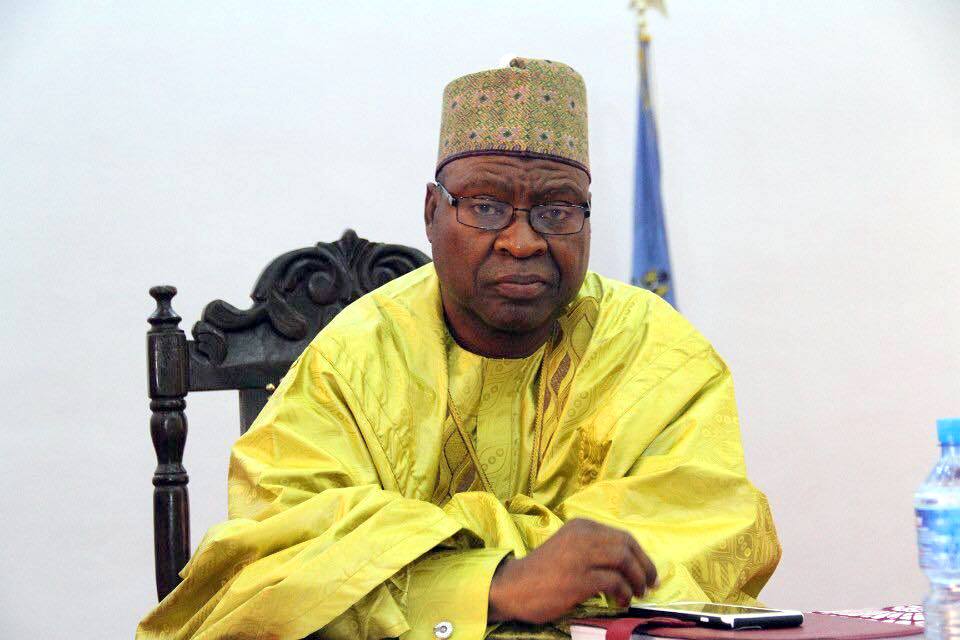
The Director-General of the Industrial Training Fund (ITF), Sir Joseph Ari, had been conferred with a “Lifetime Achievement Award” by the Plateau State Man of the Year Awards.This was disclosed by the Director, Public Affairs Department of the fund, Mrs Suleyol Fred-Chagu, in a statement made available to the News Agency of Nigeria (NAN) on Friday in Jos.
Chagu said that the award was in recognition of Sir Ari’s selfless service and far-reaching contributions to fostering progress in the affairs of critical significance in Plateau and Nigeria .
According to her, the organizer, the principal Coordinating Executive of the COA Media Group, Mr Akhimien Cletus, said the Plateau State Man of the Year Awards was initiated to honor individuals, groups, and institutions whose actions had greatly impacted the state positively during the year under review.
She said that Sir Ari was ranked number one by nominations and votes for the Award, by the general public. According to the statement, the award was conferred on Sir Ari at an award ceremony on Feb. 21 at the Crest Hotel and Garden, Old Airport Road, Jos. It also said that other awards had been conferred on those that had a significant impact in the areas of Human Rights, Health, Justice, Peace, Stability, Entrepreneur, Education, Good Governance and Politics.
Stakeholders from across Plateau State have issued a communiqué outlining key challenges and recommendations for addressing farmer-herder conflicts, criminality, and land disputes in the state.
The communiqué was released at the end of a two-day Multi-Level and Multi-Sectoral Roundtable on Sustainable Peace Infrastructure held at Novel Suites, Jos, from April 21 to 22, 2026.
The roundtable brought together government officials, traditional rulers, civil society organizations, security agencies, women and youth groups, as well as other critical actors to deliberate on strategies for strengthening peace and stability in Plateau State.
Focus on Dialogue and Sustainable Peace
Participants said the engagement provided a platform to examine the root causes of recurring conflicts and develop actionable strategies to promote peaceful coexistence.
The discussions, which included two panel sessions, explored issues around criminality, land disputes, and farmer-herder tensions, with emphasis on building trust, enhancing coordination, and strengthening existing peace structures.
Key Challenges Identified
In the communiqué, stakeholders highlighted several interconnected challenges fueling insecurity in the state.
Top among them were persistent security threats, including cattle rustling, kidnapping, illegal mining, and arms trafficking, as well as difficulties in identifying perpetrators, particularly alleged foreign elements.
They also pointed to weak law enforcement, limited trust between communities and security agencies, and operational challenges faced by security personnel.
Farmer-herder tensions were attributed to crop destruction, retaliatory attacks, underage grazing, and increasing competition over land and natural resources due to population growth.
Land-related conflicts, including land grabbing, poor documentation, displacement, and weak enforcement of land laws, were also identified as major drivers of violence.
Other concerns raised included governance gaps, lack of political will, inadequate identification systems, poverty, and limited access to modern agricultural practices.
Participants further decried the role of misinformation and unprofessional reporting in escalating tensions, as well as the impact of gender-based violence and the marginalization of women and vulnerable groups.
Stakeholders Proffer Solutions
To address these challenges, stakeholders called for strengthened security and justice systems through improved collaboration among security agencies, enhanced intelligence gathering, and the deployment of technology.
They also recommended continuous dialogue between farmers and herders, establishment of early warning systems, and the creation of joint platforms for resolving disputes.
On land governance, participants urged the government to enforce land laws, improve land documentation, and ensure fair resettlement processes for displaced communities.
They further advocated for the adoption of modern farming and livestock practices, including access to financial and technical support, improved seeds, and better farm security measures.
Stakeholders emphasized the need for inclusive governance, calling for the integration of herders into formal security structures and stronger collaboration between government and communities.
They also stressed the importance of responsible journalism and conflict-sensitive reporting, as well as the enforcement of laws addressing gender-based violence and the inclusion of women in peacebuilding efforts.
Commitment to Lasting Peace
The stakeholders reaffirmed their collective commitment to addressing the root causes of conflict and building resilient communities across Plateau State.
They urged the government to implement past recommendations, strengthen citizen engagement, improve population data systems, and facilitate the safe return of displaced persons.
The communiqué concluded with a call for sustained collaboration among all actors to ensure a peaceful, stable, and prosperous Plateau State.
Japan's immigration act may affect relocation plans
For many Nigerians exploring “japa” options beyond the usual destinations, Japan has become an attractive destination. But with the Japanese government’s new immigration protocol the move will become more expensive.
Authorities in Japan have considered changes to visa and residency fees under amendments to the Immigration Control Act. It proposes increased charges due to administrative costs—meaning more expenses for immigrants, such as Nigerians planning work and study relocation or long-term settlement.
An immediate impact on visa renewals, the cost of renewing a five-year visa could jump from 6,000 yen to about 70,000 yen (roughly $440). Short-term renewals may also increase to around 10,000 yen.
For Nigerians thinking long-term, permanent residency application fees could rise from 10,000 yen to 200,000 yen, with a proposed cap of 300,000 yen. This marks a financial shift for migrants who plan years ahead to transition from temporary stay to permanent status.
As of April 2026, eligibility tightens for foreign nationals who must now live in Japan continuously for at least 10 years before qualifying for citizenship. Twice the previous requirement, this could slow down long-term plans.
For Nigerian students who often use education as a pathway to international work opportunities, these changes may alter decisions about where to study. Japan has been gaining attention for its growing demand for skilled workers and relatively structured immigration pathways. However, higher costs could push many to reconsider options more carefully.
Professionals and skilled workers will likely feel the impact. High residency costs may influence job mobility, contract negotiations, and employer decisions to hire foreign talent.
While the policy is not yet official, the direction is clear: moving to Japan may require deeper financial planning.
For Nigerians considering “japa,” this development reinforces an important reality—migration is no longer just about opportunity, but also about affordability, timing, and long-term sustainability.
Nigerians should watch out for final decision on fees increase, implementation timeline, possible exemptions or reductions for students or low-income applicants, and changes in job sponsorship policies for foreign workers.