(This piece was first written on 6th March 2019. Readers may still find it relevant today)
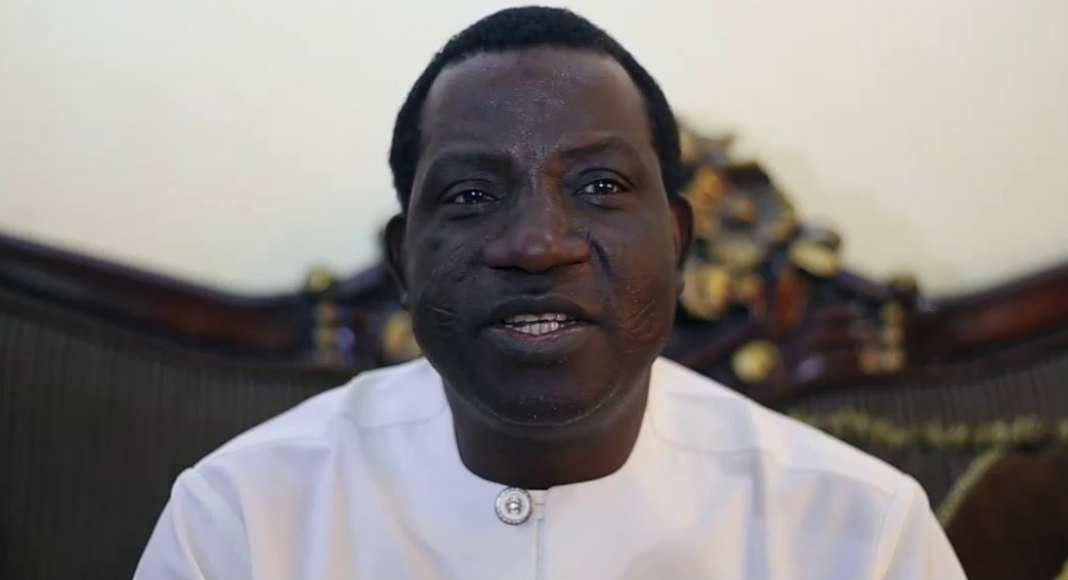
“HE IS A SELL-OUT!” This is the first reaction of most Plateau citizens when they assess Governor Lalong’s four-year tenure. What do they mean by that and is Governor Simon Lalong truly a sell-out? If so, in what ways has he been a sell-out?
Plateau people have a unique identity which defines us as a people in the overall Nigerian geo-political space. This is not peculiar to Plateau State alone. The northerner also has a distinct identity, just like eastern, western and south-south Nigerians. So we would not be seen as being unnecessarily chauvinistic and un-inclusive when we talk about a Plateau identity as it exists within the context of the much wider Middle Belt identity.
Simply put, the Plateau identity primarily revolves around the fact of our being oppressed minorities in Nigeria as a result of historical, religious, ethnic and other circumstances. All of our past leaders, both dead and alive, and leading Plateau sons and daughters have espoused and basked in the glory of this unique identity. It would not be out of place to say that J.D Gomwalk was martyred on account of this. Baba Lar died a very proud son of the Middle Belt and Plateau State.
But what about Governor Lalong? The sad thing about him is that he thinks that by debasing and rejecting his own identity and assuming a false one, he would gain the respect and political patronage of the original owners of that borrowed identity. Following his election in 2015, he boasted that it was the Hausa vote in Jos North that ensured his victory. Unknown to Lalong, that disingenuous assertion only showed him as a man who did not have the interests of the Hausa in Jos North in mind because he was pitting them against other fellow Plateau people. Was the governor therefore accusing other Plateau people of not voting for him? A wise politician knows that once he is elected into office, he becomes father to all, especially those who rejected him. A wise leader would even love those who rejected him so that he could subsequently win them to his side. But not our dear Governor Lalong.
It was also in furtherance of the self-serving purpose of switching his identity for votes that, once again, he infamously declared that now that he had appointed a Fulani Muslim from the same Jos North into his cabinet, there would be no more crises in the state. A more perceptive leader would know that such a statement is pregnant with very dangerous undertones.
It must be pointed out that one does not dislike the Hausa or Fulani, be they in Jos North or elsewhere. We are only alluding to them here to illustrate Governor Lalong’s identity crisis and the abhorrent manner he is so dubiously manipulating their own unique identity to further his confused political goals.
Recall that in January last year, Governor Lalong denounced his Benue State counterpart on national television when the entire country was mourning the slaughter of 73 innocent people by Fulani herdsmen in two local government areas of his state. Lalong’s desire was to be seen to be hand in glove with the Buhari administration, which was widely seen to be condoning the atrocities of the herdsmen. It is this burning identity crisis that further inspired the governor to support the cattle colony idea even when almost all sister states had vehemently resisted it for the dangers it posed to our survival as a people. It was also this puerile urge to belong that pushed him into declaring that he is Buhari’s godson and was prepared to die for him. It is still this intense yearning to be what he is not that made him declare that he is not a Middle Belter but a Northerner.
But, come to think of it. Despite all of these suspicious outpourings of love and affection for the Hausa and Fulani of Jos North, what has he done for them and the South-South, Yoruba, Igbo, Izere, Berom, Anaguta, Mwaghavul and other Nigerians therein? For instance, has Governor Lalong constructed the roads he promised the people of Ungwan Rogo, Rikkos, Nasarawa Gwong, Gengere, Vanderpuye, Tafawa Balewa, etc, in Jos North LGA? The best he has been able to do in the past four years is patch up a few of the roads while the majority have remained nightmares for motorists because they are riddled with potholes as wide and deep as craters. The entire city, especially Ahmadu Bello Way (the state’s commercial hub), stinks to the high heavens because it has been overtaken by mountains of months-old putrefying refuse. And the reconstruction of the Jos Main Market, which featured prominently in the governor’s promises to the people of Jos North in 2015, has now been reduced to a cheap campaign gimmick.
Most unfortunately, the state government has started announcing on radio that it intends to starts work on the market, only a few days to Governor Lalong’s day of reckoning at the polls! This is reminiscent of the kind of the kind of tricks played by provincial politicians in the sixties. They would take gravel and deploy earth-moving equipment to road construction sites immediately before elections to deceive the people into believing that they would truly execute those projects when they are voted into office. But, thank God, that era is gone for good. Plateau people are wiser and more discerning. Sadly, in his desperation, Governor Lalong has lost sight of this fact. Honestly, these lies the government is spinning about the Jos Main Market project are only annoying Plateau people the more because they know that the government is only taking them for a ride. The main aim is to simply win their sympathy and votes.
Indeed, deception is the hallmark of the Lalong administration. Since last year when the state government broke the news of purchasing 400 tractors for farmers, no one has seen a single one anywhere in the state! They also deceived President Buhari into believing that he has a huge followership in Plateau State by hiring crowds for his rally in Jos. But Buhari was defeated in the state, despite the deliberate cancellation of results in many PDP strongholds. We can go on and on.
Now, can Plateau people continue to rely on a leader whose identity is continually in doubt, shifting in accordance with his self-serving political ambitions? Can Plateau people continue to believe in a Lalong who has left a legacy of a long string of unfulfilled campaign promises in his wake and is employing deception to cover his fantastic failures? Certainly not. The judgment of history is at hand!
BY Chris Gyang
(chrisgyang01@gmail.com)






 Business4 days ago