News
Gov. Mutfwang, security chiefs meet over killings in Plateau

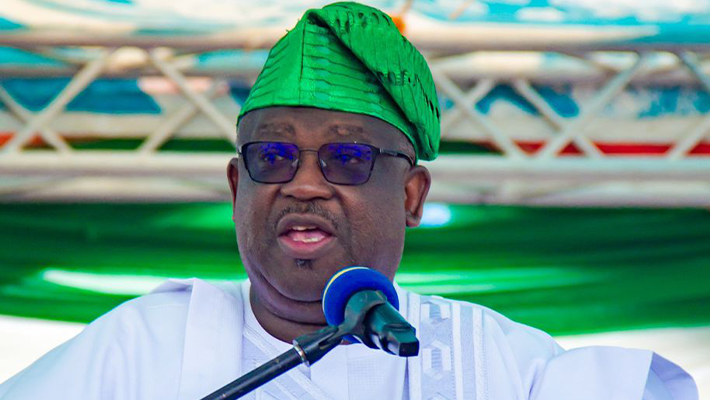
Governor Caleb Mutfwang of Plateau has convened a security council meeting as part of efforts to strengthen peaceful co-existence and security across the state.
The closed-door meeting, which held on Wednesday in Jos, had all heads of security agencies in the state and members of the State Executive Council in attendance.
The meeting focused on reviewing Plateau’s security situation over the last few days and developing proactive strategies to prevent further breaches to sustainable peace in the state.
Speaking after the meeting, the Commissioner of Police (CP) in the state, Bassey Ewah, said the session provided an opportunity to assess recent developments and outline a clear direction for coordinated security operations.
“His Excellency summoned this meeting to review the past week and enable us plan effectively for the days ahead.
“The curfew has now been adjusted to run from 6:00 a.m. to 6:00 p.m., and we have been directed to ensure strict compliance.
“All other existing restrictions remain in force, including the ban on commercial motorcycle operations and the regulation of tricycle movements. Security agencies are fully committed to maintaining law and order.
“Anyone arrested for violating the curfew will be prosecuted. Laws are meant to be obeyed; if you break them, you must face the consequences,” he said.
While addressing concerns circulating on social media over alleged protests by some residents in the state, Mr Ewah dismissed the claims, emphasising that the situation was calm.
“All decisions are aimed at ensuring peace, so to the best of my knowledge, there have been no protests and no breakdown of law and order,” he added.
The CP urged residents to support ongoing security efforts by complying with directives, stressing that unity among security agencies remains strong.
“We operate as one team, and I assure citizens that we will continue to work tirelessly to ensure peace,” he said.
Speaking at the meeting, Hamisu Anani, chairman of the Association of Local Governments of Nigeria (ALGON) in Plateau, described the meeting as critical in addressing recurring security challenges, particularly within the Jos metropolis.
Mr Anani disclosed that local government councils were adopting tailored strategies to respond to security threats based on their unique circumstances.
“Each local government will develop strategies based on its peculiarities. We are working closely with security chiefs, reviewing reports from the field, and strengthening collaboration to effectively tackle insecurity across the state,” the ALGON scribe said.
(NAN)

News
MainOne’s Opeke: Africa must turn connectivity into digital businesses that last – Technology Times
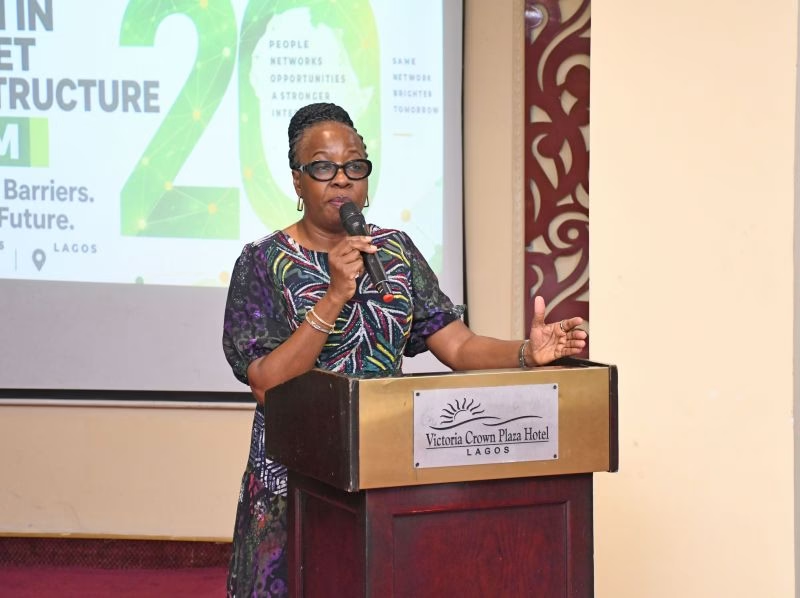
Africa’s expanding internet connectivity must now translate into sustainable digital businesses that create jobs, attract long-term investment and retain more economic value on the continent, according to Funke Opeke, Managing Director of MainOne.
Opeke said Africa’s digital economy had reached a point where expanding access alone was no longer sufficient, arguing that governments and technology stakeholders must focus on building businesses capable of surviving market pressures and generating lasting economic value.
Opeke, the founder of MainOne, who became Managing Director of the undersea cable company following its April 2022 acquisition by Equinix, made the call in a LinkedIn post while reflecting on the evolution of Africa’s digital economy, 16 years after MainOne’s submarine cable entered service in 2010.

“Sixteen years on, far more of Africa is online. The harder question is how much of that access we are converting into businesses that last, and recent weeks have not been encouraging,” Opeke said.
MainOne’s founder reflects on Africa’s digital evolution
Although connectivity has expanded significantly across the continent, Opeke said the harder challenge is converting that access into sustainable economic growth.
“Sixteen years on, far more of Africa is online. The harder question is how much of that access we are converting into businesses that last, and recent weeks have not been encouraging,” Opeke said.
She pointed to the withdrawal of Uber from Nigeria after 12 years of operations in September, followed by Moove, whose business depended on Uber’s platform, as examples of the difficulties facing technology businesses in African markets.
Opeke also cited Microsoft’s announcement of the closure of its Nairobi engineering centre, two years after shutting its Lagos engineering centre, as another indication of the challenges surrounding long-term technology investments on the continent.
According to Opeke, technology companies operating in Africa face several pressures, including currency instability, high operating costs, regulatory unpredictability, weak purchasing power and investment priorities determined by international markets.
International technology companies may successfully enter African markets but still struggle to establish commercially sustainable operations, she said, while local platforms face similar economic pressures and competition from businesses with greater scale and stronger monetisation systems.
She argued that the sustainability of technology businesses should become a more important measure of Africa’s digital progress than market entry or isolated success stories.
“The measure that matters is how much new investment we are converting into businesses that stay and grow and create jobs and value that remain in our economies,” she said.
Opeke challenges Africa to find its next digital growth sectors
The MainOne managing director also challenged African technology stakeholders to identify more everyday needs that digital solutions could address at scale.
She pointed to fintech as an example of how technology businesses can expand by addressing fundamental economic activities.
Financial technology companies have grown partly because they addressed universal needs such as money transfers and payments, Opeke said, but argued that Africa must identify other sectors where digital innovation could generate comparable economic opportunities.
“Fintech scaled partly because it met a universal need: moving money and making payments. But the story is not over. Which other basic needs can digital solutions meet, at scale? And how do we ensure we retain value in Africa?” she asked.
Her argument shifts the focus of Africa’s digital-economy debate from the number of people connected to the internet to what those connections produce in economic terms.
For Opeke, the objective should be to build companies and digital services that can scale, remain operational through economic cycles and create employment and other forms of locally retained value.
Africa needs stronger local digital value chains
Beyond developing digital products and services, Opeke called for greater investment in technology value chains within Africa.
She identified telecommunications networks, data centres, cloud platforms, devices and locally developed software as critical components of a stronger digital economy.
Building these capabilities locally, she argued, would allow African economies to retain more of the value generated by their expanding digital markets rather than relying heavily on technology infrastructure and services located outside the continent.
Opeke said global technology operators would not automatically establish these value chains in Africa because investment decisions are influenced by the availability of commercially attractive opportunities, skilled professionals and predictable policies.
“Global operators will not locate these value chains here by default. They go where the economics, skills and policy make it pay to stay,” she said.
She therefore urged African governments and industry stakeholders to create the economic conditions, develop technical capabilities and support businesses needed to attract long-term investment and strengthen the continent’s participation in the global digital economy.
For Africa, Opeke said, the challenge is increasingly about ensuring that expanding connectivity translates into productive economic activity, sustainable businesses, employment opportunities and digital value retained within African economies.

The Nigeria Democratic Congress, NDC, presidential candidate, Mr Peter Obi has rated himself above President Bola Tinubu and former Vice President Atiku Abubakar.
Obi made the declaration on Saturday during a town hall meeting in Owerri, Imo State, as part of his ongoing engagement with Nigerians ahead of the 2027 general elections.
He stated that he stands taller than the two political heavyweights in terms of competence, character, capacity and compassion to lead Nigeria.
According to the former Anambra State governor, his track record in office, his prudent management of resources and his performance in the 2023 presidential election where he defeated Tinubu in Lagos, prove that he is better positioned to rescue Nigeria in 2027.
He insisted that Tinubu has failed to deliver on his Renewed Hope agenda, while Atiku represents the old order that Nigerians have rejected.
"I'm better than Tinubu, Atiku. I have a better track record. I managed Anambra well without borrowing. I left billions in the coffers. Nigerians know who can manage this country," he added.
Obi's bold statement is already generating heated reactions on social media.
While supporters of President Tinubu and Atiku have knocked him for bragging and being desperate for power, his loyal supporters, the Obidients, have hailed him as the only credible and competent candidate to take Nigeria out of its current woes in 2027.
-

 News3 days ago
Upwind raises $400M after walking away from Datadog acquisition offer
-
News3 days ago
GOVERNOR MUTFWANG OPENS 11TH JOS NATIONAL TRADE FAIR, TARGETS INDUSTRIAL GROWTH FOR PLATEAU
-
Business3 days ago
NCC seek stronger cyber resilience as AI intensifies cyber threats
-
News3 days ago
Granola crunches up a dictation feature to compete with Wispr