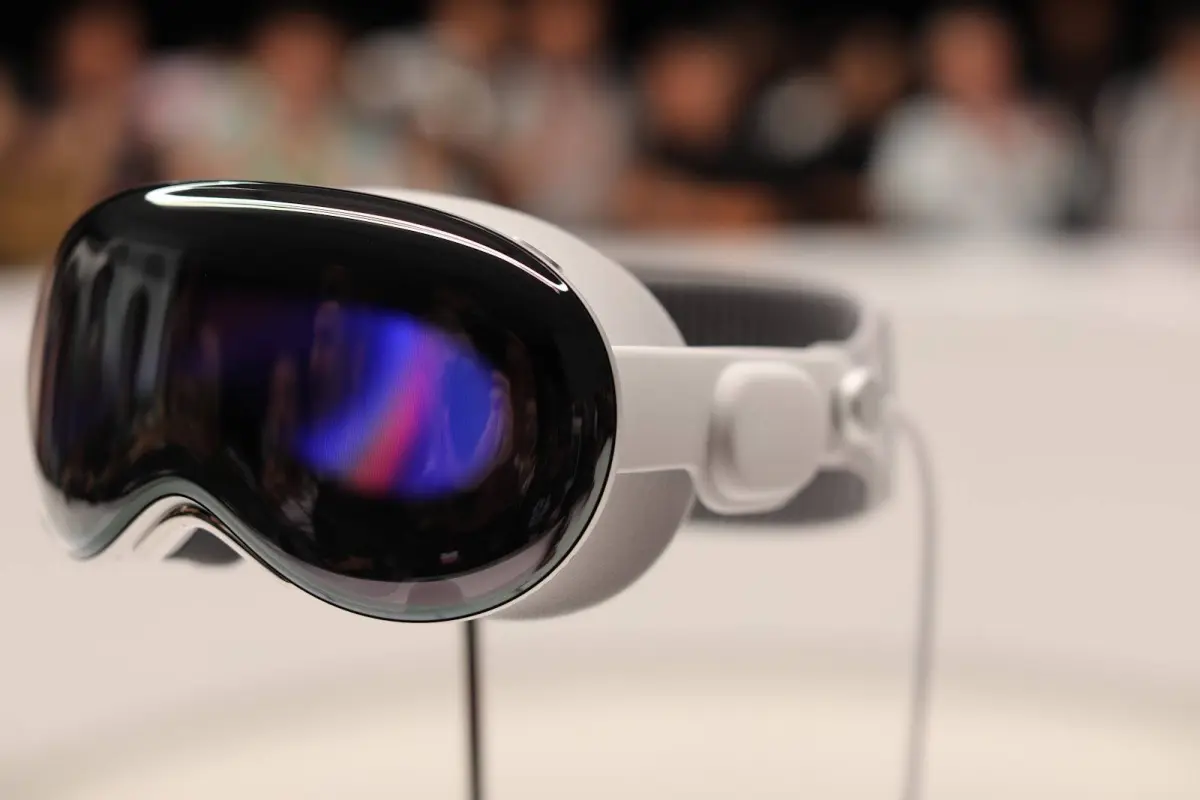
Paul Meade, the Apple vice president in charge of the Vision Pro headset, is leaving the company to join OpenAI’s hardware team, according to Bloomberg’s Mark Gurman.
Gurman frames this departure as a byproduct of John Ternus’ imminent elevation to Apple CEO, and of Ternus’ decision to shake up the hardware engineering team, which left some of the company’s vice presidents feeling like they’d been demoted.
Nigeria is facing significant outbreaks of cholera and diphtheria, with more than 65,000 suspected cholera cases recorded across 35 states and about 195 Local Government Areas. More than 10,000 confirmed diphtheria cases have also been reported in 2026.
The Director-General of the Nigeria Centre for Disease Control and Prevention (NCDC), Dr. Jide Idris, disclosed the figures in Abuja while providing an update on the country’s response to both outbreaks.
The NCDC has intensified disease surveillance and deployed National Rapid Response Teams to affected states, including Borno, which has recorded the highest number of cholera cases. Teams are investigating transmission sources and assessing water, sanitation and chlorination gaps.
To control cholera, authorities are bringing treatment closer to affected communities while expanding oral rehydration points, strengthening treatment centres, improving water chlorination and conducting oral cholera vaccination in high-burden areas.
The response to diphtheria is focused on reactive vaccination, early detection and treatment, particularly in Kano, Borno and Bauchi, where cases remain concentrated. Healthcare workers have also been urged to quickly identify, report and manage suspected cases.
The NCDC stressed that federal intervention alone cannot end the outbreaks. States and Local Governments must strengthen immunisation, improve access to safe water and sanitation, repair critical infrastructure and ensure communities have adequate treatment and rapid-response services.
Although declining cholera cases and improved survival rates are encouraging, the NCDC warned against complacency. Communities are advised to use safe water, practise good hygiene, prepare food safely and seek medical attention early. Anyone with frequent watery diarrhoea should begin oral rehydration immediately and visit a health facility, while parents and caregivers should ensure children are fully vaccinated against diphtheria.
I am nothing if not a huge movie buff. I watch way too many of them, and I’m always on the hunt for a new format in which to experience them. So when XREAL, the smart glasses company, sent me an a01 — one of its newer models, which it released in May of this year — I was eager to give them a spin as the newest vector by which to satisfy my media fanaticism.
The a01 isn’t a particularly sophisticated smart glasses model. Unlike more software-heavy AR glasses like, say, the Meta Orion or Snap’s Specs, it’s basically just an external monitor. It also doesn’t have a battery or an internal power mechanism. Instead, a simple USB-C cable plugs the glasses into a device of your choosing, which then becomes the headset’s power source. It’s also not so expensive, at an accessible price point of around $300.
The a01 is actually optimized for gaming, in that it can be plugged into a Steam Deck or other handheld gaming device. However, XREAL also advertises them as a way to watch movies and TV — and since that’s more my speed, once I had the a01 in hand, I plugged it into my personal laptop and booted up the Criterion Channel. I then sat watching David Lynch’s film Wild at Heart for a while, enjoying a sequence where Nicolas Cage, dressed in a snakeskin jacket, beats up a guy in a bar and then sings an Elvis song.
I’ll say this: the images look quite good. The glasses, which come outfitted with dual mini OLED panels, provide quite a nice image (those panels offer a 1080p resolution with up to 1,600 nits of brightness), with very vibrant colors. If you aim the glasses at a wall, it feels vaguely like you’re using a really vivid home projector — or perhaps are at a drive-in movie. In a dark room, you’re one step closer to the in-theater experience.
However, the overall experience also brought some questions to mind. Namely, why would I sit next to my computer with glasses on my head watching a thing that is also playing on my laptop only 14 inches away? The reason, XREAL offers, is that the glasses are more immersive (indeed, they claim the device’s projections are equivalent to viewing content on a 147-inch screen). Still, the redundancy of watching a movie while it plays right next to you makes you question what the actual purpose of the device is.
XREAL has suggested that the glasses can function as a “second monitor” (indeed, they’ve actually been referred to as a “wearable display”) but the functionality of this is, again, questionable. It’s rather difficult to see anything other than what the glasses are projecting — which would make it quite difficult to, say, work on a laptop while also wearing them.
The glasses can also be connected to your phone. Unfortunately, I have an older iPhone, which means that the a01’s cable is not compatible with the phone’s port. An adapter would have been necessary to link the two.
The user experience is easy enough to imagine, however. Connecting the glasses to a phone changes the situation in that you’re not captive to an indoor experience anymore as you would be with a heftier device like a laptop. You can watch a movie while you’re traveling on a plane or a train (or, hell, while you’re walking down the street — although I would say this last option is generally ill-advised unless you want to accidentally walk into traffic).
Image Credits:Lucas Ropek/TechCrunch
However, there are still inconvenient limitations with using the device this way. For one thing, the glasses still only function as a screen-mirroring device — meaning that the screen of your phone needs to remain active while you’re using the glasses. This brings us back to the redundancy problem. You’re watching a video on a screen attached to your face while the same video plays on a different screen that is located less than a foot away. You could partially solve this issue by putting the phone in your pocket, but the chances seem high that any jostling might upset the device’s playback functionality.
It’s worth noting that the device can also be paired with a separate device, dubbed the Beam Pro, which is essentially a mini-tablet and can act as an isolated streaming hub. Users download shows and movies onto the Beam, connect it to the glasses, and watch. However, this device will cost you another $200.
Then there’s the heat. It doesn’t take long for the a01 to start warming up — producing an odd tingling sensation on the bridge of your nose and over your eyes. This is, of course, not an experience unique to XREAL’s products — it’s a well-known defect of most XR glasses. You can only cram so much computing into a small plastic device before all the electrical processing begins to warm everything up. Still, it’s a tad disconcerting, and not exactly what you would want from an accessory that you’re wearing on your face.
I will say that — heat aside — the a01 is a relatively lightweight and comfortable device — and it isn’t overly cumbersome like other smart glasses that I’ve worn. (Having given Snap’s Specs a try at CES earlier this year, I promise you those are significantly heavier — although it’s also a very different kind of device than the a01.)
Image Credits:Lucas Ropek/TechCrunch
XREAL continues to iterate its product line, with each new device seeming to improve upon the previous one. Indeed, some of the existential dilemmas present in the a01 and previous XREAL headsets seem to have been ironed out in the company’s newest (and yet to be released) device: Project Aura — which I caught a glimpse of during my visit to Google I/O earlier this year — promises a significantly more immersive and convenient experience.
The Aura is powered by Android XR, an extended reality operating system developed by Google and Samsung. The Aura comes with native hand tracking (which is absent in the a01), as well as access to the Google Play Store, giving the glasses significantly more interactive abilities and AR potential. It also comes with a puck, tethered to the glasses, that acts as both the charging source and a compute node. The puck, which can be easily placed in your pocket, means that — unlike the a01 — you have substantially more mobility and you don’t have to keep it plugged into a separate device.
Let’s return to the a01, though. Unfortunately, from a cinephile’s perspective, watching movies on a pair of sunglasses just isn’t ideal. In general, movie fans like a big screen — the bigger, the better, really. In a world of 4K OLEDs of varyingly gargantuan sizes, consumers have a lot of options. My TV — a 55-inch TCL S-series — isn’t even a particularly powerful device, but it provides a home-viewing experience that is more comfortable and satisfying than what the a01 can provide. To my mind, watching a movie at home on a large flat screen is second only to actually going to a theater. Watching a film on tiny screens less than an inch from your eyes, meanwhile, is an interesting experience for its distinct sense of immersion but not what I’d call optimal.
The a01 is an interesting glimpse into a hardware industry that continues to evolve and that is still finding its footing with consumers. I’m curious to see how the user experience shifts with XREAL’s upcoming Aura, and I’m game to reevaluate my movie-watching preferences when that time comes.
When you purchase through links in our articles, we may earn a small commission. This doesn’t affect our editorial independence.