News
APC Guber Aspirant, Sunday Biggs consoles victims of attacks in different Plateau Communities


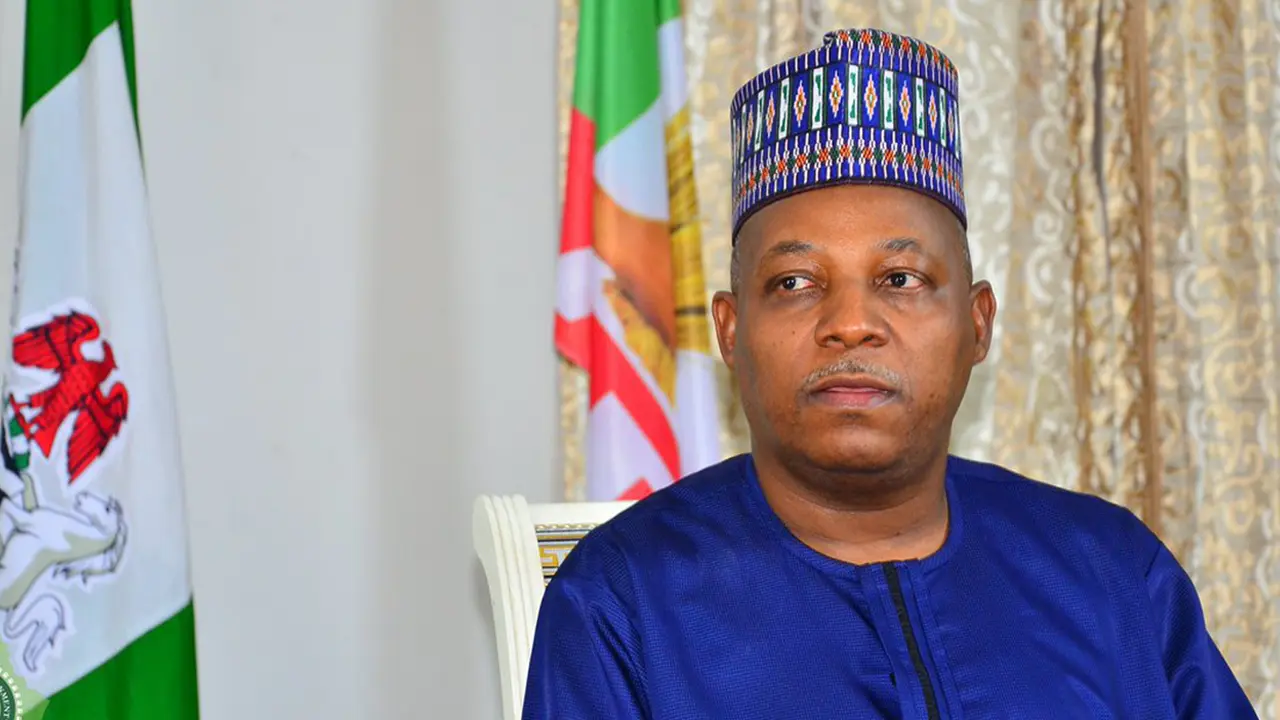
The Vice President, Kashim Shettima, on Saturday accused the African Democratic Congress, ADC, presidential candidate, Atiku Abubakar of listening to ill-advice from voodoo economists to restore the fuel subsidy.
Speaking during President Bola Tinubu's presidential campaign in the Ikwerre area of Rivers State, Shettima said the Nigeria Democratic Congress, NDC, presidential candidate, Peter Obi, has gone into political irrelevance.
The vice president also disclosed that some political charlatans from the opposition are trying to demonise the president.
According to Shettima: "Winston Churchill, the onetime British Prime Minister, once said truth is so precious that it has to be surrounded by a bodyguard of lies; hence, it's not only amazing but to define as heartbreaking that political charlatans on the other side of the divide are making efforts to demonise President Tinubu instead of celebrating him.
"Atiku Abubakar, with a certificate in hygiene from a Kano School, is intellectually malnourished and was ill-advised by some voodoo economist to restore fuel subsidy, and my friend, Peter Obi, has gone into political irrelevance."
Shettima also described the president as a decent man, stressing that Nigeria's economy has witnessed a significant improvement since he assumed office.
"I dare say without any fear that Tinubu is a decent man. When he attained the mantle of leadership some three and a half years ago, our economy was on the verge of collapse; we were on our way to Kinshasa. Instead of kicking the ball down the road, instead of demonising his predecessor, the president had the moral courage and conviction to take the bull by the horns," he added.
2027: Atiku listens to voodoo economists, Peter Obi now politically irrelevant – Shettima

Just after dawn on a humid morning in May, Enomfon Okure stepped out of her apartment on Braimoh-Igbo Street in Itafaji, Lagos Island, preparing for another workday in nearby Ikoyi.
Before taking a few steps, she instinctively covered her nose.
The stench had become part of her mornings since January 2025, when she moved into the neighbourhood with her family.
Beside the road, black wastewater flowed slowly through an open drainage channel. At intervals, more toilet waste gushed from pipes protruding from nearby buildings and emptied directly into the drain.

Flies hovered over the murky water as pedestrians squeezed along the narrow walkway, trying to avoid contact with it.
For Mrs Okure, a nurse and mother of four, the scene has become an inescapable part of daily life.


“I am struggling to survive here,” she told PREMIUM TIMES.
“My husband rented this place because it is close to my office in Ikoyi. But when I arrived, I discovered that almost all the gutters in the area receive wastewater from houses. Some of them even carry human waste.”
Her greatest concern, she said, was the safety of her children.
“I don’t allow them to play outside because if they fall into the gutter, it will be dangerous,” she said.

Eventually, Mrs Okure said the situation became unbearable.
“I discussed it with my husband and decided to send the children back to Akwa Ibom to stay with relatives,” she said. “This environment is a gateway to diseases.”
Over several weeks, PREMIUM TIMES visited Braimoh-Igbo Street, Obe Street, Alli Street, Massey Street, Kakawa Street, Okepopo Street, Isale Gangan Street, Adeniji Adele, Tinubu Square and other parts of Lagos Island.
Across residential and commercial areas, this newspaper observed pipes from buildings discharging wastewater and toilet water directly into public drainage channels.

Beyond residential neighbourhoods
The problem extends beyond residential areas.
At Tinubu Square, one of Lagos Island’s busiest commercial centres, traders told PREMIUM TIMES that wastewater and sewage from public toilets and commercial buildings flow into the drainage network serving the area.
David Nonso, who sells clothing materials there, said traders had endured the foul smell for years.
“All the toilets in this market are connected to the drainage,” he said.
“When people flush, everything goes into the gutters. The smell can be terrible, especially when it rains or when the weather is very hot.”

PREMIUM TIMES observed wastewater and sewage flowing through open drains beside rows of shops as traders and shoppers moved through the commercial district.
Mr Nonso attributed the problem partly to the dense development on Lagos Island, where buildings are packed closely together.
“Their houses are too close to each other,” he said. “Nobody is even giving space for somebody to do soakaway.”
Ibrahim Abubakar, a tailor in the area, also said wastewater regularly flows through the drains in front of the market.


Another trader, Emeka Uzor, who sells electrical goods, expressed concern about the health implications for traders, customers and residents who come into contact with the polluted environment.
“The drainage was meant to carry rainwater, but now it carries everything,” Mr Nonso said. “People have become used to it because it has been happening for years.”
He said a disease outbreak in such a crowded commercial area could affect far more than the traders who work there.
“When disease breaks out, it affects everybody,” he said. “Even our children don’t come there because it is very bad. If somebody falls into that gutter, that one is terrible.”
Buildings over drains
PREMIUM TIMES also found another practice that could complicate efforts to inspect and maintain public drains.
In several locations, sections of drainage channels disappeared beneath buildings before re-emerging further down the street.
On parts of Braimoh-Igbo Street, Obe Street and adjoining roads, the newspaper observed buildings sitting over sections of drainage channels, leaving parts of the drains inaccessible from the street.
Residents alleged that some landlords had extended their buildings over existing drainage alignments and were using the concealed sections to channel wastewater and sewage from their properties.
PREMIUM TIMES could not independently determine what was being discharged into the sections concealed beneath the buildings. However, dark, foul-smelling wastewater was observed emerging from some drains further downstream.
On 17 June, this newspaper contacted the Lagos State Building Control Agency (LASBCA) through the Freedom of Information (FOI) to seek clarification on the approval and regulation of building structures that allow residents to channel toilet pipes directly into public drainage systems. The newspaper also sought the agency’s response to the widespread practice of constructing buildings and shops on drainage channels.
Despite repeated visits to the agency’s office in an attempt to obtain answers, LASBCA did not respond to the enquiries.
For residents, however, the consequences are visible on the streets. Wastewater continues to flow through open drains around homes and businesses, even where its precise source is hidden beneath concrete.
What the law says
The practices documented by PREMIUM TIMES are prohibited under Lagos State’s environmental regulations.
The Lagos State Environmental Management and Protection Law, 2017, places responsibilities on property owners and occupiers to maintain their premises and prohibits activities that could obstruct drainage infrastructure or pollute the environment.
Under Section 112 of the law, owners and occupiers are required to keep their premises clean, including surrounding gutters and drains.
Section 118(1)(a) prohibits the construction of structures on drainage alignments, sewers, footpaths and required road setbacks.
The provision is relevant to PREMIUM TIMES’ findings on parts of Lagos Island, where sections of drains disappeared beneath buildings before re-emerging further down the streets.
The law also addresses the discharge of untreated waste.
Section 185 provides that a person must not discharge untreated waste or chemical substances into the environment except in accordance with applicable regulations or federal law.
For certain establishments, including housing estates, hotels and commercial facilities, Section 188(1) prohibits the discharge of trade and industrial effluent into public drains or the natural environment without a permit from the relevant agency.
Section 115(4) also prohibits the indiscriminate dumping of domestic, industrial or commercial waste along roads, channels and other specified locations.

Beyond the environmental law, Lagos building regulations require developers to provide appropriate systems for disposing of wastewater from buildings. These include public or private sewers, septic tanks with appropriate secondary treatment, wastewater treatment systems or cesspools.
Yet PREMIUM TIMES observed pipes from residential and commercial buildings discharging wastewater directly into public drains in several parts of Lagos Island.


Enforcement has not stopped the practice
The state has previously taken action against properties accused of violating wastewater and environmental regulations.
The Lagos State Wastewater Management Office (LSWMO) sealed a property in Okota after discovering that raw sewage from its septic tank was being discharged into a public drainage system.
Three months later, enforcement officers shut a residential property on Apongbon Street on Lagos Island for allegedly releasing faecal matter into public drains.

In September 2025, LSWMO sealed EMCEL Court Phase I and Well Stock Apartments in Ikota GRA, Eti-Osa, accusing the facilities of discharging untreated wastewater into public drains and the surrounding environment.
The agency has carried out similar enforcement in other parts of Lagos. In August 2025, it sealed residential properties in Abule Egba and Lekki, Eti-Osa, after accusing occupants of deliberately pumping raw sewage into public drains.
In April, while announcing the return of monthly environmental sanitation, the Commissioner for the Environment and Water Resources, Tokunbo Wahab, reminded residents to keep drainage channels around their properties clean and dispose of waste properly, warning that violators would be sanctioned.
Despite these enforcement actions and warnings, PREMIUM TIMES found wastewater still flowing through public drains in several communities on Lagos Island.
Billions spent on drainage infrastructure
The conditions documented by PREMIUM TIMES are occurring despite substantial public investment in Lagos’ drainage infrastructure.
According to the Lagos State government’s 2024 Citizens’ Accountability Report, the Office of Drainage Services and Water Resources spent about N45.53 billion during the year, representing 99 per cent of its total budget of N46.06 billion.
The expenditure covered several drainage-related projects, including construction, dredging and rehabilitation.
The state reported spending N13.65 billion on drainage construction and dredging across Lagos and N11.48 billion on the rehabilitation of drainage systems across local government areas. Another N9.36 billion was recorded for dredging and construction, while N2.30 billion went towards outstanding liabilities on drainage construction.
These expenditures are primarily related to drainage and flood management and should not be confused with spending on sewage or wastewater treatment, which is handled separately by the Lagos State Wastewater Management Office.
They are nevertheless relevant to another finding of this investigation: public drains in some of the communities visited were being used for purposes for which they were not designed, while sections of drainage channels had also been built over or otherwise made difficult to access.
The Lagos State government itself describes maintaining drainage rights-of-way, cleaning drains and dredging canals as important parts of its flood-control efforts.
Yet on parts of Lagos Island visited by PREMIUM TIMES, drains intended to convey stormwater were also carrying household wastewater and refuse.
The state’s budget records show that drainage expenditure is spread across several programmes and budget lines, making it misleading to use a single administrative allocation as the government’s total spending on drainage.
Lagos State government muted
The questions were put to the Lagos State government in writing. Getting answers, however, proved more difficult.
On 17 June, PREMIUM TIMES submitted an FOI request to Mr Wahab, asking what the ministry knew about illegal sewage discharges, how it monitored properties connected to public drains and what action it had taken against offenders.
The request did not end there.
On 30 July and again on 4 August, PREMIUM TIMES returned to the commissioner’s office to follow up and give the ministry another opportunity to respond to the findings of the investigation.
During the second visit, Mr Wahab’s secretary sat in his office, went through his records and then delivered the commissioner’s position before heading downstairs to the car park.
“The commissioner says he is not interested,” he said.
That left unanswered questions about whether the ministry had identified properties discharging sewage into public drains, how widespread the practice was and whether anyone had been sanctioned.
PREMIUM TIMES also tried to establish whether the conditions documented on Lagos Island were reflected in the health records of children living in the area.
In June, the newspaper visited Massey Children Hospital on Lagos Island to request data on children treated for cholera, typhoid fever, acute diarrhoea, dysentery and other waterborne diseases.
The hospital’s administrative department said approval from the Lagos State Health Service Commission was required. A letter requesting the information was submitted and received on 2 July.
There was no response despite follow-up efforts.
A separate FOI request was sent to the Lagos State Commissioner for Health, Akin Abayomi, on 17 June, seeking information on the health implications of poor sanitation and sewage discharge.
When PREMIUM TIMES returned to the relevant offices on 30 July and 4 August, the questions were still unanswered.
However, the open sewage situation in Lagos Island is believed to have contributed to the high cholera cases recorded in the area. Each year, as rainfall intensifies, floodwaters mix with sewage and refuse from clogged drains, spreading diseases like cholera.
In 2024, Lagos accounted for about half of the total cholera cases recorded in Nigeria, with many of these cases reported in Lagos Island.
The Lagos State Waste Management Authority (LAWMA) was also asked to explain what it knew about the problem. An FOI request was submitted to the agency on 17 June, followed by visits and other efforts to obtain a response.
None came.
The Lagos State Wastewater Management Office (LSWMO), however, responded after PREMIUM TIMES sent questions by email. The agency’s response came on 5 August.
According to A. Abiola, who responded on behalf of the agency’s General Manager, Adefemi Afolabi, untreated wastewater, raw sewage and faecal sludge should not be flowing into public stormwater drains or gutters. Such drains, he explained, are meant to carry rainwater, not sewage.
He noted that property owners are expected to provide proper sanitation systems, including septic tanks and soakaways or wastewater treatment plants, depending on the type and size of their buildings.
LSWMO said it checks compliance through inspections, tracing drainage routes, testing wastewater samples and responding to complaints from residents and whistleblowers.
When illegal discharges are found, the agency said it can issue abatement notices and, where property owners fail to comply, disconnect illegal pipes, seal premises, impose fines or prosecute offenders.
The agency said it had issued hundreds of abatement notices across Lagos and sealed scores of residential and commercial properties over the past two years. Some of the enforcement actions, it said, involved properties on Lagos Island.
But LSWMO also offered an explanation for why the practice has proved difficult to eliminate.
Lagos Island, it said, is densely built, with small plots, ageing infrastructure and a high groundwater table. Those conditions can make it difficult for owners of older buildings to install or upgrade conventional sanitation systems. Poorly maintained soakaways can also overflow in areas where the water table is shallow.
Some landlords respond by diverting greywater into gutters, the agency said, but that does not make the practice lawful.

Where a building lacks a proper sewage-disposal system, LSWMO said the owner is responsible for putting one in place. The agency said it can provide technical guidance, while accredited sewage dislodgers can temporarily remove waste during the work.
It also said it was looking at decentralised wastewater and faecal sludge treatment systems for densely populated areas where conventional sewer networks would be difficult or expensive to build.
The agency’s response also shed light on the buildings that PREMIUM TIMES found sitting over sections of drainage channels.
LSWMO said the removal of physical encroachments falls under other urban planning agencies. But where such structures are used to hide illegal wastewater connections, the wastewater office said it can intervene and refer the matter to the appropriate authorities.
Health risks of unsafe wastewater disposal
Health and environmental experts interviewed by PREMIUM TIMES warned that the conditions documented on Lagos Island could expose residents to disease, particularly where wastewater contains faecal matter or contaminates water and food.
Ernest Onyebuchi Nwoke, a Senior Lecturer in the Department of Physiology at Ambrose Alli University, Ekpoma, said untreated sewage in open drains increases the risk of diseases associated with poor sanitation.
He identified cholera, typhoid fever, dysentery, hepatitis A and other diarrhoeal illnesses as particular concerns.

Children, he said, can be especially vulnerable because they are more likely to come into contact with contaminated surfaces while playing.
“Children are especially vulnerable because they frequently come into contact with contaminated surfaces and often put their hands in their mouths,” Mr Onyebuchi Nwoke said.
“Even walking barefoot through contaminated floodwater can expose them to parasites such as hookworm.”
The risks could increase during flooding, he said, when contaminated water from overflowing drains spreads into homes, markets and other public spaces.
“When floodwater overflows, it carries pathogens from drains into homes, contaminates food and water sources, and increases people’s exposure to disease-causing organisms,” he said.
Mr Onyebuchi Nwoke also warned that groundwater could become contaminated where septic systems are poorly constructed, leak or overflow, particularly in areas with a high water table.
He called for stronger enforcement against illegal wastewater connections, regular inspection of drainage infrastructure and improved sewage management.
‘Infrastructure alone cannot solve the problem’
Olamide Martins Ogunlade, Associate Director for Climate Change and Extractives at the Corporate Accountability and Public Participation Africa (CAPPA), said using stormwater drains for wastewater undermines the purpose for which the infrastructure was built.
“Public drains are meant to carry rainwater away quickly to reduce flooding,” Mr Ogunlade said. “When people connect wastewater or sewage pipes to them, they are forcing the drainage system to perform a function it was never designed for.”
According to him, converting stormwater drains into open sewers not only weakens the drainage system but also increases environmental pollution and public health risks.
He said mixing sewage with stormwater creates conditions for the rapid spread of cholera, typhoid, dysentery, hepatitis and other waterborne diseases, particularly during heavy rainfall when contaminated drains overflow into streets, homes and markets. The polluted drains also become breeding sites for mosquitoes and rodents while contaminating nearby rivers and lagoons.
Mr Ogunlade said the shortage of public sewer infrastructure in many parts of Lagos cannot justify the illegal discharge of wastewater into drainage channels.
“Property owners have a responsibility to provide safe and approved wastewater disposal systems,” he said. “Wastewater should be contained and treated, not discharged directly into public drains.”
He also raised concerns over buildings constructed on drainage alignments, saying such developments make it difficult for government agencies to inspect drains, remove blockages, detect illegal wastewater connections and carry out routine maintenance.
“In a flood-prone city like Lagos, preserving drainage corridors is just as important as constructing new ones,” he said. “Once drains are built over, problems remain hidden until a major flood exposes them.”
Commenting on Lagos State’s investment in drainage infrastructure, Mr Ogunlade said building new drains alone would not solve the problem if maintenance, enforcement and public cooperation remained weak.
“Infrastructure alone cannot solve the problem,” he said. “Government must pay as much attention to maintaining existing drainage systems, enforcing environmental regulations and educating the public as it does to building new infrastructure. If wastewater management is neglected, even the best drainage system will eventually fail.”
Discover more from Premium Times Nigeria
Subscribe to get the latest posts sent to your email.
-

 News4 days ago
CrowdStrike to shell out nearly $500M for 2 AI security startups as the market for securing agents takes off
-
News4 days ago
Anthropic is working on a system to prove AI models’ identity
-
News3 days ago
Bandits kill 18-year-old vigilante in Plateau
-
News3 days ago
Zenith Tech Fair 2026 puts agentic AI, digital payments and Nigeria’s tech future in spotlight – Technology Times