News
US Lawmaker Raises Alarm Over Killing of Christians in Plateau

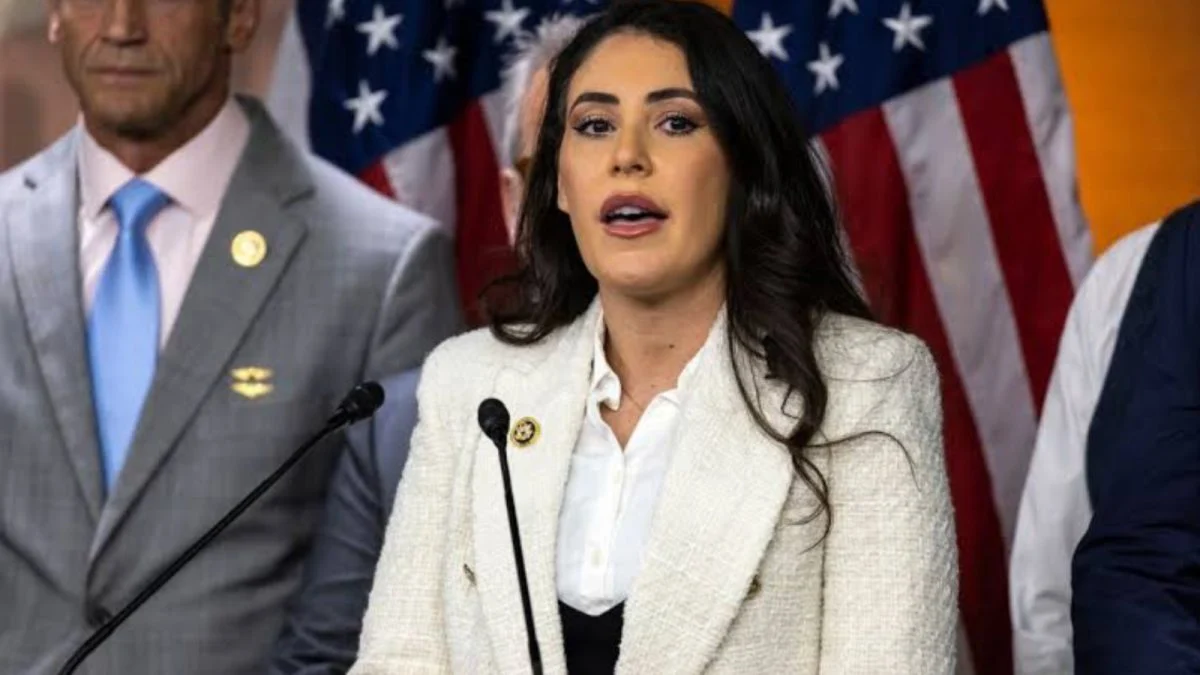
United States Representative Anna Paulina Luna has raised fresh concerns over attacks on Christian communities in Plateau State, alleging that armed groups have continued to target civilians while security agencies struggle to contain the violence.
Luna made the comments in a post shared on her verified X account on Friday.
She also tagged US Secretary of State Marco Rubio and National Security Adviser Michael Waltz in the post.
The American lawmaker described the reported attacks as a serious security concern and called for urgent action over the situation.
In her post titled, “What is happening in Nigeria right now?”, Luna alleged that Christian communities in Plateau had come under repeated attacks by what she described as Fulani ethnic militia terrorists and Islamist extremists.
She said the attacks had left thousands of residents facing serious danger, while Nigerian security forces were struggling to protect vulnerable communities.
“Hundreds of Fulani ethnic militia terrorists descended on Christian communities across Plateau State.
“Thousands of civilians are under mortal threat while the Nigerian Army and security forces struggle to hold the line,” Paulina wrote.
The lawmaker further alleged that the recent violence did not happen in isolation. According to her, several incidents had been recorded before the latest attacks, with civilians and religious figures among those allegedly targeted.
“A pastor and his church secretary were shot dead on their way to church. Five Christians were ambushed in their car.
“A civilian guard was killed outside his own home. A man and his son were beaten and left in critical condition,” the lawmaker said.
Luna also questioned the response of security agencies to warnings reportedly issued before some of the incidents.
She alleged that authorities had received security alerts but failed to act sufficiently on them before the attacks occurred.
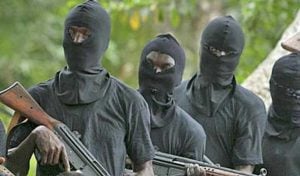
Her comments come amid renewed security concerns in Plateau State, where several communities have suffered deadly attacks in recent months.
The state has continued to face violent clashes involving armed groups, farming communities and herder communities.
The violence has affected rural settlements in areas including Mangu, Bokkos and Barkin Ladi.
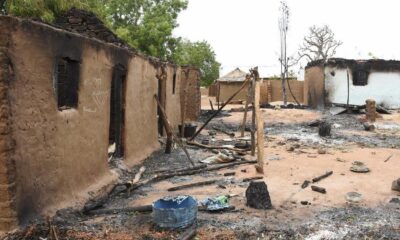
On August 18, armed attackers invaded Binper community in Kombun District of Mangu Local Government Area. More than 20 people were initially reported killed in the attack, while other residents were injured or remained unaccounted for.
The Plateau State Government later said 24 people were killed in the incident when Governor Caleb Mutfwang visited the affected community. Women and children were among those reportedly killed.
The incident added to concerns over the safety of communities in the state, particularly in areas that have witnessed repeated attacks.
The Nigeria Police Force has also previously responded to attacks in Plateau with additional deployments.
In April, following an attack in Angwan Rukuba, Jos North Local Government Area, Inspector-General of Police Olatunji Disu ordered the deployment of additional security assets and directed that those responsible be arrested.
However, allegations concerning the identity and motivation of attackers in Plateau have remained contentious.
In a recent development, the Plateau chapter of the Miyetti Allah Cattle Breeders Association of Nigeria (MACBAN) warned against attributing the killing of a senior police officer in the state to Fulani people without credible evidence.
The group condemned the killing of CSP Dennis David Babale, Deputy Commander of Operation Rainbow, who was ambushed along the Bokkos-Barkin Ladi road. MACBAN said criminal acts should not automatically be attributed to an ethnic group without evidence.
Earlier this month, Governor Mutfwang summoned the Plateau State Security Council for an urgent review of attacks across the state.
The meeting involved security and law enforcement chiefs, traditional leaders and other officials.
Discussions included intelligence sharing, preventive operations, cooperation among security agencies and the protection of communities.
The issue of violence against Christians has also attracted international attention in recent years, particularly from politicians and advocacy groups in the United States.
In July, former US President Donald Trump commended President Bola Tinubu over steps taken to combat violence affecting Christian communities in Nigeria.
The development followed earlier tensions between Washington and Abuja over allegations concerning the protection of Christians.
Nigeria has consistently maintained that insecurity affects citizens across religious and ethnic lines.
In August, more than 50 Christian and Muslim leaders in Nigeria signed an interfaith peace accord in Abuja aimed at promoting religious harmony and reducing tensions.
In a related development, Politics Nigeria had earlier reported that the Fulani Christian Association of Nigeria rejected attempts to link Fulani Christians with the activities of groups accused of involvement in insecurity.
The association said Fulani Christians should not be identified with the activities or positions of Miyetti Allah Kautal Hore and the Miyetti Allah Cattle Breeders Association of Nigeria.
The clarification was made during a gathering in Miango community, Bassa Local Government Area of Plateau State, which itself has experienced repeated attacks.


Plateau United captain Mafeng Pam has declared the team's readiness for the Nigeria Premier Football League, NPFL, Matchday 15 encounter against Ikorodu City.
Mafeng said the players were working to correct the lapses in their last match in Minna.
He insisted that victory was non-negotiable in the game against Ikorodu City.
Plateau United will lock horns with Ikorodu City in Jos on Saturday (today).
"We all know the importance of the match, which requires the utmost seriousness, as everybody is at the top of their game in training," Mafeng told the club's media.
"Everybody is responding well as we are all trying to make corrections to our mistakes from the last game.
"Ikorodu City is a team with character and they will come here with huge determination after the home defeat in the league last week.
"We can't afford to lose the game. A win is non-negotiable. We need three points."

The Federal Capital Territory Administration (FCTA) has activated a multisectoral Cholera Emergency Operations Centre (EOC) to coordinate efforts to contain the ongoing outbreak and prevent further infections and deaths.
In a statement from its Health Services and Environment Secretariat, the administration said the centre was activated on 25 November to strengthen the response across relevant government agencies and development partners, particularly as the Christmas season approaches.
The Director of the Public Health Department, Teresa Nwanchukwu, formally activated the centre on behalf of the Health Services and Environment Secretariat.
The activation meeting was attended by the Director of the Rural Water Supply and Sanitation Directorate (RUWASSA), Joyce Echoke; a representative of the FCT Water Board; and representatives of the World Health Organisation (WHO), UNICEF, Jhpiego, Pro-Health International and the Nigerian Red Cross Society.
The administration said the partners reaffirmed their commitment to supporting the territory’s response to the outbreak.
Other interventions
The FCTA also announced the appointment of the FCT State Epidemiologist, Lawal Ademola, as Incident Manager to coordinate the implementation of the approved Cholera Incident Action Plan through a multisectoral Incident Management System.


 The planned interventions include enhanced disease surveillance and active case searches, laboratory diagnosis, case management, infection prevention and control, water, sanitation and hygiene (WASH), risk communication, community engagement, logistics and vaccination, where appropriate.
It said response activities would be intensified in affected communities, while surveillance and preventive measures would be strengthened in other areas considered at risk across the territory.
According to the World Health Organisation (WHO), cholera is an acute diarrhoeal infection caused by the ingestion of food or water contaminated with the bacterium Vibrio cholerae. It can cause severe dehydration and become fatal within hours if left untreated.
The global health agency estimates that between 1.3 million and four million cholera cases occur annually worldwide, resulting in between 21,000 and 143,000 deaths.
The WHO also identifies inadequate access to safe drinking water, sanitation and hygiene as major factors contributing to the spread of the disease.
Preventive measures
The FCTA urged residents to drink only safe water from reliable sources, advising them to boil or appropriately chlorinate water before consumption where its safety is uncertain.
It also advised residents to wash their hands regularly with soap and safe water, particularly after using the toilet and before preparing or eating food.
READ ALSO: Nigeria recorded 64,000 new HIV infections in 2025 – WHO
Other recommended measures include eating thoroughly cooked food, maintaining proper food hygiene, using sanitary toilet facilities, avoiding open defecation, keeping surroundings clean and ensuring proper waste disposal.
Residents experiencing sudden watery diarrhoea, with or without vomiting, were advised to begin taking oral rehydration solution (ORS), where available, and proceed immediately to the nearest health facility for medical attention.
The FCTA reaffirmed its commitment to working with relevant stakeholders and development partners to contain the outbreak and urged residents to observe preventive measures and cooperate with public health officials.
“For cholera reporting, emergency response and enquiries, please contact: Lawal Lukman Ademola FCT State Epidemiologist and Cholera Incident Manager, Telephone: 09084000085,” it added.
Discover more from Premium Times Nigeria
Subscribe to get the latest posts sent to your email.
-

 Events3 days ago
PENIEL 2026: AGNN Calls for Deeper Encounter with God, Unity and National Transformation
-
Events3 days ago
Plateau Govt Backs AGNN’s PENIEL 2026, Says Unity Among Christians Critical to Peace
-
News2 days ago
‘The Righteous Are Not on the Throne, That Is Why Nigerians Are Suffering’ — SDP’s Adewole Adebayo Fires the APC While Speaking to Press at Jos Conference
-
Business24 hours ago
Plateau Government, BOI, PLASMIDA Back Young Innovators at YAI Bootcamp in Jos