Business
UBA strengthens mobile app security to stop fraudulent debits, withdrawals

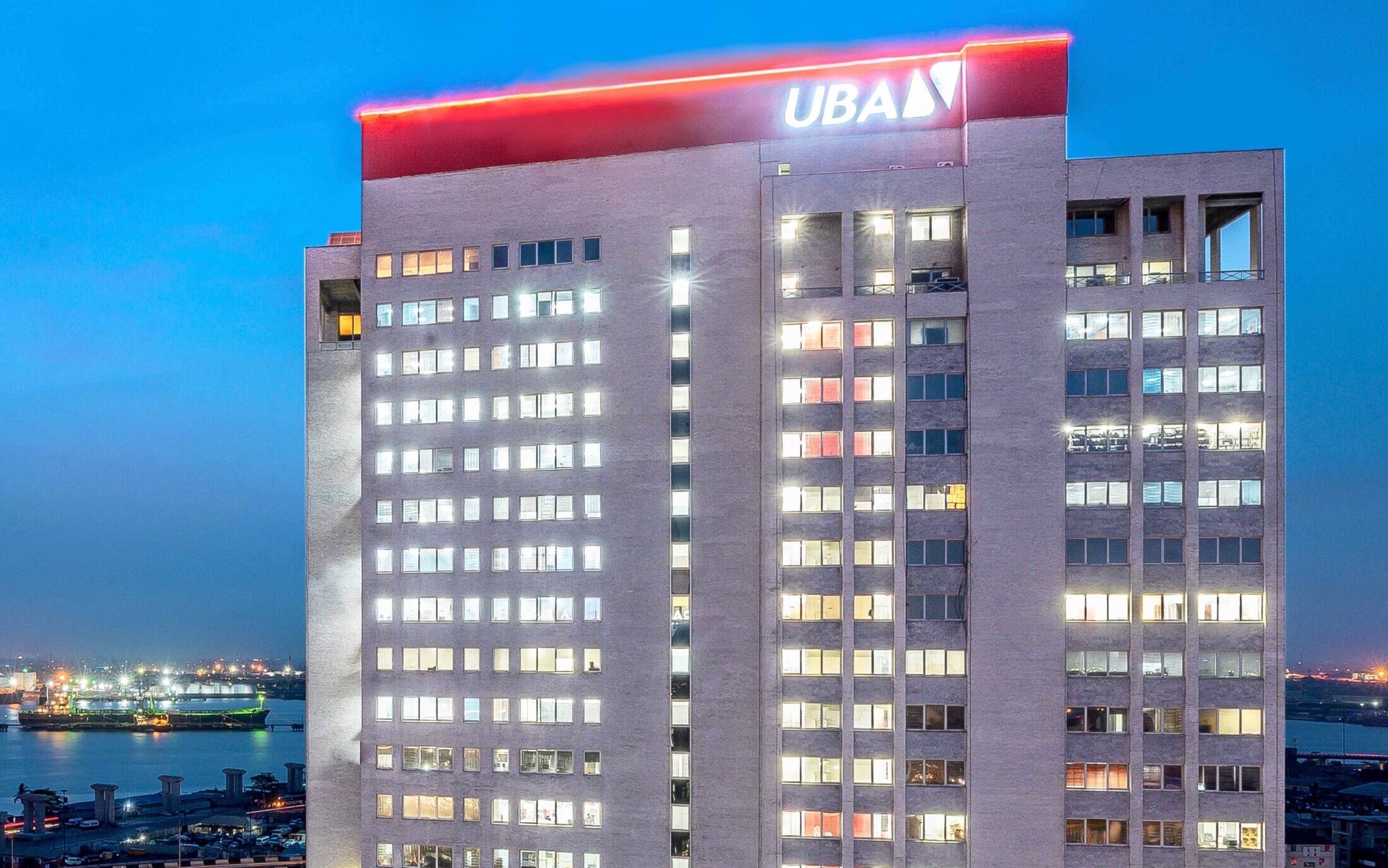
The United Bank for Africa (UBA) says it has strengthened the security of transactions on its mobile application to stop fraudulent debits, unauthorised transfers and withdrawals.
UBA announced this in a memo forwarded to its customers via email on Tuesday.
“We are pleased to inform you that we have further strengthened the security of transactions on the Mobile App.
“Updated authentication options now apply based on the value of transfers,” the memo reads in part.
Securing bank accounts
UBA said in the memo that it had introduced authentication options for transactions of varying amounts to detect and prevent fraud.
According to the bank, transactions of N200,000 or more will now require customers to provide their Personal Identification Number (PIN) and a token number.

For transactions above N200,000 and N250,000, customers will be required to provide their PIN and a One-Time Password (OTP).
They can make use of their PIN and Biometric or PIN and Token numbers to authenticate such transactions.
Customers will be required to provide a PIN and OTP, or a PIN and Token number, when carrying out transactions between N250,000 and N500,000.
For transactions between N500,000 and N10 million, customers must enter their PIN and Token to authenticate the transaction.
For transactions above N10 million, customers must use their PIN, Token, and Biometric to complete the transaction.
“The app will guide you, no need to memorise these thresholds,” the bank assured customers in the memo.
Secure pass
UBA said customers who need to authenticate transactions with Secure Pass can do so by downloading the enabling mobile app and following the instructions.
Secure Pass, formerly known as U-Token, is a mobile application that generates OTPs for authorising high-value internet and mobile banking transactions for UBA customers.
Bank fraud in Nigeria
The latest move by UBA is part of the bank’s efforts to combat fraudulent withdrawals and unauthorised transfers from customers’ accounts.
Twenty-First February this year was a sorrowful day for Muyiwa Popoola, a former deputy vice-chancellor of Ajayi Crowther University, Oyo, Oyo State.
Mr Popoola, a professor, was shocked to receive debit alerts on his mobile phone indicating fraudulent withdrawals of N9.98 million from his Guaranty Trust Bank (GTB) account.
According to him, N4,990,000 was first transferred to an account belonging to Isah Ahmed Ahmed on Paga at 10:19 a.m., before a second transfer of N4,990,000 was allegedly made at 10:21 a.m. to Nasir Nasir Sanusi, also linked to an account on the same platform.
He said he neither authorised the transactions nor compromised his PIN, token or any other security information, but the GTB claimed that the two transactions were authenticated using the professor’s login credentials, including his User ID, password and PIN.
Mr Popoola was shocked. He insisted he did not authorise such transactions, and has since petitioned the Central Bank of Nigeria to intervene in the matter.
But Mr Popoola is just one of the millions of Nigerians who have suffered increased fraudulent withdrawals, unauthorised debits and transactions from their bank accounts.
Like the university lecturer, many victims of bank fraud in Nigeria suffer such fate even without compromising their PIN, token, or any other security information associated with their accounts.
According to a report by the Nigeria Inter-Bank Settlement System (NIBSS), financial institutions in Nigeria lost N52.2 billion to fraud in 2024.
This represents a significant increase of N34.5 billion compared to the N17.6 billion recorded in 2023.
The NIBSS is the central system responsible for settling inter-bank transactions in Nigeria.
It connects Deposit Money Banks (DMB), Mobile Money Operators (MMOs), Switches and Payment Service Providers (PSPs)
SBM Intelligence recently said there has been an increase in fraud cases within Nigeria’s banking sector over the past five years.
For instance, the Africa-focused research firm said financial losses from fraudulent activities surged by N14.71 billion from 2019 to 2023.
“Fraud is common in the financial sector globally. In Nigeria, it is endemic. Although the number of incidents has reduced from a high in 2021, the amount of money lost to fraud has increased significantly,” it said.
“This may indicate that the perpetrators have become better at their act and figured out ways to move larger sums of money undetected,” SBM said.

The Nigerian government delegation was conspicuously absent at the closing plenary of the controversial United Nations climate summit (COP31) in Türkiye, where countries expressed frustration over the failure to reach consensus on key climate issues.
PREMIUM TIMES earlier reported that parties at the United Nations climate change talks in Türkiye failed to reach consensus amid deep divisions over fossil fuel phase-out, just transition, climate finance and other contentious issues.
COP31 President Murat Kurum confirmed during the closing plenary on Sunday that the final draft agreement, the Antalya Pact, would not be approved, despite negotiations being extended by nearly 48 hours beyond the officially scheduled closing date of 20 November.
The development made COP31 the longest climate summit in the convention’s history and arguably one of the most criticised in recent years.
Amid the disappointment, parties and negotiating blocs took turns expressing their positions to the COP president. The frustration and dissatisfaction with the outcome of more than two weeks of negotiations were evident in the tone of representatives who addressed the plenary.
However, despite the controversy surrounding the COP31 outcome, Nigeria’s head of delegation, ministers, and other representatives were absent, even as a few African countries spoke, despite Nigeria having one of the largest delegations at this year’s COP.

PREMIUM TIMES reported that Nigeria ranked third among countries with the highest number of registered participants at this year’s COP, with 1,506 delegates, according to provisional figures released for the summit.
Of this number, 573 participants were registered under the “Party” badge category, while 933 received “Party Overflow” badges.
Nigeria’s delegation to UNFCCC COP31 is usually led by the Director-General of the Nigeria Climate Change Council (NCCC), Teniola Majekodunmi. This year, however, it remains unclear how many of the registered participants were sponsored by the Nigerian government. The council has yet to provide a comprehensive breakdown of participants whose trips were funded with public resources.
At the conference venue, PREMIUM TIMES gathered from some associates of the NCCC director-general that she had left the COP venue midweek.
The lack of disclosure raises concerns about transparency and accountability in the management of Nigeria’s participation in international climate negotiations.
It also limits public understanding of who represents the country in various negotiating groups and technical sessions, as well as who is responsible for advancing Nigeria’s positions on critical climate issues.
Some observers have also expressed concerns that Nigeria’s participation in these conferences sometimes goes beyond diplomatic engagement, with some registered participants allegedly treating the meetings as opportunities for international travel rather than meaningful negotiations.
They argue that inadequate technical knowledge, negotiating experience and understanding of diplomatic processes among some participants could undermine Nigeria’s ability to secure favourable outcomes from the annual climate negotiations.
One of Nigeria’s notable appearances at the summit was the delivery of its national statement by Environment Minister Balarabe Lawal. PREMIUM TIMES reported that the government reaffirmed its commitment to advancing climate action, calling for stronger international cooperation and increased climate financing to accelerate the global response to climate change.
Nigeria reacts after deadlock
In a brief statement issued after the COP plenary ended on Sunday, Ms Majekodunmi said COP31’s failure to reach consensus on an overarching political outcome was disappointing and underscored the continuing challenges facing international climate cooperation.
She noted that the absence of a new political agreement did not diminish the urgency of climate action or invalidate the commitments already undertaken under the Paris Agreement.
“For Nigeria, our focus remains firmly on implementation. We will continue advancing our NDC 3.0, strengthening climate governance, mobilising investment and pursuing an orderly, just and nationally determined energy transition,” she said.
Ms Majekodunmi said the discussions in Antalya reinforced an important lesson: climate ambition must be matched by credible financing, practical implementation pathways and recognition of different national circumstances.
She added that Nigeria remained firmly committed to multilateralism and would continue working constructively with African partners and the wider international community to advance consensus and accelerate climate action.
“Ultimately, Nigeria’s climate progress will be measured not only by emissions reduced, but by jobs created, businesses developed, energy access expanded and livelihoods improved,” she said.
PREMIUM TIMES contacted the DG on Sunday to inquire why she was absent from the closing plenary, why Nigeria had no representative who spoke at the session, and why she left the conference midweek. In what has become her usual practice, she asked a third party to contact our reporter with a response.
A representative of the council, who identified herself as Jummai Vandu, said she had been directed to clarify Nigeria’s position regarding the COP31 closing plenary in Antalya.
She said Nigeria’s national position was fully presented through the African Group of Negotiators (AGN), which serves as Africa’s unified negotiating voice.
According to her, under UNFCCC plenary procedures, countries are welcome to speak in their national capacity, but doing so is entirely optional and not mandatory. In practice, she said, member states routinely align themselves with the AGN.
“Chair’s statement during overtime closing sessions to manage tight time constraints, avoid repetition, and project a unified continental front that maximises collective leverage on key issues. Those African nations that took the floor individually simply chose to add specific national emphasis to the shared regional position already delivered by the AGN,” she said.
She explained that the DG actively championed Nigeria’s core priorities across high-level sessions and bilateral engagements, ensuring the country’s interests were firmly embedded in the final African position.
However, she did not explain why the DG left the conference venue midweek.
READ ALSO: UN chief blames fossil fuel interests for climate inaction as COP31 ends without consensus
COP31 priorities
COP31 was expected to offer countries an important opportunity to advance negotiations on practical measures to address gaps in climate action implementation.
Alongside formal negotiations, the Global Climate Action Agenda was expected to provide opportunities to boost electrification, improve access to climate finance, and cut waste and emissions of super-pollutants such as methane.
PREMIUM TIMES reported that the African Group of Negotiators (AGN), which includes Nigeria, said it would push for increased climate finance, including an ambitious replenishment of the Green Climate Fund (GCF), among other priorities.
The group said securing adequate and predictable climate finance, particularly grant-based and concessional funding, would be central to Africa’s negotiating priorities at the conference.
But the group was not satisfied with the COP outcome. It made its position clear at the closing plenary.
Discover more from Premium Times Nigeria
Subscribe to get the latest posts sent to your email.
-

 Events24 hours ago
Plateau Govt, CAN Strengthen Unity Through 2026 Christmas Carols and Praise Festival
-
Health4 days ago
AMR: Pharmacist urges Nigeria to implement policies to curb drug resistance
-
Business3 days ago
FCMB Group’s profit jumps 86% on strong top-line growth
-
Health3 days ago
AMR Week: Artists, health experts use arts to raise awareness about drug resistance