News
Tinubu Lists States Enjoying Reduced Transport Fares Under CNG Programme

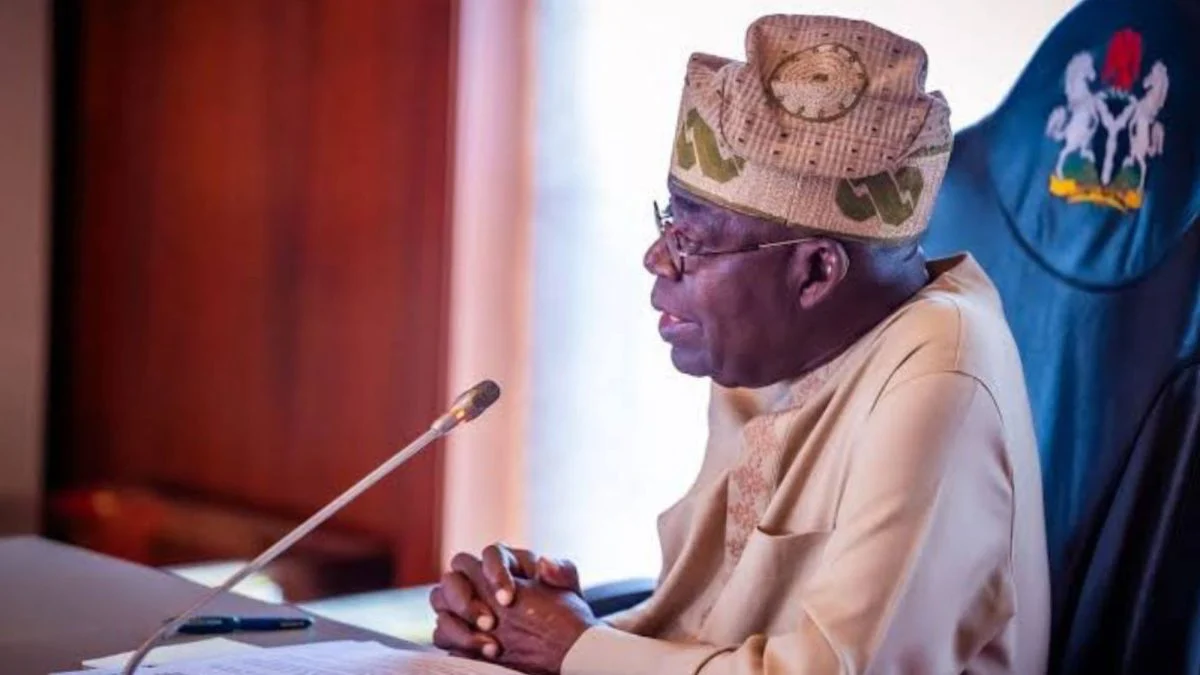
President Bola Tinubu has listed several states where the deployment of Compressed Natural Gas (CNG) and electric vehicles has resulted in significant reductions in transportation fares.
Tinubu, in a statement he personally signed on Saturday, said the reductions followed the Federal Government’s efforts to promote cheaper energy alternatives and directed all states to intensify preparations ahead of the October 1 target for more affordable transportation.
The president recalled that he met with the 36 state governors on August 27, where they agreed on the objective of ensuring that more Nigerians begin to experience measurable reductions in transportation costs from October 1.
He said an implementation committee for the National Affordable CNG Transit Programme was subsequently established under the Nigeria Governors’ Forum, chaired by Governor AbdulRahman AbdulRazaq of Kwara State.
According to Tinubu, the committee, in collaboration with PI-CNG, state governments and other stakeholders, is identifying priority transport corridors and determining interventions that would translate cheaper energy into lower fares.
He highlighted Borno as one of the states where the initiative is already producing significant results, saying CNG-powered and electric public transport services were carrying commuters for between N50 and N100 on routes where commercial operators charge between N300 and N600.
In Kaduna, Tinubu said 100 CNG-powered buses were providing free transportation on major routes, carrying about 3.2 million passengers in their first year and saving commuters more than N3.5bn in transport costs.
He said the deployment of CNG buses to Pacesetter Transport in Oyo State initially reduced the Lagos-Ibadan fare from about N8,000 to N3,200.
Similarly, alternative-energy transit services in Adamawa have reduced fares by as much as 50 per cent, from N8,000 to N4,000, while the Enugu-Nsukka fare dropped from N2,500 to N1,500 following the deployment of 100 CNG buses.
In Plateau State, government-supported buses transport about 13,000 commuters daily for N200, compared with more than N500 charged by commercial operators.
Tinubu also cited Abuja, where the Federal Government’s partnership with the National Union of Road Transport Workers has resulted in a 40 per cent reduction on several routes served by CNG-converted commercial vehicles.
He said fares from Area 1 to Gwagwalada had fallen from N1,500 to N900, Nyanya from N700 to N420, and Wuse from N400 to N240.
In Niger State, the President said passengers on the Suleja-Abuja route now pay N550 instead of about N800, while Abia State has deployed 40 electric buses with fares subsidised by 50 per cent.
“These are not projections. Nigerians are already experiencing these savings,” Tinubu said.
The president also disclosed that Edo State had 50 CNG buses in active service, while Kano had converted more than 1,000 commercial vehicles and was expanding its conversion and refuelling network.
He said Delta, Kwara and Lagos were expanding CNG-supported transport services, while Akwa Ibom had taken delivery of 50 CNG buses ahead of commercial operations.
Tinubu said the Federal Government had invested in building a CNG transportation ecosystem over the past three years, resulting in more than 120,000 vehicles being converted, over 400 certified conversion centres established and more than 90 CNG refuelling stations opened nationwide.
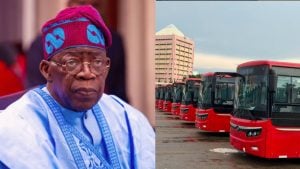
The Nigerian president said the need to accelerate the programme had become more urgent amid renewed pressure on global energy supplies and rising petrol and diesel prices. Recent reports have also documented renewed increases in petrol prices in parts of the country, with transportation costs under pressure.
He argued that Nigeria, as a gas-rich country, could reduce its exposure to fluctuations in global energy markets by expanding domestic alternatives such as CNG.
Tinubu rejected calls for a return to the former petrol subsidy regime, describing it as costly and leaving the economy vulnerable to international oil-price movements.
He urged governors to sustain the momentum towards October 1 by working with transport unions and commercial operators, supporting vehicle conversions and fleet deployment, and facilitating the infrastructure required to ensure that savings from cheaper energy are reflected in fares.
“The Federal Government will continue to support the scaling of CNG infrastructure and access, expand conversion capacity, and create the enabling environment for states, transport operators, manufacturers and private investors to participate,” he said.





A moment of exchange between Imo State Governor Hope Uzodimma and his predecessor, Rochas Okorocha, during the APC presidential campaign rally has drawn public attention.
In a video circulating online, Okorocha is heard calling out to Uzodimma, asking, “Governor Hope, didn’t you see me?” apparently suggesting that the governor had failed to acknowledge or greet him.
Uzodimma, however, responded, “You’re a small boy,” amid handshakes and laughter.
The exchange, which appeared to be friendly banter and a light-hearted greeting, comes days after the Federal High Court in Abuja nullified Uzodimma’s emergence as the APC candidate for Imo West Senatorial District in the 2027 elections and declared Okorocha the winner of the party’s May 18 senatorial primary.
See video
‘Governor Hope, didn’t you see me? — You’re a small boy’
– Moment Governor Hope Uzodimma and former Governor Rochas Okorocha took digs at each other during the APC presidential campaign rally.
Lol 😂 https://t.co/Ph6vUkFNLx
— Emma ik Umeh (Tcee )🇳🇬 (@emmaikumeh) November 4, 2026
“You’re a small boy” — Uzodimma jokes with Okorocha at APC rally [VIDEO]

MTN Nigeria Communications Plc has appointed five new directors to its board as part of efforts to strengthen its operations and support the company’s growth and strategic direction.
The appointees include former Etisalat Nigeria executives, Ibrahim Dikko and Boye Olusanya, who were appointed as independent non-executive directors to the board of the telecommunication company.
The telco giant also appointed corporate governance expert Fabian Ajogwu, Imoni Akpofure and Lwazi Bam as non-executive directors.
The appointments, which take effect from 1 December were disclosed in a regulatory filing signed by the company’s secretary, Uto Ukpanah, on Tuesday.
MTN Nigeria said the new directors were expected to bring their experience and expertise to strengthen the telco giant’s operations.
“The new Directors are expected to bring their wealth of experience and expertise to enhance Board operations and contribute to the Company’s growth and future direction,” MTN Nigeria said.


Profiles
Mr Dikko brings more than three decades of experience spanning banking, telecommunications, information and communications technology, and regulatory advisory.
He served as chairman of First Securities Discount House Limited from 2002 to 2012 and was vice president of regulatory and corporate affairs at EMTS Limited, which operated as Etisalat Nigeria, from 2007 to 2017.
He holds a Bachelor of Laws degree from the University of Buckingham and a Master of Laws degree from Queen Mary and Westfield College, and University of London.
Mr Dikko is a Fellow of the Society of Corporate Governance Nigeria and a Member of the Institute of Directors, Nigeria.
Boye Olusanya
Mr Olusanya, who currently leads FMN Holdings Limited, has more than 25 years of executive leadership experience across the fast-moving consumer goods, agriculture, telecommunications, technology, energy, infrastructure and financial services sectors.
He has led the strategic transformation of FMN Holdings into a vertically integrated, consumer-focused food and agro-industrial business.
MTN Nigeria said Mr Olusanya’s experience includes enterprise transformation, business restructuring, strategic acquisitions, operational turnaround and regional expansion.
Fabian Ajogwu
Mr Ajogwu is a Senior Advocate of Nigeria and professor of corporate governance at Lagos Business School. He is also the senior partner at KENNA LP and has practised law for 35 years.
He assisted the Securities and Exchange Commission in drafting Nigeria’s first Code of Corporate Governance and served on the Financial Reporting Council of Nigeria committee that worked on the National Code of Corporate Governance 2018.
Mr Ajogwu is also the founder of the Society for Corporate Governance Nigeria and has authored several books on corporate governance.
He holds a PhD in Law from the University of Aberdeen, an MBA from IESE Business School in Barcelona and law degrees from the University of Nigeria and the University of Lagos.
Imoni Akpofure
Ms Akpofure brings nearly three decades of experience in finance, infrastructure and sustainability, particularly across Sub-Saharan Africa.
Her career includes senior roles at the International Finance Corporation, CDC Group, now known as British International Investment, and KINA Advisory.
She currently serves on the boards of Africa50 and the Development Bank of Nigeria, where she brings experience in infrastructure investment, sustainable growth and corporate governance.
Lwazi Bam
Mr Bam joined MTN Group as group chief risk officer in June. Before joining the telecommunications group, he served as chief executive officer of Deloitte Africa and Deloitte Southern Africa from 2012 to 2022.
READ ALSO: Access Holdings’ nine-month profit jumps 6% to N474.2 billion
During his nearly three decades at Deloitte, he also served on the firm’s Global Executive Committee and advised organisations on mergers and acquisitions, strategy, governance and risk oversight.
Between 2022 and 2026, he served as a non-executive director on the boards of Standard Bank Group and Valterra Platinum. He currently serves on the boards of Woolworths Holdings Limited and ZEDA Limited.
Mr Bam is a chartered accountant in South Africa and completed the Advanced Management Programme at Harvard Business School.
MTN Nigeria, one of Africa’s largest providers of communications services, connects over 94 million people in communities across the country.
Launched in 2001, the telco operates in 19 markets in Africa and the Middle East, serving over 300 million people.
Discover more from Premium Times Nigeria
Subscribe to get the latest posts sent to your email.
-

 News2 days ago
Plateau APC 2027 Campaign Council inaugurated today in Jos
-
Health4 days ago
Ebola: No new cases in Nigeria as two suspected cases in North-east test negative
-
News3 days ago
Plateau Igbo Community Ends Leadership Crisis, Elects Johnson Nwosu as Eze Igbo IV
-
News3 days ago
NPFL Matchday 11: Shooting Stars Run Riot, Rivers United Held by Rangers as Bendel, Kano Pillars Claim Away Wins