News
Politicians steal result sheets, risk lives of INEC staff – Amaechi warns




Presidential candidate of the Allied Peoples’ Movement, APM, Seyi Makinde, has slammed past and present leaders of Nigeria, saying they lacked and still have no ideas on what to do with the country’s abundant natural and human resources.
Faulting Nigeria’s quality of leaders, Makinde said the country has yet to fully harness its potential because of a lack of innovative ideas and effective leadership.
The Oyo State Governor made the assertion on Wednesday in Abuja at the unveiling of his manifesto.
“Nigeria has the resources and the capacity to achieve greatness. Nigeria is rich in natural resources and human resources, but our leaders are poor in ideas, he said.
“Our simple proposition is that government must make life easier for the people. That is all. Nigeria needs a leadership that works.
“The narrative of projecting Nigeria as being poor, I disagree."
The APM standard-bearer also called for greater government accountability, saying every political promise must be tied to a responsible institution, a delivery plan, and measurable outcomes that citizens can independently verify.
Makinde demanded stronger national institutions to bridge the political gaps in the country and reconcile differences, warning that conflicts must not undermine national development.
Makinde, again, criticised the federal government for shifting its responsibilities to states, especially over the country’s persistent power sector challenges, asking Nigerians to hold the government accountable for its promises.
On Nigeria’s electoral act, the Oyo governor said the current policy, as it is, has the potential to produce presidents without sufficient support from most Nigerians and could create opportunities for compromises that undermine democratic institutions.
The APM candidate urged Nigerians to study his party’s manifesto, challenge existing assumptions and join him in pursuing a new political and economic order that delivers meaningful results.
2027: Makinde faults past, present leaders over failure to harness Nigeria’s resources
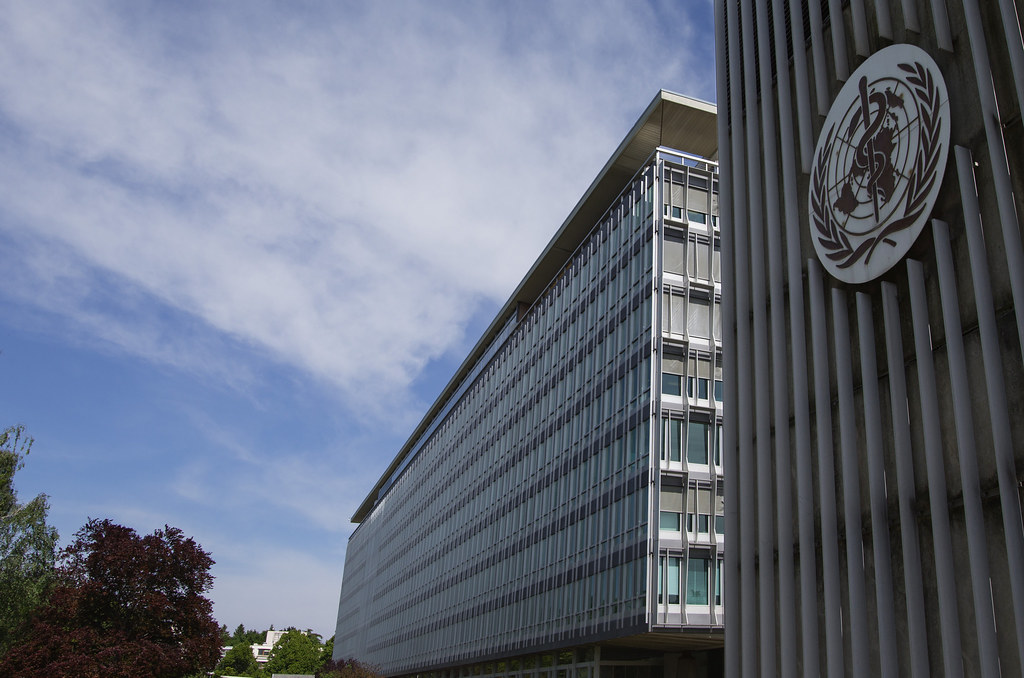
Six proven climate and health interventions could prevent 1.6 million deaths annually and generate trillions of dollars in economic benefits if implemented globally, the World Health Organisation (WHO) has revealed.
The measures, which include heat-health warning systems, access to safe water and sanitation, cleaner household energy and more efficient fossil fuel pricing policies, could generate $3.9 trillion in annual economic welfare benefits and a further $5.4 trillion in fiscal gains.
The WHO disclosed this in a new report titled ‘Global benefits and costs of prioritised actions on climate change and health’, released ahead of the 31st United Nations Climate Change Conference (COP31), where countries are expected to present their climate commitments.
According to the report, the six interventions could prevent one in every 40 deaths globally, based on modelled projections, while avoiding 16.7 billion tonnes of carbon dioxide emissions annually.
The estimated emissions reduction is equivalent to 31 per cent of global annual greenhouse gas emissions, excluding emissions from land use, land-use change and forestry.
The report, which the WHO described as its first comprehensive assessment of the economic and fiscal returns from scaling up the six recommended interventions, highlights the potential health and financial gains of integrating public health considerations into climate policies.


It argues that many health consequences of climate change are preventable through existing solutions, but governments must implement them across health and other sectors that determine people’s health.
Six interventions
The report identifies six interventions: heat-health warning systems, climate-resilient drinking-water services, basic sanitation services, hygiene and handwashing facilities, cleaner household fuels and technologies for cooking and heating, and efficient fossil fuel pricing policies.
The WHO estimates that five of the interventions could generate $24 in benefits for every $1 invested, with returns expected to be greater in low- and middle-income countries.
Heat-health warning systems are projected to deliver particularly high returns, generating an estimated $835 in benefits for every $1 invested.
The report attributes the high returns to the relatively low cost of expanding existing warning systems and their potential to prevent heat-related illnesses.
Efficient fossil fuel pricing policies, however, are projected to deliver the largest overall gains.
Such policies, including removing inefficient fossil fuel subsidies and appropriately taxing fossil fuels, could prevent 1.2 million deaths annually while generating $3 trillion in economic welfare benefits and $5.4 trillion in fiscal gains.
Health at the centre of climate action
Commenting on the findings, WHO Director-General Tedros Ghebreyesus said the climate crisis was also a health crisis, but many of its consequences could be prevented using existing interventions.
READ ALSO: WHO raises alarm as 75% of diabetes cases in Africa remain undiagnosed
He said expanding proven and affordable interventions could save millions of lives, particularly in countries with the greatest need.
“The climate crisis is a health crisis, but much of the harm it causes can be prevented with tools we already have,” he said.
Mr Ghebreyesus urged governments to place health considerations at the centre of climate action as they prepare for the next round of international climate negotiations.
The WHO said countries were already experiencing record-breaking climate shocks in 2026, investing in measures that protect human health and the environment increasingly urgent.
The health body called on governments, development partners and financing institutions to use the economic evidence to scale up the interventions, noting that they could deliver simultaneous benefits for public health, climate mitigation and national economies.
Discover more from Premium Times Nigeria
Subscribe to get the latest posts sent to your email.
-

 News2 days ago
Plateau APC 2027 Campaign Council inaugurated today in Jos
-
News4 days ago
Plateau Igbo Community Ends Leadership Crisis, Elects Johnson Nwosu as Eze Igbo IV
-
News3 days ago
NPFL Matchday 11: Shooting Stars Run Riot, Rivers United Held by Rangers as Bendel, Kano Pillars Claim Away Wins
-
News4 days ago
MainOne’s Opeke: Africa must turn connectivity into digital businesses that last – Technology Times