News
Plateau NDC gov'ship crisis: Peter Obi accused of taking sides


A chieftain of the Nigerian Democratic Congress, NDC, in Plateau State, Comrade Iliya Abdullahi, has accused the party's presidential candidate, Peter Obi, of taking sides in the lingering dispute over the party's governorship ticket in the state.
Abdullahi questioned Obi's perceived closeness to Alfred Ali Dapal, whose emergence as a governorship aspirant has reportedly heightened divisions within the party, while the party's recognised candidate, Da Jonathan Sunday Akuns, allegedly struggles to receive similar support.
The NDC governorship ticket dispute in Plateau State centres on Dapal and Akuns, with both sides laying claim to the party's mandate ahead of the forthcoming election.
Dapal, who previously contested the Plateau State governorship primary of the Peoples Democratic Party, PDP, reportedly left the party following its prolonged internal crisis and joined the NDC.
However, his entry into the NDC was followed by another controversy over the party's governorship nomination. On September 15, 2026, the Plateau State NDC Chairman, Solomon Ndam, reportedly declared Dapal the party's preferred candidate after a substitution primary.
The development further complicated the situation, as Dapal reportedly instituted legal proceedings challenging Akuns' claim to the governorship ticket.
Akuns, on the other hand, has reportedly received repeated recognition from the NDC National Chairman as the party's legitimate governorship candidate in Plateau State.
Reacting to the disagreement, Abdullahi questioned how a political party seeking to establish itself as a credible alternative to the existing political establishment could become embroiled in an internal dispute that threatens its credibility and unity.
Speaking with journalists in Abuja, the NDC chieftain expressed concern over what he described as Obi's apparent association with Dapal, despite the ongoing disagreement over the party's recognised candidate.
He argued that Obi's perceived position could undermine the party's internal structure and weaken the standing of Akuns, whom he said had repeatedly been recognised by the national leadership.
"The question Peter Obi must answer is simple: Why is he being friendly with someone whose political actions and insistence on the NDC ticket are contributing to the destruction of the party's structure in Plateau State? Why is he seemingly pushing away the official candidate whom the National Chairman has repeatedly identified as the only recognised candidate of the NDC in Plateau State?
"Is this really the kind of political judgment expected from a presidential candidate who has consistently preached integrity, due process, institutional discipline and a new political culture?" Abdullahi asked.
He also questioned Dapal's decision to pursue the NDC governorship ticket after previously contesting the PDP primary, insisting that the circumstances surrounding his departure from the former party required clarification.
"More importantly, why is Alfred Dapal so desperate to obtain the NDC governorship ticket? He contested the PDP governorship primary in May 2026 and lost. Why did he not pursue his grievance within the PDP or fight for the ticket he lost there?
"Why abandon that political platform and suddenly become so invested in the NDC, a party whose membership, internal procedures and nomination processes he must necessarily satisfy before seeking its ticket?" he added.
However, Obi has reportedly maintained that he does not ordinarily interfere in the internal affairs of state chapters of the party.
Similar disagreements have reportedly emerged in Akwa Ibom, Delta and Anambra states, where Obi has also refrained from direct intervention in state-level party disputes.
The controversy in Plateau State therefore raises further questions about the NDC's internal dispute-resolution process and the party's ability to resolve competing claims to its governorship ticket ahead of the election.
Plateau NDC gov’ship crisis: Peter Obi accused of taking sides
News
NPFL Matchday 11: Shooting Stars Run Riot, Rivers United Held by Rangers as Bendel, Kano Pillars Claim Away Wins

The Nigeria Premier Football League (NPFL) Matchday 11 fixtures produced an exciting weekend of football, with Shooting Stars recording the biggest victory, while Rivers United and defending champions Rangers International shared the points in Port Harcourt.
Sports247 reports that the action began on Friday, October 30, with Niger Tornadoes hosting Barau FC after their impressive away victory over Abia Warriors the previous weekend. However, the Ikon Allah Boys were unable to build on that result as both sides settled for a goalless draw.
On Saturday, Doma United and Ikorodu City shared four goals in a thrilling 2-2 encounter. Bitrus Philemon converted a 19th-minute penalty before Tomiwa Awojobi restored parity for Ikorodu City five minutes later.
Ujunwa Elijah put the visitors ahead in the 85th minute, but Philemon converted another penalty deep into stoppage time (90+7) to rescue a point for Doma United.
Sunday’s headline fixture saw Rivers United and Rangers play out a 1-1 draw. Chijioke Mbaoma gave the Pride of Rivers the lead in the 17th minute before Godwin Obaje equalised for the Flying Antelopes in the 53rd minute. Rangers had to finish with 10 men following Obaje’s dismissal in the 69th minute.
Shooting Stars delivered an emphatic 4-1 victory over Abia Warriors at the Lekan Salami Stadium. Damilola Akinola opened the scoring in the fourth minute, while Sodiq Ibrahim struck twice in the 41st and 45+1 minutes. Abia Warriors pulled one back in the 80th minute before Issa Yusuf completed the scoring in the 88th minute.
Bendel Insurance secured a valuable 2-1 away victory over Kwara United. Gideon Stephen gave the hosts the lead in the 49th minute, but Kayode Oke and Chinedu Nwosu struck in the 52nd and 60th minutes respectively to complete the turnaround.
At the Mobolaji Johnson Arena, Inter Lagos and Ranchers Bees played out a 1-1 draw. Quyum Akinpelu scored from the penalty spot in the ninth minute before Oscar Gabriel equalised in the 60th minute.
Enyimba defeated Kun Khalifat 1-0 through Tobi Iyanda’s 15th-minute goal, while Kano Pillars recorded a 2-0 home victory over Nasarawa United, with Yahaya Ibrahim and Fabian Nworie scoring in the 15th and 64th minutes.
Warri Wolves and Plateau United shared the points in a 1-1 draw. Emmanuel Aribogha opened the scoring in the 24th minute before Samuel Ayanrinde equalised in the 60th minute.
Katsina United also faced Sporting Lagos, with Luis Dadong scoring twice and Aliyu Baba getting on the scoresheet for the visitors.
With several teams dropping points and others securing important victories, Matchday 11 has added another competitive chapter to the race for NPFL supremacy.
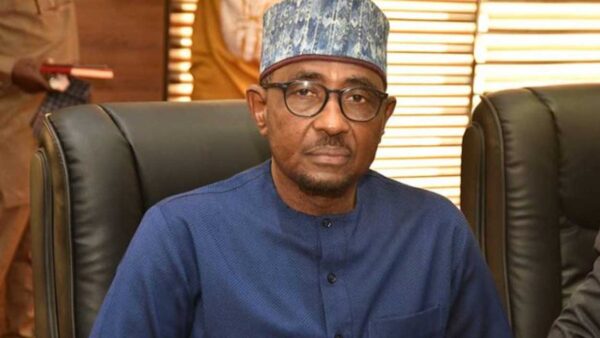
The former Chief Executive Officer of the Nigerian Midstream and Downstream Petroleum Regulatory Authority (NMDPRA), Farouk Ahmed, has called for effective and efficient regulation of Nigeria’s downstream petroleum sector amid ongoing reforms and changing global market dynamics.
Mr Ahmed, who resigned last year after corruption and abuse-of-office allegations levelled against him by Aliko Dangote, President and Chief Executive of the Dangote Group, made the call while delivering a goodwill message at the celebration of 20 years of OTL Africa Downstream Energy Week in Lagos.
“My four decades of experience have reinforced one enduring lesson: that is, effective regulation cannot operate in isolation from the industry it serves. Good regulation rests on sound policy, credible data, professional competence, meaningful stakeholder consultation, transparency and a clear-eyed understanding of market realities,” he said.
The appearance marks the first time Mr Ahmed has spoken publicly at an industry event since leaving the regulatory agency. He was also presented with an award of special recognition for his role in the growth and success of OTL Africa Energy Week at the gala.
Mr Dangote had accused the former NMDPRA chief of economic sabotage, alleging that the regulator’s policies undermined domestic refining in Nigeria.
He specifically accused the NMDPRA leadership of colluding with international traders and petroleum importers to frustrate local refining by continuing to issue import licences for petroleum products.


Mr Dangote also questioned Mr Ahmed’s sources of wealth, alleging that four of his children attended secondary schools in Switzerland at a combined cost of several million dollars. He argued that the expenditure raised questions about possible conflicts of interest and the integrity of regulatory oversight in the downstream petroleum sector.
Mr Dangote further alleged that Mr Ahmed spent more than $5 million on his children’s secondary education in Switzerland. He identified the children and their schools as Faisal Farouk of Montreux School; Farouk Jr. of Aiglon College; Ashraf Farouk of Institut Le Rosey; and Farhana Farouk of La Garenne International School. According to Mr Dangote, each child spent six years at their respective institutions.
In December last year, Mr Dangote petitioned the Independent Corrupt Practices and Other Related Offences Commission (ICPC) through his lawyer, accusing Mr Ahmed of corruption, abuse of office and economic sabotage. Mr Ahmed has denied any wrongdoing.
The petition followed a public dispute between both men over petroleum importation policies implemented under Mr Ahmed’s leadership at the NMDPRA.
Mr Dangote maintained that the policies undermined Nigeria’s domestic refining capacity, particularly the operations of his multi-billion-dollar refinery.
However, Mr Ahmed had argued that petroleum supply in Nigeria should not be monopolised and that import permits should remain accessible to other market players to promote competition.
Against the backdrop of the allegations and controversy, Mr Ahmed eventually resigned from the NMDPRA.
Regulation and industry transformation
In his remarks at the OTL Africa event, Mr Ahmed argued that responsible operators must recognise that regulation, when properly designed, consistently applied, and fairly enforced, provides the certainty, confidence, and stability required for investment, competition, and sustainable growth.
“This is why platforms such as OTL are important. They help bridge the gap between regulatory objectives and commercial realities. They encourage constructive dialogue, promote mutual understanding, and create opportunities for stakeholders to move beyond competing interests towards common solutions,” he said.
He said he attended the occasion with the perspective of a professional who has devoted more than four decades to petroleum regulation and industry development, including his experience as the NMDPRA’s pioneer Chief Executive.
From that perspective, Mr Ahmed said institutions and platforms that endure for two decades do so because they address genuine needs, deliver sustained value and remain responsive to changing demands.
“OTL Africa has demonstrated these qualities. Your Excellencies, Ladies and Gentlemen, twenty years is more than a milestone; it is a testament to vision, resilience, consistency, and the power of partnership,” he said.
Over the years, he noted, OTL has provided a platform for regulators, operators, investors, policymakers and other stakeholders to exchange ideas, examine emerging challenges, share experiences and collectively seek solutions to issues confronting the industry.
He said the importance of such a platform could not be overstated, given the strategic role of the petroleum and energy industries in economic development.
According to him, the downstream sector affects virtually every aspect of economic life, from transportation and manufacturing to power generation, agriculture, trade and household welfare. Its efficiency, stability and sustainability, he added, have direct implications for national development and people’s quality of life.
Africa’s downstream industry at a turning point
Mr Ahmed said Africa’s downstream petroleum industry was at a defining point of transformation, requiring coordinated and decisive action from governments and industry stakeholders.
He identified energy security, infrastructure deficits, financing constraints, product quality, supply-chain efficiency, market integration, environmental sustainability and the changing global energy landscape as some of the critical issues confronting the industry.
While describing these challenges as significant, he said they also presented considerable opportunities for Africa.
The continent, he argued, has the potential to develop a more integrated, competitive, efficient and resilient downstream energy market.
Realising this potential, he said, would require stronger regional cooperation, investment in storage and distribution infrastructure, modern refining capacity, appropriate technology, transparent market practices and regulatory frameworks that encourage investment while protecting consumers and the public interest.
He also emphasised the need to invest in human capital, noting that the industry’s future would depend not only on infrastructure and capital but also on the competence, integrity and innovative capacity of the professionals who operate and regulate it.
ALSO READ: Nigerian petroleum agency introduces 6 regulations for midstream, downstream sectors
Mr Ahmed urged OTL to evolve beyond a conference and exhibition platform into a stronger catalyst for practical industry solutions, strategic partnerships, investment opportunities and measurable outcomes.
He said discussions at the event should translate into action, partnerships should develop into projects, and ideas generated should contribute to tangible improvements across Africa’s energy value chain.
Institutional continuity and future of the industry
The former regulator also emphasised the importance of institutional continuity, calling for the preservation and transfer of industry knowledge and experience to younger professionals.
He said the experience accumulated over decades must be deliberately shared to prepare the next generation of regulators, entrepreneurs, engineers and energy leaders to address emerging challenges with fresh strategic thinking.
As OTL marked its 20th anniversary, Mr Ahmed urged industry stakeholders to look beyond celebrating past achievements and renew their commitment to the sector’s future.
He called on regulators to strengthen their commitment to fairness, transparency and predictable policies; operators to pursue efficiency, innovation and responsible business practices; investors to provide the capital and long-term commitment required for sustainable development; and policymakers to improve the business environment.
“Above all, let us recognise that Africa’s energy future cannot be built by regulators alone, by operators alone, or by investors alone. It must be built through partnership, trust, and a shared determination to succeed,” he said.
He expressed the hope that OTL’s next 20 years would deliver stronger partnerships, greater investment, smarter regulation, more efficient markets and broader, more reliable energy access for Africans.
“Let us not merely gather to discuss Africa’s energy future; let us unite—with purpose, discipline and urgency—to build it,” he said.
Discover more from Premium Times Nigeria
Subscribe to get the latest posts sent to your email.
-

 News4 days ago
Upwind raises $400M after walking away from Datadog acquisition offer
-
News4 days ago
GOVERNOR MUTFWANG OPENS 11TH JOS NATIONAL TRADE FAIR, TARGETS INDUSTRIAL GROWTH FOR PLATEAU
-
Business4 days ago
NCC seek stronger cyber resilience as AI intensifies cyber threats
-
News3 days ago
Granola crunches up a dictation feature to compete with Wispr