
News
NPFL Pre-Season Invitational: Plateau United, Mighty Jets begin with victories



News
IASC PatrickLingo Super League 2026: Jendol Set to Sell Zudachi a Defeat as Construction Giants Threaten to Demolish Superstores; Remed Prepare Bitter Medicine for Daily Manna!
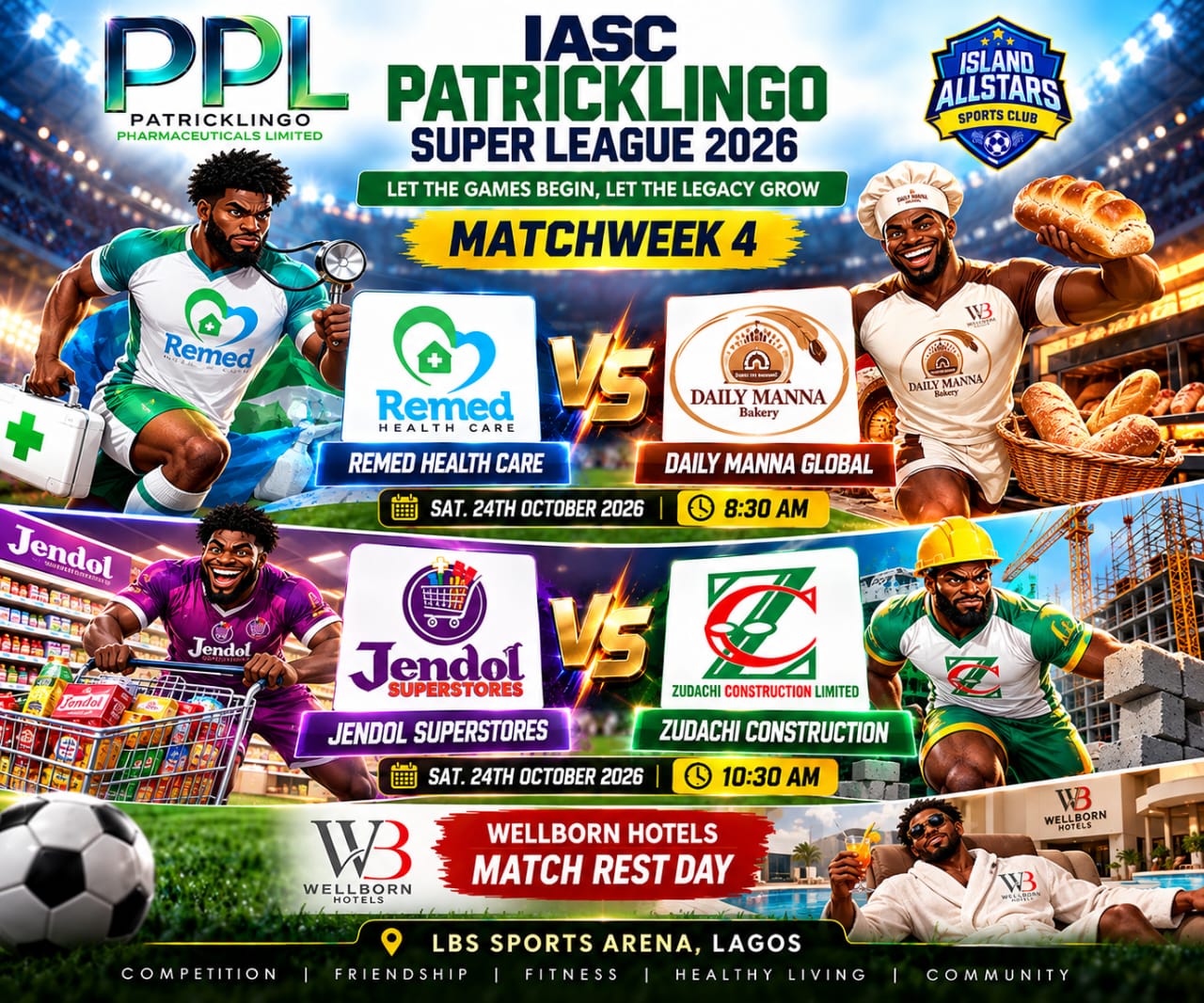
The Island AllStars PatrickLingo Super League 2026 returns with a mouthwatering Matchweek 4 on Saturday, October 24, as Jendol Superstores prepare to shut down Zudachi Construction’s championship project, while Remed Healthcare hope to prescribe bitter medicine to Daily Manna Global at the Lagos Business School Sports Arena.
The opening encounter at 8:30 a.m. promises fireworks as Remed Healthcare attempt to cure their inconsistent form against a Daily Manna side desperately searching for its first victory.
Remed began their campaign with a painful 4–2 defeat to Zudachi before administering a 1–0 treatment to Wellborn Hotels. Having enjoyed their Matchweek 3 rest day, the healthcare boys return refreshed and ready to write another winning prescription.
But Daily Manna are not coming to the hospital for treatment. The bakery boys are arriving with freshly baked football surprises!
After losing their opener to Wellborn, Daily Manna shared points with Jendol before serving Zudachi a hot stoppage-time equaliser through Sky-P’s penalty in a thrilling 2–2 draw.
However, the biggest fireworks are reserved for the 10:30 a.m. top-of-the-table blockbuster between Jendol Superstores and Zudachi Construction.
Jendol have become the hottest supermarket in town after checking Wellborn Hotels out with a stunning 3–1 victory, inspired by Chibuike’s brilliant brace.
Now, the supermarket boys want to stock their shelves with another three points and put Zudachi’s championship ambitions on clearance sale!
But Zudachi are no ordinary builders. The construction giants have laid an unbeaten foundation, collecting four points from two matches, and are determined to prevent Jendol from demolishing their position at the summit.
Meanwhile, Wellborn Hotels will enjoy their scheduled rest day, perhaps using the break to renovate their leaking defence after two consecutive defeats.
Sponsored by PatrickLingo Pharmaceuticals Limited, the competition continues to celebrate football, friendship, fitness and sportsmanship.
Will Jendol close Zudachi’s construction site, or will the builders demolish the supermarket? Can Daily Manna serve Remed a winning breakfast?
Saturday will provide the answers!

-

 News20 hours ago
Obi, Kwankwaso to hold Middle Belt Youth, Village Hall Meeting in Jos
-
News3 days ago
Meta’s Muse hits 10M U.S. downloads in 40 days, a milestone reached by only 11 other apps
-
Business3 days ago
How Your Side Hustle Income Ends Up in Your RSA
-
Business4 days ago
Mbah Rebuilds Technical College, Prepares Enugu Youths for Tech-Driven Future


