News
Mutfwang Secures APC Governorship Ticket in Landslide Victory Ahead of 2027 Plateau Guber Race


Governor Caleb Mutfwang has emerged victorious in the All Progressives Congress (APC) governorship primary election in Plateau State, officially clinching the party’s ticket for the 2027 governorship election after a commanding win across the state.
Mutfwang defeated fellow aspirant Yilchini Jan Bida following the collation of results from all 17 local government areas, recording an overwhelming lead in the exercise.
Announcing the results, APC Governorship Primary Election Committee Chairman and Returning Officer, Fidelis Bemse disclosed that out of 240,832 registered voters for the primary election, a total of 236,405 votes were cast statewide.
According to the final tally, Mutfwang secured 233,335 votes, while Bida polled 3,070 votes.
The governor dominated several local government areas including Jos North, Mangu, Kanam, Jos South, Shendam, Langtang North and Wase, posting massive margins in the polls.
Declaring the winner, Bemse stated that Mutfwang met all constitutional requirements of the APC and scored the highest valid votes cast, officially returning him as the party’s governorship candidate for the 2027 elections in Plateau State.


News
Handball President Jibril Saidu Ojih Explains Reasons Behind Introduction Of Transfer Fees For Nigerian Players

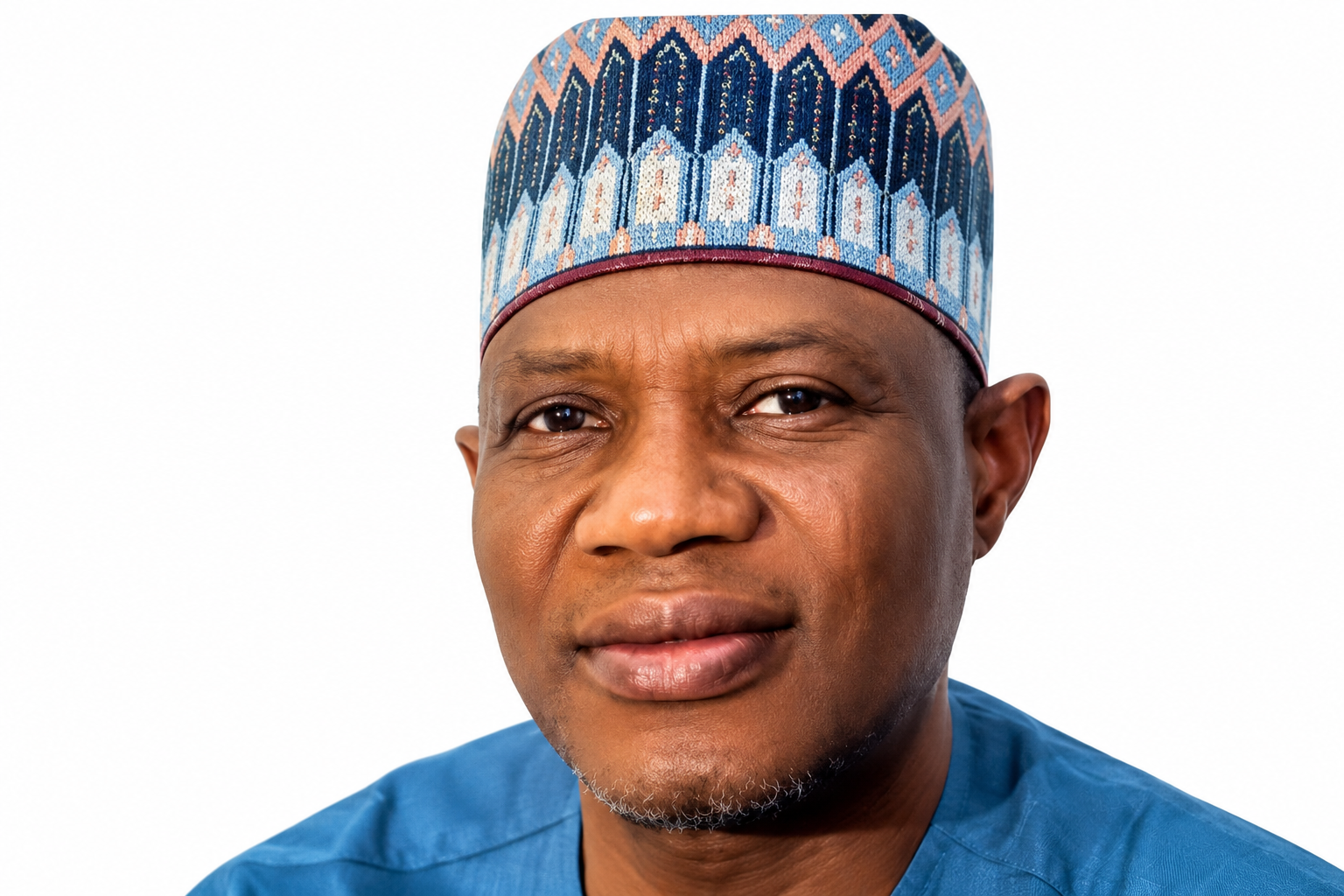
Handball Federation of Nigeria (HFN) president, Jibril Saidu Ojih has come out with an elaborate explanation of reasons behind the body’s decision to introduce transfer fees in the country, with a view that it will bring an orderly approach to how players move from one club to another.
Sports247 reports that Ojih’s explanation comes hot on the heels of a media statement about the HFN’s decision to introduce a new fee of ₦250,000 for transfers and loans involving a player from one Nigerian handball club to another within the country or internationally, with effect from the 1st of November.
Ojih stated in a circular he personally signed that the new policy is aimed at ensuring proper documentation of transfers, protecting clubs that invest in players’ development and bringing Nigeria in line with regulations of the International Handball Federation (IHF) and Confederation of African Handball (CAHB).
He added that the directive applies to clubs in Nigeria Handball Premier League, National Division One, state associations, the military, para-military and academies across the country, for domestic and international transfers as well as loans for male and female amateur and professional players.
The HFN president expatiated, “Under the new policy, a club signing a player from another Nigerian club must pay a transfer fee of ₦250,000 to cover administrative charges and compensation for player development. Of the amount, ₦100,000 will go to the HFN as administrative charges, while ₦150,000 will be paid to the club releasing the player.
“The same fee applies to loans between Nigerian clubs for each season, with loans limited to one season but renewable. The policy became necessary following an observation that several local and international transfers involving Nigerian players were being conducted without proper procedures.
“(They lacked) the involvement of licensed agents or compensation for clubs responsible for training and developing the players. Such practices are contrary to Article 9 of the IHF Regulations, Edition of June 4, 2025, which addresses compensation and the protection of minors.
“The new rules also provide additional compensation for clubs that have invested in players over a period of time. A club that trains a player for at least two consecutive seasons will be entitled to an additional ₦100,000 for each season of training if the player is transferred as a professional for the first time.”
Sports247 reports further that Ojih also clarified that a player receiving match bonuses exceeding ₦50,000 per month or holding a written employment contract will be regarded as a professional; hence a directive that all clubs should submit names of their professional players to the NHF by September 30 each year for inclusion in the IHF Transfer Management System (TMS).
HFN’s press officer and media commission vice-chairman, Cosmos Chukwuemeka Akisi added, “Another major provision of the policy is the compulsory use of licensed agents for all local and international player transfers and loans. Any transfer conducted without a licensed agent would be declared null and void.
“Under the prescribed procedure, a club seeking to sign a player must first send an official letter of interest to the player’s current club, with a copy to the HFN. The releasing club is then expected to issue a clearance letter, after which both clubs and the player will sign a tripartite agreement.
“Upon payment of the prescribed fee and submission of proof of payment, the HFN will issue a National Transfer Certificate and update the player’s records on the IHF Transfer Management System. No player will be allowed to register or play for a new club without the required certificate.
“For international transfers, no player may move to another club or federation without an International Transfer Certificate issued through the IHF Transfer Management System. All international transfer requests must be channelled through the HFN, as direct dealings between clubs without the Federation’s involvement are not permitted.
“International transfers involving players below the age of 16 are prohibited, while players aged 16 to 18 require IHF approval, alongside evidence that their academic and sporting welfare will be protected. All loans must also be supported by a three-party agreement specifying the duration of the arrangement.”
Sports247 also reports that the HFN warned that clubs and other stakeholders who fail to comply with the new policy will face strict sanctions, which include forfeiture of matches in which an ineligible player is fielded, with the offending team losing three points and 10 goals, as well as a non-negotiable fine of ₦500,000 and a ban from transfer activities for two windows.

Seplat Energy Plc has appointed Effiong Okon as its chief executive officer, making him the first Akwa Ibom indigene to occupy the top executive position at the Nigerian energy company.
Mr Okon, an engineer with more than 35 years of experience in the oil and gas industry, was appointed by the company’s board of directors in June 2026 and assumed office on 1 August 2026, according to information published on Seplat Energy’s website.

Onofiok Luke, a former member of the House of Representatives and former speaker of the Akwa Ibom State House of Assembly, commended the appointment, describing it as a significant milestone for the state.
In a Facebook post, Mr Luke congratulated Mr Okon, saying his emergence reflected years of professional dedication, competence and service.
He said the appointment should inspire young people from Akwa Ibom to pursue leadership positions in the oil and gas industry and other globally competitive sectors.
“For years, we have consistently clamoured, advocated and hoped to see our sons and daughters rise to the apex of International Oil Companies, particularly those operating within our communities and drawing substantially from our natural endowments,” Mr Luke wrote.


He also called for greater opportunities for local professionals and host communities, arguing that communities where oil and gas are extracted should participate not only in resource production but also in industry leadership, value creation and prosperity.
Mr Luke cited Udom Inoyo, a former vice chairman of ExxonMobil’s Nigerian affiliates, as one of the Akwa Ibom professionals who had previously attained senior leadership positions in the industry.
He wished Mr Okon a successful tenure and described the appointment as a source of inspiration to aspiring professionals from the state.
Career and industry experience
Mr Okon joined Seplat Energy in 2018 and has held several senior positions, including executive director of operations, director of new energy, and director of projects. He also served as managing director of ANOH Gas Processing Company Limited, a joint venture between Seplat Energy and Nigerian National Petroleum Company Limited (NNPC).
According to his biography, he oversaw the development of the 300-million-standard-cubic-feet-per-day ANOH Gas Processing Plant, which achieved its first gas in January 2026.
ANOH is an acronym for Assa North-Ohaji South, a major natural gas development project located in Imo State, Nigeria
Before joining Seplat, Mr Okon spent 26 years at Shell, where he held senior positions in Nigeria, Europe, the Middle East and the Americas. His assignments included vice president of cost leadership and continuous improvement in the Netherlands, general manager of deepwater and offshore assets in Nigeria, and deputy vice president technical and manager of the North Field at Qatar Shell.
He also participated in the commissioning and early production phases of Qatar’s Pearl gas-to-liquids project and QatarGas LNG Trains 7 and 8, according to his biography.
Mr Okon studied at the University of Benin and attended IMD Business School in Lausanne, Switzerland, and Harvard Business School in Boston, United States. He is a fellow of the Nigerian Society of Engineers and the UK Energy Institute, and a registered engineer in Nigeria.
He is married to Bertha Okon, and they have four children.
Seplat’s growth and acquisition of Mobil’s Nigeria business
Seplat Energy was established in 2009 through a partnership between Shebah Petroleum Development Company and Platform Petroleum Joint Ventures. The company has since expanded its operations in Nigeria’s oil and gas industry, with interests spanning hydrocarbon production, gas processing, and energy transition initiatives.
A major turning point came in December 2024, when Seplat completed its acquisition of Mobil Producing Nigeria Unlimited (MPNU), the Nigerian shallow-water oil and gas business formerly owned by ExxonMobil. The transaction followed an agreement announced in February 2022 and regulatory approvals for the deal.
Following the acquisition, Seplat renamed the business Seplat Energy Producing Nigeria Unlimited (SEPNU). The acquired assets include interests in four oil mining leases — OMLs 67, 68, 70 and 104 — operated under a joint venture with NNPC, as well as associated infrastructure, including the Qua Iboe Terminal and interests in the Bonny River Terminal and gas processing facilities.
READ ALSO: AFC appoints Cardoso as board chairman
Seplat said the acquisition more than doubled its production and expanded its portfolio across onshore and shallow-water operations. The enlarged business has interests in oil and gas fields, gas processing facilities and export terminals, strengthening its position among Nigeria’s indigenous energy producers.
The company is listed on both the Nigerian Exchange and the London Stock Exchange. Its operations contribute to Nigeria’s oil production and domestic gas supply, with gas serving as an important fuel for electricity generation and industrial activity. The company has also identified gas-led growth and the development of cleaner energy solutions as priorities in its strategy.
Mr Okon takes over the leadership of the enlarged company following this expansion, with responsibility for overseeing its operations, project delivery, production growth, and gas development strategy.
Discover more from Premium Times Nigeria
Subscribe to get the latest posts sent to your email.
-

 News4 days ago
Euromatch NPFL: Matchday 9 results
-
News4 days ago
No agenda, no rush, no leaving San Francisco: Benchmark’s partners on investing in a frenzied market
-
News3 days ago
Amazon to fund 12 small nuclear reactors at former Indiana coal plant
-
News3 days ago
Mamdani says feds have abdicated on AI, urges New Yorkers to push back