News
INEC Speaks on Disqualifying Chinda, Others After S’Court Judgment


The Independent National Electoral Commission (INEC) has said political parties may lose the right to field candidates in the 2027 elections if the names of those candidates were not contained in the membership registers submitted to the commission.
The commission also said affected candidates may not be replaced where their emergence resulted from a violation of the Electoral Act.
INEC National Commissioner for Information and Voter Education, Mohammed Haruna, disclosed this while speaking on Trust TV’s Daily Politics programme on Wednesday evening.
His comments come amid growing questions over the status of some candidates whose membership of political parties and participation in primaries are being challenged following the Supreme Court judgment delivered on September 24, 2026.
One of the cases that has attracted attention is that of Kingsley Chinda, the All Progressives Congress (APC) governorship candidate in Rivers State.
Chinda registered as an APC member on April 27, 2026, before the party’s governorship primary held on May 21.
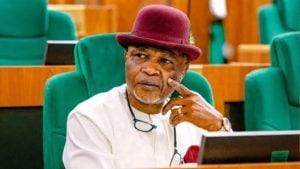
The Rivers APC has maintained that Chinda met the requirement because there were 24 days between his registration and the primary.
The party has rejected calls for his disqualification and argued that the Supreme Court judgment does not invalidate his candidacy.
The issue, however, has continued to generate legal questions, particularly over the membership register used by the APC for the primary and whether candidates were members of their respective parties when the relevant registers were submitted to INEC.
The Association of Legislative Drafting Practitioners (ALDRAP) had earlier approached the Federal High Court in Abuja over the Rivers APC nomination process and subsequently asked INEC to examine Chinda’s candidacy after the Supreme Court ruling.
The Supreme Court judgment itself did not name Chinda or order his disqualification. Instead, the apex court restored Sections 77(5), 77(6), 77(7) and 84(2) of the Electoral Act 2026 after the Court of Appeal had earlier declared the provisions unconstitutional.
The provisions place requirements on political parties concerning their membership registers and the conduct of primaries, congresses and conventions.
Section 77(5) provides that only members whose names are contained in the membership register submitted to INEC within the required period can participate in a party’s primary, congress or convention.
Section 77(6) prevents political parties from using a different membership register for such exercises.
Section 77(7) provides that a political party that fails to submit its membership register within the stipulated period cannot field a candidate for an election.
The Supreme Court also upheld Section 84(2), which provides for direct primaries or consensus as methods of nominating candidates.
Against this background, Haruna said INEC was examining the records of candidates across the various elective positions.
He stressed that the commission would not allow political parties to benefit from a breach of the law by simply replacing a candidate whose nomination is found to have violated the statutory requirements.
“It’s like you committed an offence. And then, you come and benefit from it. You remember cases that we had of some in Zamfara, you remember Plateau? The same thing.
“The parties, because they did the wrong thing, they thought they could now steal through the candidates.
“And the law was very clear. Once you do that kind of thing, you cannot benefit from it. You are benefiting from it, if you are able to substitute a candidate,” he said.
Haruna further indicated that the implications could extend beyond governorship contests.
According to him, INEC had interacted with candidates across the different levels of the 2027 elections and would examine whether their names appeared on the appropriate party registers.
“All the candidates, all the way to the Houses of Assembly, we interviewed them. If their names are not on the party register, they were not members of the party at the time that they contested for those tickets,” Haruna said.
He added that the final outcome could affect parties across several elective positions, depending on the findings of the commission’s review.
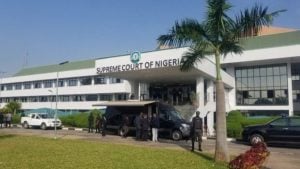
In another development, the Supreme Court had ruled unanimously in favour of INEC in the dispute involving the Zenith Labour Party (ZLP).
The seven-member panel, led by Justice Adamu Jauro, held that the disputed provisions were not inconsistent with the 1999 Constitution.
The apex court consequently set aside the earlier Court of Appeal decision and restored the judgment of the Federal High Court, which had dismissed the challenge to the provisions. It also awarded N2 million in costs against the Zenith Labour Party.
INEC had appealed to the Supreme Court after the Court of Appeal, in July, struck down the provisions relating to party membership registers and candidate nomination.
The commission has since moved to obtain and study the certified true copy of the Supreme Court judgment before taking a final position on the candidates whose nominations may be affected.
Haruna explained that INEC had to be careful with the document because of previous cases involving forged court judgments.
“You can’t be too careful with these things because even when you see copies and they tell you it’s a CTC, it may be forged. We’ve seen instances where people have even gone, have the audacity to forge a Supreme Court judgment.
“So, we have to be very careful to make sure that when you took us, we did put a lot of pressure and we were able to get it yesterday (Tuesday),” he said.

INEC Chairman Joash Amupitan had earlier confirmed that the commission received the Certified True Copy of the Supreme Court judgment on Tuesday and that the document was being reviewed.
The commission is expected to make a definite pronouncement on the implications of the judgment by Tuesday next week.
Until then, candidates whose nominations have come under scrutiny cannot automatically be regarded as disqualified solely because of the Supreme Court judgment.
The ruling restored the relevant provisions of the Electoral Act, while questions surrounding individual nominations will depend on the membership records, primary processes and other documents before INEC and, where necessary, the courts.
The Rivers APC has insisted that he became a member 24 days before the primary and therefore met the 21-day requirement under Section 77 of the Electoral Act.



The African Democratic Congress, ADC, has threatened to take its planned campaign rally to the streets of Kaduna after the state government refused to grant it access to Ranchers Bees Stadium.
The opposition party accused the Kaduna State Government of deliberately frustrating its political activities by denying it the use of the stadium for its scheduled rally on November 17 and 18, 2026.
The ADC disclosed this in a press statement issued on Tuesday by its National Publicity Secretary, Mallam Bolaji Abdullahi.
According to the party, it had earlier applied to the state government for permission to use the stadium but was denied approval in a letter dated November 12 by the Ministry of Local Government.
The ministry reportedly attributed the refusal to ongoing renovation work at the facility.
However, the ADC questioned the explanation, noting that the ruling All Progressives Congress, APC, had used the same stadium to flag off its presidential campaign on October 24, barely three weeks earlier.
The party described the government's explanation as ridiculous, alleging that the APC was afraid of the large crowds attracted by its rallies across the North.
“We find the excuse quite ridiculous. This was the same stadium where the APC flagged off its presidential campaign on October 24. But we know what they are afraid of,” the statement said.
The ADC further alleged that the government was attempting to prevent residents from comparing the attendance at its rallies with that of the ruling party.
Insisting that it would not abandon its planned rally, the opposition party threatened to hold a street demonstration if the government continued to deny it access to the stadium.
“If the Kaduna State Government will not allow us to campaign peacefully in the stadium, we will exercise our constitutional right to assemble peacefully in the streets.
“You may deny us a venue, but you cannot deny Nigerians their constitutional right to peaceful assembly,” the party said.
The ADC maintained that public facilities should not be used as instruments of political exclusion, arguing that they belong to the people regardless of the political party controlling the government.
It also warned that denying opposition parties access to public infrastructure amounted to violating citizens' rights to peaceful assembly and democratic participation.
The party urged the Kaduna State Government to reconsider its position, citing the Bauchi and Yobe state governments as examples of administrations that had allowed opposition parties to carry out their political activities.
2027: Deny us stadium, we’ll take over your streets – ADC tells Kaduna govt


Nigeria’s Olympic Eagles have produced a sensational comeback to defeat DR Congo 4-0 in the second leg of their U23 Africa Cup of Nations (AFCON) qualifying tie, securing a 4-2 aggregate victory and keeping their qualification campaign alive.
After suffering a disappointing 2-0 defeat in the first leg, the Nigerian side responded emphatically at the Remo Stars Stadium in Ikenne, delivering an outstanding performance to overturn the deficit and advance to the next stage.
Alex Oweilayefa set the tone for Nigeria’s remarkable comeback when he opened the scoring in the 8th minute, reducing DR Congo’s aggregate advantage and giving the home supporters renewed belief.
The Olympic Eagles continued their attacking momentum after the restart, with Peter Edokpolor doubling Nigeria’s lead in the 47th minute to level the aggregate score at 2-2.
Samuel Victor then struck in the 57th minute, completing Nigeria’s turnaround and putting the hosts ahead on aggregate for the first time in the tie.
With DR Congo struggling to contain Nigeria’s attacking pressure, the Olympic Eagles maintained their intensity and discipline as the contest approached its conclusion.
The decisive moment arrived deep into stoppage time when Muiz Adeleke converted a penalty in the 90+4th minute to seal a commanding 4-0 victory on the night.
The result completed an extraordinary turnaround for Nigeria, who progressed with a 4-2 aggregate triumph after entering the return fixture with a two-goal deficit.
The victory represents a significant statement from the Dream Team, whose response demonstrated resilience, attacking quality and determination under pressure.
Following their impressive comeback, Nigeria will now turn their attention to Zambia, whom they are scheduled to face in May 2027 in the next stage of the qualification campaign.
The Olympic Eagles will be aiming to maintain their momentum and build on the confidence gained from their emphatic victory over DR Congo.
For Nigerian football supporters, the night in Ikenne will be remembered for a remarkable comeback that showed the fighting spirit of the nation’s U23 side.
From a 2-0 first-leg setback to a stunning 4-0 triumph — the Olympic Eagles have answered in style!
-

 News4 days ago
Every ₦1 spent on advertising generates ₦16.50 in Nigeria’s GDP, ARCON says – Technology Times
-
News3 days ago
Tinubu (APC) in Jos: Promises to restore peace in the State and Nigeria
-
News3 days ago
Heavy Security as Tinubu Takes Campaign to Jos
-
News3 days ago
Yari Defends Tinubu on Insecurity, Says Opposition Failed to Tackle Crisis for Over 20 Years