Connect with us

News

JUST IN: Plateau Govt Files Terrorism Charges Against Five Suspects Over Palm Sunday Attack

info

Published

on

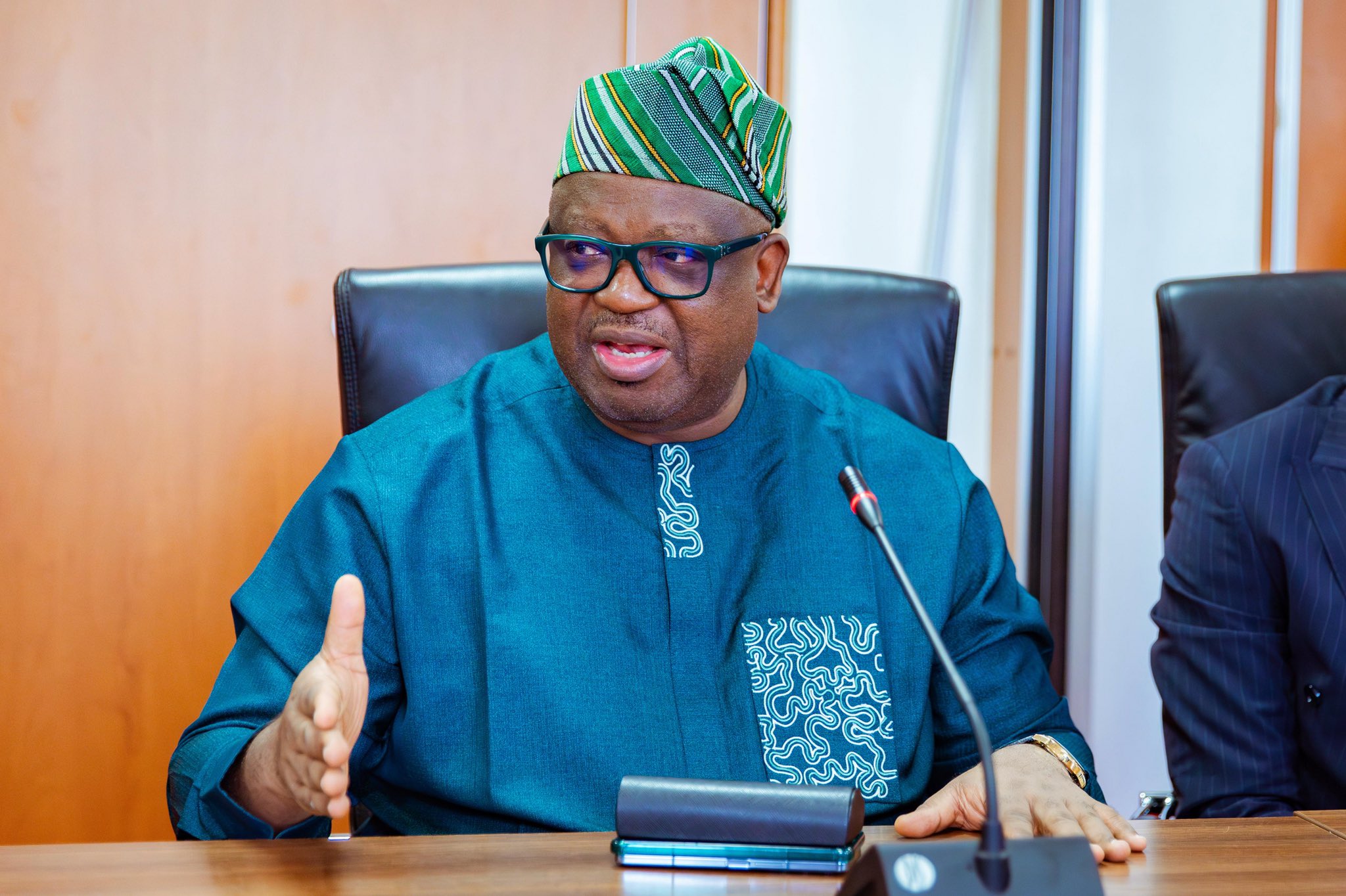
Caleb Mutfwang.jpeg

The Plateau State Government has instituted charges against five suspects arrested by the Department of State Services (DSS) over their alleged involvement in the Palm Sunday killings.

The attack, which occurred in March 2026, led to the deaths of several residents in Angwa Rukuba, Jos North Local Government Area of the state.

Those to be prosecuted were identified as Isa Umar Ibrahim, Auwalu Abubakar, also known as Auwalu Dogo, Musa Abubakar Ibrahim, also known as Yaroro, Ado Ibrahim, and Adamu Isa Alhassan.

The state government filed charges of criminal conspiracy to commit terrorism and other related offences against the first four suspects.

The fifth suspect, Alhassan, is facing additional charges including criminal conspiracy, culpable homicide, illegal possession of firearms, and unlawful dealing in arms and ammunition.

The suspects were reportedly arrested by the DSS between April 3 and April 10, 2026.

Continue Reading
Click to comment

Leave a Reply

Your email address will not be published. Required fields are marked *

News

Governors’ Travel, Office Expenses Hit N512bn

info

Published

on

By

Incollage 20260814 1904375786728277323084400376 1200x675.jpg

State governments spent at least N512.10 billion on Government Houses, governors’ offices and travel-related expenses in the first half of 2026, according to an analysis of available state budget implementation reports.

The expenditure, drawn from 33 states with usable records, highlights the large amount of public money committed to running the executive offices of state governments, even as governors’ official salaries remain relatively small compared with the overall cost of maintaining their offices.

The N512.10 billion total comprises N420.01 billion spent under Government House, Governor’s Office and related executive administration budget heads, while another N92.09 billion went to travel and transport during the first six months of the year.

By comparison, the official monthly salary of a state governor is N503,000. That amounts to N3.018 million for six months, meaning the combined salary of all 36 governors over the same period would be about N108.65 million.

The comparison shows that the combined six-month salaries of the governors accounted for only about 0.02 per cent of the N512.10 billion identified as spending on executive offices and travel.

The figures, however, do not represent money personally received by governors.

Government House and Governor’s Office expenditure covers a wide range of costs associated with running the executive arm of government, including administrative activities, staff, official residences, utilities, maintenance, protocol, security-related operations and state functions.

Similarly, the travel and transport category covers official local and international trips, transportation and related costs incurred across the wider state public service.

The figures nevertheless provide an indication of the broader cost attached to maintaining the institutions and privileges surrounding the offices occupied by governors.

The analysis was based on first- and second-quarter 2026 Budget Implementation Reports, using the largest identifiable Government House, Governor’s Office or executive administration expenditure line in each state alongside the general travel and transport head.

Complete comparable data were available for Abia, Adamawa, Bauchi, Bayelsa, Borno, Cross River, Ebonyi, Ekiti, Enugu, Gombe, Imo, Jigawa, Kaduna, Kano, Katsina, Kogi, Kwara, Lagos, Nasarawa, Niger, Ogun, Ondo, Oyo, Plateau, Sokoto, Taraba, Yobe and Zamfara. Comparable figures were not available for Edo, Osun and Rivers.

The 2026 spending represents a decline from the corresponding period of 2025 based on the available records. In the first six months of last year, N465.07 billion was recorded under Government House, Governor’s Office and similar executive administration heads, while N92.73 billion went to travel and transport, bringing the combined amount to N557.80 billion.

The 2026 figure was therefore about N45.70 billion lower, representing an 8.19 per cent reduction.

Most of the decline came from Government House and Governor’s Office expenditure, which dropped from N465.07 billion in the first half of 2025 to N420.01 billion in 2026. That represents a reduction of N45.05 billion, or 9.69 per cent.

Spending on travel and transport, however, barely changed. The amount declined from N92.73 billion in the first half of 2025 to N92.09 billion in 2026, a difference of about N643.66 million or 0.69 per cent.

The figures therefore suggest that while some states reduced expenditure associated with Government Houses and executive administration, spending on official movement and transportation remained relatively stable.

A development economist, Aliyu Ilias, said the figures demonstrated why looking only at governors’ basic salaries gave an incomplete picture of the financial cost associated with political offices.

“Ordinarily, anything that has to do with executive office in Nigeria appears to be much more expensive because they actually direct how it works there. And with the docile state assemblies we have, who always concur, it is clear that our democracy is very expensive because of the way we maintain their offices, and that is why it is very juicy,” Punch Newspaper quoted Ilias.

He said the broader benefits and expenses attached to the office should be considered when comparing governors with senior civil servants.

“Some even want to go as far as borrowing money to win an election and, when they enter office, they believe they are going to repay the money. So, it is not correct to say that a Permanent Secretary is earning better than a governor when you isolate the governor’s salary without adding the other travel perks and expenses attached to the office,” he said.

Ilias also criticised the argument that governors are poorly paid based solely on their official salaries.

“The governor just wanted to be sensational. But with the addition you have done, it shows that they are taking the bigger cheque from the spending arising from the high income that the state is generating,” he said.

Kogi State recorded the highest identifiable Government House and Governor’s Office expenditure in the 2026 data, with N65.34 billion spent during the period.

Ogun followed with N45.26 billion, while Lagos recorded N45.04 billion. Kano accounted for N25.87 billion, Ekiti N25.22 billion and Cross River N23.92 billion.

Bayelsa recorded N22.99 billion, Imo N19.43 billion and Enugu N16.20 billion.

At the other end of the available figures, Oyo recorded about N1.95 billion under the relevant executive expenditure head, followed by Sokoto with N2.20 billion, Kwara with N2.59 billion and Abia with N2.78 billion.

Kogi’s N65.34 billion represented more than 15 per cent of the identifiable Government House and Governor’s Office spending captured in the dataset.

The pattern was different when travel and transport expenditure was examined.

Plateau recorded the highest identifiable spending in that category, with N10.11 billion during the first six months of 2026. Lagos followed with N8.23 billion, while Taraba recorded N5.16 billion.

Niger spent N4.45 billion, Ekiti N4.41 billion and Bauchi N3.75 billion. Yobe recorded N3.68 billion.

Oyo was among the states with the lowest identifiable travel and transport expenditure at N667.52 million, while Kano recorded N626.95 million.

There were also significant differences in spending patterns between states when the 2025 and 2026 figures were compared.

Kogi’s Government House and Governor’s Office expenditure rose from N51.99 billion in the first half of 2025 to N65.34 billion in 2026, an increase of about N13.34 billion or 25.66 per cent.

Bayelsa recorded an increase from N14.48 billion to N22.99 billion, representing a rise of N8.51 billion or 58.75 per cent.

Cross River recorded one of the sharpest increases, with spending rising from N9.91 billion to N23.92 billion, an increase of about N14.01 billion or 141.37 per cent.

Lagos also recorded a major increase, moving from N25.86 billion in the first half of 2025 to N45.04 billion in 2026. That represents an increase of about N19.18 billion or 74.16 per cent.

Other states recorded reductions. Ogun’s spending under the relevant Government House and Governor’s Office head fell from N49.83 billion in 2025 to N45.26 billion in 2026, a decline of N4.57 billion or 9.17 per cent.

Kano’s expenditure also fell from N28.84 billion to N25.87 billion, representing a reduction of about N2.98 billion or 10.32 per cent.

Niger, however, recorded an increase from N13.13 billion to N14.15 billion, representing a rise of about N1.02 billion or 7.74 per cent.

The spending comes amid continuing discussions about the remuneration of political office holders in Nigeria.

The Revenue Mobilisation Allocation and Fiscal Commission is constitutionally responsible for determining the remuneration of governors and other political office holders. The existing remuneration structure remains in place while a broader review is being considered by the relevant authorities.

RMAFC has recently said its review of the remuneration of executive and legislative office holders had reached an advanced stage, with proposed legislation expected to be presented to the National Assembly.

The level of state spending is also coming under greater scrutiny as governments receive increased allocations from the Federation Account following economic reforms implemented by the Federal Government.

Available Ministry of Finance data previously showed that N47.25 trillion was distributed through the Federation Account between 2023 and 2025. That amount represented more than half of the N93.13 trillion shared across the nine-year period from 2017 to 2025.

Continue Reading

News

MTN faces pressure as 95% network runs on diesel in Nigeria, CEO says – Technology Times

info

Published

on

By

IMG 2886.png

Rising diesel costs are putting pressure on MTN Nigeria’s profitability, with the telecommunications company revealing that about 95% of its network in the country is powered by diesel generators.

IMG 2886 1IMG 2886 1
Ralph Mupita, MTN Group President and CEO. Image credit: MTN.

The disclosure was made by Ralph Mupita, MTN Group President and CEO on Monday during the presentation of the company’s interim results for the six months ended June 30, 2026.

Mupita says higher global oil prices during the period translated into increased diesel costs for the Nigerian operation, where dependence on generators remains extensive.

“Our network in Nigeria is like 95% on diesel generators, 5% on the grid,” Mupita says adding that energy costs, largely driven by diesel, now account for more than 30% of MTN Nigeria’s operating expenditure.

“Just over 30% of opex within Nigeria is energy prices, and that’s substantially diesel,” he says.

Diesel costs to hit coming quarters

The impact of higher diesel prices, according to Mupita, is not limited to the quarter in which the increase occurs because of the way MTN Nigeria’s energy contracts are structured. The cost recognised in a quarter is based on the average diesel price from the previous quarter. This means the effect of fuel-price movements can carry into subsequent reporting periods.

“And the way our contracts work, the cost in the quarter is the prior quarter’s average diesel price,” he explained. As a result, the higher diesel prices experienced during the second quarter are expected to affect MTN Nigeria’s third-quarter operating costs.

“What we experienced in Q2 of this year will come into Q3, and then Q3 will come into Q4,” Mupita says.

The cost pressure comes as MTN continues to invest heavily in its Nigerian network to meet growing demand for connectivity.

Data demand drives network investment

Mupita said demand for MTN’s services remains structurally strong in Nigeria, particularly as customers consume increasing amounts of mobile data.

He disclosed that the company recorded 2.7 million net customer additions in the first quarter, while average data consumption per customer reached 14.8GB.

The increase in data usage is pushing the company to continue investing in network capacity.

Mupita said MTN’s capital intensity in Nigeria exceeded 20% during the period as the company pursued growth in its mobile network and expanded its home connectivity strategy.

The operator is targeting the home broadband market through a combination of fixed wireless access and fibre, areas it believes offer significant growth opportunities in Nigeria.

The challenge for the company is that expanding network infrastructure also increases the amount of equipment that needs to be powered, making energy efficiency increasingly important to the economics of network expansion.

Nigeria remains a key growth market

Despite the pressure from energy costs, MTN maintained that Nigeria continues to offer strong growth opportunities.

Mupita described demand in the Nigerian market as robust, pointing to continued customer additions and rising data consumption.

He also noted that the naira remained relatively stable during the period, while liquidity at the prevailing exchange rate was not creating significant difficulties for the company. Inflation also moderated during the period.

However, higher diesel prices remain a major cost concern. Mupita says the impact of energy prices means MTN expects its Nigerian operation to remain within its medium-term guidance but towards the lower end of its EBITDA margin range.

“We are confident that the medium-term guidance framework we gave around Nigeria will maintain on service revenue, on the EBITDA margin will still be in range, but because of the high energy prices, we see ourselves at the lower end of the range,” he says.

The lower end of that range is around 53% EBITDA margin, according to the MTN CEO.

nigeria smartphone usernigeria smartphone user
Despite the pressure from energy costs, MTN maintained that Nigeria continues to offer strong growth opportunities. Mupita described demand in the Nigerian market as robust, pointing to continued customer additions and rising data consumption. Image credit: Image FX.

Airtime advance adds another pressure

Energy costs are not the only factor affecting MTN Nigeria’s financial performance.

The company also faced a significant revenue impact after Nigeria’s competition authorities directed it to suspend its airtime advance service in April.

Mupita said MTN responded by reducing its airtime advance base to about a quarter of its first-quarter run rate.

The suspension affected revenue generated during April, May and June, contributing to the weaker service revenue performance reported for the quarter.

However, MTN subsequently received communication from the competition authorities allowing the company to move towards restoring airtime advance through four vendors.

Mupita expects this to support the recovery of the business during the second half of the year, although he cautioned that the restoration would not immediately return the operation to its previous level because of the need for the new vendors to build experience and optimise their operations.

AI emerges as cost-cutting tool

Against the backdrop of rising energy expenses, MTN is also looking at technology, including artificial intelligence, to improve operational efficiency.

Ferdi Moolman, MTN CEO, South Africa says the group’s cost-efficiency programme is increasingly focused on structural changes to how the business operates rather than simply cutting expenses.

He cited the use of AI to improve power consumption at network sites in South Africa as an example.

“We did some proof of concept (POC) in the Western Cape, used AI to help us get more efficiency out of power consumption, which was very successful,” he says.

MTN plans to expand the initiative across the country. Moolman says the company still has significant room to extract efficiencies, with the broader cost initiative expected to take two to three years because of its structural nature.

For MTN in Nigeria, however, the scale of diesel dependence means energy costs will remain a major factor in determining how much of its strong data and subscriber growth translates into profitability.

Stay ahead with real-time reports, breaking news, and exclusive insights delivered directly to your phone. Don’t settle for outdated information. Join TECHNOLOGYTIMES NEWS on WhatsApp for 24/7 updates.
Join Our Whatsapp Channel

Continue Reading

Trending