News
I’m clearing mess you created as VP – Tinubu hits Atiku










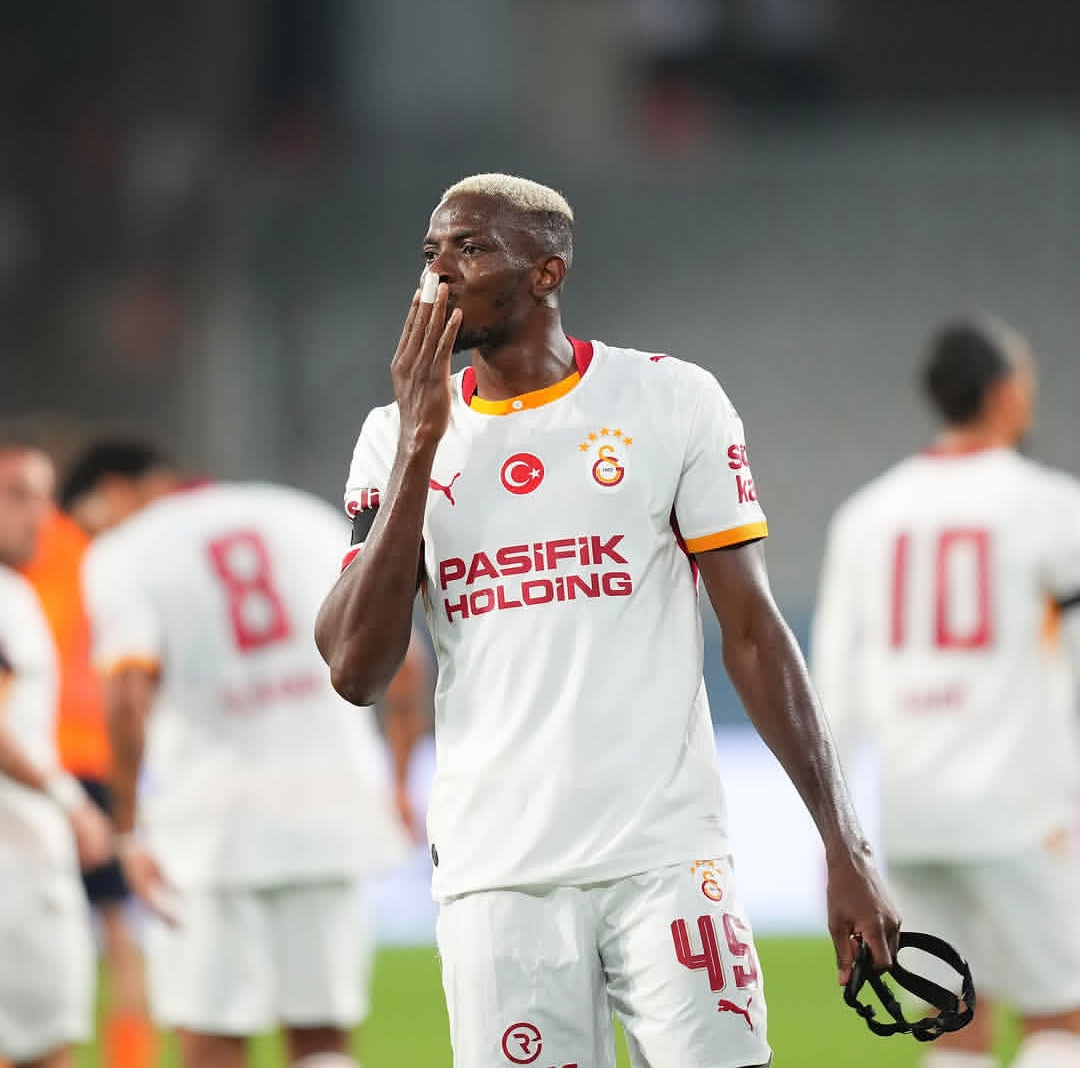
Super Eagles striker Victor Osimhen produced a mixed night for Galatasaray on Friday, scoring against İstanbul Başakşehir before being forced off with an injury that could raise concerns over his availability for Nigeria’s upcoming 2027 Africa Cup of Nations qualifiers.
Osimhen opened the scoring in the 17th minute with a stunning effort to put Galatasaray ahead.
Read Also: “My Injury Changed Everything” — Aiyegbeni Reveals How Achilles Blow Ruined Chelsea Move
However, his night was cut short after he appeared to suffer a problem following a challenge with Christopher Operi in the 23rd minute. The Nigerian striker continued briefly but later felt the problem again after making a run behind the defence and signalled that he could not continue.
Osimhen was eventually substituted in the 33rd minute, with Barış Alper Yılmaz coming on as his replacement.
Initial reports describe the problem as a suspected muscle/groin injury, but there is currently no confirmed diagnosis or recovery timeline. Osimhen himself reportedly admitted after the incident that he did not yet know whether the injury was serious.
The timing could be significant for Nigeria.
The Super Eagles are scheduled to begin their 2027 AFCON qualifying campaign against Madagascar on September 23, before travelling to face Guinea-Bissau on September 27.
That leaves Nigeria with just under three weeks before the Madagascar encounter, meaning Osimhen could still have time to recover if the injury proves minor. However, a significant muscle strain or tear could put his participation in doubt.
For now, Osimhen has not been ruled out of the Super Eagles’ upcoming matches, and his availability will depend on further medical examinations and his recovery over the coming days.
The immediate concern for Nigeria will therefore be the results of those assessments.
He scored a spectacular goal, but the biggest question tonight is whether Osimhen will be fit when Nigeria need him most.

-

 Business3 days ago
PLACCIMA Nominates Bolcit Barshep-Amakiri as Vice President, Commerce
-
Business1 day ago
IPMAN Urges FG to Intervene in Dangote Refinery Pricing to Reduce Petrol Cost
-
News4 days ago
Honest Ahanor’s Move To Crystal Palace, On Loan From Chelsea, Raises Eyebrows In Italy
-
Health3 days ago
Diphtheria outbreak kills 15, infects 117 in Plateau