Business
EXCLUSIVE: Nigeria’s nuclear power programme plans still alive – IAEA DG


The Director General of the International Atomic Energy Agency (IAEA), Rafael Grossi, said discussions on Nigeria’s nuclear power programme remain alive, amid continuous technical engagements with concerned authorities in the West African country.
Mr Grossi disclosed the progress made on the nuclear power arrangement with Nigeria while responding to a PREMIUM TIMES’ enquiry at an IAEA programme in Vienna, Austria.
The IAEA DG said the agency continues to work with Nigeria on its nuclear power plan and IAEA officials had held visits and technical meetings with relevant stakeholders to actualise the dream.
In May 2024, while on a visit to Nigeria for a seminar on ‘Promoting Cancer Awareness and Advocacy Programmes’, Mr Grossi expressed the agency’s readiness to support Nigeria’s efforts to develop a nuclear power programme during meetings with senior government officials, including the Secretary to the Government of the Federation, George Akume.
Speaking during the visit, he described Nigeria’s pursuit of nuclear energy as “a logical move for a country of your (Nigeria’s) size and importance.”

When this newspaper asked Mr Grossi about the progress of the discussions and technical meetings since the visit two years ago, the IAEA DG reassured that discussions are still ongoing.
“We have continued working with Nigeria, I have to tell you. It’s not that after that visit, things stopped. We have continued at technical levels, some visits, and technical meetings,” the IAEA DG said.
He noted, however, that no final decision has been taken on the programme, adding that Nigeria’s status as a big crude oil-producing nation makes its situation quite different from other economies.
“There hasn’t been a decision yet. There is like a pre-decision to explore the alternative. Of course, your country (Nigeria) is a big oil producer country, an exporter, etc. So the discussion in your country is different from that in other countries,” the DG said.
The IAEA boss insisted that the conversation around the programme is still alive, but Nigeria’s energy options are quite diversified.
“It’s a matter of diversification more than a matter of need, maybe. But the conversation space is pretty much alive, I must say,” Mr Grossi said.
Nigeria’s nuclear energy programme operates under the guidance and safety standards of the International Atomic Energy Agency (IAEA), aiming to add clean, stable nuclear electricity to the national grid. The programme is managed primarily by the Nigeria Atomic Energy Commission (NAEC) and is said to be advancing through the foundational infrastructure phases and planning stages.
READ ALSO: Survival logic of nuclear deterrence: The Iranian, Israeli, and American conundrum, By Jacob Edi
Earlier in September 2023, Nigeria signed its Country Programme Framework (CPF) for the period of 2024–2029 on the margins of the General Conference. A CPF is the frame of reference for the medium-term planning of technical cooperation between a Member State and the IAEA and identifies priority areas where the transfer of nuclear technology and technical cooperation resources will be directed to support national development goals.
Nigeria has been an IAEA Member State since 1957 and, according to the agency, its 4th CPF covering the period 2024 – 2029 identifies five priority areas, such as nuclear and radiation safety and security; food and agriculture; health and nutrition; water and environment; as well as energy planning and development.
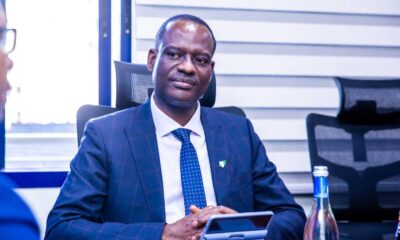


Former President of the African Development Bank (AfDB), Akinwumi Adesina, has declared his readiness to serve Nigeria in any capacity, saying he has a duty and responsibility to contribute to the country’s development.
Mr Adesina made the declaration on Tuesday after meeting President Bola Tinubu at the Presidential Villa in Abuja, where he briefed the president on his 10-year tenure at the continental development finance institution.
“I’m fully able to help Nigeria in any capacity. I’ve always had that. You know, my heart is always at home,” he told journalists after the meeting.
Asked what role he could play, Mr Adesina said he would help in any capacity the president considered appropriate, but stressed he was not seeking a government appointment.
“I’m not looking for a job. I’m not looking for anything. I’m just here to help. It’s my country. I have a duty, an obligation, and a responsibility to do so, and I will,” he said.
There was no announcement of a specific role or appointment for the former AfDB president following the meeting.

Adesina’s record in agriculture and development finance
Mr Adesina, an agricultural economist, served as Nigeria’s minister of agriculture and rural development from 2011 to 2015 under former President Goodluck Jonathan before becoming the first Nigerian to lead the AfDB.
He was elected president of the bank in May 2015 and re-elected for a second five-year term in August 2020. His tenure ended in 2025.
As agriculture minister, he championed reforms to the distribution of subsidised farm inputs, including an electronic-wallet system that let farmers receive support for seeds and fertiliser via mobile phones.
The AfDB said the programme reached 15 million farmers within its first four years. The initiative was intended to improve access to agricultural inputs while reducing the role of intermediaries in their distribution.
At the AfDB, Mr Adesina oversaw the institution’s development agenda, which included expanding electricity access, improving food security, industrialising African economies, promoting regional integration and improving living standards.
During his leadership, the bank’s general capital increased from $93 billion to $208 billion in 2019, following a decision by its shareholders, the largest capital increase in the institution’s history at the time.
AfDB provided $7 billion to Nigeria in 10 years
At the meeting, Mr Adesina said the AfDB provided about $7 billion in financing to Nigeria between 2015 and 2025.
He compared this with the $11.1 billion in cumulative financing the bank had provided to Nigeria since it began operations in the country in 1971.
“Within 10 years, we were able to do 63 per cent, literally, of that,” he said, adding that President Tinubu was pleased with the bank’s support to Nigeria during his tenure.
Mr Adesina said he used the meeting to commend the president for his economic reforms, particularly the removal of the petrol subsidy and the harmonisation of the foreign exchange windows.
He described the measures as difficult but said they were beginning to produce results.
He cited increased foreign exchange availability, the return of portfolio investors and a downward trend in inflation as signs of progress. However, he acknowledged that prices remained high for Nigerians.
He also pointed to improved assessments of Nigeria by some international rating agencies, saying the country’s outlook had shifted towards stable or positive assessments.
The comments come amid ongoing debate over the impact of the Tinubu administration’s economic reforms, including higher fuel costs after the removal of the petrol subsidy and changes to the foreign exchange market.
Although the government has defended the measures as necessary to stabilise the economy, the higher cost of living has continued to put pressure on households and businesses.
From economic stabilisation to growth
Mr Adesina said stabilising the economy was only the beginning, arguing that Nigeria must now focus on structural transformation, economic growth and prosperity.
He said President Tinubu recognised the need to move beyond macroeconomic reforms and address the broader challenge of transforming the economy.
“I told the president, I’m back at home, here to help and ready to help. It’s my country. I love my country, and I’m ready to help,” he said.
His offer comes after a decade leading one of Africa’s major development finance institutions, a period during which the bank financed projects and programmes across sectors including agriculture, energy, transport and infrastructure.
READ AlSO: ‘I will forever miss you’ – Toluwanisings’ wife breaks down in tears at night of tributes
Mr Adesina’s meeting with the president also gave him an opportunity to formally brief the president on the completion of his two terms and the achievements recorded during his leadership of the bank.
He said he was honoured to have been received by the president and was pleased with the report he presented.
While Mr Adesina did not specify how he might contribute to Nigeria’s development, he said he was prepared to do so whenever the president believed his experience could be useful.
“It’s my country. I have a duty, an obligation, and a responsibility to do so, and I will,” he said.
Discover more from Premium Times Nigeria
Subscribe to get the latest posts sent to your email.
-

 News3 days ago
Troops rescued 70 abductees, recovered N10 million ransom: DHQ
-
Business3 days ago
CBN grants JP Morgan approval-in-principle to set up merchant bank
-
News3 days ago
Plateau Activates Ebola Preparedness Measures, Urges Residents to Observe Safety Guidelines
-
Business3 days ago
REA Ends 16 Years of Darkness in Two Kano Communities