News
Concerned Citizens Assembly Calls For Nigeria’s Restructuring Into 17 Autonomous Regions


Amnesty International has condemned the arrest and four-year prison sentence imposed on Farida Isiak, a 23-year-old journalist with Nagarta Radio in Kaduna.
The amnesty said the sentence was an attempt to silence her over allegations of police misconduct.
In a statement on Wednesday, the human rights organisation called for her immediate release, the withdrawal of charges against her and the cancellation of the N1.75 million fine imposed by the court.
According to the organisation, officers under the command of the Divisional Police Officer of Mararaban Jos, Usman Adamu, took Ms Isiak into custody around 10:00 p.m. on Monday.
“The situation began as a minor disagreement between her mother and a neighbour over a N100 change dispute during a sale of charcoal. Police officers initially arrested her mother and later detained her father when he went to secure her release, using their detention as leverage to force Farida to come to the police station,” Amnesty International said.
It added that when Ms Isiak arrived at the station, officers accused her of defaming them because of a Facebook post she wrote criticising their unlawful treatment of her parents.
“Even though she complied with police demands to delete the post and apologise in the hope of securing her parents’ release, officers kept her in custody and rushed her to a Sharia court in Kawo.
“The presiding judge sentenced her to four years in prison or a fine of N1.75 million on charges of defamation, completely ignoring the initial police misconduct and the abusive actions that led to the incident,” Amnesty stated.
It explained that the arrest, detention, and hasty sentencing of Ms Isiak were a flagrant abuse of power by the police and weaponisation of the judicial system to silence free speech and intimidate journalists.
“Arresting and holding a citizen’s parents to force a journalist to hand herself over is an unlawful tactic that violates rule of law. Demanding accountability for police actions is a constitutional right,” the rights organisation said.
Amnesty called on police command in Kaduna and Nigerian judicial authorities to drop all charges and cancel the fine imposed on her.
Peoples Gazette has contacted Anietie Iniedu, the force spokesperson, for comment.


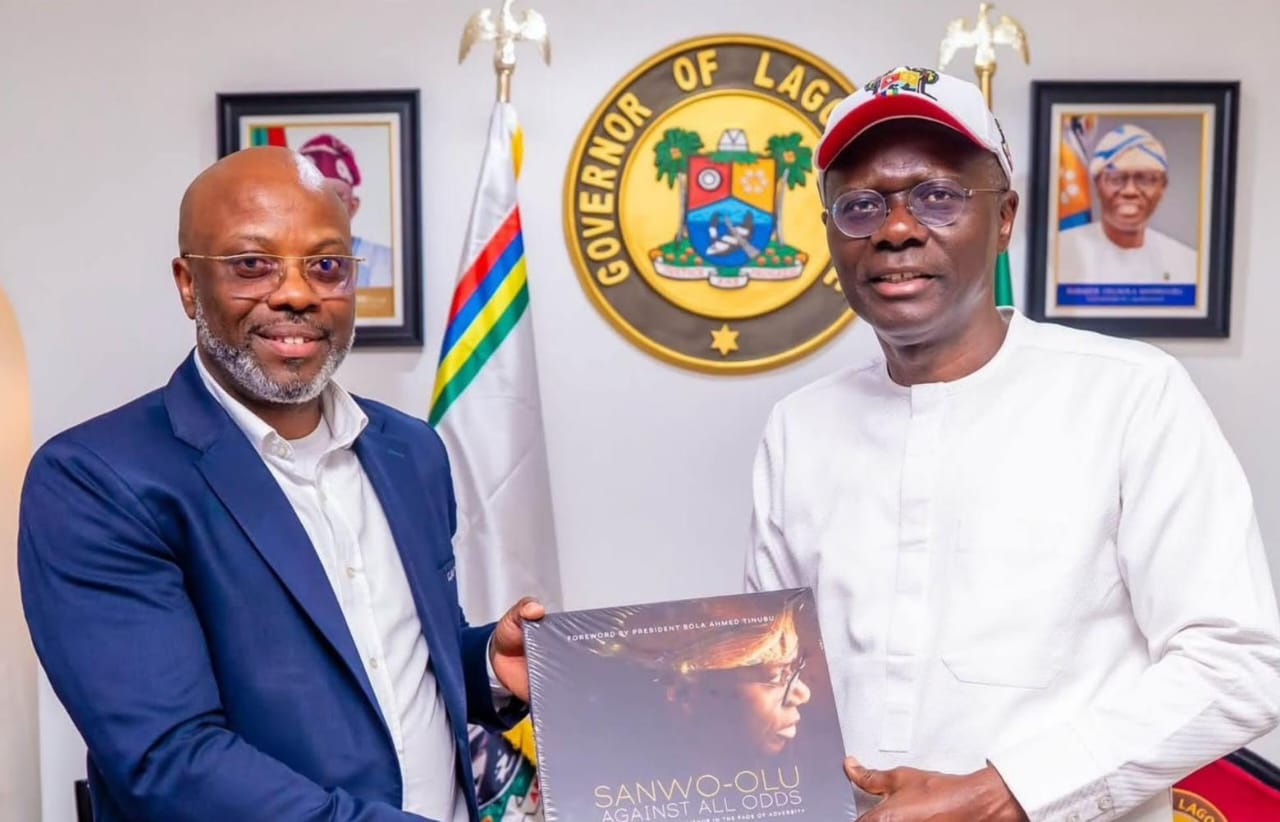
Lagos State Governor Babajide Sanwo-Olu has assured the Confederation of African Football (CAF) of the state government’s full support as preparations continue for the 2026 CAF Awards scheduled for December 7.
Sanwo-Olu gave the assurance on Sunday, October 18, while receiving a CAF delegation led by Dr Christian Emeruwa, project lead for the CAF Awards and CAF Ordinary General Assembly, at Lagos House, Marina.
Sports247 reports that the meeting focused on key arrangements for the ceremony, including security, logistics, branding and access to the proposed venue, as Lagos prepares to welcome football administrators, players, coaches and other distinguished guests from across Africa and beyond.
The governor said the state was committed to delivering a successful event and using the occasion to showcase Lagos’ cultural heritage, hospitality and capacity to host major international gatherings.
The engagement comes as Nigeria intensifies preparations for two important events on the African football calendar.
While Lagos will host the CAF Awards on December 7, Abuja is scheduled to host the 48th CAF Ordinary General Assembly on November 21 at the Bola Ahmed Tinubu International Conference Centre.
A CAF delegation is assessing proposed venues and supporting facilities in both cities. In Lagos, the inspection programme includes the Wole Soyinka Centre for Culture and Creative Arts, Eko Hotel and Suites, and Murtala Muhammed International Airport.
The Nigeria Football Federation (NFF), National Sports Commission (NSC), Lagos State Government and other relevant agencies are working with CAF to coordinate preparations for the events.
President Bola Ahmed Tinubu approved Nigeria’s hosting of the two events in May 2026, following a meeting with CAF President Patrice Motsepe on the sidelines of the Africa Forward Summit in Kenya.
The CAF Awards recognize outstanding achievements in African football, bringing together leading players, coaches, teams and administrators for the annual ceremony.
For Lagos, the event represents an opportunity to welcome the continent’s football community while demonstrating its ability to organize a major international occasion.
With the December date approaching, attention will increasingly turn to security arrangements, venue readiness, transportation and hospitality as the state works towards delivering the experience promised to CAF.
-

 News4 days ago
Euromatch NPFL: Matchday 9 results
-
News3 days ago
No agenda, no rush, no leaving San Francisco: Benchmark’s partners on investing in a frenzied market
-
News3 days ago
Amazon to fund 12 small nuclear reactors at former Indiana coal plant
-
News2 days ago
Mamdani says feds have abdicated on AI, urges New Yorkers to push back