Connect with us

News

2027: Concern mounts over APC leaders’ threats against opposition

info

Published

on

APC.jpg

As the 2027 presidential election inches closer, there are growing concerns, particularly among the opposition camp, as some chieftains of the All Progressives Congress, APC, continue to threaten Nigerians who oppose President Bola Tinubu and the ruling party.

From Borno to Kuje in the Federal Capital Territory, Osun State and then to the South-East state of Ebonyi, a pattern is forming.

The APC stalwarts, ranging from governors to commissioners and other officials, are all dishing out various kinds of threats. While some threaten violence, others speak of exclusion, eviction and even political punishment.

Different languages, but the same message: support the APC or face the consequences.

Recall that the Independent National Electoral Commission (INEC) had fixed January 16, 2027, for the presidential and National Assembly elections, and February 6, 2027, for the governorship and State Assembly polls.

While campaigns for the governorship and State Assembly elections are yet to start, those for the presidential and National Assembly elections commenced on August 19.

There are concerns that, barely three weeks into a campaign that is expected to last for over four months, the rhetoric is already painting a dark cloud. This development is not going unnoticed, as opposition political parties, Nigerians and even organisations such as Amnesty International have taken notice of the ugly trend.

Some opposition figures have even taken steps to draw the attention of security agencies to the threats against their candidates.

The trend

Recently, in Maiduguri, the Borno State capital, the state’s Commissioner for Youth and Sports Development, Sainna Buba, warned that residents who would not support President Tinubu’s re-election would have their fingers cut off.

He made the threat at the inauguration of a campaign organised by the City Boy Movement, a political support group backing the President and his administration. Buba warned political opponents against challenging the APC, saying, “Whoever shows us a finger, we are ready to cut off his fingers. Anyone who shows us a finger again would have the finger broken.”

He seemed to equate access to government benefits with political support when he told them that they would be flogged and their welfare packages would go to Tinubu’s supporters alone. “Those who followed the government would enjoy the honey, while those who refused would be flogged,” he added.

He did not mince words. He was not joking. And he meant everything he said.

However, when the video went viral and Amnesty International Nigeria condemned the threat, describing it as reckless and unlawful and demanding an urgent investigation, the commissioner said he was quoted out of context.

Also, in another viral video in August, the Kuje Area Council chairman in the Federal Capital Territory, Abuja, Samuel Danjuma Shekwolo, told residents of the area council that they either had to support the APC or leave the area.

“I have said in my area council, it’s either you’re doing APC or you leave the area council,” he said.

He also warned residents that he would not accept them coming on election day to challenge him, adding, “It is either you are with us, or you are not here.”

The statement drew condemnation from the National Human Rights Commission (NHRC), which described the remarks as intimidating and a direct assault on the Constitution and democratic principles.

The Commission called for Shekwolo’s arrest and prosecution and asked the police, the Department of State Services (DSS) and the Independent National Electoral Commission (INEC) to investigate the statement and take measures to protect residents from harassment, profiling and disenfranchisement ahead of the 2027 elections.

In Ebonyi State, the threats are coming from the governor, Francis Nwifuru, who has twice been reported to have used language that opposition figures consider coercive. In June, a civil society coalition, the Ebonyi Political Think-Tank, accused him of threatening the opposition’s governorship candidate at a rally.

The group notified the police, the DSS and the Army, warning that the governor would be held personally responsible for any harm that followed.

Recently, while addressing the newly sworn-in council chairmen, the governor reiterated his position that no seat would be surrendered to the opposition and that no opposition activity would be tolerated.

Although some people would argue that even the opposition parties are equally guilty of deploying threatening language, the point is that the ruling party should lead by example. Even if the opposition parties are issuing threats, the ruling party should be in a position to bring sanity to the process by enforcing the law.

However, the law is clear: no citizen should be punished for a political choice in a democracy.

Lessons from 2023 polls

The 2023 general election left at least 39 people dead, according to compiled media and police reports. The victims included police officers, party loyalists and ordinary voters, as well as an electoral worker felled by a stray bullet. Among the dead was Oyibo Chukwu, the Labour Party’s senatorial candidate for Enugu East, who was shot and burned by unidentified gunmen days before the presidential vote.

His party’s then-presidential candidate, Peter Obi, mourned him publicly.

The build-up to that election followed a familiar script. Researchers at the Armed Conflict Location and Event Data Project recorded dozens of violent incidents targeting party supporters, candidates and electoral officials in the months before the vote.

Atrocities Watch Africa and Global Rights counted at least 30 killings and 15 abductions of candidates and politically exposed persons in January 2023 alone, along with six attacks on campaign rallies.

Alhassan Ado Doguwa, then the APC’s House of Representatives Majority Leader for Kano, had warned before the vote that those who refused to support the party would face trouble. He was later charged over election-day violence that killed three of his own constituents. He was never convicted.

Even smaller, off-cycle elections, held outside the national calendar and generally considered easier to secure, have not escaped this pattern. Kogi’s 2019 governorship contest brought killings, ballot-box snatching and the murder of a PDP women’s leader, whose home was burnt by thugs loyal to the state’s ruling party.

Edo and Ondo followed a year later and stayed largely peaceful, helped by peace pacts signed between rivals. But by November 2023, the pattern was back. Kogi, Imo and Bayelsa all held governorship elections marked, in the words of the Centre for Democracy and Development, by vote-buying and pockets of violence, despite a heavy security presence.

This year’s Osun contest, the very election that produced Senator Fadahunsi’s remark, brought fresh accusations. The PDP, and separately former President Goodluck Jonathan, alleged that the APC had brought in thugs from other states.

The Nigeria Civil Society Situation Room estimates that 626 people were killed in violence linked to the 2019 election cycle. In 2015, the figure was 106. Observer groups point to that trajectory as evidence of a country moving in the wrong direction, not the right one.

What lies ahead

The campaign for the presidential and National Assembly race is expected to take proper shape by November. The governorship election campaigns will follow soon after, but political observers are concerned about the optics coming from certain quarters.

According to analysts, certain areas, based on the latest developments, have been marked as places to watch. One such place is Ebonyi.

The governor has been accused twice of using threatening language as the state heads into a contested race.

Another hotspot is Osun. The rivalry between the APC and Accord did not end with August’s election, and tempers there remain raw.

Borno and the wider North-East demand attention, too. The commissioner’s threats have gone unretracted, and existing insecurity in the region could sharpen the effect of political intimidation on voters already reluctant to turn out.

The Federal Capital Territory joins the list, with its councils still shadowed by the Kuje controversy. The pattern seen in Kogi, Imo, Bayelsa and Osun suggests that Nigeria’s off-cycle states remain vulnerable, whatever their smaller size and tighter security cover.

On August 18, Nigeria’s major political parties signed a National Peace Accord, pledging peaceful, issue-based campaigning ahead of 2027. Several of the incidents described here happened after that pledge was made. The police have opened at least one formal inquiry into the Borno commissioner’s remarks.

Osun’s police command questioned Senator Fadahunsi separately. Neither process has produced a public outcome yet.

In Enugu State, there have also been reported attacks on meetings and rallies organised by the opposition in the state, with casualties reported in some of the incidents. The development places the state among those to watch in the 2027 election.

What the law says

A lawyer, Marcellus Onah, offered insight into what the law says regarding statements that could ignite electoral violence.

He noted that these dangerous and incendiary comments are coming at a time when Nigeria has a specific legal framework against threats and violence during election campaigns.

According to him, the Electoral Act 2026, which repealed the Electoral Act 2022, came into force in February 2026. He noted that the new law retained and strengthened provisions regulating the conduct of political campaigns.

“According to Section 97(1) of the Electoral Act 2026, a political party, candidate, aspirant, person or group of persons must not ‘directly or indirectly threaten any person with the use of force or violence during any political campaign’ to compel that person or another person to support or refrain from supporting a political party or candidate.

“It added that such a person, candidate or aspirant found guilty under the provision could face a maximum fine of N5 million or 12 months’ imprisonment, while any political party convicted of the offence faces a N10 million fine for a first offence and N2 million for subsequent offences.

“The law also addresses inflammatory campaign language. Section 96(2) prohibits abusive, intemperate, slanderous or base language, including insinuations or innuendoes designed or likely to provoke violent reactions or emotions during political campaigns.

“This means that where a statement amounts to a threat of force or violence intended to influence political support, the Electoral Act provides a specific offence.

“Similarly, Section 40 of the Nigeria 1999 Constitution, as amended, guarantees every person the right to freely associate with others, including the right to form or belong to a political party,” he said.

He further noted that the law states: “Every person shall be entitled to assemble freely and associate with other persons, and in particular he may form or belong to any political party, trade union or any other association for the protection of his interests.”

However, with the personalities involved in the Borno, Kuje, Osun and Ebonyi incidents yet to be punished, Nigerians are raising concerns about whether the 2027 elections would be marred by violence and, eventually, whether their credibility would be affected.

In any case, the next four months are expected to show whether words spoken today become the violence of tomorrow, or whether the country will find a way to keep its politics as a contest of votes, not threats. But the bottom line remains that no citizen should be punished for a political choice in a democracy.

Nigerians are also calling on security agencies, particularly the police, to rise to the responsibility, go after anybody who threatens another ahead of the coming election, arrest such persons or groups and prosecute them.

Continue Reading
Click to comment

Leave a Reply

Your email address will not be published. Required fields are marked *

News

The King of Small Chops at a New Age: Celebrating Prince Saheed Kekere-Ekun, The Man Who Turned Small Chops Into Big Business

info

Published

on

By

IMG 20260921 WA0000.jpg

Long before the title “King of Small Chops” became synonymous with Prince Saheed Kekere-Ekun, there was a young man working as a waiter at parties and hospitality establishments in Lagos, learning the business from the ground up and quietly imagining a future few around him could probably have predicted.

Decades later, that young waiter has become one of the most recognisable personalities associated with Nigeria’s small-chops industry.

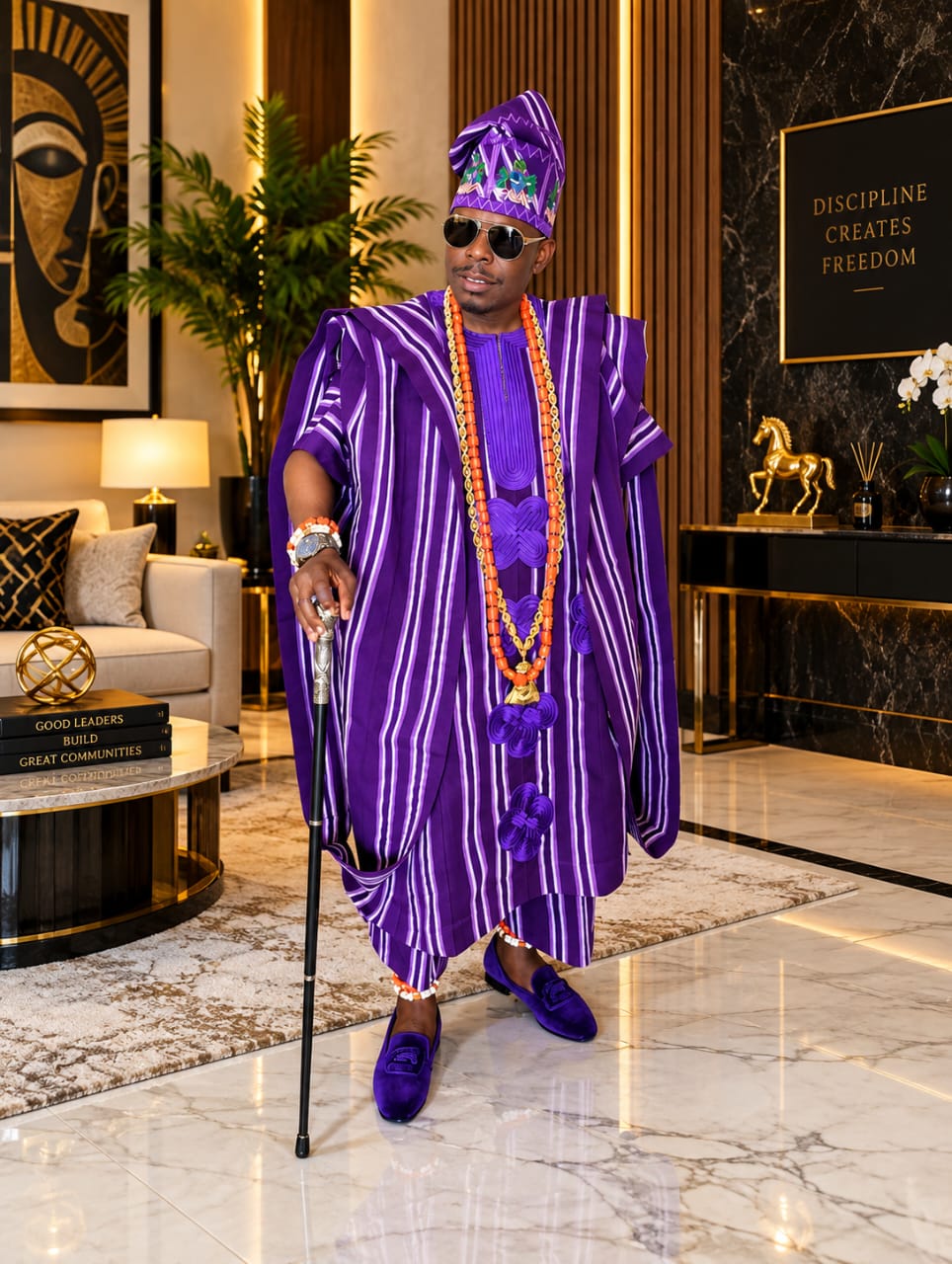
Today, as Prince Saheed Akorede Kekere-Ekun, popularly known as Saheeto, celebrates his birthday, his story is not simply that of a successful caterer.

It is the story of an entrepreneur who helped turn an often-overlooked part of the Nigerian party menu into a thriving commercial enterprise and, in the process, built a brand that has survived for more than three decades.

It is also a story with a delicious irony.

The man who made his name selling “small chops” ended up building something very big.

Kekere-Ekun’s journey dates back to his early years working as a waiter at Lagos social functions. Published accounts of his career trace the formal establishment of Saheeto International Limited to 1994, although his involvement in hospitality began earlier.

From those beginnings emerged a business dedicated to finger foods and event catering at a time when the category had nowhere near the commercial profile it enjoys today.

Kekere-Ekun saw possibilities where others saw party snacks.

He understood that spring rolls, samosas, puff-puff and other bite-sized foods could be more than an accompaniment served while guests waited for the main meal. With the right presentation, quality control, consistency and service, they could become a business in their own right.

That insight would help shape the Saheeto story.

Over time, weddings, birthdays and private celebrations gave way to increasingly large assignments, corporate functions and high-profile events. Saheeto became a familiar name within Lagos social circles and eventually beyond Nigeria.

Kekere-Ekun has credited much of that expansion not to flashy advertising but to referrals, repeat customers and maintaining standards.

His longevity is perhaps one of the most striking aspects of the story.

In a business where tastes change quickly and competitors emerge constantly, Kekere-Ekun has spent more than three decades associated with essentially the same proposition: take something seemingly ordinary and deliver it extraordinarily well.

And his influence has not been limited to what Saheeto sells.

Kekere-Ekun has spoken proudly over the years about training people who subsequently established themselves in the catering industry and, in turn, trained others. He has described that multiplier effect as one of the most satisfying parts of his entrepreneurial journey.

That may ultimately prove to be one of the more important chapters of the Saheeto story.

Businesses can be counted in outlets and revenues. Industries are built when knowledge is transferred and other entrepreneurs emerge.

The journey, however, has not been without bruises.

Kekere-Ekun has publicly recalled major business setbacks, including an early catering disaster in which food prepared for roughly 2,000 guests was spoiled, forcing his team to start again under enormous pressure. He has also spoken about suffering a much larger financial loss after operational problems affected a major catering contract.

He survived both.

Those episodes offer another explanation for the longevity of the man behind Saheeto: an ability to absorb setbacks, reassess and keep moving.

His interests would eventually stretch beyond catering. Published profiles have linked him with hospitality and real estate, including Saheeto’s Place on Lagos Island.

His entrepreneurial work also earned formal recognition. FATE Foundation’s anniversary records list Saheed Kekere Ekun as its 2012 FATE Alumni Model Entrepreneur, while he has received other recognition for his contributions to food and hospitality.

Then there is another side to Kekere-Ekun: politics.

Years before his more recent appearances on the political circuit, he publicly discussed his political ambitions and sought to represent Lagos Island Constituency II in the House of Representatives on the platform of the All Progressives Congress.

More recently, he was visible in Ekiti during the campaign for Governor Biodun Oyebanji, appearing alongside leading political figures and supporters during the election period.

It paints the portrait of a man whose network and interests have expanded considerably from the Lagos hospitality scene where his journey began.

But food remains at the heart of his identity.

That story is now moving into another generation through Saheeto Signature.

In August, the company opened its Saheeto Signature Grill Hub in Wuse 2, Abuja, extending a hospitality journey that has lasted more than three decades into a concept where customers do not have to wait for a wedding or major party to experience the brand.

It is a significant evolution.

The waiter became an entrepreneur.

The entrepreneur became an employer and trainer.

The small-chops business became a hospitality brand.

And the brand is now being positioned for another chapter.

For the many younger entrepreneurs who today make a living from small chops, finger foods and event catering, Kekere-Ekun’s journey is also a reminder that an industry does not always begin with a grand idea.

Sometimes it begins with recognising the enormous potential hidden inside something everyone else considers small.

That is what makes his birthday today more than a celebration of another year.

It is an opportunity to celebrate Prince Saheed Kekere-Ekun — the man behind Saheeto, the entrepreneur who helped give small chops a bigger place in Nigerian hospitality, and the businessman whose journey from waiting tables to building a recognised brand has become a story of persistence, reinvention and enterprise.

After more than three decades, people still call him “The King of Small Chops.”

Perhaps the greatest tribute to his journey is that nobody considers the business small anymore.

Happy birthday, Prince Saheed Kekere-Ekun.

Continue Reading

Business

Nascon, Coronation, Jaiz Bank top stock pick this week

info

Published

on

By

1638894895899blob.png

Nigerian stocks advanced by 2.9 per cent last week, lifted by bank and oil & gas equities. All the sector indexes appreciated during the week.

The main equity index has yielded 60.5 per cent so far this year.

“Recent broad-based declines have, however, brought several frontline and mid-cap stocks to more attractive entry levels. This could encourage some bargain-hunting during the week,” analysts at Meristem Securities said in a note ahead of the week.

PREMIUM TIMES has assembled some stocks with sound fundamentals, adopting rigorous approaches to save you the risk of picking equities at random for investment.

The pick, a product of an analytical market watch, offers a guide to entering the market and taking strategic positions, with the expectation that selected stocks will record reasonable price appreciation with the passage of time.

This is not a buy, sell or hold recommendation but a stock investment guide. You may need to involve your financial advisor before taking investment decisions.


PT WHATSAPP CHANNEL
Dangote Refinery AD

Nascon

Nascon tops this week’s list for its strong fundamentals. The net profit ratio (NPR) of the salt maker is 9.3, while the price-to-earnings (PE) ratio is 11.5x. Its 14-day relative strength index (RSI) is 6.9.

Coronation Insurance

Coronation appears on the pick on the basis of its attractive fundamentals. The NPR of the insurer is 22.7, while the PE ratio is 5.2x. The 14-day RSI is 55.4.

Jaiz Bank

Jaiz makes the selection for its strong fundamentals. The bank’s NPR is 28.5, while the PE ratio is 1.5x. Its 14-day RSI is 43.9.

Fidson

Fidson makes the cut for its sound fundamentals. The NPR of the drug manufacturer is 7.8, while the PE ratio is 17.7x. The 14-day RSI is 43.

CAP

CAP makes the cut for its sound fundamentals. The NPR of the chemical manufacturer is 14.1, while the PE ratio is 13.5x. The 14-day RSI is 3.6.


Discover more from Premium Times Nigeria

Subscribe to get the latest posts sent to your email.

Continue Reading

Trending