Business
PICTDA Engages Plateau Finance Officers on Digitization and Automation


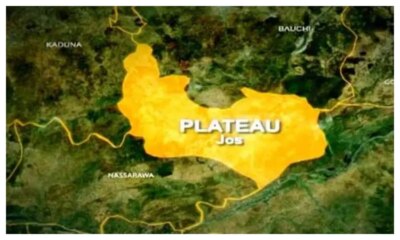
The Plateau State Information and Communication Technology Development Agency (PICTDA), in collaboration with the Office of the Accountant General, has engaged finance officers from Ministries, Departments, and Agencies (MDAs) to develop plans to automate financial transactions through the Plateau State Government Integrated Financial Management Information System (PLAGIFMIS).
The event, held at the Victoria Gowon Hall, Government House, Little Rayfield, Jos, on Wednesday, January 22, 2025, brought together key government officials, including PICTDA Director General Engr. Dominic Gwaman Datong, Commissioner of Finance Mrs. Dongkum Grace Shwarta, Commissioner for Budget and Economic Planning Hon. Chrysantus Dawam, Accountant General of the State Mrs. Nanret Asabe Mangset, Director of Treasury Operations Mr. Ezekiel Dauda Daschen, and Mr. James O. James from Growth Stack.
Participants included Directors of Finance and Supply, Directors of Internal Audit, Cashiers, and other key finance officers from MDAs. They were briefed on the importance of digitization and the role of PLAGIFMIS in aligning with Governor Caleb Mutfwang’s e-Governance vision.
In her remarks, Accountant General Mrs. Nanret Asabe Mangset commended PICTDA for the initiative and assured continued engagement and training when the platform became operational. Commissioner of Finance Mrs Dongkum Grace Shwarta emphasized the need for Plateau State to embrace automation, dispelling fears of job losses and highlighting its potential to enhance efficiency and effectiveness in financial management.


In his vote of thanks, PICTDA Director General Engr. Dominic Gwaman Datong appreciated the participants’ dedication and urged them to support the administration’s automation agenda.
The event featured paper presentations on key topics, including ‘Automation & Its Impact on Financial Management’ by Mr. Ezekiel Dauda Daschen, ‘Benefits of Automation: Efficiency, Transparency, Accuracy, and Reduced Paperwork’ by Dr. Yunana Arin, and ‘Expected Changes, Key Milestones, and Integration’ by Mr. Bess S. Domkat. Mr. James O. James also provided a project overview.
Following the presentations, participants engaged in a robust discussion, seeking clarifications and insights on the new platform.







Seplat Energy Plc has appointed Effiong Okon as its chief executive officer, making him the first Akwa Ibom indigene to occupy the top executive position at the Nigerian energy company.
Mr Okon, an engineer with more than 35 years of experience in the oil and gas industry, was appointed by the company’s board of directors in June 2026 and assumed office on 1 August 2026, according to information published on Seplat Energy’s website.

Onofiok Luke, a former member of the House of Representatives and former speaker of the Akwa Ibom State House of Assembly, commended the appointment, describing it as a significant milestone for the state.
In a Facebook post, Mr Luke congratulated Mr Okon, saying his emergence reflected years of professional dedication, competence and service.
He said the appointment should inspire young people from Akwa Ibom to pursue leadership positions in the oil and gas industry and other globally competitive sectors.
“For years, we have consistently clamoured, advocated and hoped to see our sons and daughters rise to the apex of International Oil Companies, particularly those operating within our communities and drawing substantially from our natural endowments,” Mr Luke wrote.


He also called for greater opportunities for local professionals and host communities, arguing that communities where oil and gas are extracted should participate not only in resource production but also in industry leadership, value creation and prosperity.
Mr Luke cited Udom Inoyo, a former vice chairman of ExxonMobil’s Nigerian affiliates, as one of the Akwa Ibom professionals who had previously attained senior leadership positions in the industry.
He wished Mr Okon a successful tenure and described the appointment as a source of inspiration to aspiring professionals from the state.
Career and industry experience
Mr Okon joined Seplat Energy in 2018 and has held several senior positions, including executive director of operations, director of new energy, and director of projects. He also served as managing director of ANOH Gas Processing Company Limited, a joint venture between Seplat Energy and Nigerian National Petroleum Company Limited (NNPC).
According to his biography, he oversaw the development of the 300-million-standard-cubic-feet-per-day ANOH Gas Processing Plant, which achieved its first gas in January 2026.
ANOH is an acronym for Assa North-Ohaji South, a major natural gas development project located in Imo State, Nigeria
Before joining Seplat, Mr Okon spent 26 years at Shell, where he held senior positions in Nigeria, Europe, the Middle East and the Americas. His assignments included vice president of cost leadership and continuous improvement in the Netherlands, general manager of deepwater and offshore assets in Nigeria, and deputy vice president technical and manager of the North Field at Qatar Shell.
He also participated in the commissioning and early production phases of Qatar’s Pearl gas-to-liquids project and QatarGas LNG Trains 7 and 8, according to his biography.
Mr Okon studied at the University of Benin and attended IMD Business School in Lausanne, Switzerland, and Harvard Business School in Boston, United States. He is a fellow of the Nigerian Society of Engineers and the UK Energy Institute, and a registered engineer in Nigeria.
He is married to Bertha Okon, and they have four children.
Seplat’s growth and acquisition of Mobil’s Nigeria business
Seplat Energy was established in 2009 through a partnership between Shebah Petroleum Development Company and Platform Petroleum Joint Ventures. The company has since expanded its operations in Nigeria’s oil and gas industry, with interests spanning hydrocarbon production, gas processing, and energy transition initiatives.
A major turning point came in December 2024, when Seplat completed its acquisition of Mobil Producing Nigeria Unlimited (MPNU), the Nigerian shallow-water oil and gas business formerly owned by ExxonMobil. The transaction followed an agreement announced in February 2022 and regulatory approvals for the deal.
Following the acquisition, Seplat renamed the business Seplat Energy Producing Nigeria Unlimited (SEPNU). The acquired assets include interests in four oil mining leases — OMLs 67, 68, 70 and 104 — operated under a joint venture with NNPC, as well as associated infrastructure, including the Qua Iboe Terminal and interests in the Bonny River Terminal and gas processing facilities.
READ ALSO: AFC appoints Cardoso as board chairman
Seplat said the acquisition more than doubled its production and expanded its portfolio across onshore and shallow-water operations. The enlarged business has interests in oil and gas fields, gas processing facilities and export terminals, strengthening its position among Nigeria’s indigenous energy producers.
The company is listed on both the Nigerian Exchange and the London Stock Exchange. Its operations contribute to Nigeria’s oil production and domestic gas supply, with gas serving as an important fuel for electricity generation and industrial activity. The company has also identified gas-led growth and the development of cleaner energy solutions as priorities in its strategy.
Mr Okon takes over the leadership of the enlarged company following this expansion, with responsibility for overseeing its operations, project delivery, production growth, and gas development strategy.
Discover more from Premium Times Nigeria
Subscribe to get the latest posts sent to your email.

The Minister of Aviation and Aerospace Development, Festus Keyamo, has directed the Nigeria Civil Aviation Authority (NCAA) to notify local and international airlines to place 46 people who had contact with Nigeria’s confirmed Ebola patient on a no-fly list for at least 21 days.
Mr Keyamo disclosed this on Wednesday after a virtual meeting with the Coordinating Minister of Health and Social Welfare, Muhammad Ali Pate, to discuss measures to contain the outbreak.
He said the list comprised 44 people who came into contact with the infected woman at a hospital after she developed symptoms, as well as two members of her domestic staff.
The minister said efforts were ongoing to isolate the individuals while health authorities determined whether they had contracted the virus.
He said he had directed the NCAA to notify all domestic and international airlines of the restriction immediately.
Airport surveillance intensified
Mr Keyamo also directed the Federal Airports Authority of Nigeria (FAAN) to strengthen Ebola surveillance and response measures at all international airports in the country.
According to him, measures being implemented include enhanced health screening, temperature checks, tracking of travellers’ histories, digital health declarations and coordination with the Nigeria Centre for Disease Control and Prevention (NCDC).
He said the measures followed earlier alerts about Ebola outbreaks in the region.
ALSO READ: Ebola: Nigerian govt assures citizens of containment strategies
Nigeria confirmed its first Ebola case in the Federal Capital Territory on Tuesday, prompting contact tracing and other containment measures.
The patient, a woman who recently arrived in Nigeria on an international flight from Uganda, is receiving treatment in isolation at a private hospital in Abuja.
PREMIUM TIMES reported that health authorities identified 44 close contacts of the patient and began tracing people who may have been exposed to the virus.
The 21-day restriction ordered by Mr Keyamo is intended to prevent the identified contacts from travelling by air during the period in which symptoms may develop.
Ebola virus disease can cause severe illness and is transmitted through direct contact with the blood or other bodily fluids of an infected person, or contaminated materials. Its incubation period typically ranges from 2 to 21 days.
Discover more from Premium Times Nigeria
Subscribe to get the latest posts sent to your email.
-

 News4 days ago
No agenda, no rush, no leaving San Francisco: Benchmark’s partners on investing in a frenzied market
-
News3 days ago
Amazon to fund 12 small nuclear reactors at former Indiana coal plant
-
News3 days ago
Mamdani says feds have abdicated on AI, urges New Yorkers to push back
-
News2 days ago
Meta’s Muse hits 10M U.S. downloads in 40 days, a milestone reached by only 11 other apps