Connect with us

News

JUST IN: Shettima Visits NIPSS in Plateau for Assessment After Gunmen Attack

info

Published

on

WhatsApp Image 2026 06 19 at 12.47.18 PM 1.webp

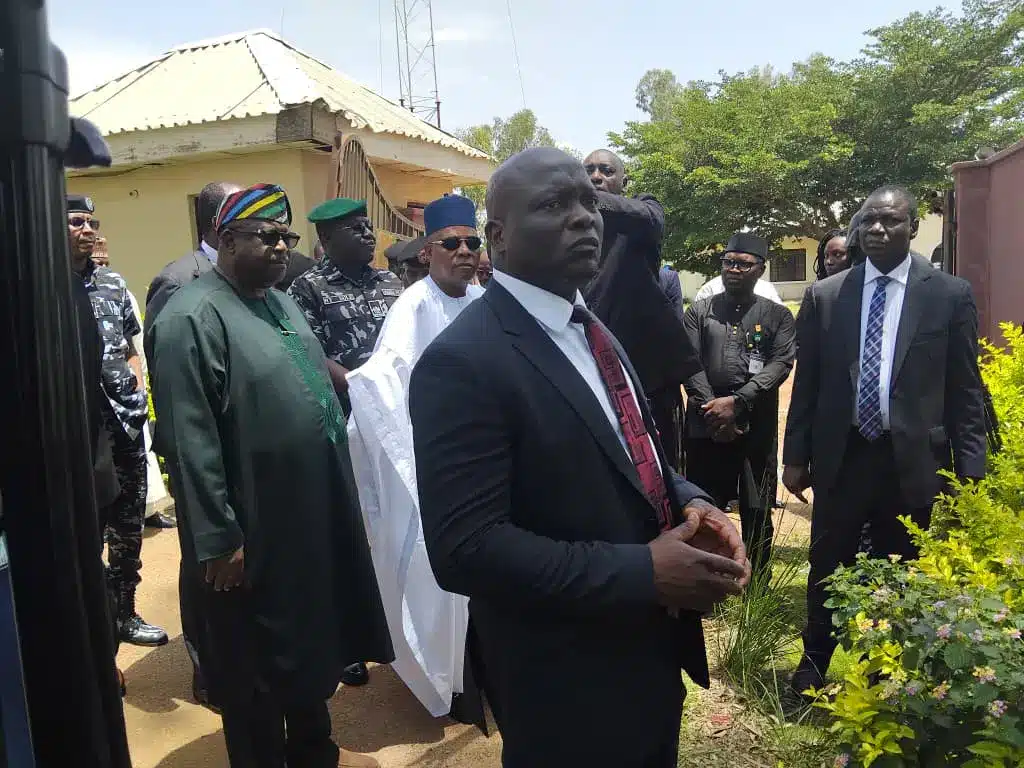
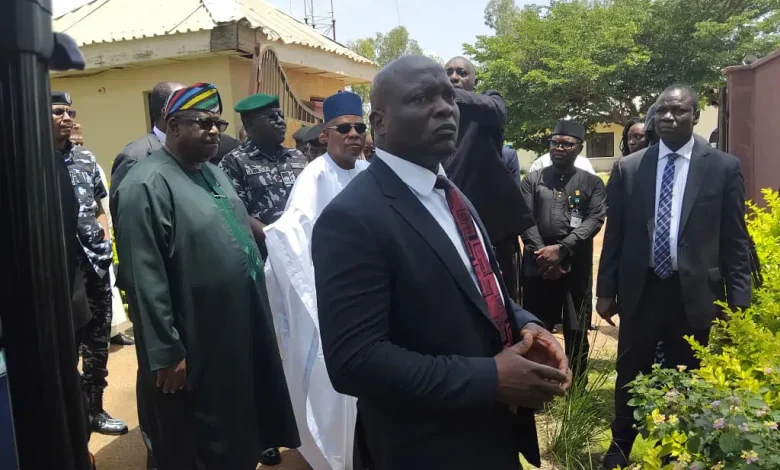
Vice President Kashim Shettima on Friday visited the National Institute for Policy and Strategic Studies (NIPSS) in Kuru, Plateau State, to assess the institution’s security situation, facilities and ongoing programmes following the recent deadly attack by gunmen.

Shettima, accompanied by Plateau State Governor Caleb Mutfwang and other senior government officials, was received by the Director-General of NIPSS, Professor Ayo Omotayo, and members of the institute’s management team.

According to POLITICS NIGERIA, the visit comes days after suspected gunmen attacked the institute, killing three people and raising fresh concerns over security at Nigeria’s foremost policy and strategic studies institution.

Security agencies have since arrested several suspects in connection with the incident, while additional security measures have been deployed within and around the institute to forestall further attacks.

The Vice President’s visit forms part of the Federal Government’s response to the incident, aimed at assessing the situation firsthand, reassuring the institute’s management and staff, and strengthening security around the facility.

Investigations into the attack are ongoing as authorities intensify efforts to apprehend all those responsible and ensure they are brought to justice.

Continue Reading
Click to comment

Leave a Reply

Your email address will not be published. Required fields are marked *

News

NWFL Championship: Promotion Race Intensifies as Matchday Two Takes Centre Stage in Calabar

info

Published

on

By

IMG 20260712 WA0092.jpg

The battle for promotion to the Nigeria Women Football League (NWFL) Premiership resumes on Monday as teams return to action for a decisive Matchday Two of the 2026 NWFL Championship in Calabar.

Following an entertaining opening day that produced 20 goals across eight matches, clubs will be eager to strengthen their promotion ambitions, while others fight to revive their campaigns after disappointing starts.

Read Also: Encouraging Sports Participation Among Young Girls for Future Maternal Health By Dr Ugwueke

In Group A, all eyes will be on the clash between First Mahi Babes and DreamStar Ladies at the U.J. Esuene Stadium. DreamStar Ladies head into the fixture brimming with confidence after a commanding 3-1 victory over Rosaria Victrix, while First Mahi Babes will be desperate to bounce back from their narrow defeat to Delta Babes. Earlier in the day, Delta Babes face Rosaria Victrix in another crucial encounter.

Group B action begins with Gallant Queens taking on Pelican Stars, who opened their campaign with a hard-fought 2-1 win over Ikukuoma Queens. The second fixture sees Ikukuoma Queens battle Moje Queens, with both teams looking to improve their positions in the standings.

At St. Patrick’s Stadium, unbeaten sides Wazbak Int’l Sports Academy and Rangers Women FC lock horns in what promises to be one of the standout fixtures of the day in Group C. Wazbak will aim to build on their dramatic 3-2 victory over Fortress Ladies, while Rangers seek their first win after settling for a goalless draw against Unification FC. The other Group C fixture pits Unification FC against Fortress Ladies.

Group D also promises intense action as Chosen Generation Angels attempt to recover from their opening-day defeat when they face Ghetto Tigers, who edged Kwara Ladies 1-0 in their first outing. Meanwhile, Imo Striker Queens, fresh from an emphatic 3-0 victory over Chosen Generation Angels, will seek another maximum haul against Kwara Ladies.

With only one team from each group advancing to the promotion playoffs, every point is becoming increasingly valuable as the championship enters a pivotal stage.

Football fans can expect another day of high-quality action as the quest for promotion to the NWFL Premiership gathers momentum in Calabar.

Continue Reading

News

To cut cancer by 30% in 2030, Nigeria embeds AI in control plan  – Technology Times

info

Published

on

By

1783915480 admin ajax.png

The Federal Government has integrated artificial intelligence (AI) into Nigeria’s National Cancer Control Plan (NCCP) 2026–2030, positioning emerging technologies at the centre of efforts to reduce the country’s cancer burden by 30% by 2030 through improved prevention, early detection, diagnosis, treatment and research.

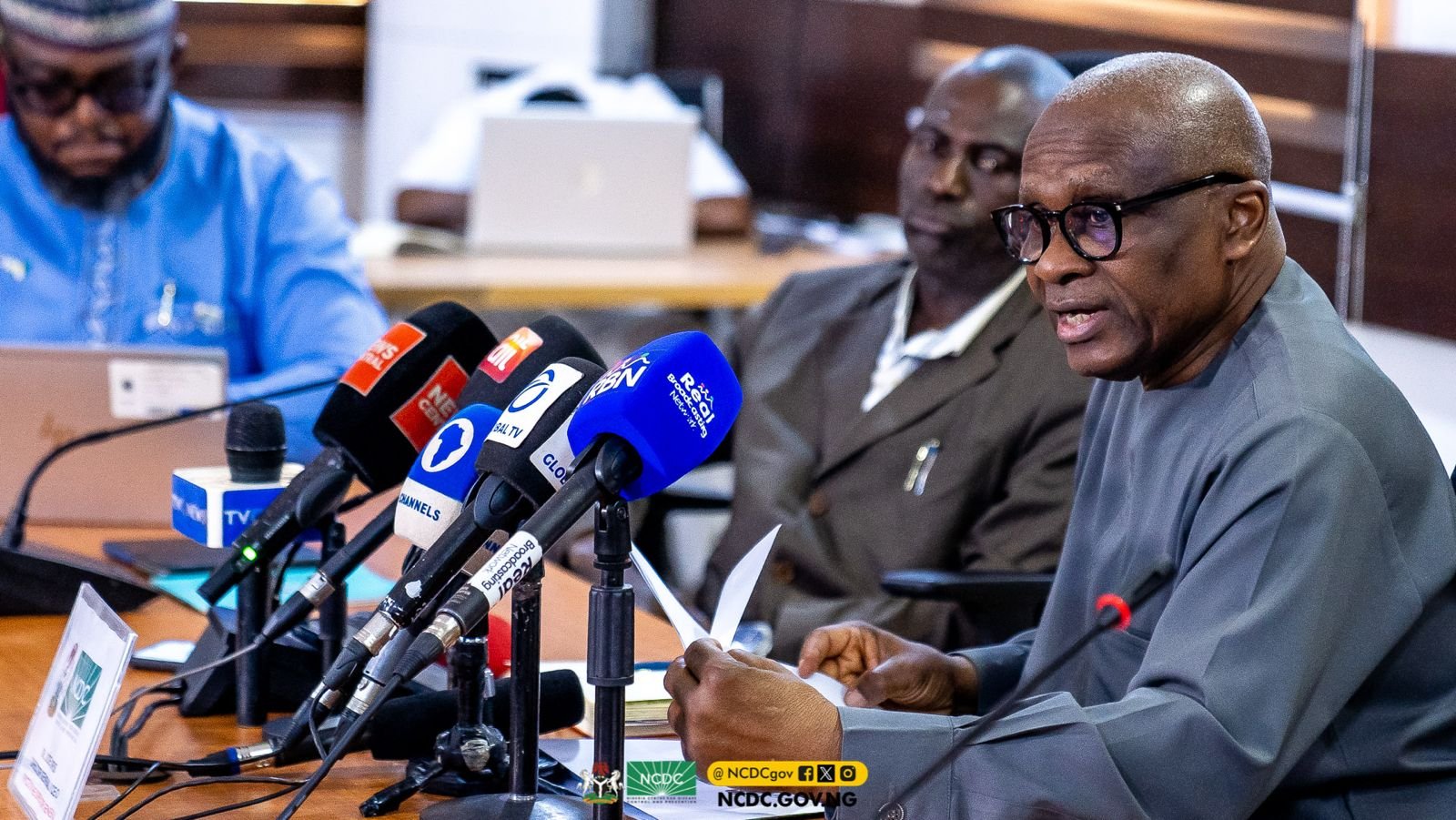
Iziaq Salako, Minister of State for Health and Social Welfare, announced the initiative at the African Organisation for Research and Training in Cancer (AORTIC) Best of ASCO Africa 2026 conference in Abuja, where he outlined the government’s strategy to leverage AI and digital technologies to strengthen cancer care nationwide.

The integration of AI into the five-year national strategy, according to the minister, is part of a broader shift towards technology-driven healthcare, with the government seeking to improve disease surveillance, support clinical decision-making, enhance diagnostic capabilities and strengthen data-driven cancer management across the healthcare system.

nigeria-embeds-ai-in-cancer-control-plannigeria-embeds-ai-in-cancer-control-plan
Dr. Iziaq Adekunle Salako, Minister of State for Health and Social Welfare. Image credit: Federal Ministry of Health.


“The National Cancer Control Plan 2026–2030 provides a comprehensive roadmap for strengthening prevention, early detection, diagnosis, treatment, survivorship, research, workforce development, data systems, artificial intelligence, partnerships and resource mobilisation to improve cancer outcomes nationwide,” the minister says. He says the inclusion of AI reflects the government’s commitment to harnessing emerging technologies to improve evidence-based healthcare delivery and modernise Nigeria’s cancer control ecosystem.

AI to strengthen cancer prevention and treatment

According to Salako, the National Cancer Control Plan 2026–2030 provides a comprehensive roadmap for improving every stage of cancer care, from prevention and screening to treatment, survivorship and research.

“The National Cancer Control Plan 2026–2030 provides a comprehensive roadmap for strengthening prevention, early detection, diagnosis, treatment, survivorship, research, workforce development, data systems, artificial intelligence, partnerships and resource mobilisation to improve cancer outcomes nationwide,” the minister says.

He says the inclusion of AI reflects the government’s commitment to harnessing emerging technologies to improve evidence-based healthcare delivery and modernise Nigeria’s cancer control ecosystem.

The renewed implementation of the National Cancer Control Plan also aligns with President Bola Ahmed Tinubu’s Renewed Hope Agenda, which prioritises stronger healthcare systems, innovation and strategic partnerships to tackle non-communicable diseases.

To support implementation of the strategy, Salako says the Federal Government has inaugurated a multi-sectoral National Technical Working Group comprising clinicians, researchers, cancer survivors, civil society organisations, development partners and private sector representatives.

The group will adopt an implementation science approach to translate the objectives of the National Cancer Control Plan into measurable outcomes, ensuring that policy interventions deliver tangible improvements in cancer prevention, diagnosis, treatment and survivorship.

nigeria-embeds-ai-in-cancer-control-plannigeria-embeds-ai-in-cancer-control-plan
Nigeria integrates AI into its National Cancer Control Plan 2026–2030 to improve cancer prevention, diagnosis, treatment and research by 2030. Image credit: Federal Ministry of Health.

According to him, locally generated scientific data will ensure that emerging innovations, including AI-powered healthcare solutions, are better adapted to the realities of African health systems.

Nigeria among Africa’s hardest-hit countries

Highlighting the urgency of the initiative, Salako says Africa recorded more than 1.18 million new cancer cases and over 721,000 cancer-related deaths in 2024.

According to him, cancer now claims more lives across the continent than AIDS, malaria and tuberculosis combined.

He adds that Nigeria accounts for about 10.5% of Africa’s cancer burden, making it one of the continent’s three most affected countries alongside Egypt and South Africa.

Call for African-led cancer research

The minister urged African researchers and oncology professionals to generate and validate more research within African populations rather than relying predominantly on international evidence.

According to him, locally generated scientific data will ensure that emerging innovations, including AI-powered healthcare solutions, are better adapted to the realities of African health systems.

Salako also advocated stronger collaboration among African countries in cancer research, innovation, workforce development and access to treatment, describing the approach as a new era of Healthcare Pan-Africanism.

“The time has come for healthcare to assume a more central place in continental cooperation through what I describe as Cancer Care Pan-Africanism,” he says.

Nigeria remains committed to advancing education, research, advocacy and strategic partnerships that will reduce cancer incidence and mortality, improve the quality of life of patients and strengthen resilient cancer care systems across Africa.”

The minister commended AORTIC, the American Society of Clinical Oncology (ASCO) and other partners for convening the conference, noting that it provides an important platform for adapting global oncology advances to African healthcare systems while promoting evidence-based cancer care across the continent.

Stay ahead with real-time reports, breaking news, and exclusive insights delivered directly to your phone. Don’t settle for outdated information. Join TECHNOLOGYTIMES NEWS on WhatsApp for 24/7 updates.

Join Our Whatsapp Channel

Continue Reading

Trending