Business
In 6 Days! Excitement Builds as Countdown to the 2025 Jos Trade Fair Begins!


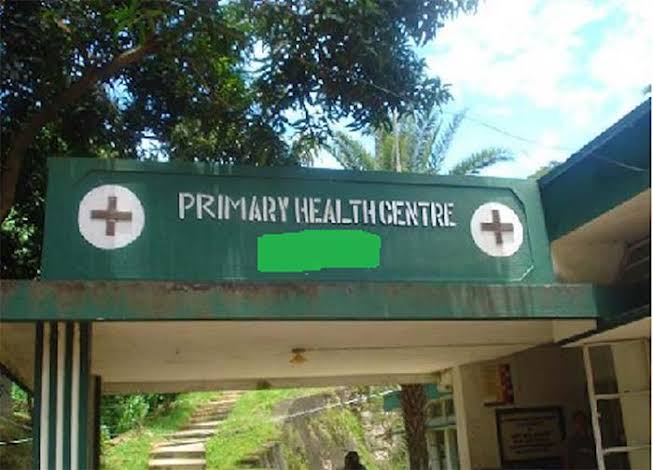
BY IUR REPORTER—The Federal Government has approved the disbursement of ₦32.8 billion through the Basic Healthcare Provision Fund (BHCPF) implementing gateways as part of efforts to strengthen healthcare delivery and expand access to quality primary healthcare services across Nigeria.
The funding is expected to consolidate recent gains in population health outcomes and disease control while ensuring that more Nigerians, regardless of their location or socio-economic status, have access to essential healthcare services.
The approval was one of the key resolutions reached at the 15th Ministerial Oversight Committee (MOC) meeting on the National Health Sector Renewal Investment Initiative, the Basic Healthcare Provision Fund, the Sector-Wide Approach (SWAp), and Government and Donor-Funded Programmes and Initiatives.
The meeting was co-chaired by the Coordinating Minister of Health and Social Welfare, Professor Muhammad Ali Pate, and the Minister of State for Health and Social Welfare, Dr. Iziaq Adekunle Salako.
During the meeting, the committee reviewed key performance indicators, financial reports, programme implementation milestones, and emerging priorities requiring policy attention. Members also identified strategic measures to address implementation bottlenecks and agreed on timelines for delivering priority interventions ahead of the next quarterly review.
The committee reaffirmed its commitment to strengthening collaboration among government institutions and development partners to reinforce Nigeria’s health system and accelerate the delivery of impactful healthcare interventions nationwide.
The latest funding injection underscores the Federal Government’s continued efforts to improve healthcare financing, increase access to quality primary healthcare services, and build a more resilient health system capable of meeting the needs of Nigerians.
The post FG Injects ₦32.8bn into Basic Healthcare Fund appeared first on Business Today NG.

The Nigerian Civil Aviation Authority (NCAA) has imposed a ₦6 million fine on Saudi Airlines for what it described as consumer-protection-related violations.
Michael Achimugu, Director of Public Affairs and Consumer Protection at the NCAA, disclosed this on Friday.
Mr Achimugu stated that the sanction became necessary after the airline failed to resolve several outstanding consumer issues, despite repeated interventions by the regulator and an extended period granted for compliance.
According to him, the NCAA had previously stepped in to support the airline in managing a situation at the Nnamdi Azikiwe International Airport in Abuja a few months ago that could have escalated into violence.
He noted that the authority had also given Saudi Airlines additional time to address pending complaints and comply with the regulator’s determinations, but the airline failed to meet its obligations.

“The Nigeria Civil Aviation Authority has sanctioned Saudi Airlines to the tune of ₦6 million for consumer protection-related infractions,” Mr Achimugu said.
He explained that the enforcement action was taken to ensure compliance with Part 19 of the Nigeria Civil Aviation Regulations (Nig. CARs) 2023, which outlines the rights of air passengers and the responsibilities of airlines operating in the country.
The NCAA expressed hope that the sanction would encourage the airline to improve its operations in Nigeria and strengthen its commitment to passenger welfare.
Mr Achimugu emphasised that passengers travelling to and from Nigeria deserve to be treated fairly and with respect by all airlines operating in the country.
READ ALSO: NCAA Championships: Ogazi shatters records, Ajayi strikes gold as Nigerians shine in Eugene
He added that while the authority would continue to support Saudi Airlines and other carriers to operate efficiently, it would not hesitate to enforce regulatory standards where necessary to protect consumers.
Saudi Airlines had yet to respond to the NCAA’s sanctions as of the time of filing this report.
-

 News4 days ago
I’m Jealous Wike is in PDP – APC Chairman, Nentawe Yilwatda admits
-

 Business3 days ago
Cement maker Lafarge Africa renamed HBM Nigeria Plc
-
Business4 days ago
Africa records hydropower growth but Nigeria still suffers power shortages — Report
-
Health4 days ago
Kano shuts two unlicensed health training institutions