Health
Ebola: Lawmakers reject border tours, but urge release of health emergency funds

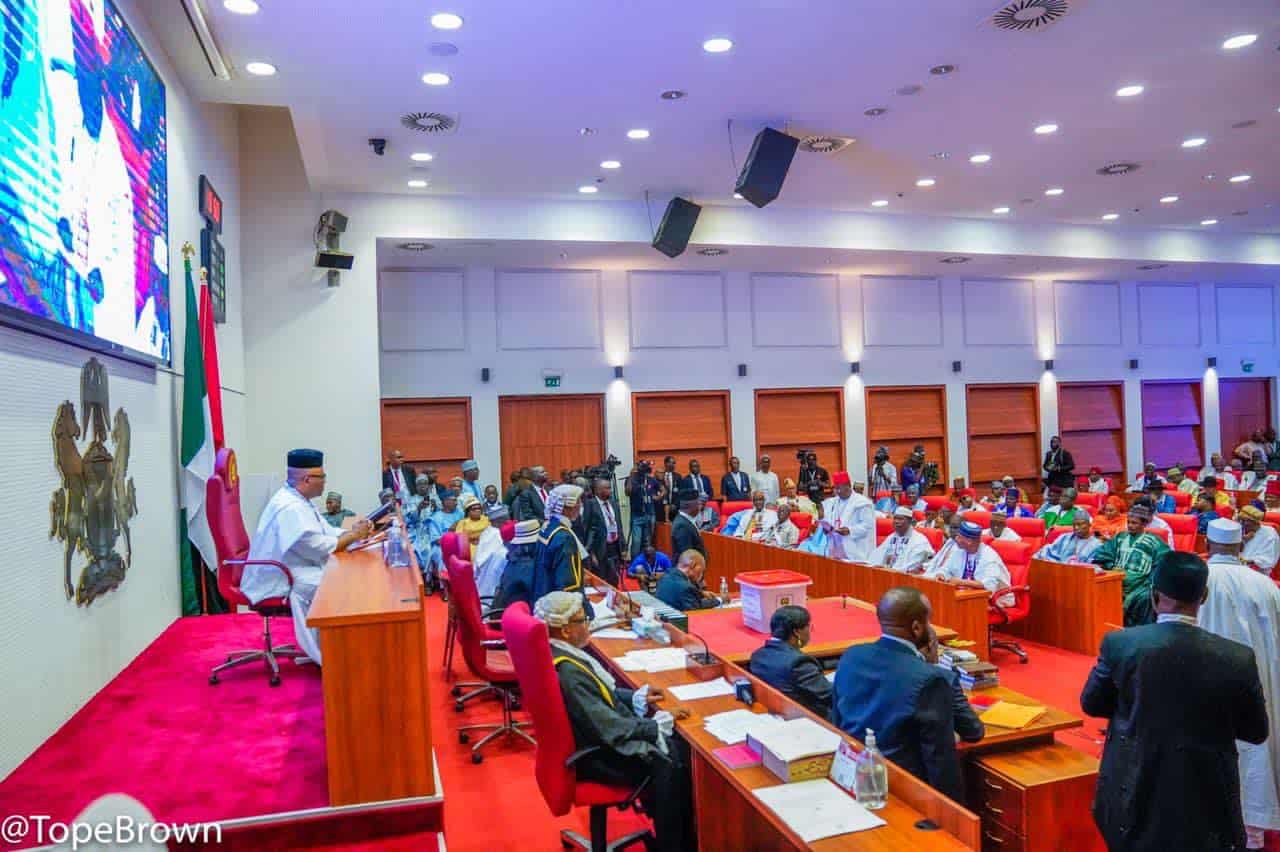
The Senate on Wednesday rejected a proposal for its members to visit the entry points through which a woman infected with Ebola entered the country before she was isolated at a private hospital in Abuja, the nation’s capital.
The upper chamber instead urged the federal government to immediately release emergency funds from the Service Wide Vote to prevent the spread of the Ebola virus.
Lawmakers passed the resolutions during plenary while debating a motion to enforce mandatory health screening at all international airports and other entry points to prevent the spread of Ebola and other epidemic-prone diseases.
The motion was sponsored by Francis Faduyile (APC, Ondo South).
Nigeria confirmed an Ebola case on Tuesday. The patient, a woman who recently arrived in the country on an international flight from Uganda, is currently in isolation and receiving medical care at a private hospital in the Federal Capital Territory.
The Coordinating Minister of Health and Social Welfare, Muhammad Pate, said 44 people had been identified as the patient’s contacts and that the government was tracking them for isolation.


The motion
Mr Faduyile, a professor of medicine, expressed concern about Nigerians’ safety, noting that no approved vaccine exists for the strain responsible for the outbreak
The senator said Nigeria needed to strengthen surveillance at its entry points in line with the International Health Regulations, without imposing travel bans or engaging in discrimination.
He urged the Senate to encourage the Federal Ministry of Health and Social Welfare, the Nigeria Centre for Disease Control and Prevention (NCDC) and the Port Health Services to make health screening compulsory for all international arrivals at airports, seaports and designated land borders.
Mr Faduyile said the screening should include health declaration forms, temperature checks and symptom assessments. He also called for enhanced screening of passengers who had been in or transited through affected areas within the preceding 21 days, regardless of their nationality or country of departure.
The senator further recommended exit screening for departing passengers during any declared public health emergency.
He urged the Federal Airports Authority of Nigeria and the Nigeria Immigration Service to ensure all entry points are adequately staffed and equipped with trained port health officers, thermal scanners, protective equipment, and isolation rooms.
The lawmaker also called for functional isolation and treatment centres in all 36 states and the FCT.
READ ALSO: Ebola: Nigerian lawmakers demand release of outstanding funds for health agencies to strengthen response
Mr Faduyile recommended reviewing the Quarantine Act of 1926 to align it with modern public health legislation and the International Health Regulations.
He further urged the Senate committees on Health, Primary Healthcare, Development and Disease Control, Aviation, Interior, and Appropriations to work with relevant agencies, visit major entry points and submit a report within four weeks to guide further legislative action.
Debate
Most senators who contributed to the debate supported the motion and its proposed measures.
However, the Senate President, Godswill Akpabio, while commending Mr Faduyile for sponsoring the motion, objected to the proposal for lawmakers to visit the country’s major entry points.
Mr Akpabio argued the visit was unnecessary, suggesting senators could risk exposure to the virus. He put the proposal to a vote, and most lawmakers opposed the planned visit.
Ekong Sampson, the senator for Akwa Ibom South Senatorial District, said Nigeria needed a stronger health system to protect its citizens from epidemic-prone diseases.
Sadiq Umar, who represents Kwara North Senatorial District, urged the government to deploy appropriate technology to strengthen contact tracing and prevent further transmission of the virus across the country.
Adamu Aliero (APC, Kebbi Central) described the matter as urgently important to the nation. He called on the federal government to immediately release emergency funds from the Service Wide Vote to contain the outbreak, rather than wait for funds previously approved in the budget to be released.
Tahir Monguno (APC, Borno North) also called for an amendment to the Quarantine Act.
Discover more from Premium Times Nigeria
Subscribe to get the latest posts sent to your email.






Seven private sector and philanthropic organisations have proposed commitments worth more than $65 million to strengthen maternal and newborn healthcare services in Nigeria.
The commitments, announced on Wednesday during the 2026 Joint Annual Review of the health sector in Abuja, are expected to support interventions in 172 local government areas (LGAs) identified as having a high burden of maternal deaths.
According to a statement issued following the event, the organisations submitted letters of intent under the Maternal and Neonatal Mortality Reduction Innovation Initiative (MAMII) Private Sector Compact, a government-led framework designed to coordinate investments and technical support for maternal and newborn healthcare.
The seven organisations are DP World, Bayer, UNICEF, dsm-firmenich, Nestlé Nutrition Institute, Roche and Ferring Pharmaceuticals.
The proposed contributions include financial resources, medical products, technical expertise, supply chain support and other services intended to address gaps in maternal and newborn healthcare delivery.
Nigeria’s maternal mortality burden
The announcement comes as Nigeria continues to record high numbers of preventable maternal and newborn deaths.
According to estimates contained in the statement, approximately 40,000 women and 300,000 newborns die annually in Nigeria, representing more than 100 maternal deaths and 800 newborn deaths every day.
These estimates highlight persistent challenges in access to skilled birth attendants, emergency obstetric services, essential medicines and timely referrals, particularly in underserved communities.
MAMII, launched in November 2024, prioritises 172 LGAs across 33 states, which account for more than half of Nigeria’s maternal deaths, according to the programme’s targeting analysis.
The initiative focuses on improving emergency obstetric and newborn care, strengthening referral systems, providing emergency transport and increasing access to essential medical supplies and trained health workers.
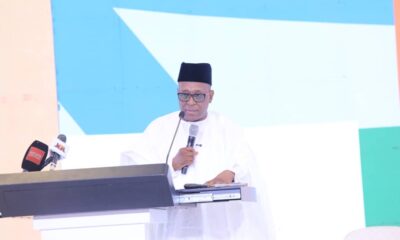
Speaking at the event, Coordinating Minister of Health and Social Welfare Muhammad Pate said reducing preventable maternal and newborn deaths remained a national priority.
“Through the Nigeria Health Sector Renewal Investment Initiative and our Sector-Wide Approach, we are bringing federal and state governments, the private sector and development partners together around a common national plan, with particular attention to the 172 local government areas where the burden of maternal mortality is greatest,” Mr Pate said.
He described the commitments as an important step towards improving healthcare delivery and an important expression of confidence in Nigeria’s reform agenda.
“Our responsibility is to ensure that every commitment is aligned with national priorities, every investment is accounted for, and every intervention contributes to measurable improvements in the lives of Nigerian women and children,” he said.
Partners pledge technical support
The Nigeria Country Director of the Gates Foundation, Uche Amaonwu, said the partnership would help coordinate resources and expertise towards reducing preventable deaths.
Mr Amaonwu said the burden of maternal mortality continues to affect too many Nigerian families.
“The MAMII compact brings focus to this challenge, coordinating public, private and philanthropic efforts to reduce preventable maternal and newborn deaths,” he said.
He said the foundation was working with partners, including MSD for Mothers, MTN Group Foundation and the World Economic Forum’s Global Alliance for Women’s Health, to strengthen maternal and newborn healthcare.
Similarly, MTN Foundation Executive Director Odunayo Sanya said the organisation would support the initiative through connectivity, artificial intelligence and digital solutions.
“MTN believes technology has its greatest value when it removes real barriers to essential services,” she said.
Ms Sanya said the partnership would help provide women, frontline health workers and healthcare facilities with information and digital tools to improve maternal health outcomes.
The Head of the Centre for Health and Healthcare at the World Economic Forum, Shyam Bishen, said private sector participation could contribute more than financial support.
Mr Bishen said businesses could provide products, technology, supply chains and expertise needed to improve healthcare delivery, particularly in underserved communities.
The Executive Director of Social Impact and Sustainability at MSD for Mothers, Jacquelyn Caglia, said the organisation would invest in the Training for Emergency Action, Management and Workflows in Midwifery, Obstetrics and Neonatal Care (TEAM OB/NEO).
The programme is designed to equip health workers with the skills needed to manage life-threatening complications during pregnancy, childbirth and newborn care, including severe bleeding, infections and breathing difficulties in babies.
Ms Caglia said the company had spent 15 years supporting efforts to reduce maternal deaths, including in Nigeria, through its MSD for Mothers initiative.
“By investing in TEAM OB/NEO as part of the MAMII Compact, we reaffirm our commitment to Nigeria and to collaborating with other private sector partners to pool resources, expertise and innovation aligned to the national effort to expand access to quality maternity care services for women across Nigeria,” she said.
READ ALSO: Maternal case fatality rate drops by 60% in supported health facilities FG
Platform to track investments
The government also unveiled a digital platform designed to coordinate and monitor contributions under the MAMII Private Sector Compact.
The platform, developed through the SWAp Coordination Office, is expected to show the geographical distribution of interventions, partner contributions and outstanding healthcare gaps across participating states and LGAs.
It is also intended to help prevent the concentration of donor-funded projects in some locations while other communities remain underserved.
However, the platform is still at the prototype stage, with its operational and reporting arrangements yet to be finalised.
The MAMII National Lead at the SWAp Coordination Office, Dayo Adeyanju, said the platform would support better coordination and investment decisions.
“It shows clearly where the gaps are and which delivery partners are supporting which LGAs,” Mr Adeyanju said.
He added that the platform would help prevent the duplication of interventions and improve resource allocation, with information expected to support partner decisions from December 2026.
The government said the next phase of the Compact would involve agreeing on implementation milestones, deploying resources to priority areas and monitoring progress against maternal and newborn health outcomes.
Discover more from Premium Times Nigeria
Subscribe to get the latest posts sent to your email.

The Nigerian government said it has granted N24 billion in tax waivers to pharmaceutical manufacturers between 2025 and 2026 as part of efforts to increase local production of medicines and reduce dependence on imported healthcare products.
The Coordinating Minister of Health and Social Welfare, Muhammad Pate, disclosed this on Tuesday at the 2026 Nigeria Health Sector Joint Annual Review (JAR) in Abuja.
Mr Pate said the incentives were introduced under the presidential executive order signed in 2024 to support domestic manufacturing of medicines, medical equipment and other essential healthcare products.
He also disclosed that the government had secured 12 technology-transfer agreements and was pursuing prospective investments exceeding $5 billion in the healthcare manufacturing sector.
According to him, the government is working to ensure that the proposed investments translate into operational businesses capable of producing affordable healthcare products and creating employment opportunities.
“The Executive Order signed by Mr President in 2024 has supported N24 billion in tax waivers for pharmaceutical manufacturers in 2025–2026,” he said.
“We have 12 technology-transfer agreements and a prospective investment pipeline exceeding $5 billion.”
Mr Pate said the government’s priority was to translate the prospective investments into actual manufacturing activities.
“Our task is to help those prospective investments become operating businesses that supply safe, effective and affordable products and create opportunities for Nigerians,” he said.
Expansion of local manufacturing
Mr Pate said 10 factories or manufacturing lines had been commissioned under the government’s healthcare industrialisation programme, including six in 2026.
He explained that the facilities cover the production of pharmaceuticals, rapid diagnostic tests, long-lasting insecticidal nets and medical oxygen.
The minister acknowledged the contribution of the Presidential Initiative for Unlocking the Healthcare Value Chain (PVAC), coordinated by Abdu Mukhtar, to the government’s efforts to expand domestic manufacturing.
Also speaking at the review, the Minister of State for Health and Social Welfare, Iziaq Salako, reported an increase in local pharmaceutical production.
Mr Salako said locally manufactured medicines accounted for 50 per cent of Nigeria’s pharmaceutical market in 2026, compared with 30 per cent in 2023.
He said figures from the Pharmaceutical Group of the Manufacturers Association of Nigeria and the National Agency for Food and Drug Administration and Control (NAFDAC) also showed an approximately 10 per cent increase in the number of active local pharmaceutical companies.
He said the improvements reflected ongoing efforts to strengthen domestic manufacturing and reduce Nigeria’s dependence on imported healthcare products.
Meanwhile, Mr Pate said NAFDAC was strengthening regulatory measures against falsified medicines to support the development of the pharmaceutical industry.
He also disclosed that the government was working to operationalise Medipool, a group purchasing organisation designed to consolidate demand for medicines and other healthcare commodities.
According to him, the initiative would help organise government procurement while allowing other supply channels to continue operating.
The arrangement is intended to create more predictable demand for healthcare products and support local manufacturers.
Background
Nigeria has been working to expand domestic pharmaceutical manufacturing amid concerns about dependence on imported medicines and disruptions to international supply chains.
In July 2024, President Bola Tinubu signed an executive order introducing fiscal incentives to encourage local production of medicines and other healthcare products.
The order provided relief from tariffs, excise duties and Value Added Tax (VAT) on specified pharmaceutical machinery, equipment and raw materials used in manufacturing.
In May 2025, PREMIUM TIMES reported that the presidency had identified the executive order as one of the government’s major health sector reforms aimed at attracting investment and reducing the cost of pharmaceutical products.
The government said the incentives were designed to make local manufacturers more competitive and encourage increased production of essential healthcare products.
In September 2026, PREMIUM TIMES also reported that the federal government was targeting at least 70 per cent local production of essential healthcare products by 2030.
Speaking at the 8th Nigeria Pharma Manufacturers Expo in Lagos, Mr Salako said the government was using financing and tax incentives to strengthen domestic manufacturing.
He disclosed that 87 local manufacturers were benefiting from the presidential executive order granting zero tariffs on pharmaceutical machinery, active pharmaceutical ingredients and other production materials.
Mr Salako also said PVAC had secured about $2 billion in financing commitments at single-digit interest rates, with approximately 50 Nigerian healthcare companies in advanced discussions for funding.
He explained that increasing local production would help strengthen medicine security and reduce the country’s vulnerability to disruptions in international supply chains.
Sustaining local production
Despite the reported progress, Nigeria’s ambition to expand local pharmaceutical manufacturing will depend on sustained investment, access to financing and the ability of manufacturers to produce medicines that meet required quality standards.
READ ALSO: Nigeria targets 90% functional health centres, 40% health insurance coverage by 2031
At the September 2026 pharmaceutical manufacturers’ expo, Mr Salako emphasised the importance of expanding production beyond finished medicines to include active pharmaceutical ingredients, vaccines, diagnostics and other essential health commodities.
He also identified research, innovation, regulatory cooperation and access to regional markets as important areas for developing the industry.
The 2026 Joint Annual Review, held under the theme “Make the Data Count”, brings together federal and state government officials, development partners and other stakeholders to assess progress under the Nigeria Health Sector Renewal Investment Initiative.
The initiative is being implemented through the Sector-Wide Approach, which seeks to improve coordination, financing and accountability in healthcare delivery.
Discover more from Premium Times Nigeria
Subscribe to get the latest posts sent to your email.
-

 News3 days ago
Troops Arrest Suspected Gunrunner, Neutralise Two Terrorists in Plateau
-
News4 days ago
Makinde Visits COCIN Headquarters in Jos, Urges Christians to Shape Nigeria’s Political Future
-
News3 days ago
Makinde Unveils Four-Pillar Agenda to Reset Nigeria, Advocates State Police and National Unity Government
-
News2 days ago
APM holds Presidential Campaign in Plateau, Pledges Security and Economic Reset