Business
‘I have a duty to serve Nigeria, and I will’ — Adesina tells Tinubu


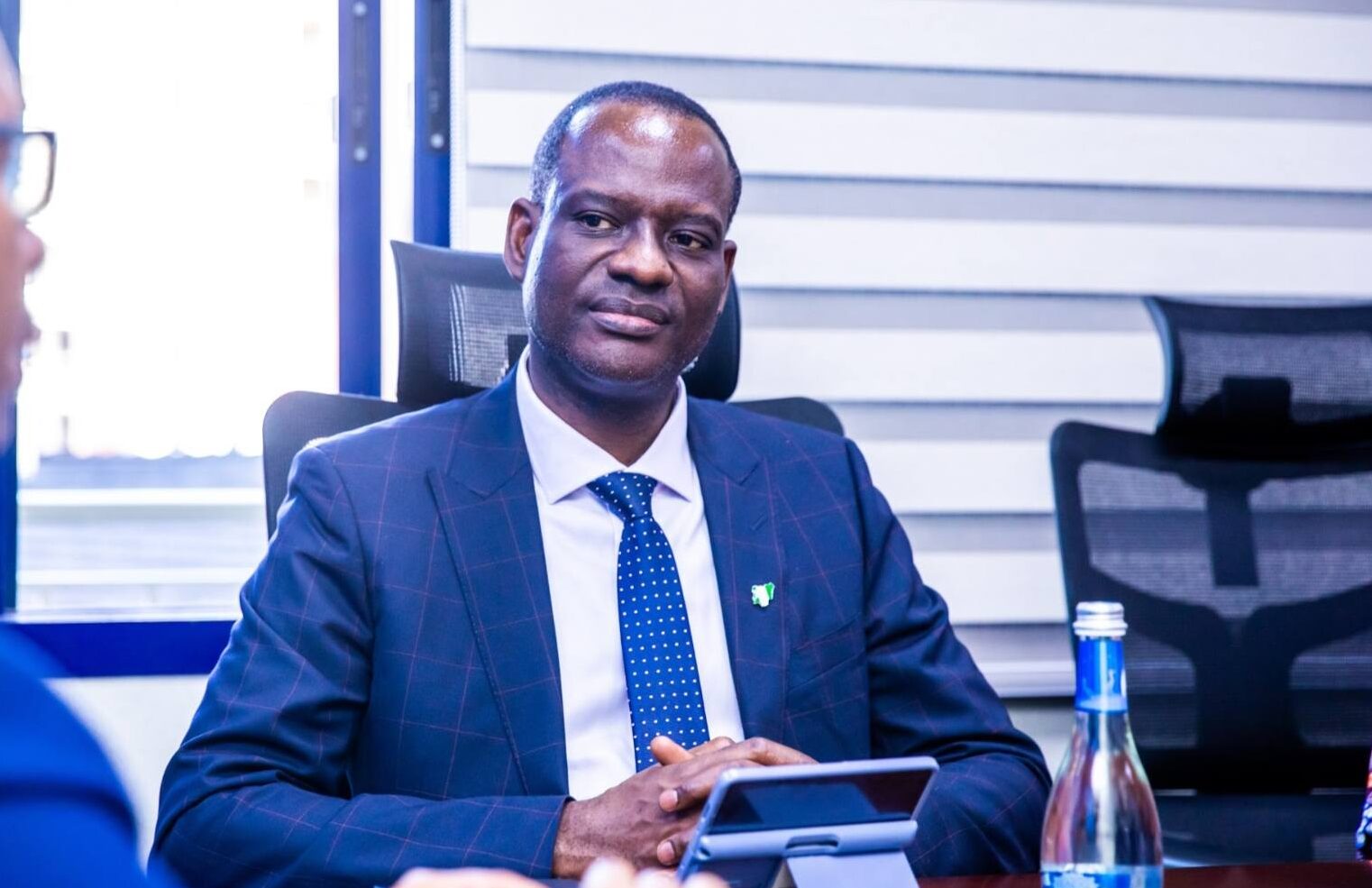
Former President of the African Development Bank (AfDB), Akinwumi Adesina, has declared his readiness to serve Nigeria in any capacity, saying he has a duty and responsibility to contribute to the country’s development.
Mr Adesina made the declaration on Tuesday after meeting President Bola Tinubu at the Presidential Villa in Abuja, where he briefed the president on his 10-year tenure at the continental development finance institution.
“I’m fully able to help Nigeria in any capacity. I’ve always had that. You know, my heart is always at home,” he told journalists after the meeting.
Asked what role he could play, Mr Adesina said he would help in any capacity the president considered appropriate, but stressed he was not seeking a government appointment.
“I’m not looking for a job. I’m not looking for anything. I’m just here to help. It’s my country. I have a duty, an obligation, and a responsibility to do so, and I will,” he said.
There was no announcement of a specific role or appointment for the former AfDB president following the meeting.


Adesina’s record in agriculture and development finance
Mr Adesina, an agricultural economist, served as Nigeria’s minister of agriculture and rural development from 2011 to 2015 under former President Goodluck Jonathan before becoming the first Nigerian to lead the AfDB.
He was elected president of the bank in May 2015 and re-elected for a second five-year term in August 2020. His tenure ended in 2025.
As agriculture minister, he championed reforms to the distribution of subsidised farm inputs, including an electronic-wallet system that let farmers receive support for seeds and fertiliser via mobile phones.
The AfDB said the programme reached 15 million farmers within its first four years. The initiative was intended to improve access to agricultural inputs while reducing the role of intermediaries in their distribution.
At the AfDB, Mr Adesina oversaw the institution’s development agenda, which included expanding electricity access, improving food security, industrialising African economies, promoting regional integration and improving living standards.
During his leadership, the bank’s general capital increased from $93 billion to $208 billion in 2019, following a decision by its shareholders, the largest capital increase in the institution’s history at the time.
AfDB provided $7 billion to Nigeria in 10 years
At the meeting, Mr Adesina said the AfDB provided about $7 billion in financing to Nigeria between 2015 and 2025.
He compared this with the $11.1 billion in cumulative financing the bank had provided to Nigeria since it began operations in the country in 1971.
“Within 10 years, we were able to do 63 per cent, literally, of that,” he said, adding that President Tinubu was pleased with the bank’s support to Nigeria during his tenure.
Mr Adesina said he used the meeting to commend the president for his economic reforms, particularly the removal of the petrol subsidy and the harmonisation of the foreign exchange windows.
He described the measures as difficult but said they were beginning to produce results.
He cited increased foreign exchange availability, the return of portfolio investors and a downward trend in inflation as signs of progress. However, he acknowledged that prices remained high for Nigerians.
He also pointed to improved assessments of Nigeria by some international rating agencies, saying the country’s outlook had shifted towards stable or positive assessments.
The comments come amid ongoing debate over the impact of the Tinubu administration’s economic reforms, including higher fuel costs after the removal of the petrol subsidy and changes to the foreign exchange market.
Although the government has defended the measures as necessary to stabilise the economy, the higher cost of living has continued to put pressure on households and businesses.
From economic stabilisation to growth
Mr Adesina said stabilising the economy was only the beginning, arguing that Nigeria must now focus on structural transformation, economic growth and prosperity.
He said President Tinubu recognised the need to move beyond macroeconomic reforms and address the broader challenge of transforming the economy.
“I told the president, I’m back at home, here to help and ready to help. It’s my country. I love my country, and I’m ready to help,” he said.
His offer comes after a decade leading one of Africa’s major development finance institutions, a period during which the bank financed projects and programmes across sectors including agriculture, energy, transport and infrastructure.
READ AlSO: ‘I will forever miss you’ – Toluwanisings’ wife breaks down in tears at night of tributes
Mr Adesina’s meeting with the president also gave him an opportunity to formally brief the president on the completion of his two terms and the achievements recorded during his leadership of the bank.
He said he was honoured to have been received by the president and was pleased with the report he presented.
While Mr Adesina did not specify how he might contribute to Nigeria’s development, he said he was prepared to do so whenever the president believed his experience could be useful.
“It’s my country. I have a duty, an obligation, and a responsibility to do so, and I will,” he said.
Discover more from Premium Times Nigeria
Subscribe to get the latest posts sent to your email.




The federal government is considering legislation to prevent successive administrations from reversing key economic reforms, as it seeks to establish a national policy framework to guide decisions on taxation, subsidies, trade and industrial development.
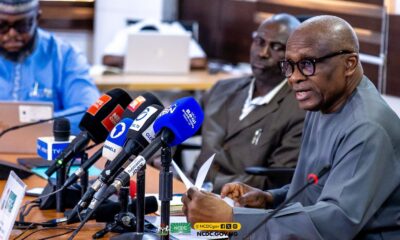
The Minister of Finance and Coordinating Minister of the Economy, Taiwo Oyedele, said the proposed framework would establish economic principles to guide successive governments, regardless of changes in political leadership.
He spoke on Monday at the 32nd Nigerian Economic Summit in Abuja, where he presented the draft of Nigeria Economic Policy Framework for public consultation.
“We now need to lock it in, in institutions, in law, as well as policy framework, so that it can be enduring,” he said during a panel session.
The proposal comes as President Bola Tinubu’s administration continues to defend its economic reforms, including the removal of petrol subsidies and changes to the foreign exchange system.
The government says the reforms are necessary to address economic distortions and improve long-term stability. However, their effects on household purchasing power and business costs have remained a subject of public debate.
Mr Oyedele said inconsistent economic policies had discouraged investment and undermined previous reforms, arguing that Nigeria needed a lasting approach to economic decision-making.
“Policy uncertainty is an invisible tax on enterprise. And unlike most taxes, it generates no revenue for government; it only destroys value and discourages investment,” he said.
He said the government was considering whether key provisions of the proposed framework should be backed by law, stressing that the document remained a draft and had not been approved as government policy.
Public consultation
According to Mr Oyedele, the consultation process will run until 27 November, after which the framework is expected to proceed to the Federal Executive Council for approval and the National Economic Council for endorsement.
The draft is built around stability, productivity, enterprise, capital, people, markets and institutions. It proposes common principles to guide economic decisions across government.
One of its key proposals is to require Policy Impact Assessments before major economic interventions. These assessments would set out the problem a proposed measure seeks to address, the evidence supporting it, its likely costs and beneficiaries, and the conditions under which it should end.
The assessments would cover interventions such as tax changes, tariff adjustments, regulatory restrictions and incentives.
The framework also proposes an annual National Economic Scorecard to measure whether economic growth is improving living conditions. Suggested indicators include real wages, productive employment and poverty levels.
The government says these measures would make economic decisions more transparent and allow Nigerians to assess policies by their outcomes rather than announcements alone.
The Ministry of Finance has published the consultation document on its website and invited businesses, professional groups, researchers and other stakeholders to submit recommendations.
No return to fuel subsidy
Mr Oyedele defended the removal of petrol subsidies, saying the artificial suppression of prices had distorted the economy and created costs that became increasingly difficult to manage.
He argued that government policy should focus on raising household incomes rather than keeping prices below levels that could be sustained by the market.
“Let’s not suppress prices. Let’s focus on raising income,” he said.
The minister also questioned Nigeria’s industrial protection policies, citing locally assembled vehicles that he said contained only about five per cent local content despite benefiting from tariffs and levies of up to 60 per cent.
He argued that protection for domestic industries should be temporary and tied to measurable performance, rather than shielding businesses indefinitely from competition. He also called for improvements in electricity supply, logistics and other infrastructure to lower production costs.
Mr Oyedele said the government was targeting inflation in the low single digits before the end of 2027, with the aim of creating conditions for single-digit interest rates. He did not provide a specific timeline for achieving lower borrowing costs.
He also cited student loans, pension payments, wage adjustments and subsidised credit for small businesses as interventions under the government’s broader economic programme.
He urged wealthy Nigerians to meet their tax obligations, warning that inadequate government revenue could worsen inflation, borrowing costs and pressure on the naira.
Tinubu administration defends reforms
The Minister of Budget and Economic Planning, Abubakar Bagudu, backed the call for policy consistency, saying President Tinubu had directed government officials to sustain the reforms despite concerns about their immediate effects on households.
“There will be no return to subsidy. There will be no return to those distortions,” Mr Bagudu said.
He said the Federal Government had reached agreements with state governments on better coordination of fiscal and monetary policies, infrastructure development, security and domestic production.
Mr Bagudu also said more than $6 billion had been mobilised from the World Bank and other development partners to support household resilience and economic opportunities.
Anambra State Governor, Charles Soludo, cautioned against abandoning macroeconomic stability, saying sustained policy discipline was necessary to achieve meaningful growth.
“The macroeconomic framework, the stability that is back, must never be taken for granted,” he said.
However, Mr Soludo argued that economic growth of about four per cent remained insufficient to deliver rapid poverty reduction and create enough jobs, calling for higher investment and faster expansion.
Calls for stronger productivity
Oxford University Professor of Economic Policy, Stefan Dercon, stressed the importance of controlling inflation and improving electricity supply, logistics and port operations to support economic growth.
He cautioned against indefinite protection for domestic industries.
“You can’t keep on protecting in the same way,” he said.
Chema Triki, co-founder and managing director of Growth Teams, said Nigeria needed to develop new productive capabilities and diversify exports rather than depend excessively on its domestic market.
She pointed to the country’s limited export diversification as a reason for strengthening industrial competitiveness.
READ ALSO: What African countries, others can learn from Nigeria’s economic reforms – Minister
Omoboyede Olusanya, group managing director of Flour Mills of Nigeria, called for lower interest rates, reliable infrastructure and improved agricultural productivity to reduce manufacturing costs.
He said expensive financing discouraged long-term investment, while poor logistics and unstable supplies of agricultural commodities weakened domestic industries.
Lagos State Governor, Babajide Sanwo-Olu, highlighted investments in ports, transport corridors, rail infrastructure and food logistics as measures to improve productivity and reduce the cost of doing business.
The Chairman of the Nigerian Economic Summit Group, Olaniyi Yusuf, urged the government to ensure that economic reforms translated into affordable living costs, productive employment and measurable improvements in household welfare.
The Minister of State for Budget and Economic Planning, Doris Uzoka-Anite, said the National Development Plan 2026–2030 would prioritise industrialisation, infrastructure, investment mobilisation, human capital development and stronger institutions.
She said the plan aimed to accelerate economic growth, create jobs and reduce poverty through better coordination of government policies, budgets and investment programmes.
The proposed Nigeria Economic Policy Framework is expected to undergo further consultation before formal consideration by the relevant government institutions.
Discover more from Premium Times Nigeria
Subscribe to get the latest posts sent to your email.
-

 News3 days ago
Troops rescued 70 abductees, recovered N10 million ransom: DHQ
-
Business3 days ago
CBN grants JP Morgan approval-in-principle to set up merchant bank
-
News3 days ago
Plateau Activates Ebola Preparedness Measures, Urges Residents to Observe Safety Guidelines
-
Business3 days ago
REA Ends 16 Years of Darkness in Two Kano Communities