Tragedy struck in Rahwol Gassa, Barkin Ladi local government area of Plateau State, as 86-year-old Joshua Deme was brutally murdered on his farm by fleeing armed men.
The incident occurred on Wednesday afternoon while Deme was working on his farm.
Rwang Tengwong, the NationalPublicity Secretary of the Berom Youths Moulders-Association, BYM said,“86-year-old Baba Joshua Deme of Rahwol Gassa in Barkin Ladi Local Government Area was murdered by terrorist elements. The incident happened around 3:30 pm on Wednesday, 23/08/2023 when the aged man was transplanting his Hot Pepper without knowing that the terrorist elements with their cows were being driven away from the destruction of farmlands around the Rahwol area.
“The deceased became a victim of the attackers, who took hold of him, tied him to a tree and slaughtered him. It is very appalling that Fulani militias have continued to abuse open grazing for the destruction of farmlands and killing people without any form of provocation if at all, such could warrant the ongoing genocide, sacking and occupation of villages and communities, destruction of farmlands in a large scale, amongst others.
“The Berom Youths Moulder-Association BYM condemns in its entirety the killing of Baba Joshua Deme, and urges the security agents, particularly Sector 4 Operation Safe Haven, OpSH to sustain its ongoing effort in dealing with terrorist elements around Fass and other hideouts of the unwanted sects. The BYM is using this medium to unreservedly commend Sector 4 Commander, Col. US Abdulsalam for taking bold steps to address the general security situation in Barkin Ladi LGA and its environs. We wish to also call on the Government to look into the issue of open grazing, which has been used as a ploy for subtly perpetrating terrorism over the years.”
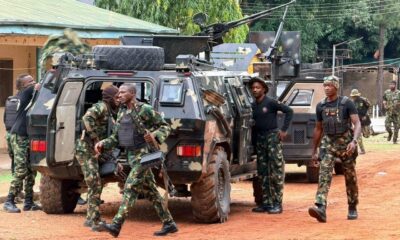
The spokesman of OperationSafe Haven, OpSH Captain James Oya who confirmed the incident said,“It is this morning that the Commander, Sector Four was informed and immediately they swung into action because he was informed that the attackers came from the Riyom axis so the suspected ruga, they went there and made some arrest. Five people were arrested in connection with the killing and they are undergoing an investigation now.”
More than three years after the emergence of generative AI, AI-assisted coding remains by far the most popular and lucrative use case for the technology.
Although multiple companies — including Anthropic, maker of Claude Code, as well as Cursor and Cognition — are already vying for dominance, investors believe there is room for at least one more player.
On Wednesday, Factory, a startup developing AI agents for enterprise engineering teams, announced it had raised $150 million at a $1.5 billion valuation. The round was led by Khosla Ventures, with participation from Sequoia Capital, Insight Partners, and Blackstone. Keith Rabois, a managing director at Khosla Ventures, joined the startup’s board.
Factory founder Matan Grinberg told the Wall Street Journal that the company’s key differentiator is its ability to switch between different foundation models, such as Anthropic’s Claude or Chinese AI startup DeepSeek. However, startups like Cursor also don’t rely on a single model to generate code.
Factory’s customers include engineering teams at Morgan Stanley, Ernst & Young, and Palo Alto Networks.
The startup was founded in 2023 after Grinberg, then a PhD student at UC Berkeley, cold-emailed Sequoia partner Shaun Maguire. The two bonded over mutual academic interest. (Maguire’s PhD from Caltech is in the same area of physics Grinberg was studying.)
Maguire convinced Grinberg to drop out and launch Factory, with Sequoia backing the startup at the seed stage.
Nigeria has taken a significant step to strengthen the security of its internet infrastructure as the Nigeria Internet Registration Association (NiRA) formally signs and unveils Domain Name System Security Extensions (DNSSEC) for the country’s .ng domain, introducing a new layer of protection against cyber threats targeting the Domain Name System (DNS).
The development was announced today at a media advocacy and capacity-building workshop hosted by NiRA in Lagos, themed “The Role of Media in Advancing Nigeria’s Digital Identity,” where stakeholders highlighted the importance of securing the country’s digital namespace amid rising cybersecurity risks.
Adesola Akinsanya, President NiRA. Image credit: Iretomiwa Balogun/Technology Times.
According to NiRA, the DNSSEC signing marks the culmination of over a decade of work by the domain name manager, which began preparatory efforts in 2011 through stakeholder engagement, technical training and ecosystem readiness initiatives. With the signing of the .ng zone, Nigeria’s country code top-level domain is now secured using cryptographic validation mechanisms designed to protect users from malicious redirection and data manipulation.
DNSSEC: Strengthening Nigeria’s internet backbone
According to NiRA, the DNSSEC signing marks the culmination of over a decade of work by the domain name manager, which began preparatory efforts in 2011 through stakeholder engagement, technical training and ecosystem readiness initiatives. With the signing of the .ng zone, Nigeria’s country code top-level domain is now secured using cryptographic validation mechanisms designed to protect users from malicious redirection and data manipulation.
DNSSEC addresses longstanding vulnerabilities in the Domain Name System (DNS), the core internet protocol responsible for translating human-readable domain names into machine-readable IP addresses. Without these security extensions, DNS queries can be intercepted or altered, exposing users to risks such as phishing attacks and redirection to fraudulent websites.
By introducing cryptographic keys that digitally sign DNS records, DNSSEC ensures that users are connected to authentic destinations. The system allows DNS servers not only to resolve domain names but also to verify that the data originates from a trusted source and has not been tampered with during transmission.
Ahmad Mukoshy, Member, Executive Board of Director NiRA. Image credit: Iretomiwa Balogun/Technology Times.
According to him, the adoption of DNSSEC positions Nigeria among countries implementing advanced internet security standards, including Sweden, United States, China and United Kingdom.
NiRA positions .ng domain for global trust standards
Speaking at the unveiling, Adesola Akinsanya, President of NiRA, describes the deployment as a milestone in Nigeria’s digital evolution, noting that the achievement reflects years of collaboration across the internet ecosystem.
According to him, the adoption of DNSSEC positions Nigeria among countries implementing advanced internet security standards, including Sweden, United States, China and United Kingdom.
“With the signing of DNSSEC, Nigeria has taken a bold step forward. We are proud to join other forward-looking countries across Africa that have embraced this critical security standard,” he says.
The NiRA President sees the DNSSEC as more than a technical upgrade, describing it as a trust framework that reinforces confidence in Nigeria’s digital identity.
“DNSSEC is not just a technical upgrade; it is a trust framework that shows users that when they access a .ng domain, they are connecting to authentic and secure digital destinations,” he adds.
He also acknowledges contributions from technical partners, policymakers and the broader internet community, noting that the rollout reflects a coordinated effort to strengthen Nigeria’s digital infrastructure.
How DNSSEC works to secure internet traffic
Providing further technical insight, Ahmad Mukoshy, a member of NiRA’s Executive Board, explains the operational framework of DNS and how DNSSEC enhances its security.
He notes that when a user enters a web address, the request is processed through a resolver, which queries the root zone before directing the request to the appropriate authority responsible for the domain. Authoritative name servers then provide the necessary records that guide users to the correct destination.
He explains that the traditional DNS model relies heavily on trust, making it susceptible to manipulation by threat actors. DNSSEC introduces a verification layer by digitally signing DNS records, allowing systems to validate the authenticity of responses.
“DNSSEC serves as a critical safeguard against manipulation. All records are secured using cryptographic keys, ensuring that users receive authentic responses from legitimate sources,” he says.
The deployment of DNSSEC is expected to enhance trust in Nigeria’s internet ecosystem, particularly for businesses, government platforms and digital services that rely on secure domain name resolution.
As cyber threats become more sophisticated, securing foundational internet infrastructure such as DNS is increasingly seen as essential to protecting users, safeguarding data and maintaining confidence in online services.
For NiRA, the initiative aligns with its broader objective of promoting a secure, trusted and globally competitive .ng domain, while supporting Nigeria’s ambitions to strengthen its digital economy.
The DNSSEC rollout also underscores the growing role of infrastructure-level security in national digital strategies, as countries move to reinforce resilience against cyber risks that can undermine digital transformation efforts.
With the signing of DNSSEC, Nigeria is advancing efforts to build a more secure and reliable internet environment, positioning its domain ecosystem to meet the demands of a rapidly evolving digital landscape.
Stay ahead with real-time reports, breaking news, and exclusive insights delivered directly to your phone. Don’t settle for outdated information. Join TECHNOLOGYTIMES NEWS on WhatsApp for 24/7 updates.