
Business
Breaking Barriers: Meet the Powerhouse Women Leading PRTVC’s Revolution in Broadcasting!


In a groundbreaking move towards gender inclusivity and diversity, the Pleateau Radio and Television Corporation (PRTVC) is setting a remarkable example with a management team dominated by six accomplished women. The team is spearheaded by Mrs. Rita Kachollom Pam, who serves as the Acting General Manager, leading a dynamic group of professionals determined to redefine leadership in the broadcasting industry.
 Mrs. Rita Kachollom Pam – Ag. General Manager:
Mrs Rita Kachollom Pam takes the helm as the Acting General Manager of PRTVC, showcasing not only her prowess in leadership but also breaking barriers in a traditionally male-dominated sector. With a vision for innovation and inclusivity, Mrs. Kachollom Pam is steering PRTVC towards new horizons.
 Mrs. Christiana Golit Wuyep – Director of Audit:
As the Director of Audit, Mrs. Christiana Golit Wuyep brings a wealth of experience and financial acumen to the table. Her role is pivotal in ensuring transparency and accountability within the organization, contributing to the overall success of PRTVC.
 Mrs. Odessa M. Chuwang – Director of Planning, Research and Statistics (DPRS)
Mrs. Odessa M. Chuwang, serving as the Director of Planning, Research, and Statistics, plays a key role in shaping the strategic direction of PRTVC. Her expertise in data-driven decision-making adds a valuable dimension to the corporation’s planning and development processes.

Mrs. Naomi Jackson – Director of Finance and Supply (DFS):
The financial backbone of PRTVC is in the capable hands of Mrs. Naomi Jackson, who serves as the Director of Finance and Supply. Her adept financial management skills ensure the stability and growth of the corporation, setting a stellar example for women in finance.
 Mrs. Hudung Gyang – Director Of Programmes:
As the Director of Programmes, Mrs. Hudung Gyang is at the forefront of content creation and broadcasting strategy. Her creative vision and commitment to quality programming contribute significantly to PRTVC’s standing as a leader in the industry.
 Mrs. Linda Dawam – Director of Marketing (DM):
Mrs Linda Dawam takes charge as the Director of Marketing, playing a crucial role in enhancing PRTVC’s brand visibility and audience engagement. Her marketing prowess contributes to the corporation’s success in a competitive media landscape.
While women make up the majority of PRTVC’s management team, it’s essential to acknowledge the valuable contributions of two male leaders who round out the diverse group:
 Mr. Yakubu Taddy – Director, News and Current Affairs (DNCA):
Mr Yakubu Taddy leads the News and Current Affairs department, ensuring that PRTVC remains a reliable source of information. His dedication to journalistic integrity and staying ahead in the fast-paced news landscape is a testament to PRTVC’s commitment to quality journalism.
 Engr. Yakubu Ashoms – Director of Engineering (DE):
As the Director of Engineering, Engr. Yakubu Ashoms oversees the technical aspects of PRTVC’s operations. His expertise is instrumental in maintaining cutting-edge technology and ensuring a seamless broadcasting experience for viewers.
PRTVC’s commitment to gender inclusivity and diversity in its leadership team is not just a milestone for the corporation but also a beacon for other organizations to follow suit. The combination of diverse perspectives, skills, and experiences within the management team positions PRTVC as a trailblazer in the broadcast industry, fostering an environment where talent knows no gender.
for more details on PRTVC visit https://www.prtvc.ng/
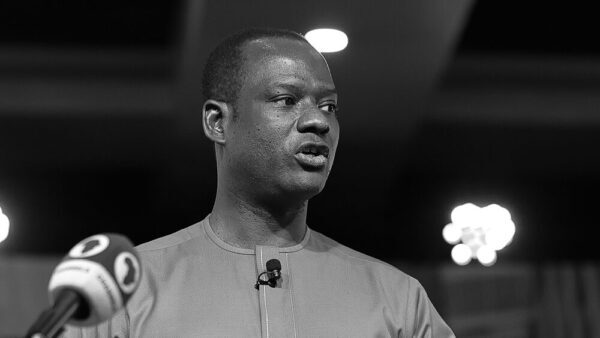
The Federal Government says Fitch Ratings’ decision to revise Nigeria’s credit rating outlook from Stable to Positive reflects progress in economic reforms, foreign exchange market adjustments and efforts to strengthen the country’s external position.
Fitch announced the revision on 9 October, retaining Nigeria’s long-term foreign-currency issuer default rating at ‘B’.
In a statement issued on Saturday, the Minister of Finance and Coordinating Minister of the Economy, Taiwo Oyedele, said Fitch cited increased foreign exchange reserves, easing inflation and improved economic prospects among the factors supporting the outlook revision.
According to the minister, Nigeria’s gross foreign exchange reserves rose to $54.9 billion as of 25 September 2026, from $32 billion in mid-April 2024.
He attributed the increase to more formalised foreign exchange transactions, portfolio inflows, higher exports and remittances.
Fitch also projected that Nigeria would record a current account surplus equivalent to 6.4 per cent of gross domestic product in 2026.


Economic growth and inflation
The ratings agency projected that Nigeria’s real gross domestic product would grow by 4.3 per cent in 2026, compared with 4 per cent in 2025, with growth remaining above 4 per cent in 2027 and 2028.
Fitch expects non-oil activities to remain the main driver of economic expansion.
The projection comes as Nigeria’s economy recorded growth of 4.43 per cent year-on-year in the second quarter of 2026, according to the National Bureau of Statistics (NBS).
The figure was higher than the 3.89 per cent recorded in the first quarter of 2026 and the 4.23 per cent recorded in the corresponding quarter of 2025.
The World Bank’s October 2026 Nigeria Development Update projected average annual economic growth of 4.4 per cent between 2026 and 2028, identifying services and agriculture among the contributors to economic activity.
On inflation, Fitch projected an average rate of 15.4 per cent in 2026, less than half the level recorded in 2024.
The NBS reported that Nigeria’s headline inflation rate eased marginally to 15.39 per cent in August 2026, from 15.43 per cent in July.
The figures provide recent context for Fitch’s assessment of inflation, although the agency’s annual average forecast is different from the monthly inflation rate reported by the NBS.
Reserves, oil production and public debt
Fitch also noted developments in Nigeria’s oil sector, including crude oil production meeting the country’s OPEC target of 1.5 million barrels per day from May 2026.
Mr Oyedele said increased domestic refining was helping to reduce fuel imports and foreign exchange demand.
On public finances, Fitch expects Nigeria’s tax reforms to increase non-oil revenue relative to the size of the economy.
The agency projected that general government debt would average 32 per cent of GDP between 2026 and 2028, below the median of 56 per cent for countries with a ‘B’ rating.
Fitch also highlighted Nigeria’s domestic debt market and the banking sector recapitalisation exercise, noting that many banks had capital adequacy ratios above 20 per cent.
However, the agency identified persistent challenges, including inflation remaining above levels in peer countries, government revenue being low relative to the size of the economy, and interest payments accounting for a high proportion of government revenue.
The minister said the federal government would continue implementing reforms aimed at increasing revenue, improving spending efficiency, strengthening debt management and supporting non-oil economic growth.
Other rating developments
The Fitch decision follows other developments in Nigeria’s international credit assessments.
READ ALSO: FG to negotiate ₦1,350 petrol price ceiling as global oil shock drives pump prices
In May 2026, S&P Global Ratings upgraded Nigeria’s credit rating from ‘B-’ to ‘B’. In August, Moody’s revised its outlook on Nigeria to Positive while retaining its ‘B3’ rating.
Mr Oyedele noted that the government’s medium-term objective remained to improve Nigeria’s credit standing and work towards investment-grade status.
He said the administration would continue to focus on foreign exchange market reforms, tax revenue mobilisation, fiscal governance, more efficient public spending and growth in non-oil sectors.
The minister said its broader objective was to “translate economic reforms into jobs, food security, support for small businesses and improved living standards”.
Discover more from Premium Times Nigeria
Subscribe to get the latest posts sent to your email.

The International Monetary Fund (IMF) said targeted, temporary income support is the most effective and cost-efficient way for governments to protect vulnerable households during cost-of-living crises.
IMF disclosed this in its latest World Economic Outlook, noting that broad-based subsidies can impose higher costs on public finances.
The IMF report examined the economic consequences of cost-of-living crises and the effectiveness of government interventions across 76 countries over three decades.
The financial institution said consumer subsidies could require three to six times more fiscal resources than targeted cash transfers to provide the same level of protection to lower-income households. In contrast, producer subsidies could cost 14 to 22 times more.
According to the lender’s report, disruptions to global commodity markets, including those following Russia’s invasion of Ukraine in 2022 and conflicts in the Middle East, have driven up prices for essential goods and services such as food and energy.
The IMF said these episodes often have lasting consequences beyond the initial price surge. It said this makes essentials more expensive relative to other goods, weakens household purchasing power, and complicates central banks’ efforts to control inflation.
“Inflation expectations also rise and stay above pre-crisis levels for years, suggesting that these episodes may complicate efforts by central banks to control inflation,” the report said.
It added that real wages could fall and remain below their previous levels for an extended period.
The Fund explained that poorer households bear a disproportionate share of the burden because food and energy make up a larger share of their spending than they do for wealthier families.
It noted that the effects on poverty and inequality were severe in lower-income countries, where necessities account for an even larger share of poor households’ expenditure.
Subsidies carry higher fiscal costs
The IMF said governments often responded to cost-of-living pressures with broad-based measures to suppress price increases, including tax reductions, producer subsidies, lower customs duties, and price controls.
According to the report, advanced economies had relied more heavily on reductions in value-added and excise taxes on food and energy.
Emerging markets and low-income countries also more often used measures targeting production costs and supply chains.
Governments also provided income support, with advanced economies using more targeted transfers and poorer countries more often introducing broad-based wage and pension increases.
However, the IMF said these interventions differed in their effectiveness and the financial burden they placed on governments.
It identified targeted, temporary transfers as the preferred approach because they direct assistance to households most in need, preserve limited government resources, and allow market prices to reflect scarcity.
On the other hand, the financial institution said price-suppressing measures can be expensive because much of the support may benefit households that do not need it.
The report cited Europe’s 2022–2023 energy crisis, during which less than 20 cents of every euro spent suppressing electricity, natural gas and gasoline prices reached the poorest fifth of households.
“Subsidising producers can cost 14 to 22 times more than targeted income support,” the IMF said.
It also warned that keeping prices artificially low could weaken incentives to conserve scarce resources.
When several countries adopt such measures at the same time, they can drive up global prices and worsen economic pressures on lower-income countries, the Fund said.
“Producer subsidies are even less efficient. Because they lower production costs rather than directly supporting households, foreign consumers benefit through lower export prices of downstream products.
“As a result, taxpayers pay more to benefit people and businesses in other countries rather than vulnerable families at home,” the lender stated.
Temporary, targeted interventions
The Fund recommended that governments make assistance temporary and deliver it through targeted income-support programmes.
It said the measure could be implemented by expanding existing social protection systems that can be scaled up quickly during crises.
“Assistance, when warranted, should be temporary and delivered through targeted income-support measures, ideally using existing social protection systems that can be scaled up quickly,” it said.
READ ALSO: IMF warns rising stablecoin use could weaken Naira demands
It said broader interventions might be necessary in exceptional circumstances, including acute food insecurity, heightened risks of social unrest or serious difficulties in identifying and reaching eligible beneficiaries.
However, such support should be designed around the temporary component of a price shock rather than permanently higher prices, with clear deadlines for ending the measures.
Where price controls or subsidies are unavoidable, the IMF advised governments to focus narrowly on goods and services consumed disproportionately by vulnerable households while preserving market signals as much as possible.
Discover more from Premium Times Nigeria
Subscribe to get the latest posts sent to your email.
-

 News3 days ago
Robot data startup Mecka AI nabs $60M from Sequoia
-
Business1 day ago
Communications Ministry made ₦345.5 million duplicate payment for Abuja ICT Park project
-
Business2 days ago
Fuel subsidy would cost Nigeria over N20trn yearly — Minister
-
News4 days ago
Spotify expands audiobooks to over 180 markets








Eric Longbaam Yakubu
February 7, 2024 at 8:21 am
Hmmmnh, awesome! I see the positions occupied by these able hands beyond the gender tag (women). Indeed I see merit & professionalism.
God bless prtvc!
Gwom Ayuba Usman
February 7, 2024 at 9:46 am
PRTV is a force in the broadcast industry in Nigeria.Your reports and programme are second to known in the State.
Dung
February 7, 2024 at 9:38 pm
Yes ooo