News
‘Democracy is in distress’ – NRM presidential candidate, Esther Okereke


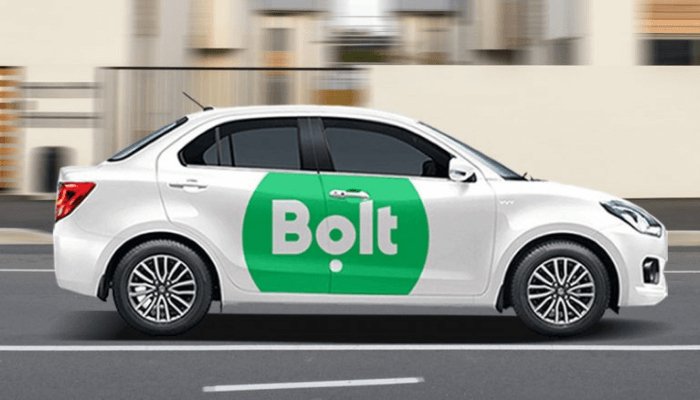

Bolt has been cleared to resume operations at airports managed by the Federal Airports Authority of Nigeria (FAAN), following an intervention by the Minister of Aviation and Aerospace Development, Festus Keyamo.
Mr Keyamo, in a statement on Thursday, said he had directed FAAN to urgently address concerns over what passengers described as exorbitant increases in airport taxi fares following the disruption of e-hailing services.
After the minister’s intervention, FAAN announced that it had reached an “agreeable operational framework” with Bolt, clearing the company to resume its services at FAAN-managed airports immediately.
The development followed days of controversy over the operation of e-hailing platforms at Nigerian airports, with passengers complaining about higher transportation costs after they were unable to access services they had previously relied on.
FAAN also apologised to passengers for the inconvenience caused by the temporary interruption of e-hailing services.

How the dispute started
The controversy followed FAAN’s efforts to establish a new operational framework for commercial and e-hailing vehicles operating within airport premises.
An internal FAAN memo dated 30 July directed airport managers to ensure that Bolt and Uber ceased commercial operations at FAAN-managed airports pending the finalisation of licence agreements with the e-hailing companies.
However, on 20 August, FAAN said it had not imposed a blanket ban on Uber, Bolt or other e-hailing platforms, but said discussions were ongoing with operators to establish a workable framework for their operations.
The clarification followed reports of restrictions affecting e-hailing services at some FAAN-managed airports, including the Murtala Muhammed International Airport, Lagos, and the Nnamdi Azikiwe International Airport, Abuja.
FAAN said its concern was not to limit passengers’ transportation choices but to ensure that commercial transport services operating within airport premises complied with safety, security and accountability requirements.
The authority said airports were highly regulated environments and that it needed adequate visibility of vehicles, drivers and operators working within them.
FAAN said it had been dealing with problems associated with commercial and e-hailing vehicles at airports for nearly a decade, including passenger solicitation, touting, unregulated operations and random pick-ups.
It said the challenges had made it necessary to strengthen the management of commercial transportation within airport premises.
Fare controversy
The dispute became more contentious after passengers began raising concerns about the cost of airport taxis.
A recent video by travel content creator Chris Joondeph, popularly known as Authentic Travelling, showed an airport taxi operator quoting N30,000 for a journey from the Lagos airport to Ikeja.
The fare generated widespread criticism, particularly after comparisons showed significantly lower prices on e-hailing platforms for the same journey. Bolt listed the trip at about N6,900, while Uber quoted N4,200 for UberX and N5,800 for its Priority option.
The controversy heightened concerns among passengers who had become accustomed to using e-hailing platforms for relatively cheaper airport transportation.
FAAN, however, said the fares that attracted public criticism were not newly imposed by the authority or introduced through its Airport Car Hire Rank Management System (ACHRAMS).
According to the authority, the rates existed before ACHRAMS and were not substantially different from those previously applicable.
FAAN said ACHRAMS only brought greater visibility to the prevailing airport taxi rates.
ACHRAMS, which stands for Airport Car Hire Rank Management System, was introduced by FAAN as a system for managing airport car-hire ranks and authorised transportation operations.
The authority stressed that ACHRAMS was not an e-hailing application and was not created to compete with Bolt, Uber or other mobility platforms.
Keyamo orders urgent action
Amid the controversy over fares and the disruption of e-hailing services, Keyamo directed FAAN to urgently resolve the issue.
The minister’s intervention came as complaints from passengers continued to draw attention to the difficulties faced by travellers seeking affordable transportation from airports.
Following the directive, FAAN said it had engaged Bolt and reached an operational agreement that would allow the platform to resume services immediately.
The authority said the agreement showed that airport regulation and security could coexist with passengers’ access to e-hailing services.
“The resolution demonstrates that it is possible to protect the integrity and security of the airport environment while preserving the convenience and freedom of choice that e-hailing services provide to passengers,” FAAN said.
FAAN also apologised for the disruption.
“We sincerely apologise for the difficulties this caused our passengers,” the authority said.
The authority acknowledged that although its actions were driven by regulatory, safety and security considerations, the immediate impact on passengers had been significant.
Bolt resumes, others still in talks
With the agreement reached, Bolt has been cleared to resume operations at all FAAN-managed airports.
FAAN said it was also engaging other e-hailing operators and expected the outstanding discussions to be concluded in the coming days.
READ ALSO: Keyamo directs airlines, unions to agree repayment plans over TSC debt
However, the authority did not give details of the specific operational terms agreed with Bolt.
It said passengers remained free to choose from available transportation options that best met their needs, provided the services were authorised to operate within the airport environment.
The authority noted that its responsibility was to ensure that whichever transportation service passengers chose operated in a safe, secure, orderly and accountable manner.
The resolution comes after FAAN had initially maintained that its engagement with e-hailing operators was aimed at establishing an appropriate framework rather than eliminating the services.
The latest development restores Bolt as an option for passengers using FAAN-managed airports, while the authority continues discussions with other operators.
For passengers, the immediate significance is the return of a familiar alternative to airport taxi services at a time when transportation costs have become a major part of the airport travel experience.
Discover more from Premium Times Nigeria
Subscribe to get the latest posts sent to your email.

The rapid scaling of robotaxis over the last two years has come with a hidden human cost.
Test drivers for Waymo and Zoox sustained more than two dozen injuries in 2024 and 2025 from hard braking or other sudden movements made by the autonomous vehicles, according to a TechCrunch review of data submitted to the Occupational Safety and Health Administration.
These test drivers, who put autonomous vehicles through their paces on public roads, have suffered sprains, strains, whiplash, and more, according to OSHA data and interviews with former and current workers. Some have been sidelined for weeks or months.
Transdev, which employs and manages Waymo’s test drivers, reported 16 injuries tied to Waymo depot locations in three cities that were caused by the autonomous software braking hard or swerving suddenly. Zoox reported as many as eight worker injuries linked to hard braking.
Other autonomous vehicle companies do not appear in the dataset, though it’s possible they’re exempt. The Zoox and Waymo injuries appear because the companies classify themselves as taxi, limo, or transit services, which OSHA subjects to greater disclosure because they’re “higher-hazard” industries. OSHA also only requires establishments with 100 or more employees in these industries to make this information public, meaning test drivers in newer cities where operations haven’t scaled may have been injured on the job without appearing in this dataset.
TechCrunch was unable to learn whether Waymo or Transdev logged any new injuries in 2026. OSHA does not require companies to submit annual data until the following year as part of the agency’s Injury Tracking Application.
In Zoox’s case, injuries are still happening, according to sources who spoke to TechCrunch on condition of anonymity.
Two current and three former Zoox contractors told TechCrunch that the company’s test fleet vehicles — modified Toyota Highlander SUVs equipped with its self-driving system — were still braking hard and abruptly as recently as July. Three of those contractors said workers are still getting hurt. The workers were granted anonymity to discuss private operations.
Zoox declined to answer specific questions about the injuries it reported last year or the claims contractors made to TechCrunch about the continued hard-braking issues. The company said it follows necessary reporting requirements and takes injuries seriously.
Zoox also said hard-braking incidents are sometimes unavoidable and that the injuries reported last year represent a small percentage of the millions of miles its test fleet traveled.
Waymo also declined to answer questions about the injuries reported to OSHA.
“The safety of our riders, road users, and team is of paramount importance,” Waymo told TechCrunch. “As part of the process of responsibly deploying fully autonomous vehicles, we have driven tens of millions of miles with human operators behind the wheel. This is part of our ongoing validation process and learnings from these trips are integrated into the service.”
Transdev declined to comment.
More miles, more injuries

While Waymo has spent more than a decade developing its self-driving cars, it wasn’t until 2025 that it really started to scale. The company started offering rides in new cities and began mapping and testing in others, growing its commercial fleet to more than 1,500 vehicles by May 2025. Today, that fleet is more than 3,500 vehicles.
Waymo doesn’t break out how many vehicles it uses just for testing. But the amount of autonomous vehicle testing almost certainly increased as the company expanded its service areas and started to familiarize itself with entirely new locations.
Test driver injuries increased, too.
Transdev reported five Waymo test driver injuries in 2024 across San Francisco, Los Angeles, and Phoenix. One was related to hard braking, while the other four were related to erratic vehicle behavior.
In one case, a test driver reported that the car “suddenly backed up” while parking itself and “whipped the steering wheel,” catching his left hand and bending it “to the point he heard a crack in his wrist.” The employee spent more than two months away from work as a result.
The number of injuries jumped to 11 in those three markets in 2025, and hard braking was the cause of nearly all of them. Last September, a test driver in Phoenix wound up having to spend 157 days away from work after their vehicle “made an exaggerated breaking [sic] event without any obstruction.” At least two other injury reports specifically mention that the hard braking happened for no apparent reason.
The only injury report from 2025 that offers a reason for a hard-braking event involved an incident that happened in August in Los Angeles. The employee reported that “some kids were playing in the pathway.” The Waymo robotaxi stopped hard enough that the worker spent 175 days away from their job.
“Software braked harshly”

The Zoox contractors said hard braking — or “brake jabs,” as they are referred to internally — can happen multiple times on a single test drive, sometimes in the same location. They can happen at any speed, though higher-velocity braking incidents typically take a harsher toll on the body, the workers said.
The braking often happens when the autonomous driving system detects — or mistakenly detects — debris of some kind on the road, they said.
The scariest incidents, the contractors said, are when a test vehicle experiences a “nogo” — internal code for an entire system shutdown that often leads to a brake jab.
“You could be going 45 miles per hour and the car will enact a nogo, and suddenly you’re being whipped forward in the middle of the street, in traffic, and you need to be able to take over quickly,” one said.
This behavior shows up repeatedly in the injury reports Zoox submitted to OSHA.
On January 5, 2025, a Zoox test vehicle was driving autonomously in San Francisco when it abruptly slammed on the brakes. The “harsh” stop, as Zoox described it, injured the shoulder and upper arm of a contractor who was inside the SUV, leaving the worker on restricted duty for 16 days.
Later that month, another driver was hurt after a Zoox test vehicle made an “unexpected” stop, injuring their neck and leaving them with a swollen shoulder. It took the contractor eight days to return to work without restrictions.
Most of the Zoox-reported injuries appear to have happened to workers who sit in the driver’s seat of the SUVs. The company also reported an injury to an instructor who trains the test drivers. That injury took place on June 3 in San Francisco, when the test vehicle’s “software braked harshly,” causing the instructor in the back seat to report “sharp pain in lower right ribs and tightness in left shoulder upon returning to base.”
The injured instructor reported additional injuries to the spine and pelvis, though their work restrictions lasted only four days, according to the data.
Seven of the eight entries explicitly mention hard braking, nogos, or brake jabs. The eighth injury involved a worker who was sidelined for the longest amount of time — 46 days — and who reported “extreme back pain” after operating a test vehicle in Las Vegas in May 2025. Zoox wrote that the worker said they “were not sure if it was related to the behavior of the vehicle in autonomy or not but they said it hurts them to drive as well as take deep breaths,” and attributed the injury to a “vehicle maneuver.”
Zoox is dealing with these hard-braking issues as it finally begins offering a true commercial robotaxi service in a bid to compete with Waymo. The Amazon-owned company started charging for rides in its purpose-built robotaxi for the first time this month in Las Vegas. It offers free rides in San Francisco and is testing in Atlanta, Austin, Dallas, Los Angeles, Phoenix, Seattle, and Washington, D.C.
Four of the injuries Zoox reported in 2025 happened after the company issued a recall meant to resolve a year-long federal investigation into the tendency of its autonomous vehicles to brake unexpectedly. Zoox told TechCrunch the recall addressed an extremely narrow braking behavior and said the later incidents — and any resulting injuries — are unrelated to the software fix.
Two of the people who spoke to TechCrunch said that braking can be challenging even when manually driving the Zoox test cars because of the extra weight of the self-driving sensor suite. Test drivers are trained to brake with the extra weight, they said, though they added that minor injuries can be sustained even during that training process.
It’s hard to know if Zoox is experiencing hard-braking incidents with any regularity in its purpose-built vehicles, which do not have traditional controls such as a steering wheel or pedals. They either operate unoccupied or carry passengers who mostly aren’t employees – meaning any injuries wouldn’t be reported to OSHA.
Zoox has reported two robotaxi crashes to the National Highway Traffic Safety Administration in the last eight months in which hard braking for debris resulted in the purpose-built vehicles being rear-ended. The company’s descriptions of the crashes don’t specify what debris was spotted in either case.
When you purchase through links in our articles, we may earn a small commission. This doesn’t affect our editorial independence.
-
Business4 days ago
Police Arrest of Five Suspected Telecommunication Vandals, Recovery of Truckload of Suspected Stolen Iron Rods
-

 Health4 days ago
FCTA trains health workers in basic life support, plans Code Blue teams in hospitals
-
News3 days ago
MTN Group service revenue hits ₦9.68tn as Nigeria contributes 30.6% – Technology Times
-
News4 days ago
SSA Adeboye: National Intermediate Games Will Give Nigeria’s Young Talents the Platform to Shine