Connect with us

News

2027: Do I look 80 – Atiku asks Nigerians, tackles age concerns

info

Published

on

1787919657 Atiku.jpg

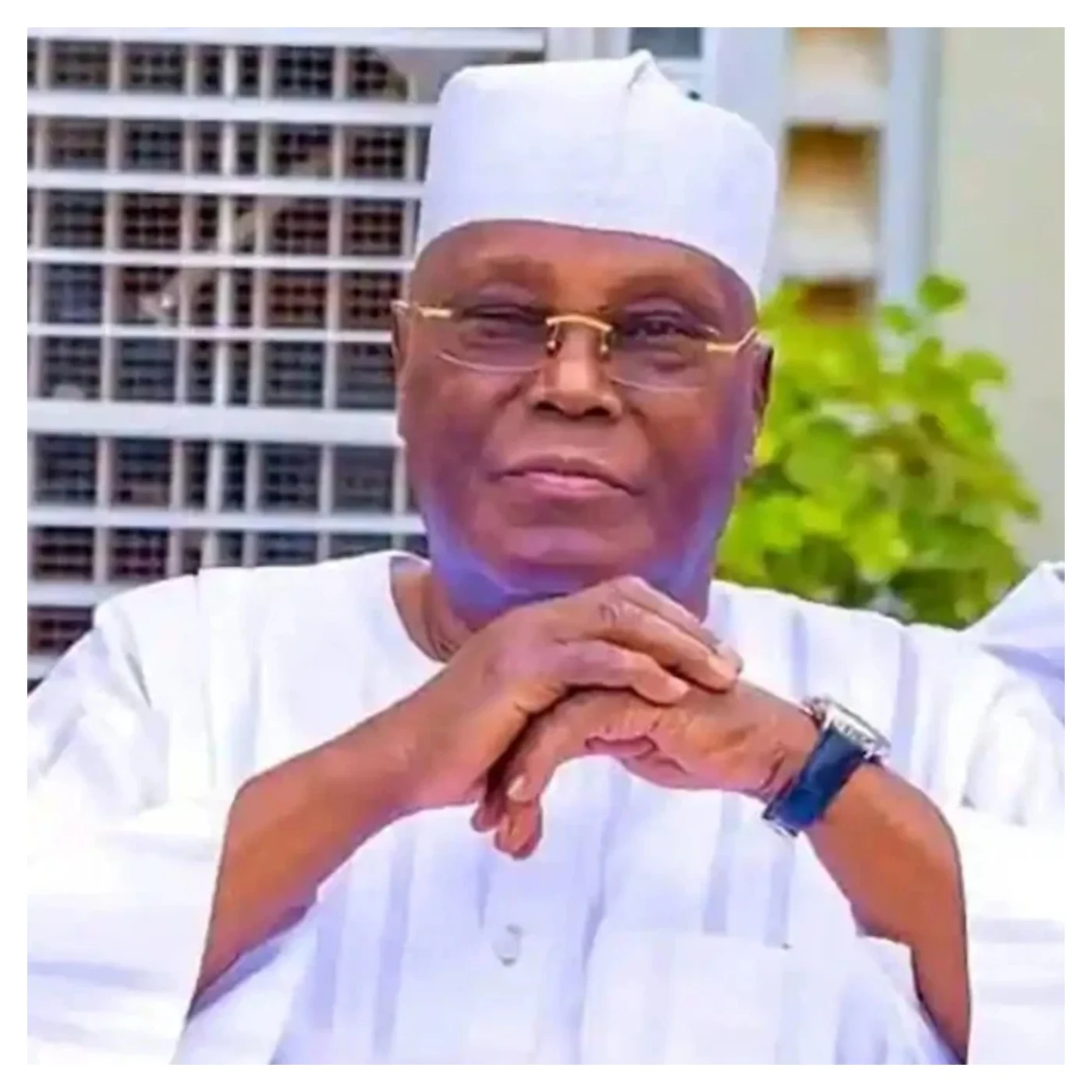
The African Democratic Congress (ADC) presidential candidate, Atiku Abubakar, has dismissed concerns about his age ahead of the 2027 presidential election, challenging critics to say whether he looks like someone approaching 80.

Atiku spoke in an interview with BBC Hausa published on Friday while responding to concerns that his age could affect his ability to provide effective leadership if elected.

The former vice president was asked whether his age could affect his ability to provide effective and healthy leadership for four years if elected president.

The interviewer noted that Atiku would be “almost or nearly 80 years old” by the time Nigerians vote in 2027 and asked what he would say to those who consider his age too advanced for the presidency.

Recommended

Responding, Atiku referenced President Bola Tinubu’s age before challenging the premise of the question.

“You went and voted for someone who is 80, I mean 90 years old. How old is President Bola, 90?” he asked.

When the interviewer corrected him, saying Tinubu was not yet 80, Atiku replied: “Do I look to you like someone who has reached 80 years of age?”

The exchange comes as Atiku intensifies preparations for the 2027 presidential election and seeks to rally opposition politicians behind a coalition aimed at challenging the ruling All Progressives Congress (APC).

Atiku also rejected claims that he had become an obstacle to the opposition coalition, saying he was instrumental in bringing the group together.

“That is a baseless accusation levelled against me. I was actually the one who initiated the coalition. Nobody else… I, Atiku Abubakar, started it,” he said.

According to him, most of the politicians who started the coalition remained together despite disagreements among some major opposition figures.

He identified NDC presidential candidate Peter Obi and his running mate, Rabiu Kwankwaso, as the two major opposition figures who had left the group.

“It was just Kwankwaso… he was with us at first, then he left,” Atiku said.

Asked about Obi, he added: “Yes, and also Peter Obi. It’s just them, but the rest of us are still here continuing our work.”

Atiku, however, said there was still a possibility of opposition politicians working together before the 2027 election.

“Nothing is impossible, by God’s grace.

“One day you’ll see… we have agreed to work together to save this country and its poor citizens, Insha Allah,” he said.

The former vice president also criticised the Federal Government’s handling of the removal of the petrol subsidy, questioning how the savings from the policy had been spent.

“I did not oppose the removal of the oil subsidy, but where is the money? Where did it go?” Atiku asked.

He said the funds were supposed to be used to reduce poverty, improve education, tackle insecurity and create opportunities for young Nigerians.

“Where is the money now? It seems they are just stealing it,” he alleged.

Atiku also promised to restore the petrol subsidy if elected president and demanded that anyone who had stolen the funds refund them.

“If elected, I will bring back the oil subsidy, and whoever stole the money must refund it,” he said.

He further argued that the subsidy could have been removed without causing the level of hardship currently experienced by Nigerians if the savings had been properly utilised.

Continue Reading
Click to comment

Leave a Reply

Your email address will not be published. Required fields are marked *

News

X finally gets parental controls after 20 years

info

Published

on

Twitter x musk graffiti hand.jpg

After 20 years of existence, X, the social network formerly known as Twitter, has finally added parental controls for teenagers, giving parents and guardians a way to manage what their kids see and interact with on the platform. But unlike most platforms’ implementation of such controls, X is putting its own spin on the system by giving teens a say in the matter.

The company said accounts belonging to 13-to-17-year-olds will be set to “protected mode” by default, meaning they won’t be able to see sensitive content, and won’t be served targeted ads. However, X is allowing teenagers to retain a measure of control over their accounts, letting them see what restrictions were made to their accounts. Parents and guardians will also not be able to read their teens’ private messages, see search or viewing history, or post as their teen.

The controls let parents see how much time their teen spends on X per week, set daily limits, require their approval for new followers, limit feed recommendations and videos to already followed accounts, filter specific words, turn off sensitive media, specify who can send their teen DMs, and see who they are messaging.

The controls arrive months after X came under fire for a lack of controls preventing the platform’s AI chatbot from being used to generate sexualized images of children and women. The social network has also long been rife with child sexual abuse material, misinformation, AI bots, and openly lets users post porn.

X has generally not been a platform aimed at teenagers, but that doesn’t mean they don’t use the platform. A 2024 study found that nearly a third of Gen Alpha kids have an X account. The platform itself requires users to be at least 13 years old, though that’s not a high bar given the kind of content on the platform.

“Parents want practical tools, and teens deserve room to grow. With Parental Controls on X, families can set the guardrails that fit their home, while teens keep ownership of their accounts and can see every change. Striking that balance is vital and what we set out to build.” Michael O’Herlihy, head of safety at X, wrote in a blog post.

When you purchase through links in our articles, we may earn a small commission. This doesn’t affect our editorial independence.

Continue Reading

News

50 Nigerian Innovation Teams Advance To USPF Changemaker Regional Demo

info

Published

on

IMG 20261126 WA0049.jpg

By Usman Aliyu

Fifty innovation teams drawn from 36 states of the federation and the Federal Capital Territory (FCT) have advanced to the regional demonstration stage of the Universal Service Provision Fund (USPF) Changemaker Challenge.

Ubulu Africa, which is delivering the programme, in a statement on Thursday, said that the selected teams were developing technology-driven solutions in education, agriculture, healthcare, financial inclusion and clean energy.

The News Agency of Nigeria (NAN) reports that the Universal Service Provision Fund (USPF) is a Federal Government initiative established to expand access to affordable ICT services, particularly in rural, unserved and underserved communities.

The USPF Changemaker Challenge is one of its initiatives, designed to promote digital inclusion by supporting innovative solutions to challenges across Nigeria.

Meanwhile, the six virtual Regional Demo Days, covering the six geopolitical zones of the country, are holding from Nov. 25 to Nov. 27.

One team from each zone will qualify for the physical National Demo Day in Lagos, where the six finalists will compete for a share of the N10 million prize pool.

A breakdown of the selected innovations shows that 21 teams are focused on education, 14 on agriculture, seven on healthcare, five on financial inclusion and three on clean energy.

The organisers said 46 of the 50 teams had developed working prototypes or more advanced solutions, while 12 already had products in use.

They said several innovations were designed to function offline or through basic mobile phones, USSD, SMS and voice services, including in at least seven Nigerian languages.

In agriculture, the solutions address challenges such as access to market information, crop monitoring, livestock management and weather alerts.

For instance, Chigari AgriConnect provides farmers with market prices through USSD and Hausa voice services, while Albasa Connect offers advice to onion and garlic farmers in Hausa and French.

Clisense, another selected innovation, provides flood warnings up to 72 hours before expected flooding.

In healthcare, the teams are developing solutions covering medical information, laboratory services, maternal health and support for frontline health workers.

MotivAid, for example, is designed to help maternity ward personnel identify and respond to emergencies.

Other innovations include Gorro, which digitises traditional group savings arrangements such as ajo and esusu, and Reklaima, which helps users identify wrongful or excessive bank charges.

The clean energy category features Iron Ore Energy from Edo, GridSense from Imo and CTNApp from Plateau, focusing on energy storage, electricity monitoring and shared solar power management.

The organisers said women lead 12 of the selected teams, representing 24 per cent of the shortlist.

Women-led teams account for three of the seven healthcare innovations and six of the 21 education solutions, with representation across all six geopolitical zones.

The organisers said that the selection process adopted a 37-plus-13 model, allocating one place to the highest-scoring qualifying team from each state and the FCT, while the remaining 13 places went to the next highest-scoring teams nationwide.

Under the arrangement, 27 states have one team each, while Adamawa, Bayelsa, Kaduna, Kano, Nasarawa, Oyo and Plateau have two teams each.

Kebbi, Lagos and the FCT have three teams each.

Entries were assessed based on problem relevance, functionality at their current stage, potential impact and team readiness, with no sector-specific quotas.

Tobiloba Gomes, Programme Manager at Ubulu Africa, said the shortlist demonstrated the importance of designing technology around devices already available to ordinary Nigerians.

“What stood out across the shortlist was how many teams designed for the phones people already own, not the ones we wish they had.

“That is a practical instinct, and it is exactly what the Challenge is here to back,” Gomes said.

Odiong Akpan, Chief Executive Officer of Ubulu Africa, said the innovations showed that technology solutions were emerging from communities beyond major urban centres.

“Many of these solutions run on a basic phone, in a local language, with no internet. Those aren’t compromises. That is what building for Nigeria looks like,” Akpan said.

NAN reports that the top three national winners will receive N5 million, N3 million and N2 million respectively.

All six finalists will also participate in a four-week structured incubation programme beginning in January 2027, while retaining full ownership of their intellectual property. (NAN)

===========

Edited by Deborah Coker

Continue Reading

Trending