PLATEAU STATE: IS THERE PEACE, OR ONLY THE ABSENCE OF VIOLENCE?
RETHINKING THE STATE OF PEACE IN PLATEAU STATE THROUGH THE LENS OF POSITIVE AND NEGATIVE PEACE
By
Rev Joshua Longji Sati
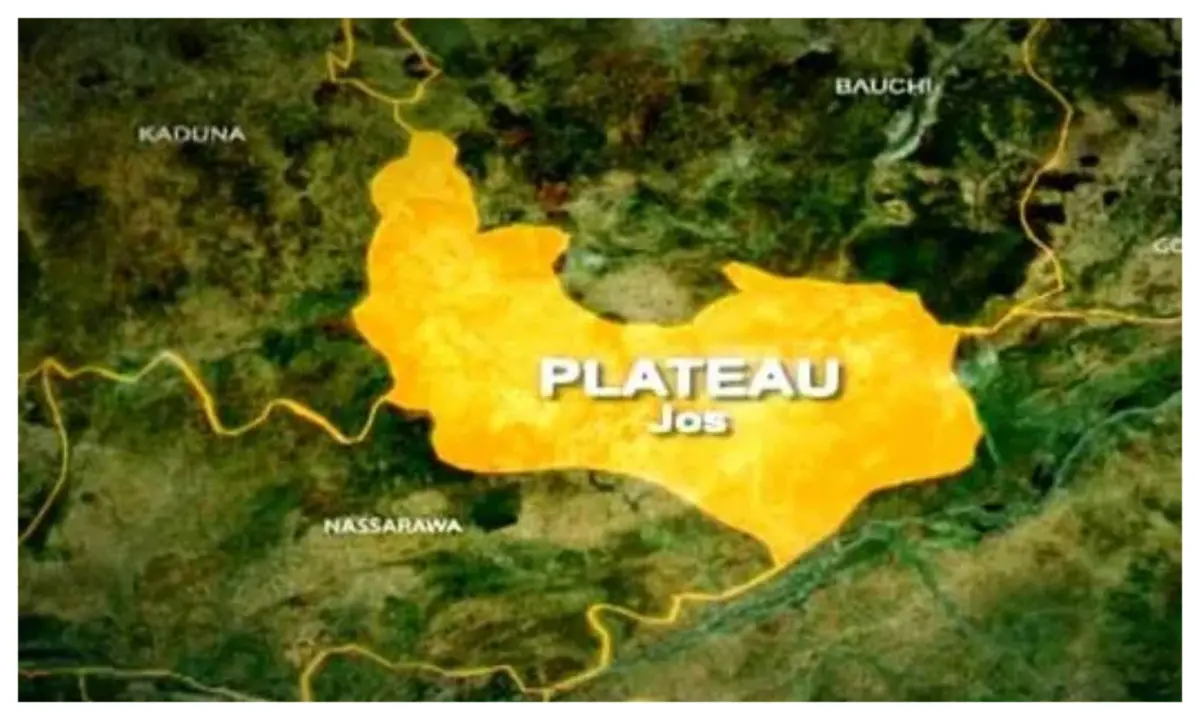
Peace is one of the most frequently used words in discussions about Plateau State. Governments speak of restoring peace; religious leaders call communities to peace; traditional rulers advocate peaceful coexistence; civil society organisations facilitate dialogue and reconciliation; and communities themselves repeatedly express a desire to live without fear.
Yet an important question remains: What kind of peace is Plateau experiencing?
Is Plateau moving toward positive peace, a condition in which justice, security, human dignity, inclusion, reconciliation and healthy relationships are being strengthened? Or is much of what is described as peace actually negative peace, a temporary reduction in open violence while the grievances, inequalities, trauma, impunity, and structural conditions that produce conflict remain unresolved?
This question is particularly important because silence is not always peace. A community may appear quiet because people have genuinely reconciled, but it may also be quiet because people are afraid, exhausted, displaced, disillusioned, or have concluded that speaking will make no difference.
As of September 2026, the evidence suggests that Plateau is experiencing important and genuine peacebuilding processes alongside continuing conditions of negative peace. There are encouraging signs of dialogue, reconciliation, and institutional peacebuilding, but recurrent violence demonstrates that the deeper foundations of positive peace have not yet been secured.
- Understanding Positive and Negative Peace
The distinction between positive and negative peace is associated particularly with peace scholar Johan Galtung.
Negative peace refers broadly to the absence or reduction of direct violence. A community may no longer be experiencing daily attacks, killings, or open confrontation, but this does not necessarily mean that justice, trust, and social harmony have been restored.
Positive peace, by contrast, goes beyond stopping violence. It involves addressing the conditions that allow violence to emerge and persist. It includes justice, equality, participation, respect for human dignity, functioning institutions, reconciliation, trust, and the capacity of communities to resolve disputes without violence.
This distinction is particularly relevant to Plateau.
A community that has not been attacked for six months may be safer than it was previously. But if residents remain afraid to farm, displaced families cannot return, perpetrators are not held accountable, historical grievances remain unresolved, and communities continue to view one another with suspicion, the absence of recent attacks should not automatically be described as genuine peace.
The central question therefore becomes:
Has Plateau merely become quieter, or is Plateau becoming more just, secure, reconciled and capable of peacefully managing its differences?
- Plateau Has Genuine Signs of Peacebuilding
It would be inaccurate to portray Plateau simply as a state without peace.
There are significant initiatives demonstrating that individuals, communities, government institutions, religious bodies, traditional leaders, civil society organisations and security agencies are working toward genuine peace.
Community dialogue is increasing
In February 2026, farmers and herders in communities in Bokkos and Riyom signed 25 peace agreements following sustained dialogue and reconciliation facilitated by the Institute for Integrated Transitions. The process brought community members together to identify problems and rebuild relationships.
This is important because positive peace requires more than security deployment. It requires people who have experienced conflict to sit together, listen to one another, and negotiate mechanisms for living together.
Similarly, in August 2026, the Plateau State Peace Building Agency and partners organised a “Peace Under the Tree” initiative involving traditional, religious, youth and women leaders from Afizere and Anaguta communities, focusing on indigenous conflict resolution, restorative justice and community reconciliation.
These are examples of peace understood as relationship-building rather than merely conflict suppression.
There are efforts toward inclusive peace structures
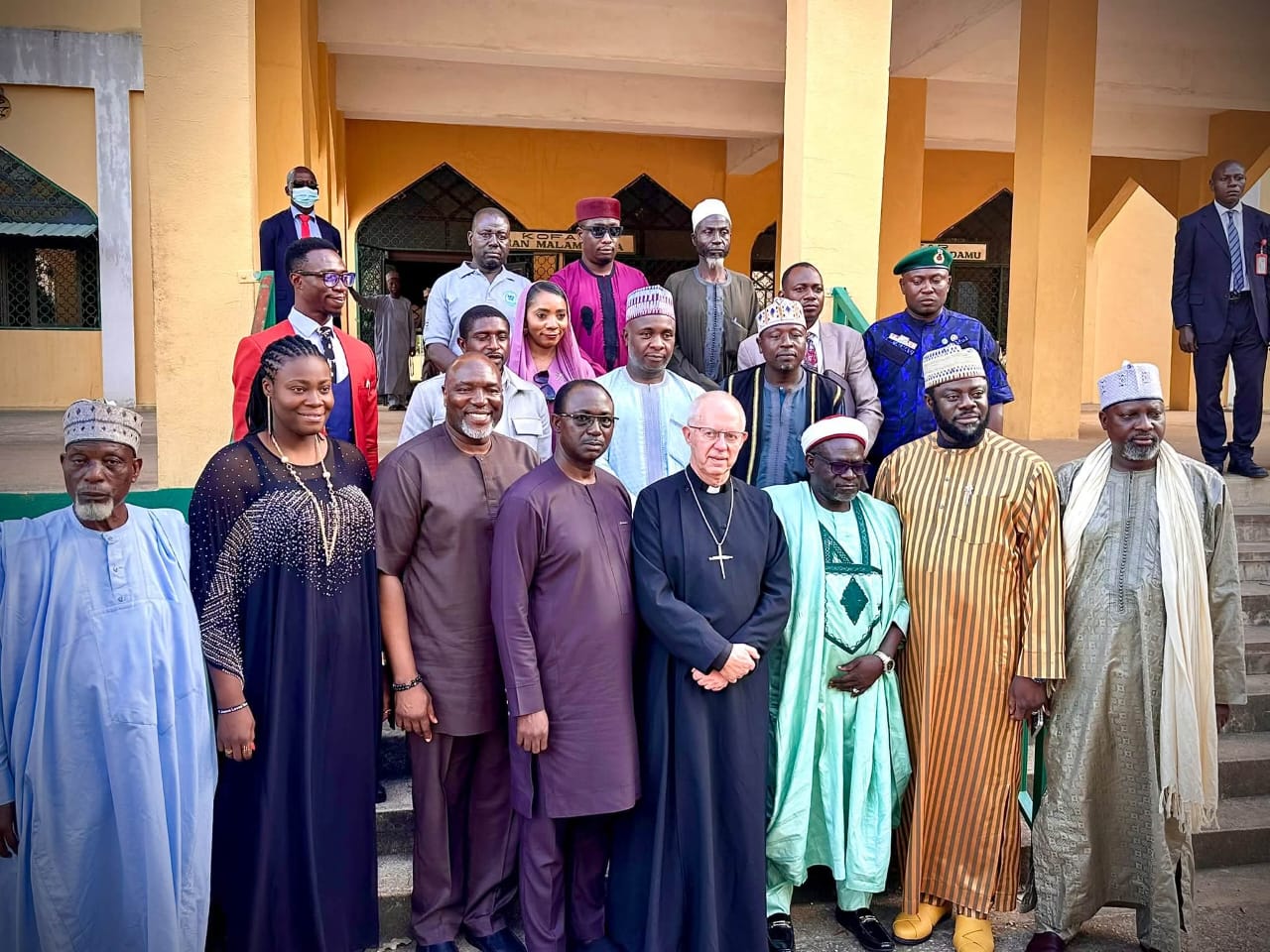
In 2025, a federal peace initiative brought Christian leaders, Fulani leaders, traditional rulers, women and youth representatives together to discuss community-based peace structures across Plateau’s 17 LGAs.
In April 2026, Plateau stakeholders also participated in discussions addressing farmer-herder conflict, criminality and land disputes, with emphasis on inclusive policy and sustainable peace infrastructure.
Such initiatives recognise an important reality: peace cannot be constructed exclusively by security agencies or government offices.
It must involve the people who live with the consequences of conflict.
There are examples of negotiated problem-solving
There have also been smaller examples of practical reconciliation. In August 2026, for example, a dispute following the destruction of 38 farms in Bokkos was reportedly resolved through engagement between farmers and herders, with compensation agreed for the damaged farms.
Such cases may appear small compared with the scale of Plateau’s conflict, but they illustrate what positive peace can look like at community level: wrongdoing is acknowledged, harm is addressed, compensation is negotiated, and relationships are preserved.
- Yet Plateau’s Current Reality Cannot Be Described Simply as Positive Peace
The strongest challenge to the claim that Plateau has achieved genuine peace is the continuing recurrence of violence.
In September 2026, the Plateau Government imposed a dusk-to-dawn curfew on Barkin Ladi, Bokkos and Mangu following renewed security threats.
On September 23, reports indicated that attacks in Barkin Ladi and Mangu had killed several people, including a police officer and civilians, despite the curfew.
These incidents matter because positive peace is not simply measured by whether a government has announced a peace programme. It is ultimately reflected in whether ordinary people can live, farm, travel, worship, conduct business, and raise their children without persistent fear of violence.
The continuing attacks demonstrate that Plateau’s peace remains fragile.
- The Scale of the Historical Problem Cannot Be Ignored
The historical depth of the crisis also complicates any claim that Plateau has entered a period of genuine peace.
A Plateau State fact-finding committee report presented in September 2025 reportedly documented attacks on more than 420 communities between 2001 and 2025, with nearly 12,000 deaths and thousands of people displaced.
The European Union Agency for Asylum, drawing on ACLED and other sources, recorded 282 security incidents and 737 fatalities in Plateau between 1 January 2024 and 31 August 2025. It also reported an estimated 55,053 internally displaced people in February 2025, with communal clashes and farmer-herder conflict identified as major causes of displacement.
These figures are not simply statistics.
Behind them are:
- widows;
- orphans;
- displaced families;
- destroyed homes;
- abandoned farms;
- traumatised children;
- disrupted education;
- broken relationships;
- damaged livelihoods;
- communities living with memories of violence; and
- people who remain uncertain about whether it is safe to return home.
Consequently, peace cannot be measured only by the number of attacks recorded during a particular month.
It must also be measured by whether the consequences of previous violence are being addressed.
- Are Victims Being Heard?
This is one of the most important tests of whether Plateau’s peace is genuine.
The first question should not merely be:
Are people fighting today?
It should also be:
Are the people who suffered yesterday being heard today?
Victims often need more than humanitarian assistance. They need acknowledgement, justice, psychosocial support, restoration of livelihoods, security guarantees and opportunities to participate in decisions concerning their future.
The state has taken some steps in this direction. The fact-finding committee that investigated the violence reportedly consulted security agencies, traditional rulers, community leaders and civil society organisations across all 17 LGAs.
That is significant because truth-telling is an essential component of sustainable peace.
However, investigation is only the beginning.
A report becomes meaningful when its findings lead to implementation, accountability, institutional reform and restoration.
In April 2026, President Tinubu also urged Plateau stakeholders to review previous government White Papers on security crises and develop implementable recommendations.
The crucial question therefore is not simply whether reports exist.
It is:
What happens after the report?
- Justice Cannot Be Replaced by Reconciliation
One of the greatest dangers in a conflict-affected society is confusing reconciliation with forgetting.
Reconciliation does not mean telling victims to forget what happened.
It does not mean telling communities to “move on” without addressing wrongdoing.
And it does not mean treating victims and perpetrators as morally equivalent simply because both communities have suffered.
Amnesty International, responding to killings in Plateau in 2025, argued that condemnation alone was insufficient and called for investigation and justice for victims, expressing concern about impunity.
This highlights an important principle:
Forgiveness and accountability are not necessarily opposites.
A Christian theology of forgiveness does not require the denial of truth.
Indeed, biblical reconciliation assumes that something has gone wrong and that wrongdoing must be confronted truthfully.
Therefore, when religious leaders preach:
“Let us forgive and forget.”
The more appropriate question may be:
Forgive what? Forget what? And what has been done to address the wrongdoing?
Forgiveness without truth can become another form of injustice.
- Political Stability Is Not the Same as Peace
Another danger is equating political calm with peace.
A government may prefer stability because instability threatens governance, investment, and public confidence. But genuine peace requires space for legitimate criticism and participation.
This does not mean that every criticism is correct or that every political demand should be accepted.
It means that citizens must have legitimate avenues through which grievances can be expressed without intimidation.
If people remain silent because they believe that speaking against injustice will bring consequences, then silence should not automatically be interpreted as consent or peace.
This is particularly important in communities emerging from conflict.
The absence of protest may indicate satisfaction.
But it may also indicate:
- fear;
- fatigue;
- hopelessness;
- political exclusion;
- displacement;
- distrust of institutions; or
- the belief that nobody will listen.
Therefore:
A silent community is not necessarily a peaceful community.
- Are Difficult Conversations Actually Taking Place?
Positive peace requires communities to talk about the issues they would rather avoid.
Plateau’s conflicts involve multiple and overlapping factors, including land, livelihoods, identity, ethnicity, religion, political representation, historical grievances, criminality and insecurity.
The EUAA’s assessment describes farmer-herder violence as being driven partly by competition over resources and complicated by religious dimensions.
Therefore, peacebuilding that speaks only about “living together” without addressing land, identity, political inclusion, security, justice and livelihoods will remain incomplete.
The encouraging development is that some current initiatives are beginning to address these difficult issues directly.
The Plateau Peace Committee adopted a report chaired by former Governor Joshua Dariye in June/July 2026 as a framework for addressing persistent security challenges and reconciliation, with emphasis on dialogue, institutional reforms and collaboration with the federal government.
This suggests that the conversation is moving beyond simply asking people to “be peaceful.”
The challenge is to move from conversation to implementation.
- Religious Leaders Have a Particularly Important Responsibility
Plateau is deeply religious, and Christian and Muslim leaders have considerable influence over how communities interpret conflict.
Religious leaders can either contribute to genuine peace or unintentionally contribute to false peace.
False peace can emerge when religious teaching becomes:
“Just forgive.”
“Don’t talk about the past.”
“We are all God’s children, so forget what happened.”
Those statements may sound spiritual, but they can become harmful if they prevent victims from telling the truth or seeking justice.
A more constructive theology of peace should hold together:
truth + justice + repentance + forgiveness + restoration + reconciliation.
Christian peacebuilding, for example, should not merely ask:
“Have you forgiven?”
It should also ask:
“Has the truth been acknowledged?”
“Has wrongdoing been confronted?”
“Have victims been restored?”
“Has accountability occurred?”
“What must change so that the violence does not happen again?”
That is a much deeper understanding of biblical peace.
- Plateau Is Not Without Hope
It would equally be wrong to conclude that everything happening in Plateau represents false peace.
There are genuine signs of resilience.
Farmers and herders are negotiating agreements.
Religious and traditional leaders are participating in dialogue.
Women and youth are increasingly included in peacebuilding processes.
The Plateau State Peace Building Agency is engaging communities.
Security agencies are pursuing dialogue alongside security operations.
The government has established peace and security as a central policy concern. Its development framework identifies Peace, Security and Good Governance as one of its principal pillars.
These developments matter.
Positive peace does not arrive overnight.
It is constructed through thousands of decisions, conversations, relationships and institutions.
- The Present Reality: A Peace in Transition
The evidence therefore points toward a more nuanced conclusion.
Plateau is neither simply at peace nor simply without peace.
It is experiencing a peace transition in which genuine peacebuilding initiatives exist alongside persistent manifestations of negative peace.
There are areas where violence has decreased.
There are communities where dialogue has restored relationships.
There are peace agreements.
There are institutional mechanisms.
There are people deliberately working across religious, ethnic and community boundaries.
But there are also renewed attacks.
There are displaced people.
There are unresolved grievances.
There is continuing fear.
There are questions about accountability.
And there are structural problems that continue to reproduce conflict.
The current reality therefore resembles a fragile peace, rather than a consolidated positive peace.
- A Practical Test for Genuine Peace in Plateau
Plateau should therefore develop a broader Peace Test.
Rather than asking only:
“Are people killing one another?”
we should ask at least ten questions:
- Security
Can ordinary people live, travel and farm without persistent fear?
- Justice
Are perpetrators of serious violence investigated and held accountable?
- Victims
Are victims heard, supported and included in decisions affecting them?
- Truth
Are communities able to speak honestly about what happened?
- Reconciliation
Are former enemies rebuilding relationships rather than merely avoiding one another?
- Inclusion
Are women, youth, minorities, displaced people and marginalised communities participating in peace processes?
- Livelihoods
Can people return to farming, trading and economic activity without fear?
- Institutions
Are government and traditional institutions trusted to resolve disputes fairly?
- Accountability
Can citizens criticise government policies and security failures without fear?
- Prevention
Are the underlying causes of violence being addressed so that future generations do not inherit the same conflict?
If the answer to these questions is increasingly yes, Plateau is moving toward positive peace.
If the answer is largely no, then what looks like peace may simply be negative peace.
Conclusion: Plateau Must Move from “Peace as Silence” to “Peace as Justice”
The most important question facing Plateau is not whether the state can achieve periods without violence.
It is whether Plateau can build a society in which violence is no longer necessary as a means of expressing grievances, securing land, defending identity, pursuing political interests or responding to perceived injustice.
That requires more than security operations.
It requires justice.
It requires truth.
It requires accountability.
It requires reconciliation.
It requires inclusive governance.
It requires restoration of livelihoods.
It requires healing of trauma.
And it requires communities that are courageous enough to have difficult conversations.
The recent recurrence of attacks, including renewed violence in Barkin Ladi, Bokkos and Mangu in September 2026, shows that the work is far from complete.
But the growing number of community dialogues, peace agreements, interfaith initiatives and institutional peacebuilding efforts also demonstrate that another future is possible.
The task before Plateau is therefore not simply to maintain peace.
It is to deepen peace.
Not merely peace as the absence of gunshots, but peace as justice.
Not peace as silence, but peace as truth.
Not peace as forgetting, but peace as healing.
Not peace as suppression, but peace as participation.
Not peace as forced coexistence, but peace as restored relationships.
And not peace that protects the powerful from uncomfortable questions, but peace that protects the vulnerable from violence and injustice.
The ultimate test of peace is not whether people have stopped speaking.
It is whether they have become free enough to speak, safe enough to live, justly treated enough to trust, and reconciled enough to build the future together.
Plateau’s journey toward genuine peace has begun in many places, but the evidence suggests that it is still a journey, not yet a destination.
Works Cited
- Theoretical and Conceptual Sources
Galtung, Johan. “Violence, Peace, and Peace Research.” Journal of Peace Research, vol. 6, no. 3, 1969, pp. 167–191.
Galtung, Johan. Peace by Peaceful Means: Peace and Conflict, Development and Civilization. PRIO/SAGE Publications, 1996.
- Plateau State and Contemporary Security Sources
Amnesty International Nigeria. “Plateau: Killing of 51 People Is an Inexcusable Security Failure.” Amnesty International Nigeria, 14 Apr. 2025.
Channels Television. “Fact-Finding Committee Report Reveals 12,000 Deaths in Plateau Attacks.” Channels Television, 17 Sept. 2025.
Channels Television. “Farmers, Herders Sign 25 Peace Pacts to End Bokkos–Riyom Killings in Plateau.” Channels Television, 11 Feb. 2026.
Channels Television. “Plateau Imposes Dusk-To-Dawn Curfew on Barkin Ladi, Bokkos, Mangu.” Channels Television, 21 Sept. 2026.
Channels Television. “Plateau Attacks: Police Officer, Five Others Killed Despite Curfew.” Channels Television, 23 Sept. 2026.
European Union Agency for Asylum (EUAA). “2.1.7. Plateau.” Nigeria: Security Situation, Jan. 2026.
Plateau State Government. 2025 Budget Speech. Government of Plateau State, 2025.
Plateau State Government. “Government of Plateau State: Three-Point Policy Agenda.” Government of Plateau State.
Premium Times. “Mutfwang Receives Dariye Panel Report, Seeks Broader Peace Dialogue.” Premium Times, 30 June 2026.
Premium Times. “Plateau Adopts Dariye Report, Prepares Fresh Peace Dialogue.” Premium Times, 1 July 2026.
State House, Abuja. “President Tinubu Sends Peace Emissary to Plateau State.” The State House, Abuja, 16 Nov. 2025





 News4 days ago