Connect with us

News

Plateau: Military Cautions Religious Leaders Against Inciting Sermons

editor

Published

on

Plateau

Religious leaders in Nigeria have been cautioned against making inciting comments that could threaten the peace of the country.

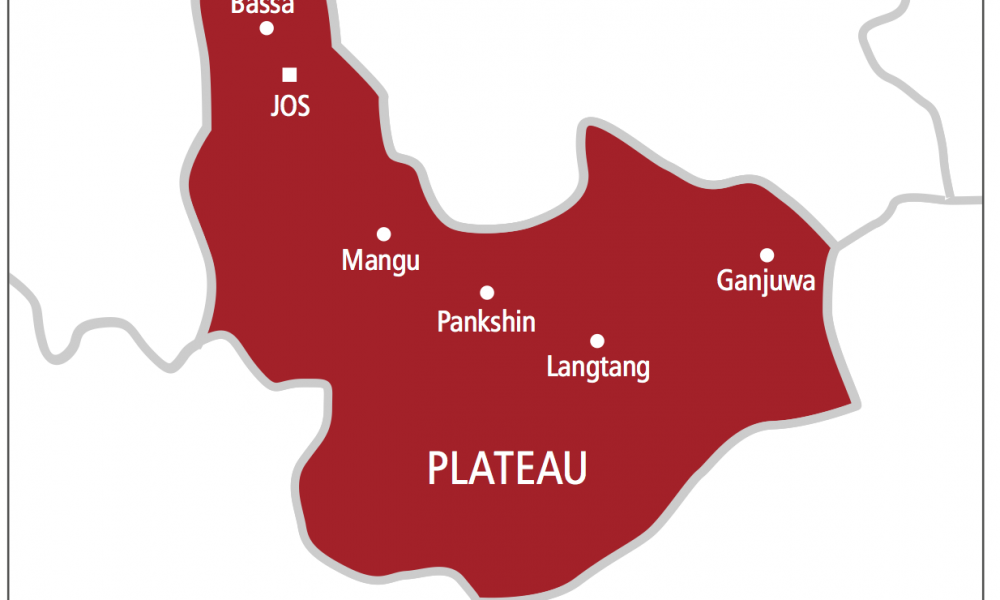
This warning came during a symposium organized for religious leaders in Plateau by the Special Task Force Operation SAFE HAVEN (OPSH) at Headquarters 3 Division Nigerian Army (NA), Maxwell Khobe Cantonment, Rukuba, Jos.

Delivering his keynote address at the event, the Commander Operation SAFE HAVEN and General Officer Commanding 3 Division NA, Major General AE Abubakar, said the aim of the symposium was to outline the importance of religious leaders as key contributors to peace in the society.

He lamented the damages inciting sermons from religious leaders have caused to include fueling tension and anger amongst religious groups.

Abubakar informed the gathering that the symposium was a platform for constructive discussions on how to leverage on sermons to bring permanent peace to Plateau State.

The commander urged the participants to reflect on their sermons and continually preach peace over violence. He further disclosed that the participants were drawn from different religious groups that have shown commitment to a peaceful society.

Delivering a paper on the topic: ‘The Effects Of Incitive Preaching On Peaceful Coexistence On The Plateau,’ the guest speakers, Sheikh Ghazali Ismail, Deputy Chief Imam, Jos Central Mosque; and Reverend Father Boniface Nkum, Director of Studies Saint Augustine Missionary School Jos, said religious leaders have strong potential to influence their followers.

They disclosed that religious stigmatization has caused serious problems in society over the years.

In the paper, the guest speakers agreed that the government must provide an active platform where religious leaders who make inciting statements could be reported and sanctioned accordingly.

The guest speakers maintained that interfaith dialogue and education must be encouraged in order to promote harmonious relationships between different religious groups.

While calling on the religious advisory committee of the State to wake up to its duties, they added that religious leaders must take responsibility for the messages they convey to their followers.

In their separate remarks, the Emir of Wase and Chairman Jamatul Nasir Islam (JNI) Plateau State, Alhaji (Dr) Muhammadu Sambo Haruna, and the Chairman Christian Association of Nigeria (CAN) Plateau State, Reverend Father Polycarp Lubo, said that the  government and security agencies must not spare religious leaders encouraging violence by making inciting statements, while maintaining that no one was above the law in the country.

They advised that a similar symposium should be organised at the local levels to educate people on the need for religious tolerance.

On his part, the Special Adviser on Security to Plateau State Governor, Brigadier General GG Shipi (Rtd), disclosed that there must be public condemnation of preachers of inciting statements especially by followers of same faith.

He revealed that the Inter-religious Advisory Council in the State was active to address issues relating to religion and practices.

In his vote of thanks, the Chairman OPSH 55-Man Peace Implementation Committee, Justice Daniel Longji (Rtd), said inciting statements create mob action and urged the participants to promote sermons that encourage unity.

Some of the dignitaries present at the event include; the Emir of Wase and Chairman Jamatul Nasir Islam (JNI) Plateau State, Alhaji (Dr) Muhammadu Sambo Haruna; Chairman Christian Association of Nigeria Plateau State, Reverend Father Polycarp Lubo; Special Adviser on Security to Plateau State Governor, Brigadier General GG Shipi (Rtd); Chairman OPSH 55-Man Peace Implementation Committee, Justice Daniel Longji (rtd), religious leaders of various denominations, Women Wings of CAN/JNI amongst others.

Continue Reading
Click to comment

Leave a Reply

Your email address will not be published. Required fields are marked *

Business

Federal Government approves payments for 1,240 contractors across ministries and agencies

info

Published

on

By

New coat of arms.jpg

MTN ADVERT

The Federal Government has officially supported payments to more than 1,240 contractors across various ministries, departments, and agencies to resolve verified outstanding obligations.

The Ministry of Finance shared an update on Monday, revealing that, after a thorough verification and reconciliation process, it has validated the claims submitted by contractors.

According to a statement signed by Mary-Ann Duke, the senior special assistant on communication and press secretary to the minister of finance, contractors with verified claims of N100 million or less were prioritised in the latest disbursement round.

This move comes after months of growing concern over unpaid government contracts.

In January, frustrated contractors staged a protest at the ministry’s headquarters in Abuja, blocking access to the then Minister of State for Finance, Doris Uzoka-Anite, as they demanded prompt settlement of their outstanding debts. The protest has also drawn the legislature’s attention. Last July, the Senate constituted a committee to engage the finance ministry and other relevant agencies on the backlog of debts owed to contractors by the Nigerian Government.

PT WHATSAPP CHANNEL

The payments announced on Monday could bring swift relief to businesses, especially indigenous firms and small to medium-sized enterprises that have faced months of delayed payments from the government.

This initiative promises to offer immediate liquidity support nationwide, reaffirming the Federal Government’s dedication to fulfilling its financial commitments, the statement emphasised.

READ ALSO: $460m Abuja CCTV Project: ‘We have no record of local contractors,’ finance ministry says

Additionally, the ministry highlighted that these disbursements will enable affected contractors to return to project sites, pay their workers, and settle with suppliers.

In recent months, the government has verified and processed over N700 billion in owed obligations to local contractors, with about N436.6 billion settled in May alone.

Prioritising smaller contractors aims to extend these benefits across various sectors and regions, helping businesses stay operational and safeguarding jobs.

The ministry expressed optimism that these payments will restore confidence among contractors, suppliers, and other service providers working with the government.


Continue Reading

News

Apple puts parents back in control of kids’ iPhone use

info

Published

on

By

Screentime devices.jpeg

At its Worldwide Developers Conference, Apple introduced a host of tools designed to put parents back in control over how their kids are using the iPhone. This includes features that let parents decide who a child can talk to, what apps they can use, whether they can visit specific websites, and access to other tools to block inappropriate texts, manage screen time schedules, find age-appropriate app suggestions, and more.

The redesigned version of its Screen Time controls builds on the technology Apple already offers, expanding its capabilities in new ways with more granular controls. This comes as the mental health impacts of technology on children’s development have come to the foreground of people’s minds, and as new laws and regulations are attempting to rein in kids’ access to devices and social media.

When creating a child’s accounts on a new device, Apple will tailor safeguards to their age, blocking adult websites, allowing only age-appropriate media, and setting age-based restrictions on the App Store. Parents can adjust these settings if they prefer, but now they can go even further.

Image Credits:Apple

For instance, parents can start off by providing kids access only to the content they’re comfortable with, then add more over time, as they deem it appropriate. Apple will make smart app suggestions upon setup, letting parents pick whether they want to only give a child access to the essentials, or if they want to pick and choose specific other apps the child can use. This particularly makes sense for younger kids getting iPhones, like tweens and other school-aged children, who may not be ready for all the social experience an iPhone provides.

In addition, parents will be able to control access to which websites kids can browse, too — a feature that’s been much in demand since kids have historically used websites to work around parental controls that would restrict access to certain apps, often social media.

This feature, “Ask to Browse,” works across iPhone, iPad, and Mac with Safari, Apple notes. And it, along with “Ask to Buy” for apps and games, is on by default for kids under 13.

Parents will also be able to control which contacts the child can add to their contacts, and can opt to block media arriving in text messages that may include gore or violence. A similar feature has already been available to block possible nudity, to assuage sexting concerns.

Image Credits:Apple

The company’s existing Screen Time controls lets parents set up a schedule and choose which apps are available on which days and at which times. The feature helps parents limit access to things like social media during school hours, but not on weekends.

What’s new is that Apple is now relying on experts’ advice to make some initial screen time allowance recommendations, based on a child’s age and the app category. Apple said it consulted with the American Academy of Pediatrics and others on this feature. The company also pointed in particular to the fact that social media apps aren’t advised for children under 13, which is why Apple may suggest that category is turned off for younger kids.

Image Credits:Apple

The Screen Time feature has been redesigned, as well, to make it easier for parents to see how kids have been using their devices, and to allow parents to adjust that access with just a tap.

App developers, meanwhile, are offered a full suite of APIs that let them protect against nudity and violent content in apps, help ensure parents approve any new contacts in apps, or ensure a child is of age to use their app, among other options.

The new parental controls will roll out to consumers with the release of iOS 27 in the fall.

When you purchase through links in our articles, we may earn a small commission. This doesn’t affect our editorial independence.

Continue Reading

Trending