Connect with us

News

Plateau Commissioner solicits sustained action against sexual/gender-based violence

editor

Published

on

Mrs. Rebecca Sambo

The Plateau State Commissioner for Women Affairs and Social Development, Mrs. Rebecca Sambo has tasked citizens to reaffirm their commitment to fight against gender-based violence and reclaim the streets to create a society that is safe and secure for women and children.

The Commissioner stressed that domestic violence is not something that should be left to families to resolve but whenever it is known that someone is being abused in a home or a neighbor’s house, citizens must report and also stand in the courts as witnesses to make sure that the abusers are successfully prosecuted.

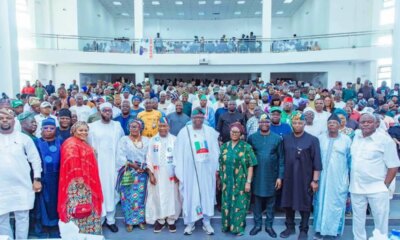
She spoke at the weekend in Jos during a town hall meeting with traditional, religious, and community members and the media to mark the end of 16 Days of activism 2022.

Mrs. Sambo disclosed that having a safe environment for everyone to thrive is important hence her Ministry, in collaboration with the Women Peace Mentors, Women Peace and Security Media Network and HeforShe with support from UN Women and the Government of Norway put the event together to continue to raise awareness on the need for zero tolerance for violence against women and children.

In her remarks, she stated, “… This is a moment for all of us to reaffirm our commitment to reclaim our streets and create a society that is safe and secure for women and children. The 16 Days of Activism Campaign 2022 With the Theme: “Unite Activism To Fight Gender-Based Violence Against Women And Girls” focuses primarily on generating an increased awareness of the negative impact of violence on women and children as well as society as a whole…

“The campaign seeks to mobilize all of us as members of the community to also join in this effort. I urge all Nigerians to join this fight. When we know that someone is being abused in our own home or our neighbor’s house, we must report that. We also must stand in court as witnesses to make sure that these abusers are prosecuted successfully. Domestic violence is not something that should be left to families to resolve. An uncle who rapes a niece needs to face the full might of the law. Once a crime has been committed, let us allow the law to take its full course.”

She lamented that “Despite Nigeria’s constitutional and legislative protection, violence based on gender and sexual orientation remains at unacceptable levels. The violence takes different forms such as sexual harassment, abuse, assault, rape, domestic violence, and other cultural practices that are harmful to women and children. Whilst there are programs and interventions to prevent and respond to the abuse, the government cannot do this alone and therefore depends on mutual partnerships with non-governmental organizations, businesses, faith-based organizations, traditional leaders, political parties, religious leaders, and various sectors of society and communities.

“A concerted effort is required to promote the reach of the campaign to rural areas including farming and mining communities. Those most severely affected by violence are in these areas and may not be aware of the resources and services available to them to help them cope with their circumstances. We believe that the unacceptably high levels of gender-based violence require the collective efforts of all Nigerians. We must pause and ponder the real impact of gender-based violence. These include direct costs relating to health care services, judicial services, social services, and other related services.

“Gender-based violence robs women and children of the opportunity to become productive citizens of the country. It denies them their constitutional rights and condemns them to a life of perpetual fear. They are therefore prevented from enjoying the fruits of our freedom and democracy. The reality that we must collectively confront is the reluctance on the part of some victims of violence to come forward and seek legal advice and social support. This could be due to a lack of knowledge of their rights, the social stigma around domestic violence, or the inaccessibility of rural women to police and courts…

The question that must be posed is: If animals find it unacceptable to abuse their young ones, why is it that some among us derive pleasure from seeing their flesh and blood in pain?

“Women and children long for the day when they can walk the streets without fear of being raped or brutally assaulted. They long for a day when they can walk the streets without having to look behind them to see who is following them. They long for a day when society will protect them against sexual molesters. The current spate of child murders in our country is a matter of grave concern and a painful reminder of the disregard for human life and the rights of children.

In memory of all children who perished in hands of abusers, we must move with speed to put these murderers behind bars. As we do so, we must also focus our attention on those who claim to be sangomas who pay for the body parts of our children. The law must be equally harsh on them. I urge real sangomas to take a stand and expose those who trade with the bodies of our children…”

Also, a former Lawmaker, Alice Asaije, and a gender expert, Sewuese Isaiah, a HeforShe, Gyang Dudu as well as some traditional leaders and others who spoke called for concerted efforts to end violence against women and girls.

Asaije said, “…we need to stand and protect ourselves,” as Isaiah in her presentation gave the progress report, success, gaps, opportunities, and way forward on the VAPP law and SAP on WPS agenda as a veritable framework to Unite! Activism to end violence against women and girls in the State while Dudu called for more support from the men to ensure women and girls are protected in society.

Continue Reading
Click to comment

Leave a Reply

Your email address will not be published. Required fields are marked *

News

NJC recommends new judges across five states, two appellate courts

info

Published

on

Screenshot 20240517 173446 Chrome.jpg

The National Judicial Council (NJC) has recommended 28 candidates for appointment as judicial officers across five states and two appellate courts.

The recommendations were made at the council’s 112th meeting held on November 3, 2026, according to a statement issued on Wednesday by NJC’s deputy director (Information), Kemi Babalola-Ogedengbe. 

Of the 28 candidates, 24 were recommended for appointment as judges of the High Courts of Kano, Ebonyi, Edo, Adamawa and Ogun states.

One candidate was recommended for appointment as Grand Kadi of the Plateau State Sharia Court of Appeal, while another was recommended as Kadi of the Adamawa State Sharia Court of Appeal.

Two other candidates were recommended for appointment as judges of the Adamawa State Customary Court of Appeal.

The council also included Ijeoma Agugua in the shortlist of candidates for appointment as substantive chief judge of Imo State. 

The candidates recommended for the various courts include Tijjani Zololo for appointment as Grand Kadi of the Plateau State Sharia Court of Appeal.

For the Kano State High Court, the recommended candidates are Hassan Nafisan, Ahmad Halima, Bature Abdullahi and Umar Musa.

Amaga Dickson was recommended for appointment as a judge of the Ebonyi State High Court.

The candidates recommended for the Edo State High Court are Osawaru Benson, Omoruyi Taiye, Adamaigbo Dorathy, Usiobaifo Festus, Oiwoh Pius, Amune Majebi and Imuekemhe Emile.

Those recommended for the Adamawa State High Court are Sa’ad Aminu, Musa Ibrahim, Giwa Sadiq, Mijinyawa Musa, Ibrahim Japhet, Bakari Aliyu and Ahmadu Yakubu.

For the Ogun State High Court, the recommended candidates are Oke Olakulehin, Obienu Adebimpe, Daudu Fatimat, Kadiri Rafiat and Osho Oludotun.

Ishaku Abubakar was recommended for appointment as Kadi of the Adamawa State Sharia Court of Appeal, while Dimas Elsha and Pembi David were recommended as judges of the Adamawa State Customary Court of Appeal.

Continue Reading

News

Nigeria Get Second Chance as CAF Reportedly Considers Flying Eagles for 2027 U-20 AFCON

info

Published

on

IMG 20261105 WA0201.jpg

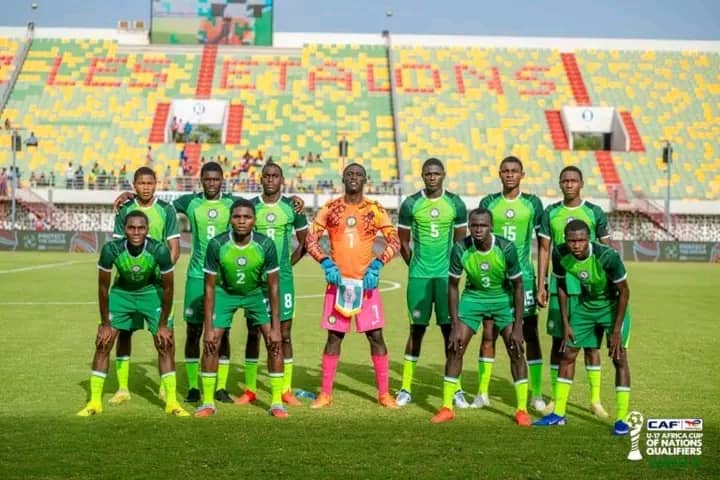
Nigeria’s Flying Eagles could be handed a lifeline in their quest to qualify for the 2027 FIFA U-20 World Cup following reports that the Confederation of African Football (CAF) is considering including the team in the 2027 Africa U-20 Cup of Nations.

The development follows Ghana’s reported removal as hosts of the continental competition, potentially creating an opening for Nigeria to secure a place in the tournament.

Sports247 reports that CAF has informed the Nigeria Football Federation (NFF) to keep the Flying Eagles on standby for a possible invitation to the 2027 U-20 AFCON.

Nigeria initially missed out on automatic qualification after suffering a disappointing 4-1 defeat to Burkina Faso in the final of the 2026 WAFU Zone B U-20 Championship.

Burkina Faso secured the region’s automatic qualification ticket, while Ghana were expected to occupy the second available place as hosts of the continental tournament.

However, Ghana’s reported failure to meet CAF’s hosting requirements has thrown the arrangement into uncertainty, with the continental governing body expected to appoint a new host.

The situation could work in Nigeria’s favour, with the Flying Eagles potentially considered for the place initially reserved for Ghana as tournament hosts, having finished runners-up in the WAFU Zone B competition.

Although CAF is yet to make an official announcement confirming Nigeria’s inclusion, the reported development has raised hopes of a second opportunity for the seven-time African champions.

The 2027 U-20 AFCON will carry additional significance as it will also serve as Africa’s qualifying competition for the FIFA U-20 World Cup.

According to CAF’s qualification format, the four semi-finalists will represent the continent at the global tournament.

Nigeria’s possible inclusion would therefore provide the Flying Eagles with another opportunity to compete for continental honours and keep their World Cup ambitions alive.

The West African giants have a proud history at the FIFA U-20 World Cup, having finished runners-up on two occasions, in 1989 and 2005.

For now, Nigeria will await CAF’s final decision, with the reported development offering renewed hope after their disappointment in the WAFU Zone B final.

Continue Reading

Trending