News
Plateau 2023: Lanlong working to rig election – alleged Ubandoma







News
PremiumTrust Bank Abuja City International Half Marathon Assures Runners Of Safety Ahead Of 14 November Race



The organisers of the PremiumTrust Bank Abuja City International Half Marathon have assured runners of a safe and well-planned race, with special attention to the challenges of extreme heat.
Speaking in a video message, Emmanuel Odey, the Project Manager at Nilayo Sports Management Limited, the organisers of the race, warned athletes about the dangers of running in extreme heat and advised them to prepare properly.
“The world is bracing for a powerful El Niño, a climate phenomenon that can disrupt weather patterns worldwide and lead to extreme heat. Nigeria is a possible risk area, and runners must take the warning seriously.” Odey explained.
According to him, “Extreme heat is no joke. It can lead to dehydration and even life-threatening heat stroke if runners are not careful.”
He urged runners to “hydrate well, pace themselves and listen to their bodies at all times, even while training.”
To support the athletes on race day, Odey revealed that the organisers will provide chilled water at every 2.5 kilometres along the route. At the finish area, there will also be a cold water bath to help cool down the body of runners after the race.
He added “We will provide chilled water at every 2.5 kilometres along the route, and at the finish area, there will be a cold water bath to help cool down the body after the race.”
The race is scheduled for 14 November 2026. The start point is the Old Parade Ground opposite the Fire Station, while the start time is 6:30am. The finish line is the Velodrome at the Moshood Abiola National Stadium, Abuja.
Odey concluded his message with a charge to all participants, “Respect the heat, run smart and finish strong. You are built for this.”
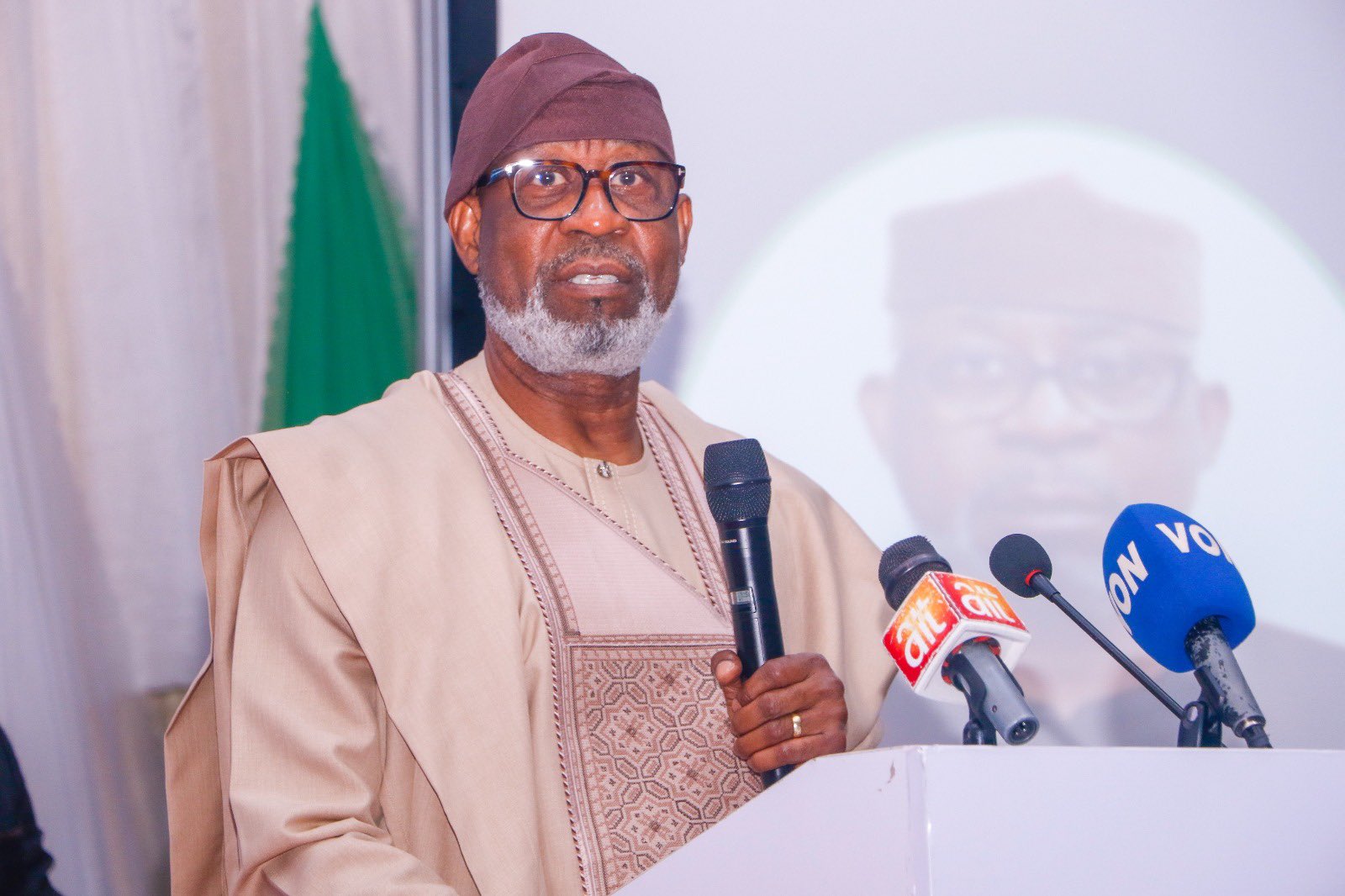
The Minister of Solid Minerals Development, Dele Alake, has dismissed reports that Nigeria sold $700 billion worth of solid minerals to the United States, insisting that the bilateral agreement between both countries does not involve the sale or transfer of Nigeria’s mineral assets.
Mr Alake made the clarification during the inauguration of the Nigeria-United States Committee on Strategic Cooperation in the Solid Minerals Sector in Abuja.
“There is no sale of any Nigerian asset. There’s nothing exchanging hands,” he said.
The minister explained that the agreement signed by Nigeria and the US was a government-to-government framework designed to connect American investors with Nigerian businesses, rather than transfer ownership of the country’s natural resources to foreign interests.
“We created a platform to facilitate mingling of US investment ventures with Nigeria’s local operators,” he added.
Mr Alake said the partnership was intended to attract capital, promote technology transfer, expand local mineral processing and create jobs as the Federal Government seeks to reduce Nigeria’s dependence on crude oil.


The committee’s inauguration followed the signing of a strategic cooperation framework by Nigeria and the US in New York in September, on the sidelines of the 81st United Nations General Assembly.
What the $700bn figure means
The clarification follows the announcement of the agreement, which described Nigeria’s mineral resources as being worth an estimated $700 billion.
The figure refers to the estimated value of Nigeria’s mineral resources, according to the government, not the value of minerals sold to the US or a confirmed investment commitment from the American government.
The framework was signed by Mr Alake and US Deputy Secretary of State Christopher Landau in New York on 23 September. It provides for cooperation in geological data and exploration, mineral development and processing, infrastructure and technical capacity-building.
The agreement is expected to provide a platform for American investors to partner with Nigerian mining companies and other local operators.
Mr Alake said the government wanted to change a pattern in which resource-rich countries export raw materials while other countries capture more of the value through processing and manufacturing.
“We have the resources, the critical elements the world needs to transit to clean energy. So we are creating a new paradigm: you bring your capital, expertise and technology to match with our natural resources and create a win-win situation. The investor gains, Nigeria gains,” he explained.
He added that the government wanted Nigeria to retain more economic value from its mineral resources through local processing and industrial development.
Local processing takes centre stage
Mr Alake said local processing had become a key requirement for investors seeking mineral titles, as the government sought to discourage the extraction and export of raw minerals without sufficient value addition.
Nigeria has deposits of minerals including lithium, gold, iron ore, limestone and tin. However, the sector remains underdeveloped compared with the country’s oil industry, limiting its contribution to exports, industrial growth and government revenue.
The government has increasingly identified solid minerals as an avenue for diversifying the economy, attracting foreign investment and creating employment outside the oil sector.
Mr Alake said the policy was encouraging investment in mineral-processing facilities, including a lithium processing plant in Nasarawa State that the government has described as one of the largest of its kind in West Africa.
He said the Nigeria-US partnership could help match the country’s mineral resources with the capital, technology and expertise needed to develop a stronger mining industry.
The agreement comes amid global competition to secure critical minerals used in electric vehicle batteries, renewable energy systems and other advanced technologies. Countries are seeking to diversify their supply chains as demand for these materials grows.
Mr Alake charged members of the newly inaugurated committee to identify viable investment opportunities and ensure that the agreement produced measurable outcomes.
ALSO READ: Alake warns mining firms over host community agreements, threatens licence revocation
He said the committee’s work was important to President Bola Tinubu’s target of building a $1 trillion economy.
The minister said the government was determined to ensure that mineral wealth translated into tangible economic benefits for Nigerians rather than remain an underutilised resource.
In his remarks, the ministry’s Permanent Secretary, Faruk Yusuf Yabo, said the committee would provide a structured platform for turning bilateral discussions into practical cooperation and investment.
Jonathan Baas, an economic officer at the US Embassy in Nigeria, said Washington was prioritising energy, artificial intelligence and critical minerals in its international economic engagements.
He explained that the US was seeking partnerships that would strengthen critical mineral supply chains while allowing resource-producing countries to benefit from the economic opportunities created.
The Managing Director of the Nigeria Solid Minerals Company, Martins Imonitie, also said the committee would coordinate implementation, facilitate investment and monitor progress towards the objectives of the cooperation framework.
Mr Alake said the government would judge the partnership by its ability to generate investment, strengthen local industries and create jobs, rather than by the estimated value of Nigeria’s mineral resources alone.
Discover more from Premium Times Nigeria
Subscribe to get the latest posts sent to your email.
-

 Business4 days ago
CBD COP17: Nigeria, France Push for Faster Action on 30×30 Biodiversity Target
-
News3 days ago
Poor AI data pipelines could fuel cyber exploitation in Nigeria, regulator warns – Technology Times
-
Health2 days ago
Ebola: ₦100,000 weekly allowance for quarantined contacts was unplanned
-
Health4 days ago
UPDATED: Ebola: Nigeria identifies 53 contacts linked to confirmed case