News
I can’t be suspended by ward – Jigawa ADC chieftain Gantsa


A member of the African Democratic Congress, ADC, National Executive Committee, Aliyu Gantsa, has rejected his 12-month suspension by the party's leadership in Buji Local Government Area of Jigawa State, describing the decision as unconstitutional and invalid.
Speaking in reaction to the development, Gantsa insisted that the ward executives lacked the constitutional authority to suspend him from the party.
Gantsa accused the Jigawa State leadership of the party of orchestrating the suspension in an attempt to weaken his political influence within the ADC.
"I am a member of the National Executive Committee of the ADC. Ward executives have no constitutional grounds or authority to suspend me. Their decision violates the party's constitution and is therefore invalid," he said.
He maintained that he remained a legitimate and active member of the ADC despite the suspension announced by the party's executives at ward level.
Gantsa also vowed to challenge the decision through the appropriate channels provided by the party's constitution.
DAILY POST reports that the ADC leadership in Buji Local Government Area had announced Gantsa's suspension for 12 months over alleged anti-party activities.
According to the statement, the suspension took effect on October 19, 2026, and would last until October 19, 2027.
The party accused Gantsa of violating its rules, creating divisions among members and openly supporting a candidate who lost the party's primary election.

Amnesty International has condemned the arrest, detention and four-year prison sentence handed to 23-year-old journalist Farida Isiak in Kaduna State, describing the case as vindictive and an attempt to silence press freedom.
The organisation said the journalist’s arrest and subsequent sentencing were linked to her attempt to expose alleged police misconduct involving her parents.
Isiak, a reporter with Nagarta Radio in Kaduna, was reportedly arrested at about 10pm on Monday, October 20, by police officers under the command of the Divisional Police Officer of Mararaban Jos, Usman Adamu.
According to Amnesty International, the incident began with a disagreement between Isiak’s mother and a neighbour over a ₦100 change during a charcoal sale.
The organisation alleged that police officers initially arrested her mother and later detained her father when he went to seek her release, using their detention to compel the journalist to report to the police station.
When Isiak arrived, officers allegedly accused her of defamation over a Facebook post criticising their treatment of her parents.
Amnesty International said she deleted the post and apologised in an attempt to secure her parents’ release, but the police allegedly continued to detain her before taking her to a Sharia Court in Kawo.
The court subsequently sentenced her to four years in prison or a fine of ₦1.75 million on a defamation charge.
Describing the proceedings as a sham trial, Amnesty International said the court failed to address the alleged police misconduct that triggered the incident.
“The arrest, detention, and hasty sentencing of Farida Isiak are a flagrant abuse of power by the police and weaponisation of the judicial system to silence free speech and intimidate journalists,” the organisation said.
It added that detaining the journalist’s parents to compel her to surrender to the police was an unlawful tactic that violated the rule of law.
“Demanding accountability for police actions is a constitutional right,” Amnesty International said.
The human rights organisation called on the Kaduna State Police Command and Nigerian judicial authorities to secure Isiak’s immediate release, drop the charges against her and cancel the fine imposed by the court.
It also urged the Nigeria Police Force to launch a full and independent investigation into the conduct of the officers involved in the alleged unlawful detention of the journalist’s family.
Amnesty International further called on Nigerian authorities to stop using defamation charges and the judicial system to harass journalists and restrict press freedom.
The organisation warned that the case raises concerns about the protection of freedom of expression and the ability of journalists to hold public institutions accountable without fear of intimidation or retaliation.
Amnesty condemns four-year jail sentence for Kaduna journalist Farida Isiak
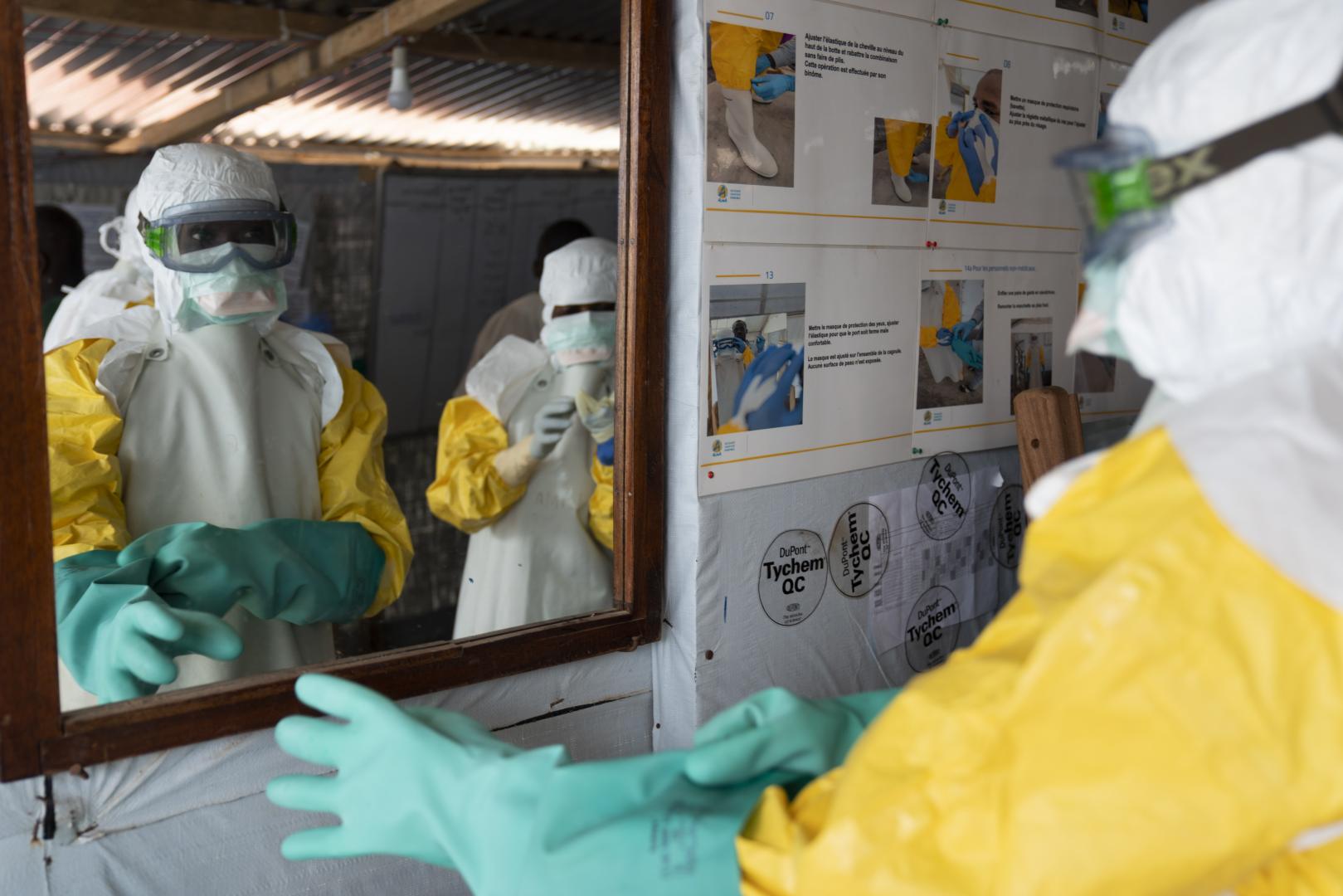
The World Health Organisation (WHO) has urged Nigerians to remain calm, noting that one confirmed case of Ebola does not mean the country is experiencing an outbreak.
WHO Regional Director for Africa, Mohamed Janabi, gave the reassurance in a video message posted on his X account on Wednesday night.
“One imported case does not by itself mean that Nigeria is experiencing an Ebola outbreak,” Mr Janabi said.
Mr Janabi said the agency is working with the Nigerian government and other partners to investigate the case, trace contacts, conduct laboratory testing, implement infection prevention and control, and protect health workers and communities.
He urged Nigerians to remain calm, stay informed and follow advice from public health authorities.
“There is no benefit in fear or misinformation,” he said. “What helps is early reporting, cooperation with the health authorities, and reliable information from reliable sources.”


Nigeria confirms case
Nigeria confirmed its first case of Ebola Bundibugyo virus disease on Tuesday after a woman who recently travelled to the country was diagnosed at a private hospital in Abuja.
The woman developed symptoms after arriving in Nigeria and is currently receiving treatment in isolation in the Federal Capital Territory.
The Nigeria Centre for Disease Control and Prevention (NCDC) has activated its incident management system, while health authorities have begun contact tracing. The 44 identified contacts include healthcare workers, patients, caregivers and travel contacts.
The Nigerian government said the case is currently being treated as an imported infection rather than community transmission.
WHO said Nigeria’s response demonstrates the importance of early detection and rapid public health action in preventing further transmission.
“Africa has considerable experience in responding to Ebola,” Mr Janabi said, adding that when cases are detected early, and contacts are followed closely, transmission can be stopped or interrupted.
Expert raises diagnosis concern
Meanwhile, virologist and Chairman of the West African National Academy of Scientists, Oyewale Tomori, raised concerns about the time taken to confirm the Nigerian case.
Speaking on Arise TV on Wednesday night, Mr Tomori said the gap between symptom onset and Ebola confirmation should prompt health authorities to strengthen their diagnostic response.
He said health workers should have a higher index of suspicion when treating travellers from areas where Ebola is circulating, rather than initially treating symptoms as more common illnesses such as malaria.
“If I hear somebody is coming from a country where Ebola is going on, or close to where Ebola has occurred, my first thought would be, is there Ebola?” he said.
Mr Tomori also urged authorities to prepare for the possibility that additional cases could emerge among the 44 contacts currently being monitored.
DRC outbreak continues
The Nigerian case comes amid a large Ebola outbreak in the Democratic Republic of the Congo (DRC), where the Bundibugyo virus has continued to spread.
According to the European Centre for Disease Prevention and Control (ECDC), the DRC reported 9,552 confirmed cases and 4,602 related deaths as of 19 October, based on data up to 18 October.
The outbreak has affected 66 of 178 health zones across eight provinces, with Ituri remaining the most affected province.
Kenya has also recorded imported cases linked to the DRC outbreak, with health authorities reporting nine confirmed cases as of 20 October.
Mr Janabi said the evolving situation in the DRC is a reminder for countries across Africa to maintain strong surveillance, laboratory readiness and rapid response capacity.
Discover more from Premium Times Nigeria
Subscribe to get the latest posts sent to your email.
-

 News3 days ago
Euromatch NPFL: Matchday 9 results
-
News3 days ago
No agenda, no rush, no leaving San Francisco: Benchmark’s partners on investing in a frenzied market
-
News3 days ago
Amazon to fund 12 small nuclear reactors at former Indiana coal plant
-
News4 days ago
Meta removes language that raised scraping and AI training concerns