Health
Ebola: Kenya records third case, continues contact tracing

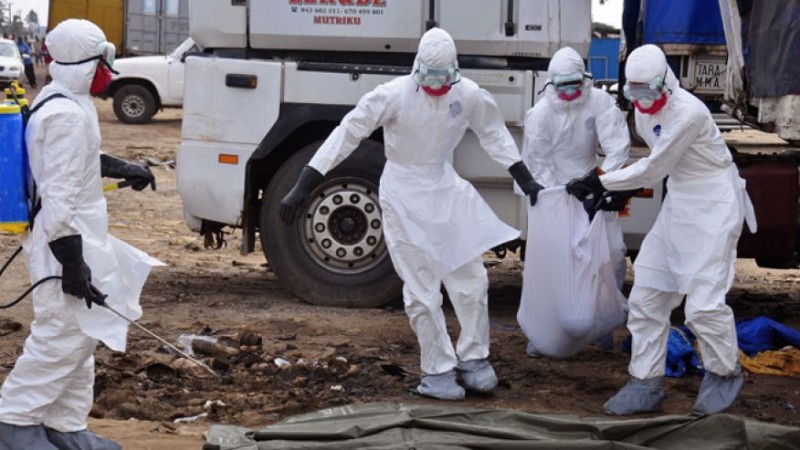
Kenya has confirmed a third case of Ebola after a 65-year-old woman tested positive while in quarantine.
The woman is a close relative of Kenya’s first confirmed patient, a 40-year-old who died from Ebola on 5 October, two days after arriving in Kenya from the Democratic Republic of the Congo (DRC).
The Associated Press (AP) reported that the woman had been in quarantine since 6 October and developed symptoms before testing positive. She has since been transferred to an infectious disease unit for treatment.
The second patient, a 39-year-old man from the same family, remains stable, according to Kenya’s Ministry of Health.
The ministry said there was no evidence of community transmission, as all three cases were linked to the first patient and the individuals had been in quarantine.
Nigeria’s preparedness
The development comes as Nigeria continues to monitor the regional outbreak and strengthen preparedness against possible importation of the virus.


PREMIUM TIMES reported on 7 October that the Nigeria Centre for Disease Control and Prevention (NCDC) was reviewing the country’s preparedness after Kenya confirmed its first imported case of the Bundibugyo strain of Ebola.
In a statement issued on 6 October, the NCDC said the case highlighted the risk of international importation through travel and population movement, including the possibility of the virus entering Nigeria.
The agency said it was working with the Federal Ministry of Health and Social Welfare, Port Health Services, state governments and other partners to strengthen surveillance, early detection, laboratory diagnosis, isolation, contact tracing and infection prevention.
It also said Nigeria conducted a national Ebola preparedness simulation exercise to assess its readiness to respond to a possible case.
As of 6 October, the NCDC said Nigeria had no confirmed Ebola case.
Contact tracing continues
Kenya’s first case involved a 40-year-old man who had been living in the DRC and travelled through Uganda before arriving in Nairobi. He tested positive for Ebola and died on 5 October.
The confirmation of a second case on 14 October raised concerns about further infections among people exposed to the initial patient.
PREMIUM TIMES reported on 14 October that the second patient, a 39-year-old close relative of the first case, developed symptoms while in quarantine.
At the time, Kenyan authorities had identified 128 contacts linked to the first patient, with 113 located and efforts ongoing to trace the remaining 15.
In its report on Friday, AP said three contacts of the initial patient remained unaccounted for, while authorities continued efforts to trace people who might have been exposed.
The latest case brings the number of confirmed Ebola infections in Kenya to three.
Regional outbreak
The cases in Kenya are linked to the ongoing Ebola outbreak in the DRC, where the Bundibugyo virus has caused thousands of infections and deaths.
The World Health Organisation (WHO) said the DRC had recorded 7,890 confirmed cases and 3,799 deaths as of 23 September.
The outbreak has raised concerns about cross-border transmission, particularly as people travel between affected areas and neighbouring countries.
The Bundibugyo virus is a distinct species of Ebola virus. No vaccine or treatment has been specifically approved for this strain.
Discover more from Premium Times Nigeria
Subscribe to get the latest posts sent to your email.





PREMIUM TIMES journalist Mariam Ileyemi has emerged as the third-prize winner in the Nigeria AMR Media Awards (NAMA), recognising her reporting on antimicrobial resistance (AMR).
The NAMA is a national category of the 2026 Global AMR Media Awards (GAMA), which recognises journalists and other media professionals whose work raises awareness of drug-resistant infections and promotes action against the growing public health threat.
The 2026 awards received 382 entries from four global regions, with Africa accounting for 193 submissions. Asia-Pacific followed with 134 entries, while Europe and the Americas recorded 28 and 27 entries, respectively. Nigeria submitted 96 entries for the global and national competitions, representing about a quarter of the total submissions.
Ms Ileyemi was recognised for her report examining the gender dimensions of AMR, including how gender-based violence, social inequalities and barriers to healthcare affect women’s exposure to drug-resistant infections and access to treatment.
In the report, published in March 2026, she highlighted calls by health experts for gender-responsive policies to address antimicrobial resistance.
The recognition adds to her reporting on AMR. In November 2024, she collaborated with Nike Adebowale-Tambe, the PREMIUM TIMES Head of Health and Development Desk, on a special investigation examining the experiences of Nigerians affected by drug-resistant infections and the challenges they face when medicines fail.
In the NAMA category, Kazeem Biriowo of Nigerian Tribune won first prize, while Julian Adetinuyo of News Scope Africa came second.
Seven other journalists received special mentions: Folashade Akpan of the News Agency of Nigeria, Chioma Obinna of Vanguard, Helen Oji Emmanuel of Blueprint, Fatima Saka of DistinctNews, Chinyere Okorafor of Nigeria Health Times, Laide Akinboade of Daily Asset and Odimmegwa John Peter of New Africa Horizon.
The winners in the Nigerian category will receive certificates and cash prizes supported by the Art for Health Initiative, a non-profit organisation.
The awards were announced on 11 November during the Sixth Global Media Forum on AMR, ahead of World Antimicrobial Resistance Awareness Week, observed annually from 18 to 24 November.
Nigeria is scheduled to host the Fifth Global High-Level Ministerial Conference on AMR in Abuja from 6 to 8 December 2026. The conference, the first of its kind to be held on African soil, is expected to bring together government representatives and other stakeholders to strengthen global action against antimicrobial resistance.
Other Nigerian winners
Other Nigerian journalists also received recognition in the global award categories.
 In the category for reporting on the Fifth High-Level Ministerial Conference on AMR, Annabel Nwachukwu of the Federal Radio Corporation of Nigeria won first prize, followed by Edward Samuel Ikpete of Voice of Nigeria in second place and Doris Obinna of The Sun in third. Alice Etuka of The Fact Daily received a special mention.
In the People’s Reporting category, Isioma Appiah-Yeboah of Clean Beat Radio won first prize, Racheal Abujah of NAN won second, and Helen Shikanda, a Kenyan, came third. Princess Ekwi-Ajide of the Anambra Broadcasting Service, Smith Nwokocha of Port Harcourt Wakawaka Blog and Chioma Vivian James of True Verdict received special mentions.
Patience Ihejirika of Leadership Newspaper and Benedict Ifeanyi Chukwu of Kaftan TV also received special mentions in the Africa category.
The Global AMR Media Awards are organised by the Global AMR Media Alliance, a network of media professionals working to raise awareness of antimicrobial resistance and promote its visibility within global health security and the United Nations Sustainable Development Goals.
Media coverage of AMR
Speaking after the announcement, Shobha Shukla, chairperson of the Global AMR Media Alliance, congratulated Nigerian journalists and commended Ojoma Akor, founding chairperson of the Nigeria AMR Media Alliance, for highlighting the effects of AMR and strengthening media efforts to address the problem.
Ms Shukla said AMR was not merely a medical or scientific issue but also a societal and development challenge that required action beyond laboratories and hospitals.
“We need an informed public, accountable governments, and responsible practices across human, animal, and environmental health,” she said.
She said the media has the power to connect these issues, amplify the experiences of affected communities and turn public awareness into action.
Ms Shukla urged journalists to move beyond reporting AMR solely as a health news issue and help build public support for responsible antimicrobial use and stronger health systems.
Ms Akor, in her comments, described the inaugural NAMA awards as an important milestone for health and science journalism in Nigeria, noting that AMR had received insufficient attention in newsrooms despite its implications for public health, healthcare delivery, food security and national development.
She said the awards recognised journalism’s role in making an often-unseen public health threat visible, translating complex scientific evidence into accessible information, amplifying the experiences of affected communities and holding institutions accountable.
“As an alliance, we remain committed to building the capacity of journalists, encouraging investigative and solutions-oriented reporting, and ensuring that AMR receives the sustained attention it deserves,” she said.
Chidera Rosecamille Aneke, founder of the Art for Health Initiative, said AMR is one of the organisation’s focal areas and explained that its support for the NAMA awards was intended to encourage innovative storytelling.
“AMR is one of our organisation’s focal areas, and we are glad to support the NAMA awards to push innovative storytelling to communicate AMR in ways the audience can understand,” she said.
She said the initiative works at the intersection of storytelling, media and the arts to promote public understanding and action on critical health issues.
Understanding antimicrobial resistance
Antimicrobial resistance occurs when bacteria, viruses, fungi and parasites change over time and no longer respond effectively to medicines used to treat infections. This makes infections harder to treat and increases the risk of severe illness and death.
The problem affects human and animal health, food production and the environment, making it a One Health concern.
Nigeria’s National Action Plan on Antimicrobial Resistance 2024–2028 cites estimates that 64,500 deaths in the country were directly attributable to AMR in 2019, while 263,400 deaths were associated with it. The country has also acknowledged surveillance gaps that make it difficult to establish the full scale of drug-resistant infections.
About Mariam Ileyemi
Mariam Ileyemi is a Nigerian journalist on the Health and Development Desk at PREMIUM TIMES. Her reporting covers antimicrobial resistance, disease prevention, and primary healthcare.
She was named PREMIUM TIMES Reporter of the Year 2025 and is a fellow of the Africa Health Communications Fellowship and Media-EIS Fellowship, among others.
She was recently nominated for the Outstanding Health Investigation Award at the Private Sector Health Alliance of Nigeria (PSHAN) Annual Awards. She is also a recipient of the Mamman Marshall Scholarship for Women in Journalism.
Discover more from Premium Times Nigeria
Subscribe to get the latest posts sent to your email.

Nigeria recorded a decline in antiretroviral treatment coverage among pregnant women living with human immunodeficiency virus (HIV) in 2026.
The proportion of pregnant and breastfeeding women living with HIV who achieved viral suppression fell from 95 per cent in 2025 to 79 per cent in 2026, according to the 2026 Joint Annual Review (JAR) Statistical Book.
Produced by the Federal Ministry of Health and Social Welfare, the report reviews the third year of implementation of the Health Sector Strategic Blueprint and was presented at the third Nigeria Health Sector JAR in Abuja on 10 November 2026.
The report also shows that antiretroviral treatment coverage among HIV-positive pregnant women recorded in the programme data fell from 98 per cent in 2025 to 83 per cent in 2026.
Antiretroviral therapy (ART) is the use of medicines to control HIV infection. Viral suppression occurs when treatment reduces the amount of the virus in the blood to a very low level.
Preventing mother-to-child transmission
HIV can be transmitted from a mother to her child during pregnancy, childbirth or breastfeeding.
However, appropriate treatment during pregnancy and continued care after delivery can substantially reduce the risk of transmission.
According to the World Health Organisation (WHO), the risk of mother-to-child transmission ranges from 15 to 45 per cent, without interventions.
It recommends that women diagnosed with HIV be linked promptly to lifelong treatment and supported to remain in care and achieve viral suppression.
Speaking at the National HIV Health Sector Symposium in Abuja in July 2025, the Minister of State for Health and Social Welfare, Iziaq Salako, said Nigeria continued to record more than 9,000 new paediatric HIV infections annually.
Mr Salako called for improved access to treatment for pregnant women living with HIV, early diagnosis of HIV-exposed infants and stronger community engagement to address stigma.
He also said the government’s state of emergency on the prevention of mother-to-child transmission remained in effect as part of efforts to ensure that no Nigerian child is born with HIV.
Other HIV indicators
The report also recorded a decline in newly detected HIV cases, from 108,230 in 2025 to 70,356 in 2026.
READ ALSO: CSOs identify stigma, poor facilities as barriers to HIV, TB, malaria treatment in Akwa Ibom
It further showed an improvement in overall ART coverage among people living with HIV, which increased from 78 per cent in 2025 to 82 per cent in 2026. Viral suppression among those receiving treatment also rose from 94 to 95 per cent.
However, the number of people newly diagnosed with advanced HIV disease increased from 19,747 in 2025 to 20,162 in 2026.
The figures show improvements in some national HIV indicators alongside declines in treatment coverage and viral suppression among pregnant and breastfeeding women.
The JAR Book cites the National Data Repository and National Data Reporting System as sources of its HIV indicators.
Discover more from Premium Times Nigeria
Subscribe to get the latest posts sent to your email.
-

 News4 days ago
Troops Arrest Suspected Gunrunner, Neutralise Two Terrorists in Plateau
-
News3 days ago
APM holds Presidential Campaign in Plateau, Pledges Security and Economic Reset
-
News4 days ago
'How many times will you approve Ibom Deep Seaport' – NDC blasts Tinubu over 'endless lies'
-
News4 days ago
APC Legacy Assembly Expresses Confidence in Tinubu Ahead of 2027 Election