Plateau State University (PLASU), Bokkos is set to present 13 first-class holders out of the total 1,352 graduates as the institution holds its 6th and 7th combined convocation ceremony this weekend, the institution’s Vice Chancellor, Professor Yohanna Izam, disclosed.
Professor Izam who spoke with journalists on Tuesday, during a pre-convocation briefing at the campus in Bokkos said that three eminent Nigerians would be awarded Honourary Doctorate Degrees along with the 13 first-class honors on the 27th of January, 2023
According to him, “This will be the last of the convocation ceremonies that will hold during my tenure which will end one month away from now. The convocation ceremony will feature the award of Honorary Doctorate Degrees to three notable Nigerians ie Professor Ochapa Onazi, Chairman of the Implementation Committee for the establishment of Plateau State University and pioneer Chairman of the Governing Council.
“Professor Jonah Elaigwu, foremost Middle Belt educationist, and Dr. Dere Awosika, the Chairman of the Board of Trustees of Access Bank Nigeria limited and a Pharmacist of note. At this convocation ceremony, we will be graduating 658 students for the 2018/2019 academic session and 694 for the 2019/2022 academic session, bringing the total to 1,352.
“Of this number, the 2018/2019 academic session has six first-class honour degrees, 159 second-class upper honour degrees, 366 second-class lower honour degrees, 125 third-class honour degrees, and two pass degrees. For the 2019/2020 academic session, we have seven first-class honour degrees, 193 second-class upper honour degrees, 243 second-class lower honour degrees, 127 third-class honour degrees, and four pass degrees.
“The convocation ceremony will be preceded by the convocation lecture titled: “Education: The foundation for peace, unity and economic development,” to be delivered by Professor Nanven Gambo, the Vice Chancellor of Karl Kumm University.”
He added that notable projects which included the Faculty of Law, Faculty of Education, Post Graduate School, proposed Faculty of Agriculture, and the PLASU Rock Garden, which seeks to speak to the environmental beauty nature has endowed on PLASU would be commissioned.
The VC further stated efforts have been intensified to address security challenges that hitherto faced the University community and appealed to credible members of the public to partner with the institution to provide hostels and quarters for the students and members of staff.
The Federal Government, in partnership with UNESCO and the Pan-African University, has launched a mobile learning initiative to improve teacher professional development through digital technology.
The programme integrates mobile-based learning into the Pan-African Virtual and Electronic University Initiative and is designed to provide teachers and school leaders with flexible access to training resources through technology-enabled learning platforms.
The three-day Master Training Programme, themed “Empowering Female Teachers and School Leaders through Integrating Mobile-based Learning in the Pan-African Virtual and Electronic University (PAVEU) Initiative,” is being implemented by the Federal Ministry of Education in collaboration with the UNESCO International Institute for Capacity Building in Africa and the Pan African University, with funding support from the Government of Japan.
According to the ministry, the initiative targets five African countries: Nigeria, Algeria, Cameroon, Kenya and South Sudan. It seeks to expand access to continuous professional development for educators, particularly female teachers and school leaders.
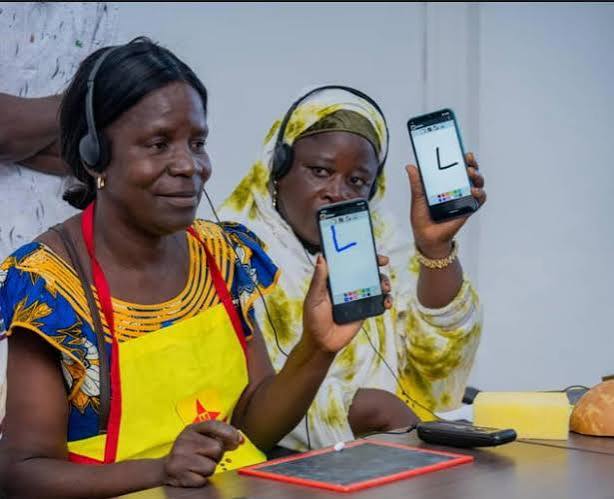
The Federal Government, UNESCO and Pan African University launch a mobile learning initiative to improve teacher professional development across five African countries through digital technology. Image credit: Image FX.
“The initiative leverages mobile technology to overcome barriers such as time constraints, geographical limitations and inadequate infrastructure, enabling educators to access quality learning resources anytime and anywhere through a low-data, offline-friendly platform,” the ministry said.
Mobile learning plan to address barriers facing teachers in Nigeria
The ministry said the programme aims to address barriers that have limited teachers’ access to regular training, including geographical constraints, connectivity challenges and inadequate learning infrastructure.
“The initiative leverages mobile technology to overcome barriers such as time constraints, geographical limitations and inadequate infrastructure, enabling educators to access quality learning resources anytime and anywhere through a low-data, offline-friendly platform,” the ministry said.
The programme, the Federal Ministry of Education said, places particular emphasis on female teachers and school leaders as part of efforts to promote inclusive access to professional development opportunities.
“Accessible professional development is essential to strengthening learning outcomes and building a resilient, inclusive and future-ready education system,” the ministry said.
The deployment of mobile learning tools aligns with broader efforts across Africa to use digital platforms to improve access to education and professional training. UNESCO-IICBA has previously promoted digital development programmes for teachers across the continent, focusing on improving teacher competencies and strengthening education systems through capacity building.
UNESCO’s Global Teacher Campus initiative has also focused on providing online courses to enhance teachers’ digital skills and pedagogical competencies. The organisation estimates that the world will require about 44 million additional teachers by 2030, including an estimated 15 million new teachers in sub-Saharan Africa.
The PAVEU initiative, developed under the Pan African University framework, is designed to support virtual learning and expand access to higher education and professional development opportunities across African countries through digital platforms.
The Federal Government has in recent years introduced several digital education programmes, including virtual learning platforms and digital teacher training initiatives, as part of efforts to integrate technology into Nigeria’s education system.
In 2026, the government launched the HOPE-EDU programme, a $552 million education initiative expected to support about 29 million children, more than 500,000 teachers and 65,000 public schools through improved learning outcomes and education infrastructure.
According to UNICEF, Nigeria’s education system faces a significant learning crisis, with more than 70% of children lacking foundational literacy and numeracy skills, partly due to weak teacher capacity and limited access to standardised professional development opportunities.
The challenge is compounded by digital access limitations. UNICEF reports that only 36% of Nigeria’s population uses the internet, while 47% of teachers possess basic ICT skills, highlighting gaps in educators’ ability to fully leverage digital learning tools.
UNESCO-IICBA said the initiative is built around the use of mobile platforms to provide flexible learning opportunities for teachers who may be unable to attend traditional face-to-face training programmes. The institute added that the project is designed to strengthen teacher professional development and resilience by integrating mobile-based learning solutions into national teacher education systems across the five participating African countries.
Stay ahead with real-time reports, breaking news, and exclusive insights delivered directly to your phone. Don’t settle for outdated information. Join PLATEAUREPORTS NEWS on WhatsApp for 24/7 updates.
A month after the mass abduction of 46 Oyo schoolchildren and teachers by terrorists on May 15 and the decapitation of a teacher, the captives remain in the forest despite military claims and political promises from President Bola Tinubu and Governor Seyi Makinde.
The terrorists kidnapped the students and staffers after invading schools in the Esienle and Yawota communities in Orire local council in Oyo state.
Days after the abduction, one of the teachers, Michael Oyedokun, was beheaded by the terrorists, pressuring the government to meet their demands for the release of the abductees.
On May 19, four days after the abduction, the Defence Headquarters, in a statement by its spokesperson, Michael Onoja, said, “Troops are currently deployed and actively operating within the forest in pursuit of the perpetrators and in search of the abducted victims.”
“Troops made contact with the criminal elements two days ago, have since reorganised, and are continuing the search and pursuit operations with full determination.”
The military and the government cited collateral damage as a reason for not taking out the terrorists.
While the schoolchildren and their teachers languish in captivity, Messrs Tinubu and Makinde have been engaging in electioneering as they chase their presidential dreams, both emerging as their party’s candidates for the 2027 election.
On May 31, Mr Makinde visited the hostages’ communities, promising their families the safe return of those abducted.
“This is not the time to start trading blame on who should be responsible for the release of these children between the state and federal government. This is just the time to come together to rescue our children and their teachers, Mr Makinde told the families of abductees. “All I need is your cooperation. Please trust us. I cannot speak much because it has security implications. I know your hearts are bleeding. My heart is also bleeding. Please trust us. We will secure their release.”
Similarly, a delegation representing Mr Tinubu, led by his chief of staff, Femi Gbajabiamila, visited the families and made a similar promise.
In a video released by the terrorists, Rachael Alamu, one of the hostages and the principal of Community High School Esinele, begged Messrs Tinubu and Makinde to negotiate with the terrorists to secure their release.
Meanwhile, the Oyo State House of Assembly has opposed negotiating with the terrorists.
Debo Ogundoyin, the speaker of the assembly, said the state would not pay ransom, give weapons to terrorists or change laws to accommodate the kidnappers.
Several protests have followed the government’s failure to rescue the hostages.
Amid public outrage and discontent, many Nigerians protested across several states, including Oyo, Lagos, Ogun, Bayelsa, Plateau and the Federal Capital Territory, demanding the immediate rescue of the hostages.
In his Democracy Day speech on June 12, Mr Tinubu said, “Though this year’s mood is dampened by the abduction of our children in Oyo and Borno, we remain hopeful for their safe return. Democracy without security is not solid enough.”
The president urged terrorists and bandits across the country to lay down their arms or face the wrath of his administration.









 Entertainment1 day ago