News
Plateau State’s Farming Communities Receive Boost with New Access Roads from PL-CARES Program

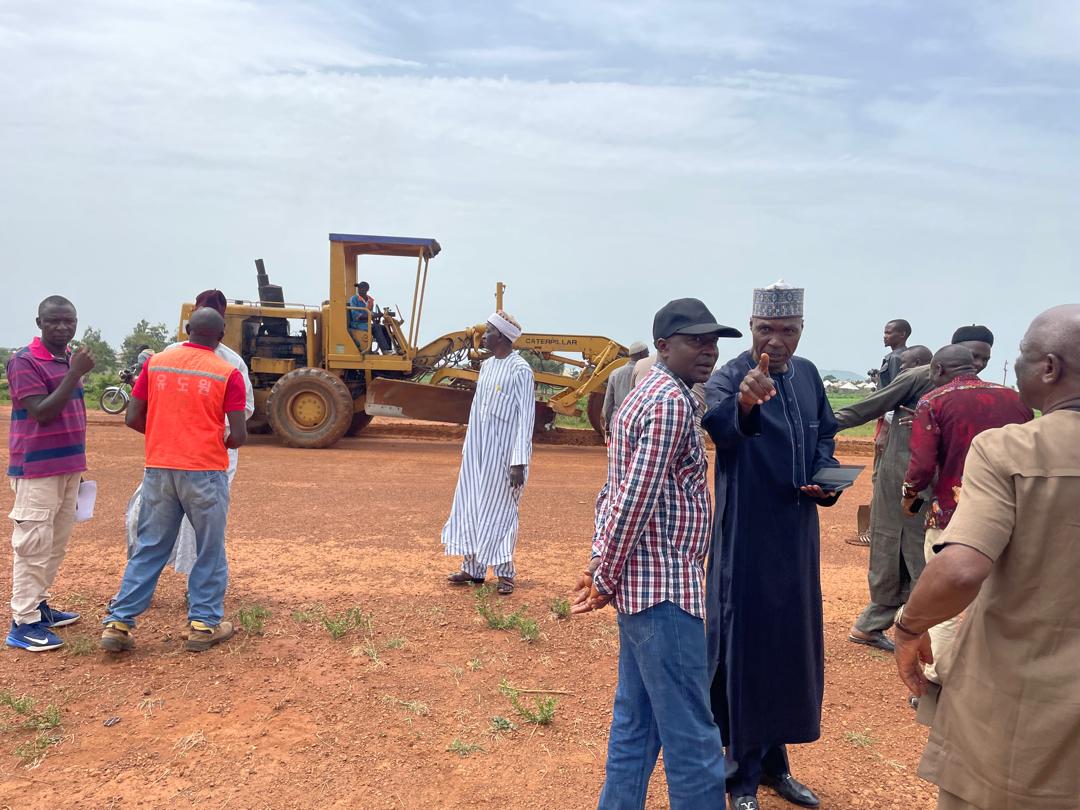
Farming communities in Plateau State are experiencing a resurgence of hope and support as the Farmer Cares Program, under the Plateau COVID-19 Action Recovery and Economic Stimulus (PL-CARES), has initiated the construction of access roads in rural areas across the state’s 17 local government areas.
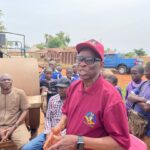
On Friday, June 14th, the monitoring team from the State Cares Coordinating Unit of the Nigeria COVID-19 Action Recovery and Economic Stimulus (NG-CARES) Program visited several project sites in the Northern Zone of Plateau State. The team inspected the progress of access road construction in communities such as Farin Number-Gurum Road in Bassa LGA, Kudedu Road in Jos East LGA, and Nding Sesut in Barkin Ladi LGA. Expressing satisfaction with the work done so far, the team emphasized the project’s importance in revitalizing the local economy.
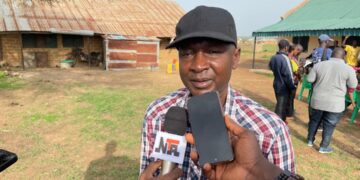
Dr. Haggai Gutap, Technical Head of NG-CARES in Plateau State
Leading the monitoring team, Dr. Haggai Gutap, Technical Head of NG-CARES in Plateau State, highlighted that the project covers 35 roads across the state’s 17 local government areas. “This initiative responds to the economic devastation caused by the COVID-19 pandemic. We aim to mitigate the lingering effects by creating employment, improving access roads to farmlands, and enabling farmers to expand their production beyond subsistence levels,” said Dr. Gutap.
He commended the government’s proactive approach and noted the state’s significant progress under Governor Caleb Mutfwang. “Our goal is to transform Plateau into a leading state in agricultural production. The World Bank’s support through a $750 million fund for all states, including the FCT, has enabled us to pursue these ambitious projects,” Dr. Gutap added.
The project engineer, Engr. Easter Agoh, explained that the initiative focuses on creating simple, durable laterite roads to ensure farmers can transport their produce efficiently. “We are rehabilitating over 30 roads across the state, ensuring that every community benefits from improved access to markets and farms,” said Engr. Agoh.
Gideon Damdam, the state overseer of the Farmer Cares Program, noted the importance of these interventions. “Fadama Cares has the privilege of supporting farmers in several areas. We identify intervention areas from the communities and aim to relieve them from the difficulties posed by bad roads. Our goal is to help farmers transport their produce efficiently,” Dandam said. He added that Fadama has a longstanding commitment to improving farmers’ lives through crop production, livestock processing, and asset acquisition.
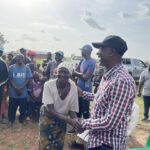
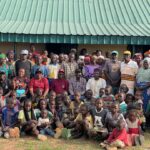
Community leaders and residents have expressed their gratitude for the initiative. HRH Ogomo Aima Gurum, Mr. Danladi Akinga Kasuwa, welcomed the monitoring team at the Farin Number-Gurum Road project site, praising the government’s efforts. “Since the colonial era, nothing substantial has been done for this community until now. Governor Mutfwang’s administration has brought us new hope,” he said.
Abel Pam Cholom, a resident of Nding Sesut in Barkin Ladi LGA, echoed this sentiment. “Access to roads transforms communities, making them safer and more connected. We are grateful for this intervention and hope for continued government support in the future,” Cholom said.
The PL-CARES program’s focus on rural infrastructure aims to reduce unemployment, enhance food security, and improve the overall quality of life for Plateau State’s farming communities. With ongoing projects and future interventions, the state is poised for significant economic growth and development.





News
Two Survive, Two Fall: Rangers, El-Kanemi Keep Nigeria Alive as Rivers United, Shooting Stars Crash Out of CAF Competitions

Nigeria recorded mixed fortunes in CAF inter-club competitions at the weekend as Rangers International and El-Kanemi Warriors advanced to the next round, while Rivers United and Shooting Stars saw their continental campaigns come to an end.
Rangers produced the most dramatic qualification of the Nigerian contingent, overcoming Benin Republic champions AS Sobemap 5-4 on penalties in Lomé after another 1-1 draw left their CAF Champions League preliminary-round tie locked at 2-2 on aggregate.
The Flying Antelopes had been held to a 1-1 draw in the opening leg in Abeokuta and travelled to Lomé knowing there was little margin for error.
Rangers again took the lead in the return encounter, but Sobemap responded in the second half to restore parity and eventually force the contest into a penalty shootout.
The Nigerian champions initially missed their first kick in the shootout but recovered impressively, converting their next five attempts while Sobemap failed with two of theirs as Rangers prevailed 5-4.
The reward for Rangers is a significantly tougher assignment against Algerian champions MC Alger in the second and final preliminary round of the Champions League.
MC Alger booked their place after eliminating Niger’s ASN Nigelec 5-0 on aggregate, setting up a major test for Rangers in their battle to reach the lucrative group stage.
While Rangers survived a nerve-shredding shootout, El-Kanemi Warriors progressed in contrasting circumstances despite suffering defeat in their second leg.
The Maiduguri side lost 1-0 away to UDIB of Guinea-Bissau but their commanding 3-0 advantage from the first leg proved sufficient to send them through 3-1 on aggregate.
El-Kanemi had put themselves firmly in control of the tie in Nigeria, with Nnamdi Mejuobi scoring twice and Dayo Wahab adding another in their emphatic first-leg victory.
UDIB managed to reduce the deficit in the return fixture but could not overturn the damage, allowing El-Kanemi to continue their CAF Confederation Cup journey.
The story was considerably different for Shooting Stars.
The Ibadan club travelled to Tunisia carrying a 1-0 advantage over CS Sfaxien after Lucky Emmanuel’s first-half goal had secured victory in the opening leg in Abeokuta.
However, the advantage disappeared in Tunisia as Sfaxien struck twice without reply to record a 2-0 victory and advance 2-1 on aggregate.
The result brought a painful end to Shooting Stars’ first continental campaign in 27 years, despite entering the decisive second leg with qualification firmly in their hands.
Rivers United also suffered heartbreak in the CAF Champions League.
The Port Harcourt side had secured an encouraging 1-1 draw against San Pedro in Côte d’Ivoire in the opening leg, placing themselves in a promising position ahead of the return fixture in Nigeria.
But San Pedro stunned their hosts by racing into a two-goal advantage.
Rivers United responded with a determined fightback, scoring twice to rescue a 2-2 draw, but their recovery ultimately proved insufficient as the Ivorian side secured passage to the next round.
The weekend therefore leaves Nigeria with two clubs still standing on the continent.
Rangers will continue their pursuit of a place in the CAF Champions League group stage, while El-Kanemi remain alive in the Confederation Cup.
For Rivers United and Shooting Stars, attention will now return to domestic competition following disappointing early exits.
For Rangers and El-Kanemi, however, the continental journey continues — although considerably greater challenges lie ahead.
Nigeria entered the weekend with four clubs fighting to keep their African ambitions alive.
By the end of it, the number had been cut in half: Rangers survived a penalty-shootout thriller, El-Kanemi protected their first-leg advantage, while Rivers United and Shooting Stars were left counting the cost of painful eliminations.
-

 Featured3 days ago
Children Are Suffering in Silence: Plateau Child Protection Network Rates Abuse Crisis 9/10
-
Business3 days ago
CBN disowns purported $46 billion grant approval
-
Business2 days ago
FG settles severance benefits for 2,100 former Nigeria Airways workers after two decades
-
News2 days ago
Mecka AI nears $500M valuation in Sequoia-led deal amid rush for robot training data