News
NCC outage records uncover fibre cuts, vandalism behind Nigeria’s network disruptions – Technology Times

Nigeria’s telecoms networks continue to face significant service disruptions from fibre cuts, vandalism, equipment failures and power-related incidents, with records from the Nigerian Communications Commission’s (NCC) showing repeated incidents across Lagos, Abuja and several other parts of the country.
Technology Times analysis of major incidents on telecoms regulator’s Major Outage Reporting Portal shows that fibre infrastructure damage is a recurring cause of network disruption, particularly affecting data services, while vandalism and power failures are also contributing to outages experienced by telecoms and internet service customers.
The pattern is evident in the NCC’s latest incident records, which include a Tizeti equipment failure affecting data services across Amuwo-Odofin, Ikeja and Oshodi-Isolo in Lagos on October 18, 2026, as well as a FibreOne fibre cut in Eti-Osa, Lagos, reported a day earlier. Both incidents were classified by the NCC as major outages.

Under the NCC’s directive, a major outage includes a fibre cut caused by construction, access issues, theft or vandalism, or force majeure where the disruption affects at least 5% of an operator’s subscriber base or five or more Local Government Areas. Other qualifying events include the isolation of 100 or more network sites, or 5% of an operator’s sites, in addition to outages capable of degrading network quality in Nigeria’s top 10 states by traffic volume.
The telecoms regulator established its Major Outage Reporting Portal to provide public visibility into significant service disruptions and require operators to report the cause, affected locations and restoration status of qualifying incidents.
Under the NCC’s directive, a major outage includes a fibre cut caused by construction, access issues, theft or vandalism, or force majeure where the disruption affects at least 5% of an operator’s subscriber base or five or more Local Government Areas. Other qualifying events include the isolation of 100 or more network sites, or 5% of an operator’s sites, in addition to outages capable of degrading network quality in Nigeria’s top 10 states by traffic volume.
Outages: Fibre cuts repeatedly disrupt Abuja networks
Abuja emerges as one of the locations with repeated fibre-related incidents in the NCC records.
The commission’s incident listings show several BCN fibre-cut reports in the Abuja Municipal Area Council between August 30 and September 8, 2026. The incidents were reported as affecting data services, with the operator repeatedly describing the cause as a suspected fibre cut along the route.
The recurrence is notable because the reports represent separate outage entries over successive days, rather than a single isolated incident.
The NCC portal also recorded an IPNX vandalism incident in AMAC on September 1, affecting data services. The operator’s incident report identified multiple affected customer ports and said the matter had been escalated to its field team for resolution.
The Abuja incidents illustrate how damage to physical network infrastructure can translate directly into loss of connectivity for customers.
Earlier incidents recorded by the NCC also show the persistence of the problem. A BCN fibre cut in AMAC in January 2026 was attributed to vandalism, with the operator reporting that the fibre had to be repulled and respliced to restore connectivity. Another January incident was resolved after the damaged fibre was found and replaced.
Lagos also records repeated fibre damage
Lagos features prominently in the outage records. The NCC listed FibreOne’s October 17, 2026 fibre cut in Eti-Osa as a major outage affecting data services. The same portal also contains previous FibreOne fibre-cut reports in Lagos, including incidents in Ikeja and Eti-Osa.
IPNX also recorded fibre-related incidents in Lagos, including a fibre cut in Ibeju-Lekki and vandalism incidents on Lagos Island in August 2026.
The pattern suggests that the challenge is not confined to mobile network operators. Fibre providers and internet service providers that form part of the wider connectivity infrastructure are also exposed to physical damage and deliberate interference.

Where a major outage lasts beyond 24 hours, operators may also be required to provide proportional compensation, including service-validity extensions, in line with the Consumer Code of Practice Regulations.
Fibre damage extends beyond Lagos and Abuja
The NCC records show that fibre-related disruptions have affected multiple regions.
An MTN fibre-cut incident reported on March 31, 2026 covered locations across Borno, Gombe, Kano, Kebbi, Sokoto and Zamfara and affected the operator’s network across a wide geographic area in Nigeria.
A separate T2 (formerly 9Mobile) fibre-cut incident reported on March 26 was recorded across locations in multiple states, including Aba, Abakaliki, Abeokuta and Abuja Municipal Area Council.
The NCC’s historical outage records also show fibre-related incidents involving MTN across Adamawa, Kano, Kogi and Niger, among other locations.
The geographical spread highlights the dependence of Nigeria’s mobile and broadband networks on an increasingly extensive fibre infrastructure that connects towers, hubs, data centres and other network components.
Construction has become a major threat to fibre infrastructure
The outage records come against the backdrop of a much larger fibre-cut problem documented by the NCC.
In August 2026, NCC Executive Vice Chairman and Chief Executive Officer Dr Aminu Maida disclosed that more than 5,000 fibre-cut incidents had been recorded in the first six months of 2026 because of road construction, excavation and related civil works.
The commission has previously reported an even larger annual problem. In February 2025, Maida said Nigeria recorded more than 50,000 fibre-cut incidents in 2024, with about 30,000 attributed to federal and state road construction activities.
The regulator has consequently been working with the Federal Ministry of Works and the Federal Ministry of Communications, Innovation and Digital Economy through a Joint Standing Committee on the Protection of Fibre Optic Cables.
The committee is intended to improve coordination between road construction authorities and telecommunications operators before, during and after civil works to reduce damage to deployed fibre infrastructure.
In August 2026, the telecoms regulator again sought stronger coordination between road contractors, engineers, government agencies and telecoms operators, warning that damage to fibre infrastructure can disrupt banking, government services, education, healthcare, commerce, security and emergency communications.
Vandalism adds another layer of risk
Physical damage is not limited to accidental cuts during construction. The incident records include several outages explicitly attributed to vandalism.
IPNX recorded vandalism affecting data services in Abuja’s AMAC on September 1, while earlier reports included vandalism-related incidents involving IPNX on Lagos Island. BCN also reported a fibre cut in AMAC that was attributed to the activities of vandals.
The NCC has made infrastructure protection a wider regulatory and national-security issue.
The commission’s major-outage directive requires operators to report significant incidents through its public portal, which also identifies the party responsible for infrastructure damage where such information is available. This transparency mechanism, according to the telecoms regulator, is intended to ensure that culprits are held responsible for sabotage to telecoms infrastructure.
Telecoms infrastructure has also been designated as Critical National Information Infrastructure under a presidential Executive Order, increasing the national-security significance of protecting the networks on which digital services depend.
Power, equipment failures remain part of the problem
Fibre damage is not the only source of disruption recorded by the NCC.
The commission’s incident records include a Tizeti equipment failure in Lagos affecting data services across three Local Government Areas, Amuwo-Odofin, Ikeja and Oshodi-Isolo, reported on October 18, 2026. The incident remained under investigation in the NCC’s latest listing.
Previous records include power outages affecting T2 services in Katsina and Kaduna, with the Katsina incident affecting USSD, SMS, voice and data services.
The NCC’s network-performance framework recognises the interconnected nature of these failures: telecommunications reliability depends on power systems, fibre, base stations, hub sites and core networks working together. The regulator identifies fibre cuts, equipment faults, power outages, vandalism and theft among the issues capable of degrading service.
A national connectivity problem, not simply an operator problem
The incident records suggest that network reliability in Nigeria is increasingly dependent on the protection and resilience of physical infrastructure outside the immediate control of individual subscribers.
A damaged fibre cable can affect broadband and mobile services; vandalism can isolate network equipment; a power failure can take sites offline; and construction activity can sever critical routes.
The scale of fibre damage reported by the NCC reinforces the significance of the problem. Its fibre-cut reporting system tracks incidents by region, state, service provider and cause, including construction, core breaks, power issues and vandalisation or sabotage.
For consumers, the distinction between a fibre cut, vandalism, equipment failure or power outage may be largely irrelevant: the immediate consequence is the same: degraded or unavailable connectivity.
For operators, however, the consequences include repair costs, service degradation, customer complaints and the need for redundant network routes.
Maida has previously warned that preventing avoidable fibre cuts would allow operators to redirect resources from repeated repairs and redundancy measures towards network expansion and infrastructure improvement.
NCC’s outage transparency puts operators under greater scrutiny
The Major Outage Reporting Portal gives regulators, consumers and industry stakeholders a clearer view of the causes and locations of significant network disruptions.
The NCC’s 2025 directive requires operators to publicly communicate major outages, including the cause, affected areas and expected restoration time. Planned outages must be communicated to consumers at least one week in advance. Where a major outage lasts beyond 24 hours, operators may also be required to provide proportional compensation, including service-validity extensions, in line with the Consumer Code of Practice Regulations.
The emerging record therefore provides more than a list of isolated network failures. It offers a picture of the physical vulnerabilities beneath Nigeria’s growing digital economy, particularly the country’s dependence on fibre infrastructure and the continuing exposure of that infrastructure to construction activity, vandalism, theft, power problems and equipment failures.
As Nigeria expands broadband, 4G and 5G connectivity, the NCC’s outage records indicate that protecting the infrastructure that carries the traffic is becoming as important as deploying more infrastructure itself.


The National Chairman of the Peoples Redemption Party, PRP, Hakeem Baba-Ahmed, says the party is in the 2027 election race to win and not to make numbers.
Baba-Ahmed made this statement at a strategic retreat organised for the party's leadership and candidates.
He charged the party's candidates to go out and convince Nigerians that PRP deserves their trust and their votes in 2027.
According to him, the party has the best presidential candidate in Donald Duke, adding that history and character have moulded him to lead Nigeria out of its current challenges to a deserved status of affluence, security and unity.
He also said that Duke's running mate, Malam Sule Mohammed, is a study in principled loyalty, excellence in personal and professional life and unparalleled humility, which is tragically rare in current leaders.
Baba-Ahmed said the party also has governorship candidates who will be models of competent leadership, integrity and courage, stressing that they are candidates who will embody service, sacrifice and humility.
"We are PRP. We're in the 2027 race to win not to make numbers. We are products of a great tradition which insists that Nigeria can be great enough for all those who work honestly, and a nation which has the same place for the weak and the vulnerable as it has for those who are trusted with power or possess wealth," Baba-Ahmed said.
According to him, the party is under no illusions that its tasks will be easy, stating that the party will be competing in very hostile environments where incumbents fear change, while PRP champions it.
He said the party will find resistance from politicians who bribe the people for their future, while PRP asks for trust and the courage to choose quality and integrity.
On his part, the party's presidential candidate, Donald Duke, took a swipe at the ruling All Progressives Congress, APC, saying it is enjoying too much advantage when it comes to campaign visibility.
According to him, opposition parties are finding it hard to get venues and places to put their adverts as the 2027 elections draw near.
He said the problem is making it harder and harder for opposition candidates to reach voters in different parts of the country.

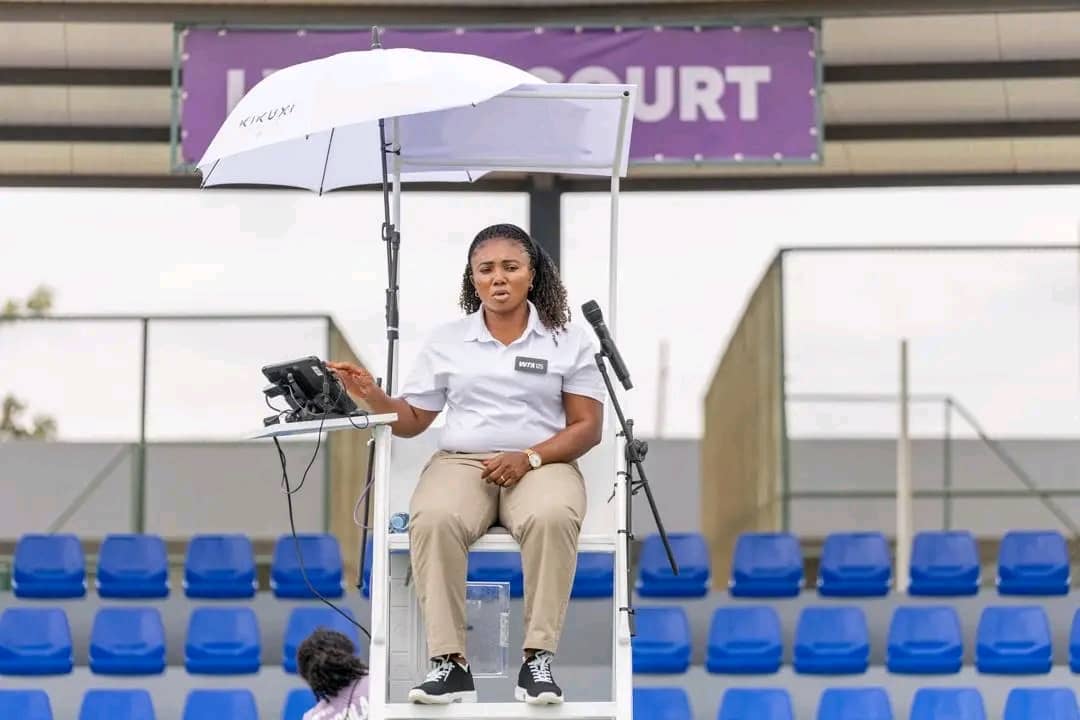
Nigerian female tennis umpire, Rose Onoja Abu, has earned recognition after officiating at the WTA 125 tournament in Luanda, Angola, marking a significant milestone in her professional career and another proud moment for Nigerian tennis.
Sports247 reports that the tournament made history as the first-ever WTA 125 event to be staged on African soil, bringing an important international women’s tennis competition to the continent. Abu’s involvement as an official at the landmark event further highlights Nigeria’s growing presence beyond the playing court in international tennis.
Her appointment and participation represent an encouraging achievement for Nigerian sports officiating, particularly for women working to establish themselves in the highly competitive world of international tennis administration.
Officiating at a tournament of this level requires professionalism, consistency, sound judgement and a strong understanding of the rules of the game. Abu’s presence at the Luanda event reflects the value of dedication and sustained commitment to developing a career in sports officiating.
The achievement also provides inspiration for aspiring Nigerian umpires and other sports professionals, demonstrating that opportunities at the highest levels can emerge through discipline, diligence and continuous improvement.
For Nigerian tennis, milestones such as this are important in showcasing the contributions of officials who help drive the sport forward, often away from the spotlight enjoyed by players.
While the WTA 125 assignment represents a significant step in Abu’s journey, it could also serve as a platform for greater opportunities on the international stage.
With consistency and continued dedication, the ambition of seeing a Nigerian umpire officiate at a Grand Slam tournament remains a possibility worth pursuing.
Congratulations to Rose Onoja Abu on this remarkable achievement. The journey continues, and a Grand Slam appearance could be the next milestone.
-

 News1 day ago
Troops Arrest Suspected Gunrunner, Neutralise Two Terrorists in Plateau
-
News2 days ago
Makinde Visits COCIN Headquarters in Jos, Urges Christians to Shape Nigeria’s Political Future
-
News4 days ago
Presidency seeks AI safeguards ahead of 2027 elections – Technology Times
-
News3 days ago
Sequoia shutting down its Scouts program marks the end of an era