News
Land grabbing, ethnic cleansing, political penetration responsible for Plateau attacks —Nwatiri
Published
3 years agoon
By
vicky
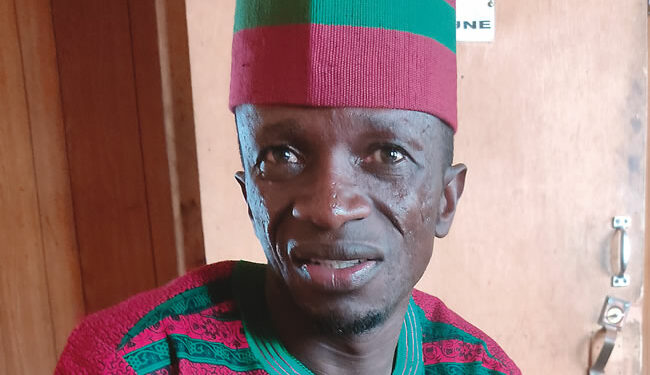
Militias terrorizing parts of Plateau State have intensified their onslaught in recent times, killing more than 300 people within the space of three months. In this interview by ISAAC SHOBAYO, the Chief Executive Officer, Emancipation Centre for Crisis Victims in Nigeria, who is also the National President, of Berom Youth Moulders (BYM), Mr. Solomon Dalyop Nwatiri, speaks on the attacks and other issues. Excerpts:
Plateau State, specifically Plateau North and some parts of Plateau Central, have been grappling with attacks by Fulani militias for quite some time. What is responsible for this?
The quest for land grabbing and ethnic cleansing are responsible for this, as is the desire to have political penetration, among other factors. Why I said quest for land grabbing is because that is what is in vogue among the elements behind the attacks. In Plateau alone, we have not less than 102 communities and villages that have been sacked and are currently under the occupation of the Fulani militias, who have infiltrated the state long before now. Also, this can be linked to ethnic cleansing, which is ravaging Plateau State today. People are being killed without any justification, just as we witnessed in recent times where over 200 people were killed in the Mangu Local Government area of the state, coupled with the recent attack in Riyom local government where over 20 people were killed. It wasn’t a surprise attack because we got local intelligence that the Fulani militias were coming to attack Rim, Jol, Kwi, Alle, and other neighboring villages. It was reported to the appropriate authorities.
The attackers, however, struck a day after the information was released, and they came in large numbers. It is an orchestrated plan to kill the people and scare the survivors away from their lands. So land grabbing cannot be separated from ethnic cleansing because once the people are uprooted, the land belongs to them. It is unfortunate that this kind of barbaric attack takes place in a country where there are laws to regulate people’s activities. But it seems like a compromise, or there is no political will to curtail the situation. Our belief is that the new administration both at the state and federal levels would rise to the occasion, but should things continue like this, I can see communities, especially in Beron Land, going into extinction.
What is the response of the government and the security agencies to this menace of land grabbing?
Of course, the government’s response has always been that they will look into it. Simon Lalong, who constituted a task force on anti-land grabbing based on the provision of the anti-land grabbing law of Plateau State, said that there will be a task force that will look into the incidences of land grabbing, and our expectation was that the government would then follow through on its word with action by inaugurating the task force, but it went on in silence. If the government had the willpower, then the incidence of land grabbing would have been taken care of. Even though the constitution provides that everyone has the right to reside anywhere in the country. That is freedom of movement. There is also a provision on how to acquire land, but these militias have unfettered power as they arrogate land to themselves without the consent and approval of the constituted authority. Only the government has the right to acquire land compulsorily, and even at that, there must be adequate compensation by the government. In this case, the militias are not the government; they are elements that have connections with ISWAP. Based on the intelligence gathered, most of these attackers are from the north-east and north-west, and nothing is being done to check their incursion into Plateau State. The only solace that we have now is the assurance by the new state and federal governments that the insecurity will be tackled, believing that some positive will come out of their assurances; otherwise, we may see a worse situation. The issue of the government’s raising up to its constitutional mandate is what we are looking forward to seeing, especially this government’s marching words with action.
Based on the available information, the natives and the Fulanis have been living together for a long time without any problems. Where is the missing link in this situation?
The law is very explicit and express in terms of who is an offender or who is a party to an offense. The fact that mercenaries have been brought from outside the state is a serious concern to us, the natives, and the question of who actually brought them is a question to be answered. It was the Fulani that we have hosted over time that brought these mercinaries for their territorial expansion agenda. Despite the ones they have, they still want to have more, and you can see by implication that they want larger land so that political coloration will come into this and they will begin to contest for political offices. But what have they contributed to Plateau State other than terrorism? Yet they are still saying they have contributed to the development of Plateau State. Already, they have taken over the source of livelihood for the natives because, by grabbing those lands, they have killed agriculture and as well renamed the places they occupied. The people engaged in dry and rainy season farming, so now that the Fulani have taken over, they have taken over Shono and other places. If you go to Shono now, all their plantains are being harvested by the Fulanis; in just one week, one person can harvest two trucks’ worth of bananas. Ever since their displacement in 2014, the Fulani have been the ones harvesting those banana plantations.
The local Fulani are equally claiming that the natives are the aggressors; there were instances where they accused the natives of cattle rustling.
The allegation is to justify their killings, but they should know that the Berom too had cows before now. They have rustled the cows of people in Bachit. In Riyom District, the cows belonging to the natives of Fan and other places rustled. They will always hide under the guise of cattle rustling to unleash mayhem. Cattle rustling is a criminal act that, once done, should be reported to the authorities concerned, like the police and other sister agencies. Why should cattle rustling justify mayhem and acts of genocide against innocent people? Cattle rustling is just a ploy. Once these people want to attack the natives, they will always come up with false accusations. I want to correct one impression: there is nothing like herders and farmers clashing; this is another angle that the media needs to get right. This might be the case in other places, but not in Plateau State. What is happening in Plateau State is purely an act of terrorism, banditry, and other forms of criminality. The nature of the killings in Plateau State did not reflect this. The Fulani also farm; why have they not been destroying their farms? Just yesterday, they killed eleven people in Kwi. The night before this morning, they destroyed almost all of the farmland. It was reported to the security, but the security said they don’t know how to approach it because it is already night. I don’t blame them; they are humans like any other. Even the security men are not safe in the hands of the Fulani. We have a situation where some people were arrested only to be taken to Abuja and returned within the space of one week to continue with their nefarious activities, which became more dreaded. If the natives are as aggressive as they claim, they wouldn’t have accommodated them in the first instance.
The immediate past administration claimed to have commenced what it called reconstruction of destroyed communities to enable those displaced to return to their ancestral homes before the end of its administration. How many communities have been resettled?
This is just a political statement; there is nothing like resettlement and reconstruction for the IDPs. I did not see any efforts on the part of the immediate past government to resettle any group of people. What the former government did in 2020 was that the IDPs of Ghashishi were said to have been resettled; what was given to them were some bundles of roofing materials and ten measures of grains for people who had lost everything they had. After some days, the people left and returned to the town, and the governor went to close down all the IDP camps without anything. The question is: why will the government ask them to return and to cohabit with those who have taken over their houses? That is insensibility on the part of the government, and this has further emboldened the terrorists to continue with their onslaught against innocent people.
The previous government, on different occasions, had brought both the natives and Fulani together for reconciliation, but shortly after, you see them returning to the trenches. In your opinion, what is responsible for such a failure or breakdown?
That purported reconciliation was just a cosmetic one, just to give the impression that the government is on ground; the governor was not on ground to manage the security situation in the state, and the reconciliation was never monitored. In the real sense of the word, there was no reconciliation; there is no way you will reconcile somebody who is already armed; we are unarmed people. You must disarm the armed person first, dislodge the bad elements, and then bring them to the round table when they are on equal footing. But when there is imbalance between two parties, the reconciliation will be an encouragement to someone who is already armed to continue, and at any given time he will overrun you, and that is what we are witnessing today. Shortly after the election, Plateau recorded about 400 deaths. There has been no effort to resettle the IDPs since 2021. In 2018, when the former Vice President, Professor Yemi Osinbajo, visited Plateau State, there was a pledge of N10 billion for the reconstruction and resettlement of the IDPs on the Plateau. Up until today, the money has not been released. This is a lack of political will on the part of the government, but we have seen the ongoing resettlement and all the packages that the federal government is providing for the people in the North-East, and we are being treated as if we are not Nigerians. You can see the bias on the part of the government. This bias suggests an encouragement to the militias and bandits to continue their onslaught on the plateau.
What do you think the government can do to stop the attacks on Plateau State communities and villages?
Mobile policemen should be deployed to the troubled parts of Plateau State. During the administration of the former Governor Jonah Jang, mobile policemen were deployed, and there was relative peace. In their case, they swung into action. If there is a deployment of mobile policemen, particularly in these crisis-affected areas, I want to believe there will be an improvement. Presently, Operation Safe Haven, Sector 6, is making remarkable efforts; it deserves commendation, but there is still much to be done. I am also appealing to the Federal Government to revisit the promise of N10 billion to resettle the IDPs in the state because their number is increasing. There are several situations where people have been made IDPs several times because they are often attacked wherever they run. Also, the locations of militias on the plateau should be spotted, and they should be dislodged.
Where is the location?
We have Fass, which has been renamed Tafawa; we have Guava, which was Dakas before now; and we have Dankum, which has been renamed Mahanga; that’s a terrorist enclave because that is where most of the attacks, not just in the Plateau but the entire Middle Belt, are being coordinated. We have repeatedly cried out that these are the abodes of these elements, but the government refused to listen. If the security agencies can dislodge them from those places, Plateau will know peace. Also, places like Shonon and Shau have been taken over, so there should be dislodgement of those individuals. Those identified as perpetrators should be arrested and investigated. The Task Force on the Anti-land-grabbing Law of Plateau State should be inaugurated so that it will swing into action and investigate the incidence of land grabbing in the true sense of the word. There should be a ban on open grazing because it has become a strategy for unleashing terror on the native inhabitants.
You may like
-
Gov Mutfwang Chairs Security Council Meeting, Announces Measures to Curb Attacks in Plateau
-
FG Files Terrorism, Firearms Charges Against 15 Suspects Over Benue, Plateau Attacks
-
Governor Mutfwang Visits Grieving Communities in Riyom, Condemns Plateau Killings as Genocide
-
Plateau Attacks: 182 Victims Treated as Female Health Workers Launch Medical Outreach
News
What the jury will actually decide in the case of Elon Musk vs. Sam Altman
Published
2 hours agoon
May 14, 2026By
Preport
Nine California jurors are now deliberating over the future of OpenAI, the world-leading artificial intelligence lab.
While the trial exploring Elon Musk’s case against OpenAI’s other cofounders and Microsoft has covered territory ranging from the breakup of the founders in 2018 to Altman’s firing and rehiring in 2023, the jurors will be considering a set of fairly narrow questions.
- Breach of charitable trust — essentially, did OpenAI and cofounders Sam Altman and Greg Brockman violate a specific agreement with Musk to use his donations to OpenAI for a specific, charitable purpose and not general use by the non-profit?
- Unjust enrichment — did the defendants use Musk’s donations to enrich themselves through OpenAI’s for-profit arm, instead of for charitable purposes?
- Aiding and abetting breach of charitable trust — Did Microsoft, through its interactions with OpenAI, know that Musk had specific conditions on its donations, and play a significant role in causing harm to Musk?
OpenAI has also made three arguments in its defense that the jury will weigh:
- Statute of limitations — a legal deadline by which a lawsuit must be filed. Here, if OpenAI can prove that any harms to Musk happened before August 5, 2021 for the first count; August 5, 2022 for the second count; and November 14, 2021 for the first count, then his claims will be moot.
- Unreasonable delay — Musk, by filing his lawsuit in 2024, delayed his claim in a way that made his request for damages unreasonable.
- Unclean hands — a legal doctrine holding that Musk’s conduct related to his claims against OpenAI was unconscionable and renders them invalid.
If Musk wins out, it could mean the end of OpenAI as a for-profit company, but it’s not entirely clear what will result. Next week, the judge will begin a set of new hearings where lawyers from both sides will debate what the consequences of a verdict in favor of the plaintiffs might be. That process could be rendered moot by a negative verdict, however.
Breach of charitable trust
Musk’s attorneys say the defendants clearly understood that Musk wanted to support a non-profit that would ensure the benefits of AI to the world, and prevent it from being controlled by any one organization. In particular, they say a $10 billion investment from Microsoft in 2023 into OpenAI’s for-profit affiliate—the first to happen after the statute of limitations—was the event that turned Musk’s concern into conviction.
That deal, Musk’s lawyers say, was different from previous investments and led to OpenAI’s investors being enriched by the company’s commercial products, at the expense of the charitable mission of AI safety that Musk promoted.
OpenAI’s attorneys have asked every witness to describe specific restrictions put on Musk’s donations, and none have, including his financial adviser Jared Birchall, his chief of staff Sam Teller, or his special adviser Shivon Zilis. They say everyone involved agreed that private fundraising would be required to achieve its goals, and note that Musk himself attempted to launch an OpenAI-affiliated for-profit he would personally control, and later to merge OpenAI into his company Tesla. They also note the organization’s other donors haven’t said their charitable trust was violated.
Importantly, a forensic accountant hired by OpenAI testified that all of Musk’s donations had been used by OpenAI well before the key date of August 5, 2021. That is evidence that Musk’s donations were already used for their purpose well before he brought his lawsuit, invalidating any charitable trust that may have existed.
Mainly, they insist that the for-profit affiliate that conducts most of OpenAI’s actual activity continues to fulfill the organization’s mission, and has generated nearly $200 billion in equity value to support the non-profit foundation. Notably, Sam Altman argued that providing ChatGPT for free helps fulfill the mission of sharing the benefits of AI with the world.
Unjust enrichment
The plaintiffs point to the multibillion-dollar valuations of stakes held by OpenAI founders like Brockman and Ilya Sutskever, as well as Microsoft itself, as a sign that Musk’s donations were ultimately used for personal benefit, as opposed to supporting the mission of the charity. They argue that the work at OpenAI’s for-profit was commercially focused, while the foundation itself was left essentially dormant, without full-time employees, and, ultimately, not even in control of the for-profit.
OpenAI says all of Musk’s contributions were used by the foundation by 2020, and that equity distributions came well after he left the organization in 2018. Even beforehand, evidence shows the key players agreed that being able to compensate researchers with stock was key to developing AGI, the hypothetical form of AI capable of performing any intellectual task a human can. OpenAI executives maintain that the for-profit’s work meaningfully advanced the foundation’s mission, including safety activities. They say the non-profit board continues to control the for-profit, and instituted new governance controls following “the blip,” when Altman was fired by OpenAI’s non-profit board in 2023 for lack of candor and then rehired just days later.
Aiding and abetting
Musk’s case focused on the events of the blip, when Microsoft CEO Satya Nadella, whose company depended on OpenAI’s tech, was personally involved with helping to bring Altman back and creating a new board to govern OpenAI. They note that Microsoft executives wondered if their commercial agreement might conflict with the non-profit’s goals, and suggest that Microsoft’s commercial priorities led OpenAI away from its mission. They’ve focused attention on a clause in Microsoft’s agreement with OpenAI that gave Microsoft veto rights over major corporate decisions at OpenAI.
Microsoft’s witnesses have insisted that the company’s executives didn’t know of any specific conditions on Musk’s donations despite extensive due diligence, and never vetoed any decision by OpenAI. They note that the company’s investments and compute power allowed OpenAI to achieve its biggest triumphs.
Statute of Limitations
Musk has suggested that his skepticism of his cofounders grew over time, until in the fall of 2022 he finally decided they had betrayed him when he found out about Microsoft’s plans for a new $10 billion investment that took place in 2023. He wouldn’t file his lawsuit until mid-2024.
OpenAI’s attorneys argue that the terms of that deal were spelled out in a term sheet for a previous fundraising round in 2018, which Musk received and his advisers reviewed, but Musk said he didn’t read in detail. They also note numerous blog posts and other communications from over the years that show Musk could have known what OpenAI was doing well before he brought them to court, including tweets where Musk criticized the company years before the suit. Zilis, Musk’s adviser, even voted to approve these transactions as a member of the OpenAI board.
Ultimately, the OpenAI attorneys emphasize that Musk’s formal role in the organization ended in 2018 and his last donations took place in 2020.
Unreasonable delay
OpenAI’s attorneys say the real reason that Musk filed his suit was he realized that he was wrong about OpenAI, after its launch of ChatGPT revolutionized the business of artificial intelligence. They argue that OpenAI has operated under its current structure since its first Microsoft investment in 2018, and that forcing the organization to restructure eight years later is unreasonable.
Unclean hands
There is evidence that Musk was planning his own competing AI efforts while he was still the chair of OpenAI, and hired OpenAI employees to work on AI at Tesla. OpenAI’s attorneys argue that these efforts undermined OpenAI at a time when it was using Musk’s donations to pursue its mission. They noted that Zilis, the mother of three of Musk’s children, didn’t disclose her personal relationship to other OpenAI board members for years. And they argue that Musk withheld his donations in 2017 in an effort to win control of a planned for-profit affiliate of OpenAI. Finally, “Mr. Musk abandoned OpenAI for dead in 2018,” Bill Savitt, OpenAI’s lead attorney, told the jury.
When you purchase through links in our articles, we may earn a small commission. This doesn’t affect our editorial independence.
Business
SEC positions AI, data-driven regulation to attract investments
Published
3 hours agoon
May 14, 2026By
Preport
BY NECHI NAECHE-ESEZOBOR—The Securities and Exchange Commission has said it is placing artificial intelligence, data analytics and technology-driven regulation at the centre of Nigeria’s capital market reforms to attract both local and foreign investments.
Speaking at the FSDH Investor Conference 2026 in Lagos, the Director-General of the SEC, Emomotimi Agama, said the future of global investing would increasingly depend on the quality of intelligence, data and technology supporting investment decisions rather than the size of capital alone.
According to him, the era of “intelligent investing” has already arrived, driven by artificial intelligence, real-time analytics, distributed ledger technology and algorithmic systems that are reshaping how investments are priced, allocated and protected globally.
He said, “We are at the threshold of what scholars and practitioners are calling the era of intelligent investing — a paradigm in which data does not merely inform decisions, but actively participates in them.”
Agama noted that the SEC had embarked on what he described as the most comprehensive regulatory reform agenda in its history to ensure Nigeria remains competitive in the evolving global investment environment.
He explained that the Commission’s reforms were aimed at creating a forward-looking market structure capable of supporting intelligent investing through faster settlement systems, tokenised securities and deeper derivatives markets.
According to him, the Commission’s seven-pillar capital market infrastructure vision includes plans to achieve T+1 settlement cycles, expand digital assets regulation and build a comprehensive framework for tokenised securities.
The SEC boss said the Commission was also developing governance frameworks for artificial intelligence applications in the capital market to ensure transparency, accountability and investor confidence.
“We are developing AI governance frameworks for capital market participants — frameworks that demand explainability, accountability and algorithmic fairness. An investor in Nigeria deserves to know not only what decisions were made on their behalf, but how those decisions were reached,” he said.
Agama stated that intelligent investing must be inclusive and accessible to ordinary Nigerians, adding that the SEC’s fintech-bank integration strategy targets about 20 million retail investors across the country.
He said technology and data-driven investing tools could democratise access to wealth creation opportunities for small businesses, artisans and low-income earners who had previously been excluded from formal investment systems.
The SEC DG also stressed the importance of collaboration between regulators, financial institutions, fintech firms and investors in building a resilient and technology-driven market ecosystem.
According to him, Nigeria’s capital market reforms and adoption of intelligent investing frameworks would strengthen investor confidence, improve market transparency and position the country as a leading investment destination in Africa.
He added that the Commission was strengthening investor protection through enhanced enforcement mechanisms, financial literacy programmes and the establishment of a dedicated Investor Protection Department.
Agama said, “Confidence is the ultimate asset in a capital market. Every disclosure we enforce, every fraud we prosecute, every investor we educate adds to the stock of market confidence.”
He further noted that Nigeria’s growing role in African capital market integration and digital finance initiatives would help channel long-term investments into infrastructure, gender finance and other critical sectors of the economy.
The SEC DG commended FSDH Merchant Bank for creating a platform for stakeholders to discuss the future of intelligent investing, adding that collaboration and data-sharing among market participants would be critical to building globally competitive financial markets in Nigeria.
The post SEC positions AI, data-driven regulation to attract investments appeared first on Business Today NG.
Trending
-
News3 days ago
FG donates foodstuffs to victims of bandits’ attacks in Plateau
-
News2 days ago
Riyom APC Youths Endorse Tinubu, Mutfwang, Dalyop Fom for Continuity Ahead of 2027
-
News3 days ago
Yusuf Gagdi Receives Massive Support as Ward Tour Begins Ahead of APC Primaries
-
News3 days ago
Governor Mutfwang Bans Night Mining and Grazing in Plateau After Deadly Attacks