News
Erosion Control, Tourism, and Healthcare: Mutfwang Inspects Landmark Projects in Plateau


Plateau State Governor, Barr. Caleb Manasseh Mutfwang, has embarked on an inspection tour of key infrastructure and healthcare projects across the state, reinforcing his administration’s dedication to improving the standard of living for residents.
During the tour, Governor Mutfwang assessed a newly completed, state-of-the-art medical laboratory at the Plateau State Specialist Hospital, Jos, which is fully equipped with modern facilities to provide quality healthcare, especially for indigent citizens. He also visited the newly constructed administrative block, home to the Electronic Medical Records System (E-Hospital)—a digital initiative designed to improve healthcare service delivery.
Accompanied by the hospital’s Chief Medical Director, Prof. Christopher Yilgwan, the Governor reaffirmed his administration’s commitment to strengthening the healthcare system to ensure accessible and quality medical services.
In a major health intervention, Governor Mutfwang, alongside his deputy, Ngo Josephine Piyo, launched the distribution of Safe Delivery Kits (Mama Kits) to primary healthcare centers across Plateau State.
Addressing healthcare professionals, ward development committees, and women’s groups, he emphasized the initiative’s importance in enhancing safe childbirth and reducing maternal and infant mortality rates.
The Governor further disclosed that his administration had awarded contracts for the renovation and re-equipment of 82 primary healthcare centers, aimed at strengthening the primary healthcare system and addressing the state’s immediate health challenges.
Governor Mutfwang also inspected the Plateau Club – Bingham University ACReSAL Gully Erosion Project, where a seven-kilometer drainage system is under construction to mitigate erosion in the Jos-Bukuru metropolis.
Expressing satisfaction with the quality of work, he urged contractors to expedite completion ahead of the rainy season and warned against substandard projects. He also visited Thirty Hotel at Polo Roundabout, urging the contractor to accelerate work to meet deadlines.
At the Jos Wildlife Park, the Governor inspected the ACReSAL fencing project, as well as the construction of a museum and storage facilities. He described the revitalization of the park as part of his administration’s strategy to restore its historical significance and enhance tourism potential.
“Even in its dilapidated state, the Jos Wildlife Park attracts visitors and tourists. However, we are determined to modernize it, making it a premier tourism destination that will attract both local and international visitors,” he stated.
Governor Mutfwang assured Plateau residents of his commitment to completing all projects initiated under his administration. He noted that some projects, including the medical laboratory at Plateau State Specialist Hospital, were initially started by former Governor Jonah David Jang’s PDP-led administration but were abandoned.
“I am glad that today, Plateau State can boast of a first-class medical laboratory, comparable to any in the country and beyond. Our investment in healthcare, education, and infrastructure is not just about preserving assets but also about improving the quality of life and generating revenue for further development,” he remarked.
He reassured the people of Plateau:
“You did not make a mistake in voting for us. By the grace of God, when we are done, you will look back and be proud of the decision you made. We are here to serve, and our mission is service to the people.”


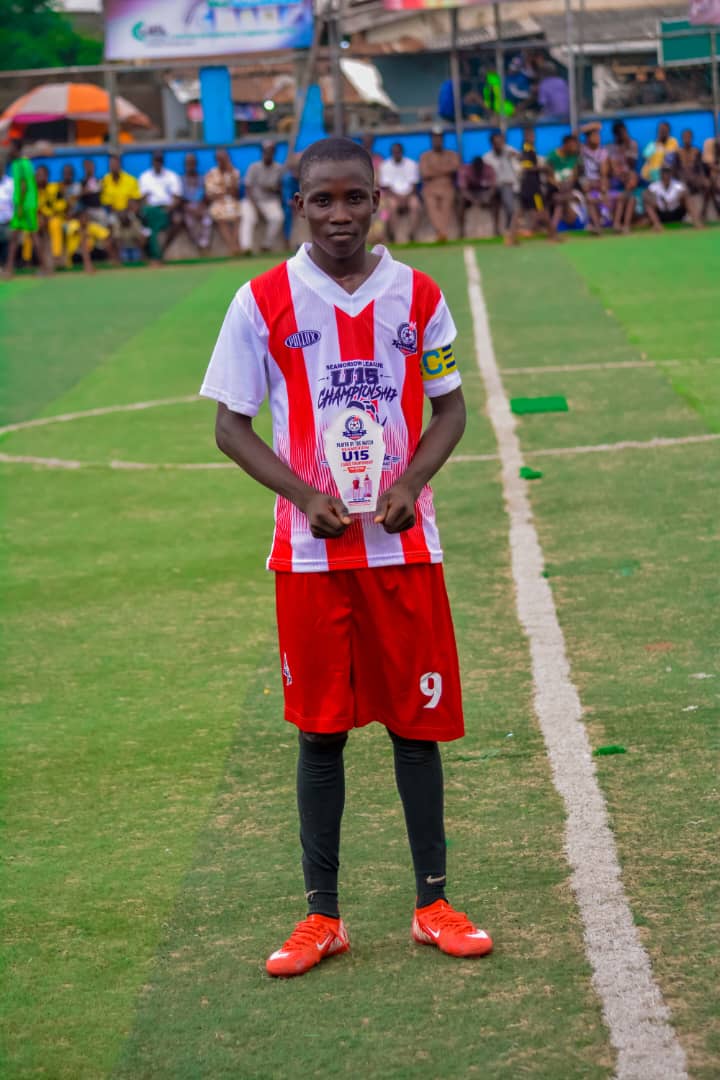
An enterprising youngster at Shuffle Select Football Academy of Abule Egba, Lagos, Olaoluwa Abiodun has disclosed that he learns from watching the skills of Lionel Messi and goals of Jude Bellingham in order to get better.
READ ALSO: Virgil Van Dijk Is My Role Model, But Barcelona’s My Favourite Club – Samuel Ibeanusi
Sports247 reports that the fast growing lad, who can play as a midfielder and striker, is currently making waves with Shuffle Select at the ongoing Seamoriow U15 Football Competition in Ikotun, Lagos, where his team will face the hosts in the first semi-final on Thursday.
All eyes will be on Abiodun, after he scored four goals to emerge as man of the match in his side’s 8-0 thumping of Bee United during the quarter-finals on Tuesday and he’s in contention to be the highest goal scorer.
The youngster, who is a student of Oke Odo Senior High School, also thanked his coach, Babatunde Ashifa, for guiding him in the right direction towards becoming a future football star for Nigeria.
“I am happy for how my coach is teaching me to play football,” said Abiodun. “That’s why I always like to be early for our training sessions at Ebenezer Primary School.
“He’s the one who brought me to the club in 2024 and I have learnt a lot from him since then. I also learn from watching the way Messi and Bellingham play. I try to combine their styles anytime when I’m playing.”
Sports247 gathered further that Abiodun could soon be in line for a deal abroad, as the director of Shuffle Select Football Academy, Ibrahim Odeyinka is connected to a number of clubs in Europe as well as Brook House College of England.

-

 Events3 days ago
Nigeria’s Christian Leaders to Unite in Abuja for First Lausanne Congress in Over 10 Years (Register Now)
-
Business1 day ago
PLACCIMA Nominates Bolcit Barshep-Amakiri as Vice President, Commerce
-
Business2 days ago
NSIA Insurance Grows Revenue by 18% to ₦33bn, Divests Life Insurance Portfolio
-
News4 days ago
Nigeria seeks China tech partnership to boost local capacity – Technology Times