
Health
Ebola: Swiss government says Nigeria’s patient likely contracted virus in Uganda

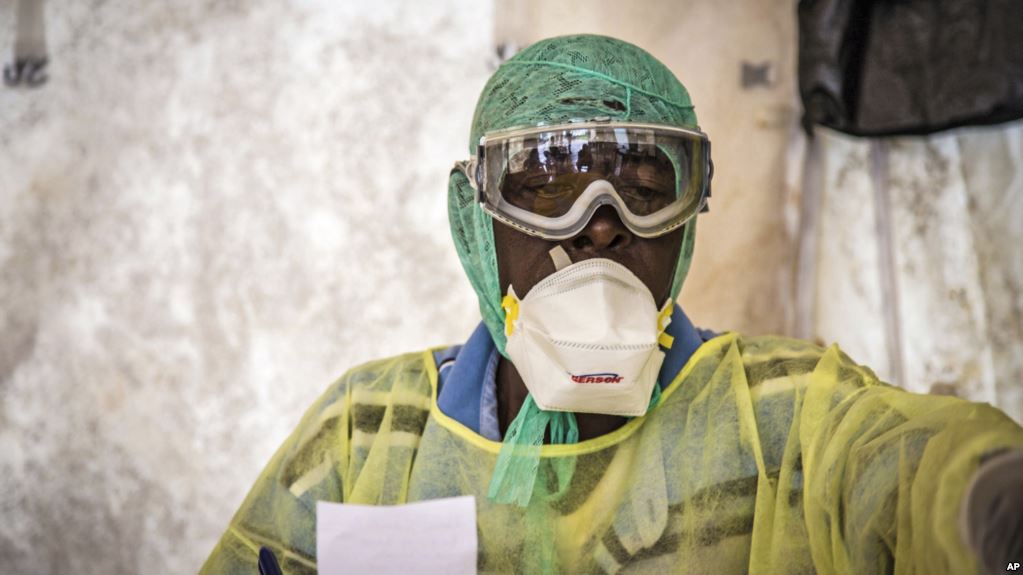
Nigeria’s first confirmed Ebola patient in more than a decade is believed to have contracted the virus while travelling in Uganda, although health authorities are yet to establish the source of her infection.
According to a report by Reuters, the Swiss Federal Department of Foreign Affairs told the newspaper in an emailed statement on Thursday that the patient, a Ugandan-born woman married to a Swiss diplomat based in Abuja, has been receiving treatment at a private clinic in the Nigerian capital for about a week.
According to Reuters, the statement said the woman was believed to have contracted the virus during a visit to Uganda about two weeks earlier. Her husband, who travelled with her, is in isolation but has not developed symptoms.
However, the World Health Organisation (WHO) and the Africa Centres for Disease Control and Prevention (Africa CDC) said they had not received verified information that the woman travelled to the Democratic Republic of the Congo (DRC), where the current Ebola outbreak began.
Conflicting travel accounts
According to Reuters, Ugandan authorities had earlier said the woman travelled to eastern DRC before transiting through Uganda.
However, Africa CDC official Wessam Mankoula said on Thursday that there was no validated information confirming that the patient had travelled to the DRC.


Mr Mankoula said Nigeria and Uganda were exchanging information to reconstruct her travel history and identify the possible source of infection.
WHO representative to Nigeria Pavel Ursu said the information received by the agency indicated that the woman had been in Uganda from 16 September and returned to Abuja on 3 October.
The WHO official said the information available to the agency did not establish that she had travelled outside Uganda.
Patrick Otim, a WHO emergency response manager, also said the source of the infection remained unknown as investigators worked to establish the patient’s movements before she became ill.
One area of investigation is the health facilities the woman visited in Abuja after developing symptoms and before she was hospitalised, including the possibility of exposure to other people during that period, he said.
Meanwhile, the Ugandan government said that the country had no active Ebola cases.
Uganda recorded 20 Ebola cases between May and June, most of them linked to infections imported from the DRC. The WHO declared the country’s outbreak over in August after 42 days without a new confirmed case.
Nigeria’s response
The uncertainty surrounding the woman’s travel history comes as Nigeria works to prevent further transmission following confirmation of the imported infection on 20 October.
As PREMIUM TIMES reported, the patient is a 42-year-old woman who lives in Abuja and recently travelled to Uganda. She developed symptoms on 6 October, three days after returning to Nigeria, and initially sought treatment at a private hospital, believing she had malaria.
She later visited another private hospital, where she was admitted on 11 October after her condition failed to improve. Her infection was subsequently confirmed through laboratory testing.
PREMIUM TIMES also reported that health authorities had identified 44 people who might have been exposed to the patient, including healthcare workers, patients, caregivers and travel contacts.
The government has begun contact tracing and is working with international partners to establish the woman’s movements and identify anyone who may have been exposed.
The WHO has urged Nigerians to remain calm, explaining that one confirmed imported case does not, by itself, mean the country is experiencing an Ebola ‘outbreak’. The agency is supporting Nigeria with case investigation, laboratory testing, contact tracing and infection prevention measures.
Regional outbreak
Nigeria’s case comes amid an Ebola outbreak that was declared in the DRC in May and has spread to other African countries, raising concerns about cross-border transmission.
The outbreak is caused by the Bundibugyo virus, a species of Ebola virus for which there is currently no licensed vaccine.
Kenya has also reported cases linked to the movement of the virus across borders, adding to concerns about the challenges of tracing infections among international travellers.
Ebola spreads through direct contact with the blood or other bodily fluids of an infected person, or with contaminated materials. Symptoms may include fever, headache, weakness, vomiting and diarrhoea.
Discover more from Premium Times Nigeria
Subscribe to get the latest posts sent to your email.




Women in northern Nigeria continue to bear a disproportionate burden of maternal deaths, with the Northwest and Northeast geopolitical zones accounting for about three-quarters of reported fatalities in health facilities, according to the 2026 Joint Annual Review (JAR) Statistical Book.
The report also highlights significant disparities in maternal health outcomes between rural and urban areas, with rural women recording a maternal mortality ratio of 656 deaths per 100,000 live births, compared with 444 deaths per 100,000 live births in urban areas.
Produced by the Federal Ministry of Health and Social Welfare, the report reviews the third year of implementation of the Health Sector Strategic Blueprint. It was presented at the third Nigeria Health Sector Joint Annual Review in Abuja on 10 November.
The findings highlight persistent inequalities in maternal healthcare access and outcomes, despite a reported decline in maternal deaths across health facilities nationally.
According to the report, Nigeria recorded thousands of maternal deaths in health facilities between January and September 2026, although the figures represent only deaths captured by the facility reporting system.
The ministry acknowledged that the figures could be underreported or overreported but described the data as reliable for monitoring trends in the health sector.
Maternal mortality remains high
Maternal mortality refers to the death of a woman during pregnancy, childbirth or within 42 days of the termination of pregnancy from causes related to or aggravated by the pregnancy or its management.
Most maternal deaths are preventable through timely access to quality antenatal care, skilled birth attendance, emergency obstetric services and appropriate postnatal care.
Despite the reported improvements, Nigeria’s maternal mortality ratio remains a major public health concern.
The JAR Statistical Book puts the country’s maternal mortality ratio at 572 deaths per 100,000 live births, significantly above the Sustainable Development Goal (SDG) target of fewer than 70 deaths per 100,000 live births by 2030.
The burden is particularly concerning given Nigeria’s contribution to global maternal deaths.
In its 2023 report, titled “Improving Maternal and Newborn Health and Survival and Reducing Stillbirths: Progress Report 2023”, the World Health Organisation (WHO) estimated that Nigeria recorded 82,000 maternal deaths, 181,000 stillbirths and 277,000 neonatal deaths in 2020.
The combined 540,000 deaths accounted for 12 per cent of global maternal, stillbirth and neonatal deaths, despite Nigeria contributing only six per cent of global live births.
The report ranked Nigeria second after India among countries with the highest combined burden of maternal deaths, stillbirths and neonatal deaths.
Reported maternal deaths decline
The JAR data indicate a downward trend in facility-reported maternal deaths over the review period.
The country recorded 5,391 maternal deaths in health facilities in 2024, compared with 4,455 in 2025.
The figure declined further in 2026, although the exact total requires confirmation against the final statistical table. The quarterly data also indicate improvements.
Following a peak in the second quarter of 2024, maternal deaths and the maternal mortality ratio generally declined. By the third quarter of 2026, the maternal mortality ratio had fallen to 128 deaths per 100,000 live births, representing a reduction of about 46 per cent from the earlier peak.
Maternal deaths during the same period also declined by approximately 40 per cent to 947.
However, these improvements have not been evenly distributed across the country.
Northern states bear the burden
According to the report, maternal deaths over the past three years were heavily concentrated in the Northwest and Northeast geopolitical zones.
By 2026, the two zones together accounted for approximately three-quarters of all documented maternal deaths in health facilities.
The five northern states with the highest maternal mortality burden were Kano, Borno, Jigawa, Yobe and Katsina.
While the national figures showed a downward trend, maternal deaths reportedly increased across the two northern zones, contrasting with reductions recorded in southern parts of the country.
ALSO READ: Faith leaders urged to confront beliefs, family decisions driving maternal deaths in Kano
In most southern states, fewer than 50 maternal deaths were reported. The states with the lowest recorded numbers included Osun (four deaths), Abia (five), Enugu (eight), Ekiti (nine), and Bayelsa (nine).
Maternal morbidity
Beyond deaths, the report also highlights the burden of maternal morbidity, including complications that can have lasting effects on women’s health, wellbeing and livelihoods. In 2026, approximately 3,060 women were diagnosed with vesicovaginal fistula (VVF), compared with 4,350 in 2025.
VVF is an abnormal opening between the bladder and vagina that can result in continuous, involuntary leakage of urine, often following prolonged or obstructed labour.
Of the women diagnosed in 2026, 1,737 underwent surgical repair, representing 56.8 per cent of those diagnosed. This was lower than in 2025, when 2,564 women (59 per cent) underwent repairs.
The Northwest and Northeast again recorded the highest burden, with 1,420 and 982 cases, respectively, in 2026. The figures underscore the need to strengthen access to emergency obstetric care, timely referrals and surgical treatment, particularly in underserved communities.
Discover more from Premium Times Nigeria
Subscribe to get the latest posts sent to your email.

The woman who tested positive for Ebola in Nigeria and was evacuated to Switzerland for treatment has been discharged from hospital after making a full recovery.
She was discharged from Geneva University Hospitals on Wednesday, after medical personnel confirmed her recovery, Reuters reported on Thursday, quoting a statement from the hospital.
“After the medical team confirmed her full recovery, the cantonal physician authorised the patient being treated for Ebola virus disease to leave the Geneva University Hospitals (HUG) on 11 November 2026,” the hospital said.
The Uganda-born woman and her husband, a Swiss diplomat, were evacuated from Nigeria to Switzerland on 26 October. Her evacuation was confirmed by the Minister of Health and Social Welfare, Muhammad Pate.
The patient had returned to Abuja from Uganda on 3 October. She developed symptoms days later and was admitted to a private health facility before the Nigeria Centre for Disease Control and Prevention (NCDC) was notified. Laboratory tests confirmed the infection on 20 October.
Nigeria continues Ebola surveillance
The NCDC’s latest Ebola situation dashboard, updated on 12 November with data as of 11 November, lists one confirmed case, no deaths and seven negative cases.
It also shows that 62 contacts linked to the confirmed case have been identified. Of these, 52 have completed their mandatory 21-day follow-up, while 10 remain under monitoring.
The NCDC said its response includes contact tracing, investigation of reported alerts, laboratory testing, infection prevention and control measures, and surveillance at the country’s points of entry.
On 11 November, NCDC disclosed that Nigeria recorded no additional confirmed Ebola cases since the imported infection was confirmed.
The agency has urged healthcare workers to remain vigilant, ask patients about their travel and exposure histories, and promptly report suspected cases to public health authorities.
READ ALSO: Ebola: Nigeria records no new cases 21 days after imported infection – NCDC
Regional outbreak continues
The situation in Nigeria is part of a wider outbreak of Bundibugyo virus disease affecting parts of Africa.
In its latest situation update published on 6 November, the World Health Organisation (WHO) said the DRC had recorded 10,668 confirmed cases and 5,198 deaths as of 3 November, across 67 health zones in eight provinces.
Kenya had recorded nine confirmed cases and two deaths, while Nigeria had reported one imported case. WHO said there had been no new confirmed cases in Kenya or Nigeria since its previous update.
Discover more from Premium Times Nigeria
Subscribe to get the latest posts sent to your email.
-

 News4 days ago
APM holds Presidential Campaign in Plateau, Pledges Security and Economic Reset
-
News1 day ago
UNIJOS Appoints Patricia Lar as First Female Vice-Chancellor
-
News3 days ago
NiYA: Nigeria Awards ₦49m grants to 17 young entrepreneurs – Technology Times
-
News4 days ago
NPFL Matchday 12 Roundup: Rangers Edge Kwara United, Bendel Snatch Late Winner as Inter Lagos Rescue Derby Point